
AMERICA BRANDS 157 NIGERIANS THE "WORST OF THE WORST" AND PREPARES TO SEND THEM HOME. THE CHARGES ARE SERIOUS, THE LABEL IS POLITICAL, AND NIGERIA'S REPUTATION IS ON THE LINE
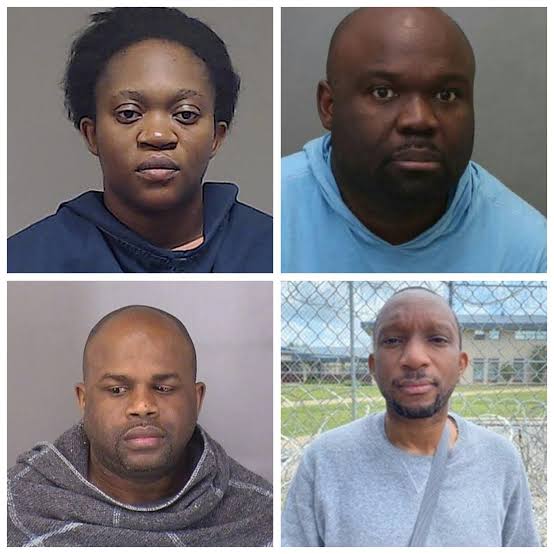
The US Department of Homeland Security (DHS) has added 24 more Nigerians to its "Worst of the Worst" initiative. That brings the number of Nigerian nationals on the list to 157. DHS describes the people on it as foreign nationals arrested by US Immigration and Customs Enforcement (ICE) for "despicable crimes," and it says they are slated for removal from the United States. The update came on Monday, November 23, 2026. More than 45,000 people from many countries now appear on the full list. Across the list, the alleged offenses include drug and weapons crimes, rape, murder, fraud and the misuse or theft of public benefits. The Nigerians named in the latest additions are linked mostly to financial crimes, including wire fraud, mail fraud, identity theft and money laundering. Others are listed for drug offenses, assault and child cruelty. Those named include Emmanuel Omowaiye, Laurene Onwuka, Olusegun Shonekan, Michael Orji and Ifeanyi Ibennah. Public reporting does not make clear, case by case, whether each listed offense is a conviction or a pending charge. Where charges have not been proven in court, the people involved are presumed innocent. As far as public reporting shows, none of those named has commented publicly, and the Nigerian government has not issued a detailed response. The list is part of President Donald Trump's aggressive immigration enforcement campaign. It lands at a tense moment in Nigeria-US relations, and it revives a painful stereotype that links Nigerians abroad with fraud. For a diaspora that is among the most educated immigrant groups in America, and for a country that depends heavily on remittances, the stakes go well beyond 157 names. Ghanaians, who face many of the same pressures from Washington, have reason to watch closely too.
The US government has a name for them. It calls them the "worst of the worst." Since November 23, that label has covered 157 Nigerians.
DHS added 24 Nigerian nationals to its public "Worst of the Worst" list in its latest update. The department says everyone on the list was arrested by ICE over serious criminal activity and is set to be removed from the United States. It describes their alleged offenses as "despicable crimes." The full list now names more than 45,000 foreign nationals from countries around the world.
The Nigerians named in the latest batch are, for the most part, linked to money. DHS lists Emmanuel Omowaiye, arrested in Richmond, Texas, over alleged mail fraud. It lists Laurene Onwuka, arrested in Chantilly, Virginia, over fraud by impersonation, and Olusegun Shonekan, arrested in Newark, New Jersey, over wire fraud. Peter Ude, arrested in Atlanta, Georgia, is listed over wire fraud. Newton Jemide, arrested in Fort Dix, New Jersey, is listed over wire fraud, conspiracy and mail fraud. Shedrack Umukoro, arrested in Yazoo City, Mississippi, and Bright Eigbedion are both listed over money laundering.
Others are listed for drug crimes. Olusegun Olaseni was arrested in Greencastle, Indiana, over the sale of amphetamine. Alameen Adetunji Tokosi was arrested in Chicago, Illinois, over heroin possession.
Michael Orji, arrested in Oxford, Wisconsin, carries one of the longest entries. DHS lists him over weapons-related violations, fraud, identity theft, wire fraud, falsely claiming US citizenship and money laundering. Ifeanyi Ibennah is listed over child cruelty. Moyinoluwaseun Okeowo is listed over larceny, forgery and concealing stolen property. Babajide Oluwaseun Faseyi is listed over assault.
Some care is needed here.
The list is a government publication. It reflects how DHS describes each person and each case. Public reporting on the latest update does not make clear, in every case, whether the offense listed is a conviction or an arrest on charges that have not yet been tested in court. Where no conviction exists, those named are presumed innocent, and the descriptions should be read as allegations. As far as public reporting shows, none of the people named has spoken publicly about their case, and no lawyers have commented on their behalf.
There is also a detail in the locations that deserves a closer look. Several of the places where people were reportedly "arrested" are best known for prisons. Fort Dix, New Jersey, and Yazoo City, Mississippi, are home to major federal correctional complexes. That suggests some individuals may have been taken into ICE custody after serving, or while serving, criminal sentences, rather than being picked up on the street. DHS has not explained the circumstances of each arrest, so that remains an inference. But it matters. A person handed to ICE from a federal prison has likely already been convicted of something. A person arrested on a charge has not.
The distinction is not a technicality. It goes to the heart of the debate over the list itself.
The "Worst of the Worst" initiative is a public-facing website run by DHS during Trump's second term. It names foreign nationals arrested by ICE, often with photographs, nationalities, arrest locations and the crimes linked to them. The department presents it as proof that its enforcement campaign targets dangerous criminals, not ordinary immigrants. Each update arrives with strong language. The people listed are described as threats to American communities, and the department frames their removal as a matter of public safety.
Supporters see the list as long overdue transparency. They argue that Americans deserve to know who is being arrested and why. They point out that many of the offenses listed, such as fraud, drug dealing and violent crime, harm real victims, and that people who commit serious crimes while in the country as non-citizens should expect to be removed. Fraud in particular costs Americans billions of dollars a year, much of it taken from elderly people, small businesses and public programs.
Critics see the list differently. They argue that naming people publicly, sometimes before trial, amounts to punishment by press release. They warn that a website mixing convictions with pending charges, and grouping a mail fraud case alongside murder under one dramatic label, invites the public to treat every name the same way. They also point to a broader concern. Independent data trackers, such as Syracuse University's TRAC project, have repeatedly reported that a large share of people held in ICE detention have no criminal conviction at all. To critics, a list of 45,000 "worst of the worst" serves as a public relations shield for an enforcement system that sweeps up far more people than the label suggests.
Both points can be true at once. Some people on the list may have committed grave crimes. The branding, however, is political by design.
To understand why, it helps to look at the wider campaign it belongs to.
Trump returned to the White House in January 2025 promising the largest deportation operation in American history. He signed a wave of executive orders on his first day, declaring a national emergency at the southern border, expanding the use of fast-track removals and directing agencies to prioritize enforcement. Congress followed with the Laken Riley Act, the first bill he signed in his second term. It requires the detention of undocumented immigrants charged with certain crimes, including theft and burglary, even before conviction.
In July 2025, Trump signed a sweeping tax and spending law that included roughly $170 billion for immigration and border enforcement. A large share of that money went to ICE, for detention beds, new officers and removal flights. ICE expanded arrests in cities across the country. The administration also revived and widened the practice of deporting people to third countries, nations that were not their home, when their own governments would not take them back.
The campaign has been fiercely contested. Courts have blocked parts of it. Lawsuits have challenged detention conditions, the speed of removals and the treatment of people with legal claims to stay. Protests have erupted in several cities. Immigration has become one of the defining fault lines of American politics, and the "Worst of the Worst" list is one of the administration's main tools for telling its side of the story.
That story has a clear message: the people being deported are criminals. Publishing names, faces and crimes makes that message vivid. It also makes the nationalities of the accused highly visible. And that is where the list collides with something Nigerians know all too well.
When Nigerians scroll through the latest additions, they will see a familiar pattern. Wire fraud. Mail fraud. Identity theft. Money laundering. Fraud by impersonation. These are the crimes most often attached to Nigeria's name abroad.
The stereotype is old and stubborn. It goes back at least to the 1980s and 1990s, when "419" advance-fee scams, named after the section of Nigeria's criminal code that covers fraud, flooded fax machines and later email inboxes around the world. The "Nigerian prince" email became a global punchline. In the 2000s and 2010s, the image hardened as young fraudsters in Nigeria, known locally as "Yahoo boys," moved into romance scams, business email compromise and online identity theft.
Some high-profile cases in the United States have reinforced that image. In 2022, Ramon Abbas, the Instagram celebrity known as "Hushpuppi," was sentenced in Los Angeles to more than 11 years in prison for his role in international money laundering and fraud schemes. In 2021, Obinwanne Okeke, a businessman once celebrated in a major African magazine as a young entrepreneur, was sentenced to 10 years for a business email compromise scheme that cost victims millions of dollars. In 2019, the FBI's Operation reWired led to 281 arrests worldwide, including 167 in Nigeria. And in 2023, two Nigerian brothers, Samuel and Samson Ogoshi, were sentenced in Michigan to more than 17 years each in a sextortion case linked to the suicide of a teenager, Jordan DeMay. That case drew national attention to a crime wave targeting American teenagers online.
These are real crimes with real victims. Nigerians do not benefit from pretending otherwise. Cybercrime networks with roots in Nigeria have stolen enormous sums from people and businesses abroad, and they have damaged the country's image in ways that hurt honest Nigerians every day.
But a stereotype is not a statistic. Fraud networks operate from many countries, including the United States itself. Americans commit the vast majority of fraud against Americans. And the 157 Nigerians on the DHS list are a tiny fraction of a large, mostly law-abiding community.
That community is one of the most remarkable immigrant success stories in America.
Estimates vary, but several hundred thousand Nigerian-born immigrants live in the United States. When their American-born children are included, the Nigerian diaspora numbers well over half a million people, by many estimates far more. They are concentrated in Texas, Maryland, Georgia, New York, New Jersey, California and Illinois. Houston alone is home to one of the largest Nigerian communities outside Africa.
By most measures, Nigerian Americans are among the most educated groups in the country. Studies have long found that a majority of Nigerian-born adults in the US hold at least a bachelor's degree, far above the national average. Many hold advanced degrees. Nigerians are heavily represented in medicine, nursing, engineering, pharmacy, technology, finance, law and academia. Nigerian doctors and nurses have become a pillar of the American health system, especially in underserved areas.
The diaspora's influence reaches into culture and business too. Nigerian Americans have built tech companies, won public office, and helped carry Afrobeats from Lagos clubs to American stadiums. They are visible, ambitious and, for the most part, deeply invested in both countries.
That is why lists like this one sting. A nurse in Houston or a software engineer in Atlanta did nothing to earn the suspicion that follows headlines about Nigerian fraudsters. Yet many Nigerians abroad report facing extra scrutiny at banks, in job interviews and at borders because of their nationality. Every new list, every new case and every new viral headline adds to that burden.
There is a fairness argument on the other side, and it deserves a hearing. Members of the diaspora are often the first to say that criminals damage the community's reputation and should face the law. Many Nigerian professionals in America express anger, not sympathy, when they read about fraud rings. Their complaint is not that offenders are punished. It is that the punishment of a few becomes a judgment on everyone.
The list also lands at a sensitive moment in Nigeria-US relations.
The two countries have long been important partners. The United States is one of Nigeria's largest trading partners and investors, and Nigeria is Washington's most significant partner in West Africa on security, trade and diplomacy. Millions of Nigerians admire American culture, education and business. Thousands of Nigerian students enroll at American universities each year.
But relations have grown more strained during Trump's second term. In July 2025, the US State Department cut the validity of most non-immigrant visas for Nigerians to single-entry, three-month permits, citing reciprocity and security concerns. Nigeria's government protested and said it was seeking a review. That same month, Nigeria's then Foreign Minister Yusuf Tuggar publicly rejected pressure to accept deportees from other countries, including Venezuelans, saying Nigeria had enough problems of its own. Later in 2025, Trump designated Nigeria a "Country of Particular Concern" over religious freedom and threatened military action over killings of Christians, a framing Nigerian officials firmly rejected.
Against that backdrop, deportation is not just a law enforcement issue. It is a diplomatic one.
Under international law and long-standing practice, countries are expected to take back their own citizens when another state lawfully removes them. US law gives Washington leverage to enforce that expectation. Under Section 243(d) of the Immigration and Nationality Act, the US can restrict visas for countries that refuse or delay accepting their deported nationals. Washington has used that power before against several countries, including Ghana in 2019.
Nigeria has generally cooperated on returns of its own nationals. Charter flights carrying deportees from the US and Europe land in Lagos periodically. Nigerian consular officials verify identities and issue travel documents. Where Nigeria has drawn a line is on accepting people who are not Nigerian. The 157 people on the DHS list, as described, are Nigerian nationals, so their removal would fall within the kind of returns Nigeria has historically accepted.
How the process actually works matters too.
Being named on the list is not the same as being on a plane. In most cases, a non-citizen facing removal goes before an immigration judge, who decides whether the person can be deported and whether any legal relief applies. Immigration proceedings are civil, not criminal. The protections are weaker than in a criminal trial. There is no right to a government-funded lawyer, and detention is common.
For people convicted of crimes, the path to removal is usually faster. Under US immigration law, certain offenses count as "aggravated felonies," a broad category that includes fraud or deception causing losses above $10,000 and money laundering above that same amount, as well as drug trafficking. A conviction for an aggravated felony makes removal almost certain and blocks most forms of relief. Many non-citizens convicted of federal crimes serve their prison sentences first and are then handed directly to ICE for deportation.
For people who have only been charged, the situation is more complicated. They may still be facing criminal trials. They may be acquitted. They may plead to lesser offenses that carry different immigration consequences. Some may hold green cards or other legal status that requires a full hearing before removal. DHS's description of the list as people set for "removal" may, in some cases, describe the government's intention rather than a final legal outcome.
That is why the label "worst of the worst" deserves scrutiny. On one list, a person listed for heroin possession sits alongside people accused of murder and rape elsewhere in the database. A person listed for assault sits alongside an alleged money launderer. Each case is different. Some may be serious and proven. Others may be minor, old or still unresolved. A single dramatic phrase flattens all of those differences.
For Nigeria, the biggest question is not how the list was built. It is what happens when these people come home.
Deportation is often treated as the end of a story. For the receiving country, it is the beginning of one. Nigeria will receive people who may have spent years, even decades, in the United States. Some left Nigeria as children. Some have American spouses and children they will leave behind. Some have served long prison sentences. Some may still be facing financial losses, debts or ongoing investigations.
Their return raises practical issues. Many deportees arrive with little money, few local contacts and limited job prospects. They may face stigma from families and communities. Some struggle with mental health problems after detention. Without support, reintegration can fail, and a small number may drift back into crime. That risk is especially sharp for people with skills in fraud and money laundering, which can be practiced from anywhere with an internet connection.
There is also a law enforcement question. If a person was involved in a fraud network with links to Nigeria, their return could be useful to investigators, or a risk if the network simply absorbs them. Nigerian agencies may want information from US authorities about returnees with serious financial crime histories. Information sharing between the two countries already exists through law enforcement channels, but how deportees are tracked after arrival is less clear.
Nigeria has institutions meant to help. The Nigerians in Diaspora Commission, led by Abike Dabiri-Erewa, has handled the return of Nigerians from Libya, South Africa, the Gulf and elsewhere, often in crisis conditions. Agencies such as the Nigeria Immigration Service and the National Agency for the Prohibition of Trafficking in Persons work on returnee screening and support in some cases. But programs designed for migrants fleeing abuse are not the same as programs for people deported over criminal allegations. Nigeria has no large, well-known system for reintegrating deportees with criminal records.
Then there is the domestic fight against fraud, which shapes how the world sees Nigeria and how Nigeria sees itself.
The Economic and Financial Crimes Commission was created in the early 2000s, with Nuhu Ribadu as its first chairman. It was built partly in response to international pressure, including Nigeria's listing at the time by the Financial Action Task Force as a country not cooperating in the fight against money laundering. Since then, it has become the country's main agency against fraud, corruption and cybercrime.
Under its current chairman, Ola Olukoyede, who took office in 2023, the EFCC has reported thousands of convictions a year, a large share of them for internet fraud. Its officers regularly raid homes and hideouts used by suspected "Yahoo boys," seizing laptops, phones and luxury cars. In December 2024, the agency announced one of its largest operations ever, arresting 792 suspects in a Lagos building allegedly used for cryptocurrency and romance scams. The suspects included Chinese and Filipino nationals, a reminder that fraud operations in Nigeria are increasingly international.
Nigeria has strengthened its laws too. The Cybercrimes Act of 2015, amended in 2024, criminalizes a wide range of online offenses. The country was placed on the FATF "grey list" for weak anti-money laundering controls in 2023 and has worked to address the gaps. Banks, telecom firms and fintech companies have been pushed to tighten identity checks.
The EFCC's methods have drawn criticism. Rights groups and lawyers have accused the agency at times of heavy-handed raids, profiling of young men based on appearance, and parading suspects before trial. Some critics argue it focuses too heavily on small-scale internet fraud while big political corruption cases drag on. Others say the agency's work is vital and has helped Nigeria rebuild some credibility with international partners.
The DHS list exposes the limits of all that effort. Fraud linked to Nigerians abroad is not only exported from Nigeria. Some of it is committed by Nigerians living abroad, using the financial systems of their host countries. Nigerian enforcement cannot reach those cases directly. It can only cooperate with foreign agencies and work on the conditions that push young people toward fraud in the first place.
Those conditions are not mysterious. Nigeria has one of the youngest populations in the world. Youth unemployment and underemployment are high. Inflation has squeezed households hard since the removal of the petrol subsidy and the naira's sharp fall in 2023 and 2024. Many young Nigerians see fraud as a fast route to wealth in a country where honest routes look blocked. Popular music has, at times, glamorized "Yahoo" lifestyles. Social media rewards visible luxury, whatever its source.
None of that excuses crime. But it explains why enforcement alone, at home or abroad, has never been enough. A list of 157 deportees will not change the economics that drive cybercrime. Jobs, opportunity, credible justice and cultural change will.
Deportation also has an economic side that is easy to miss.
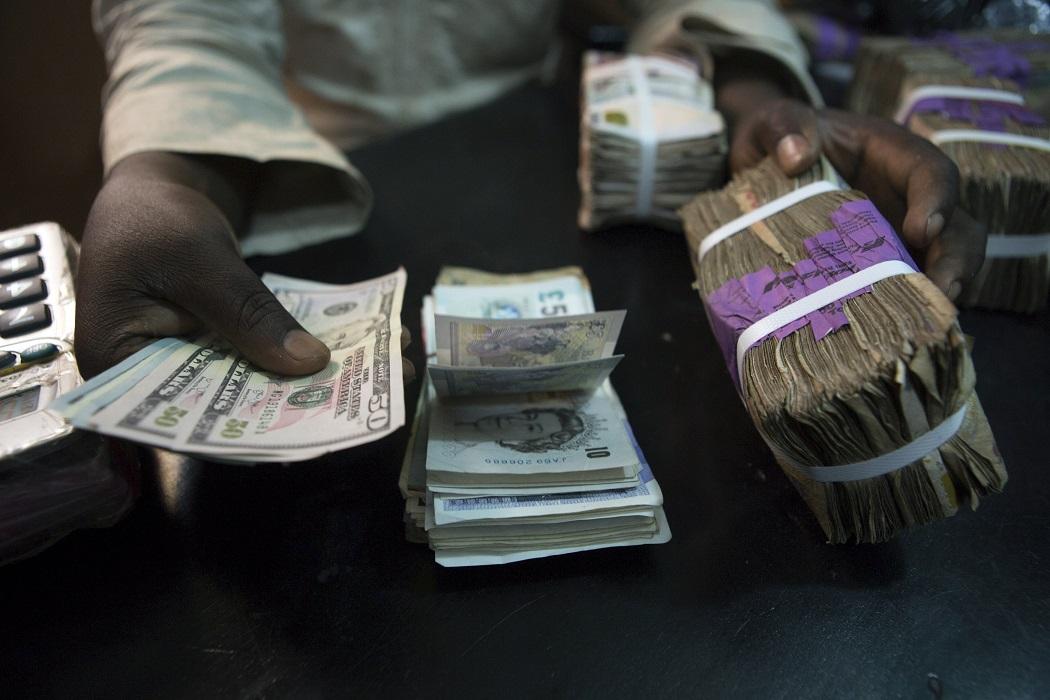
Nigeria is one of the largest recipients of remittances in the world. Diaspora Nigerians send home around $20 billion a year by World Bank estimates, and the United States is one of the leading sources. That money pays school fees, rent, hospital bills and small business costs for millions of families. It supports the naira and the country's foreign exchange supply.
The 157 people on the list are not a meaningful share of that flow. But the wider enforcement climate is. Tighter visa rules, stricter scrutiny of financial transfers and the fear of arrest can make it harder for Nigerians to travel, study, work and send money. If the image of Nigerians as fraudsters hardens further in American minds, banks may add friction to transfers and employers may hesitate. The cost of a stereotype is paid in many small ways.
For Ghanaians, much of this story will feel familiar.
Ghana has its own long history with the United States on deportation. In 2019, Washington imposed visa sanctions on Ghana, saying it had failed to cooperate in accepting its deported nationals. The dispute was resolved after Ghana improved cooperation. In 2025, the US also tightened visa terms for Ghanaian travelers, before easing some restrictions after talks.
In September 2025, President John Mahama confirmed that Ghana had agreed to accept West African nationals deported from the United States, including some who were not Ghanaian. The first group arrived that month. The deal drew criticism at home and from rights groups, who raised concerns about the people being sent onward to countries where they might face danger. The government defended it as a regional gesture under ECOWAS free movement rules. The episode showed how quickly American immigration policy can reach into West African politics.
Ghana also has its own cybercrime problem. "Sakawa," a Ghanaian term for internet fraud sometimes linked to ritual practices, has made headlines for years. Ghanaian nationals have been charged in US romance scam and business email compromise cases. Ghana's Cyber Security Authority, created under the Cybersecurity Act of 2020, and the country's police and economic crime agencies have stepped up enforcement. Ghanaians abroad face some of the same suspicion Nigerians do.
So the lessons cut across the border. When Washington publishes lists by nationality, every West African country with a large diaspora is exposed to the same reputational risk. When the US uses visa sanctions to force cooperation on deportations, every country that depends on American visas for students, workers and family visits feels the pressure. And when deportees arrive home without support, every receiving country bears the cost.
There are also shared opportunities. Nigeria and Ghana could push for clearer agreements with the US on how deportations are handled, including advance notice, accurate records and safeguards for people with pending legal claims. They could work together, through ECOWAS, on reintegration programs for returnees. They could deepen cooperation with US agencies on fraud networks that span the region. And they could invest more seriously in the young people who are most at risk of being drawn into cybercrime.
The diaspora itself has a role. Nigerian and Ghanaian community groups in the United States already offer legal clinics, mentorship and support to families affected by immigration enforcement. They also speak out against fraud. Their voices carry weight in American politics, especially in states with large African immigrant communities. They can push back against blanket stereotypes while making clear that crime has no place in their communities.
There is a final point that both sides of the debate should accept. The rule of law means two things at once. It means people who commit serious crimes should face consequences, including deportation where the law allows it. It also means people are innocent until proven guilty, that labels are no substitute for evidence, and that whole communities should never be judged by the actions of a few. A list that serves the first principle while ignoring the second does not make anyone safer. It just makes some people louder and others quieter.
Several developments will show where this story goes next.
The first is the outcome of the individual cases. If DHS or the courts release more detail, it will become clearer which listed offenses are convictions and which are pending charges. Some cases may end in acquittals, dropped charges or reduced pleas.
The second is the pace of removals. Watch for reports of charter flights carrying Nigerian deportees from the United States in the coming weeks and months, and for how many of the 157 are actually sent home.
The third is the Nigerian government's response. Abuja may issue a statement, request consular access or seek clarity on the cases. Its tone will signal how it plans to manage relations with Washington on immigration.
The fourth is further additions to the list. DHS updates the initiative regularly. If the number of Nigerians keeps rising, the reputational pressure will grow.
The fifth is the wider diplomatic picture. Visa policy, trade, security cooperation and the religious freedom dispute will all shape how deportation is handled between the two countries. Ghana's experience with third-country deportees will also be watched closely across the region.
For now, the facts that can be stated are these. DHS added 24 Nigerians to its "Worst of the Worst" list on November 23, 2026, bringing the total number of Nigerian nationals listed for removal to 157. The full list names more than 45,000 foreign nationals arrested by ICE. The Nigerians in the latest additions are linked mainly to fraud, money laundering and identity theft, along with drug offenses, assault and child cruelty. Those named include Emmanuel Omowaiye, Laurene Onwuka, Olusegun Shonekan, Peter Ude, Newton Jemide, Shedrack Umukoro, Olusegun Olaseni, Alameen Adetunji Tokosi, Michael Orji, Ifeanyi Ibennah, Moyinoluwaseun Okeowo, Babajide Oluwaseun Faseyi and Bright Eigbedion. Public reporting does not make clear, in every case, whether the listed offenses are convictions or pending charges. Where no conviction exists, the allegations remain unproven.
One hundred and fifty-seven names will not define a nation of more than 200 million people, or a diaspora that heals Americans in hospitals, builds companies and teaches in universities. But names on a government website travel fast, and stereotypes travel faster. The real test for Nigeria is not whether it can stop Washington from publishing lists. It is whether it can build a country where fewer of its young people see fraud as a future, and where the ones sent home find a reason to stay on the right side of the law.