A NEW PARTY STORMED GEZAWA WITH A PROMISE NO KANO GOVERNOR HAS KEPT: FREE ALL 44 COUNCILS. CAN THE NDC SELL IT TO A STATE THAT HAS HEARD IT BEFORE?
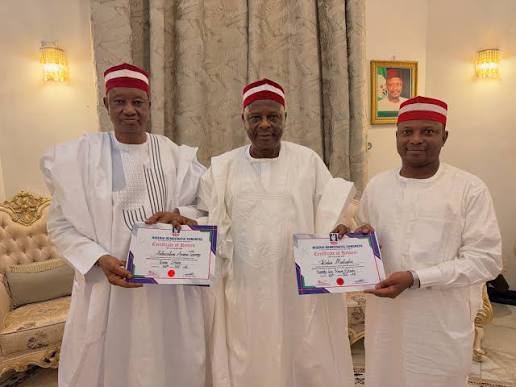
The Nigeria Democratic Congress (NDC) officially launched its 2027 general election campaign in Kano State on Sunday, November 22, 2026. The rally took place in Gezawa Local Government Area and drew a large crowd of supporters, party leaders and stakeholders from across the state. The party said the event marked the start of "a new era of grassroots governance and accountability." The headline promise came from the party's governorship candidate, Aminu Abdussalam Gwarzo. He pledged full financial and administrative autonomy for all 44 local governments in Kano if he is elected. Under an NDC government, he said, council funds would go directly to the councils. Elected chairmen would be free to work without interference. Rural communities would finally see progress on roads, health care, education and water supply. Gwarzo argued that heavy control by state governments has crippled local councils for years. He blamed it for poor services, abandoned projects and a lack of development at the grassroots. The pledge touches one of the oldest fights in Nigerian politics. In July 2024, the Supreme Court ruled that state governments must stop holding and controlling local government funds. Yet the ruling has been slow to change life on the ground. In Kano, the country's largest state by number of councils, the gap between law and reality is easy to see. The promise could resonate with voters. But the NDC is a smaller party facing an entrenched NNPP government under Governor Abba Kabir Yusuf, a strong APC machine and a weakened PDP. It must now convince voters that this time, a governor will really let go.
Gezawa is not the obvious place to start a campaign for Kano's Government House. It sits just outside the city, a largely rural council of farms, markets and small towns. It has none of the glamour of a rally in the heart of Kano metropolis. That may have been the point.
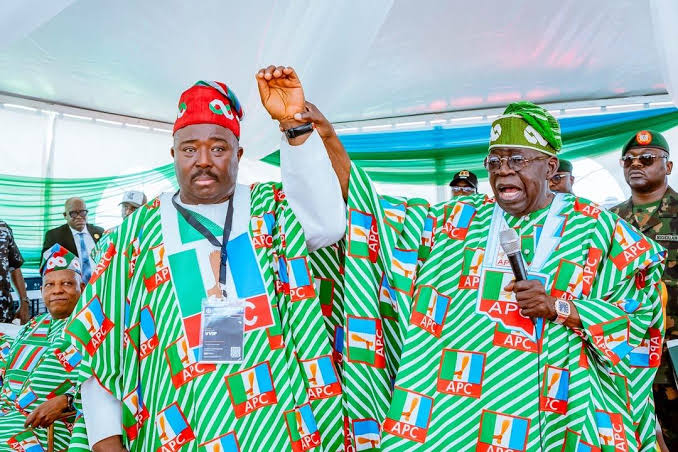
On Sunday, the Nigeria Democratic Congress chose Gezawa to officially open its 2027 campaign in Kano State. Supporters, party leaders and stakeholders came from across the state. The party described the event as the start of a new era of grassroots governance and accountability. Its governorship candidate, Aminu Abdussalam Gwarzo, then made a promise aimed squarely at places like Gezawa.
If elected, he said, all 44 local governments in Kano would be fully autonomous. "If elected as the next governor of Kano State come 2027, I promise all our 44 local governments will be autonomous," he told the crowd, according to reports from the rally. Council funds would go straight to the councils. Elected chairmen would be allowed to run their councils without interference. And rural communities would see real development in roads, health, education and water supply.
Gwarzo framed the problem bluntly. Local governments, he argued, have been crippled for too long by excessive control from state governments. He blamed that control for poor service delivery, abandoned projects and the lack of development in rural areas.
Few people in Kano would dispute the diagnosis. Fewer still have seen a governor who acted on it. That is the challenge facing Gwarzo and his party. The promise is popular. The track record of such promises is not.
To understand why local government autonomy draws cheers at rallies, you have to understand how Nigeria's councils actually work.
Nigeria has 774 local government areas. On paper, they are the third tier of government, closest to the people. They are supposed to handle primary health care, primary education support, rural roads, markets, sanitation, water points and other basic services. Section 7 of the 1999 Constitution guarantees a system of democratically elected local government councils.
In practice, many councils have been little more than extensions of the state government. The key reason sits in Section 162 of the same Constitution. It created the State Joint Local Government Account. Federal allocations meant for councils were paid into this joint account, which the state controlled. The state was then supposed to pass the money on to the councils.
Too often, the money did not arrive in full. Over the years, councils and civil society groups complained that states made heavy deductions. Some deductions covered genuine joint costs, such as salaries for primary school teachers and pensions. Others were harder to explain. Critics accused governors of using council funds for state projects, political patronage or worse. Many council chairmen said they received only enough to pay salaries, with little left for roads, clinics or schools.
Governors also controlled who ran the councils. Many states went years without holding local elections. Instead, governors appointed "caretaker committees" loyal to them. Where elections did happen, they were run by State Independent Electoral Commissions, whose members are appointed by the governor. The results were strikingly predictable. In state after state, the ruling party won nearly every chairmanship and councillor seat. Opposition parties called these contests a formality.
Reformers tried for decades to change the system. Constitutional amendments to grant councils financial autonomy came up in several rounds of review, including in 2013, 2017 to 2019, and again in 2022. Each time, the National Assembly could pass the proposals. Each time, they stalled in the state Houses of Assembly. Any constitutional amendment requires approval from at least 24 of Nigeria's 36 state legislatures. State lawmakers, many of whom owe their positions to their governors, repeatedly failed to provide that support.
There were other attempts. In 2019, the Nigerian Financial Intelligence Unit issued guidelines aimed at limiting cash withdrawals from council accounts and curbing state interference in council funds. The guidelines drew attention to the problem, but enforcement proved difficult. Governors found ways around them.
The biggest turning point came in 2024.
The federal government, through the Attorney-General of the Federation, sued all 36 state governments at the Supreme Court. It asked the court to stop governors from controlling council funds and from running councils through unelected caretaker committees.
On July 11, 2024, the Supreme Court delivered its judgment. The court ruled that it is unconstitutional for state governments to hold and spend funds meant for local governments. It ordered that federal allocations be paid directly to councils. It also ruled that only democratically elected councils are entitled to receive those funds. Councils run by caretaker committees, the court said, should not receive allocations.
The ruling was hailed as historic. Supporters said it would finally free councils to serve their communities. President Bola Tinubu's government welcomed it and pledged to enforce it. Labor unions, civil society groups and local government workers celebrated.
The reality since then has been more complicated. Many states rushed to hold local elections after the judgment, in part to keep councils eligible for funds. Implementation of direct payments ran into practical problems, including how council accounts would be opened, managed and monitored. Through 2025, reports suggested that direct payments were uneven and that many governors still held strong informal influence over councils. Some states passed new laws that critics said recreated state control in a different form.
The lesson is simple. A court can declare who owns the money. It cannot, by itself, change who holds political power over the people who spend it. A council chairman who owes his ticket to the governor, depends on the governor's party for re-election and faces state pressure on every decision may still be autonomous in name only.
That is the space Gwarzo is trying to fill. His promise is not just about money arriving in council accounts. It is about political independence: elected chairmen who can act without fear of the governor. That kind of autonomy is not fully guaranteed by any court ruling. It depends on the person who sits in Government House.
Kano is not just any state in this debate. It has 44 local government areas, the most of any state in Nigeria. It is also one of the most populous states in the country, with a population widely estimated at well over 15 million. Its councils cover a vast range of communities, from dense urban areas in the metropolis to remote farming villages.
That scale makes local government in Kano a huge political and financial prize. Forty-four councils mean 44 chairmanship seats, hundreds of councillors and a large share of monthly federal allocations. Whoever controls the councils controls a significant network of political influence, jobs and grassroots structures.
It also means that when councils fail, the failure is felt widely. Many rural communities in Kano still lack reliable access to clean water. Primary health centers in some areas are understaffed or poorly equipped. Rural roads wash out in the rainy season. Kano also has one of the highest numbers of out-of-school children in Nigeria, a long-standing concern for educators and international agencies. Primary education, which councils help fund and manage, is central to that problem.
When Gwarzo talks about roads, health, education and water supply, he is naming the exact services where Kano's rural voters feel the gap most. That is why his choice of Gezawa makes sense. The rally was a message to rural Kano that the party sees them.
The NDC enters a political landscape that is crowded, intense and often bitter.
Kano is currently governed by Abba Kabir Yusuf of the New Nigeria Peoples Party (NNPP). His 2023 victory was a major upset. He defeated Nasiru Yusuf Gawuna of the All Progressives Congress, which had held Kano for eight years under former Governor Abdullahi Umar Ganduje. Yusuf's win was powered by the Kwankwasiyya movement, the political organization built around former Governor Rabiu Musa Kwankwaso, who was also the NNPP's presidential candidate in 2023.
The victory did not settle the contest. In September 2023, the governorship election tribunal nullified Yusuf's win and declared Gawuna the winner, after deducting votes it ruled were invalid. The Court of Appeal upheld the tribunal's decision. The case went to the Supreme Court. In January 2024, the Supreme Court restored Yusuf as governor. The months of legal uncertainty left deep scars and heightened tensions between the two camps.
Kano politics has stayed turbulent since then. In May 2024, the Kano State House of Assembly repealed the 2019 emirates law that had split the old Kano Emirate into five. That move led to the reinstatement of Muhammadu Sanusi II as Emir of Kano and set off a long dispute with supporters of Aminu Ado Bayero, who had been emir since 2020. The emirship tussle became a battle fought in courts, palaces and political rallies, and it drew in the federal government and security agencies.
Local government itself has been a flashpoint. In October 2024, the Kano State Independent Electoral Commission conducted council elections. Conflicting court orders surrounded the polls. A federal court ruling questioned the commission's composition, while state courts cleared the way for the election. The vote went ahead, and the NNPP won all 44 chairmanship seats. Opposition parties dismissed the outcome. Supporters of the government said it reflected the party's popularity in the state.
That clean sweep matters for the NDC's message. When one party controls Government House and every council, critics argue that council autonomy becomes very hard to test. Chairmen are unlikely to openly challenge a governor from their own party. Supporters of the current arrangement counter that political alignment helps government work smoothly. Either way, the result gives Gwarzo an opening to argue that Kano's councils need a different kind of freedom.
The APC remains the main challenger. It still has a strong base in Kano, built during the Ganduje years. Ganduje himself rose to become the APC's national chairman in 2023 before stepping down in 2025. The party has the power of the federal government behind it and deep structures in many councils. It will be seeking to win back the state in 2027.
The Peoples Democratic Party, once a major force in Kano, has been weakened. Kwankwaso himself was a PDP governor twice, from 1999 to 2003 and from 2011 to 2015. But his movement's shifts between parties, along with defections and internal crises, left the PDP a much smaller player in the state. It is still on the ballot and still has loyalists. It is not, at present, seen as the front-runner.
Into this mix comes the NDC, one of several opposition parties trying to break through as the 2027 election approaches.
Gwarzo is not a political newcomer. He was elected deputy governor of Kano in 2023 on the NNPP ticket alongside Abba Kabir Yusuf. That gives him two things at once: experience inside government and a difficult question to answer.
The experience is useful. He knows how the state budget works. He knows how councils relate to Government House. He has seen, from inside, how state and local finances are managed. He can speak about the system with an insider's understanding.
The question is obvious. If local governments in Kano have been crippled by state control, as he argues, what did he do about it while he was part of the state executive? Rival parties will press that point hard. They will say he is criticizing a system he helped run. They will ask why he did not push for full council autonomy when he had the chance.
Gwarzo will likely answer that a deputy governor has limited power, and that real change requires a governor committed to it. That is a fair point. In Nigeria's system, deputy governors often have little independent authority. Their influence depends heavily on their relationship with the governor. Many deputies have found themselves sidelined, and some have been impeached after falling out with their principals.
His move to a different party also signals shifting alliances in Kano politics. How and why his path diverged from the party that brought him to office will be a key question for voters. It will also shape how voters in the Kwankwasiyya camp, the most powerful grassroots movement in the state, see him. Some may view him as a reformer who broke away on principle. Others may view him as a defector. The campaign will have to tell that story clearly.
For all its challenges, the NDC's pledge has real potential to connect with voters.
The first reason is that it speaks to a felt need. Rural voters in Kano do not need a lecture on constitutional law to know their councils are not delivering. They see broken boreholes, empty clinics and unpaved roads. A promise that council money will reach the councils, and that chairmen will be free to spend it on local needs, is easy to understand.
The second reason is that the promise carries a hint of fairness. Many voters believe council funds are taken by powerful people at the state level before they reach the grassroots. Whether or not that perception is always accurate, it is widespread. A candidate who promises to stop that practice is promising to return what voters see as theirs.
The third reason is the Supreme Court ruling itself. The 2024 judgment gives Gwarzo's pledge legal weight. He is not promising something outlandish. He is promising to fully honor a ruling that the country's highest court has already made. That makes the promise sound less like a slogan and more like a commitment to obey the law.
The fourth reason is timing. Across Nigeria, voters are frustrated by the cost of living, insecurity and poor services. Local governance is where many of those frustrations meet daily life. A party that focuses on the grassroots can tap into that frustration without needing to win every national argument.
There is also the symbolism of a governor giving away power. Nigerian voters are used to politicians promising more. A candidate promising to give up control is unusual. If voters believe him, it could set him apart.
Belief is the problem.
Nigerian voters have heard promises of council autonomy many times. Candidates for governor in many states have pledged to free councils, only to keep tight control once in office. The incentives are powerful. Controlling council funds and council politics helps governors build loyalty, reward allies and win elections. Few politicians give that up willingly.
The NDC also faces the practical problems of a smaller party. It does not have the federal power of the APC or the incumbent advantage of the NNPP in Kano. It must build structures in all 44 councils and hundreds of wards. It needs agents at polling units on election day. It needs money for logistics, media and mobilization. A large crowd at a launch rally is a start, but rally crowds in Nigeria do not always translate into votes. Party loyalties, ethnic and religious networks, traditional institutions and local power brokers all shape how people vote.
Smaller parties also struggle with visibility. Many voters in rural Kano may not yet know the NDC's name or symbol. The party will need to spend heavily on outreach in Hausa, through radio, mosques, markets and community leaders. Radio remains especially powerful in Kano, and parties that master it gain an edge.
Then there is the question of detail. A promise of "full autonomy" sounds strong, but voters and analysts will want to know how it will work. Will an NDC government repeal or amend existing state laws on local government administration? Will it end state deductions from council funds, including those for shared costs like teachers' salaries? How will it handle joint projects? Will it reform the State Independent Electoral Commission so that council elections are seen as fair? Will it publish monthly allocations to each council so citizens can track them? Without clear answers, the promise risks sounding like the many that came before.
There is another uncomfortable truth in the autonomy debate. Freeing councils from state control does not guarantee better councils.
Some critics of autonomy warn that it could simply move the problem of mismanagement from one level of government to another. Local councils in Nigeria have their own history of waste, weak accountability and poor record keeping. Some council chairmen have been accused of diverting funds, padding payrolls and abandoning projects. Councils often lack skilled staff, strong audit systems and transparent budgets. In some cases, autonomy without accountability could mean less oversight, not more.
That is why serious reformers argue that autonomy must come with checks. Councils should publish their budgets and spending. Legislative councils at the local level, made up of elected councillors, should be strong enough to question chairmen. Audit reports should be public. Citizens and community groups should be able to see what projects are planned and track whether they are delivered. Civil society organizations and the media should have the access they need to monitor council finances.
Capacity also matters. Many councils need trained engineers, health managers, education officers and accountants. Without them, even well-funded councils may struggle to deliver. A state government committed to autonomy could still play a supportive role, providing technical help and training without taking control of the money.
If Gwarzo and the NDC want their promise to be taken seriously, they will need to show they understand this. Freeing the councils is one step. Making sure the councils serve their people is the harder step.
If an NDC government did deliver real autonomy in Kano, the effects could be significant.
Councils with reliable funding could plan beyond monthly salaries. They could repair rural roads, maintain water points, equip primary health centers and support local schools. Chairmen accountable to voters, rather than to the governor, might pay closer attention to local needs. Communities might see faster responses to problems such as broken boreholes or flooded roads.
Autonomy could also change politics at the grassroots. Council elections might become more competitive if chairmen are no longer seen as the governor's appointees. Local politicians might build their own bases rather than depending entirely on state patronage. That could widen the pool of political talent and give voters more real choices.
There are risks too. Strong, independent councils could clash with the state government over projects, priorities and politics. Coordination between state and local plans could weaken. Some councils would perform well; others might not. Inequality between councils could grow, depending on the quality of local leadership.
These are the trade-offs that come with any decentralization. Countries that have made it work tend to combine local freedom with clear rules, strong transparency and active citizens. The question for Kano is whether its political class is willing to build those systems.
Ghanaian readers will recognize this debate. Ghana's local governance system is built around Metropolitan, Municipal and District Assemblies. Their chief executives, known as MMDCEs, are appointed by the president rather than elected directly. For years, reformers have argued that electing these officials would make local government more accountable to citizens.
In 2019, Ghana prepared for a referendum that would have allowed political parties to take part in local elections, a key step toward elected district chief executives. The referendum was called off shortly before the vote amid a lack of broad consensus. The debate over electing MMDCEs has continued since then, with many civil society groups and politicians still calling for reform.
Ghana's District Assemblies Common Fund, which channels central government money to local assemblies, has faced its own questions about delays, deductions and central control. Ghanaian local assemblies often complain that funds arrive late or come with strings attached.
The parallels are clear. In both countries, the people closest to communities often have the least control over money and decisions. In both countries, politicians at higher levels find it hard to let go. And in both countries, voters wonder whether promises of decentralization will ever become reality. Kano's 2027 campaign offers Ghanaians a mirror on their own unfinished reform.
Several signals will show whether the NDC's pledge becomes a serious force in Kano's race.
The first is detail. Watch for a written policy document from the NDC that explains how autonomy would work in practice. A clear plan for funding, elections, accountability and state-local relations would strengthen the party's case.
The second is reaction from rivals. The NNPP government and the APC will likely respond. They may claim credit for existing reforms, attack Gwarzo's record as deputy governor or question the NDC's capacity to win. How they respond will show whether they see the pledge as a threat.
The third is grassroots organization. Watch whether the NDC can build structures across all 44 councils, recruit credible local candidates and attract defectors from bigger parties. Rally crowds are a signal. Ward-level organization is what wins elections.
The fourth is the national picture. Kano's governorship race will be shaped by the presidential contest and by alliances among opposition parties. Any coalitions or mergers before 2027 could change the NDC's position quickly.
The fifth is the progress of the Supreme Court ruling. If direct payments to councils become more reliable nationwide, the autonomy debate may shift from money to political independence. If implementation stalls further, the NDC's message may gain more force.
On Sunday in Gezawa, the Nigeria Democratic Congress made a promise that goes to the heart of how Nigeria is governed. Its Kano governorship candidate, Aminu Abdussalam Gwarzo, pledged full financial and administrative autonomy for all 44 local governments, with funds going directly to councils and elected chairmen free to work independently. He promised that rural communities would finally see roads, clinics, schools and water.
The promise is popular, timely and backed by the Supreme Court's 2024 ruling. It speaks to real needs in a state where many rural communities still wait for basic services. But it comes from a smaller party in a fiercely contested state. It comes from a candidate who must explain his own years inside the system he now criticizes. And it lands with voters who have heard similar promises before.
The question for Kano is not whether councils deserve their own money and their own voice. Most people agree they do. The question is whether any governor, once in power, will truly give them both. The NDC says its candidate will. Over the next months, Kano voters will decide whether they believe him.