
TINUBU SAYS THE WATER WENT OFF WHILE HE WAS SHAVING IN ASO ROCK. HIS CRITICS SAY THAT ONE ADMISSION EXPLAINS NIGERIA'S ENTIRE INFRASTRUCTURE CRISIS
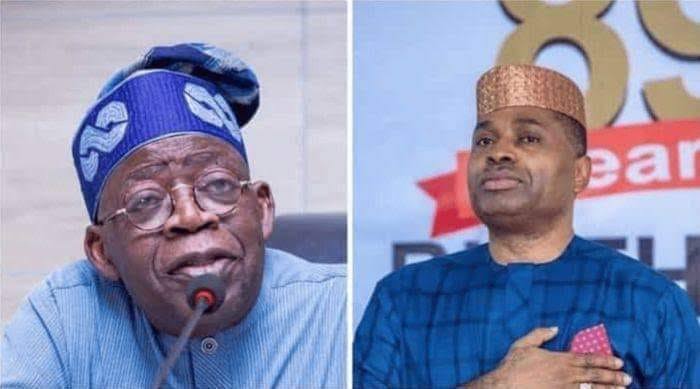
President Bola Tinubu told a family prayer gathering in Lagos on Sunday, November 22, 2026, that the water supply at the Presidential Villa in Abuja went off while he was shaving earlier in the week. "On the Wednesday of last week, I was shaving, and the water went off. And the Villa, you won't know punishment there too. The water went off. So we will correct all this. No light, no water, no electricity, no development," he said. The remark spread quickly. On Monday, Nollywood veteran and lawyer Kenneth Okonkwo, now a supporter of former Vice-President Atiku Abubakar, seized on it in a post on X. He described it as evidence of the failure of Tinubu's administration. In his argument, a government that cannot guarantee steady water and electricity at the seat of power cannot credibly promise basic infrastructure to ordinary Nigerians. He suggested that if the Villa lacks water and light, the average citizen has little reason for hope. The Presidency had not, at the time of writing, publicly responded to Okonkwo's criticism or explained the cause of the outage. The episode is small on its face, but it touches the most sensitive nerve in Nigerian public life. Unreliable power and poor water access shape daily life for most of the country's more than 200 million people. The remark arrives as the 2027 election campaign heats up, and it hands the opposition a vivid, easy-to-share symbol. It also raises a fair question about whether the president's candor is a sign of empathy or an admission his critics will not let him forget.
It was meant to be a moment of connection. It may become a campaign slogan for the other side.
On Sunday, President Bola Tinubu stood before members of his family at a special prayer session in Lagos. The setting was warm and personal, far from the formal podiums of Abuja. In that relaxed atmosphere, he told a story that many Nigerians would recognize from their own homes. Earlier in the week, he said, he had been shaving at the Presidential Villa when the water stopped running.
"On the Wednesday of last week, I was shaving, and the water went off," Tinubu said. "And the Villa, you won't know punishment there too. The water went off. So we will correct all this. No light, no water, no electricity, no development."
There is a version of that remark that plays well. A president admitting that he, too, suffers the frustrations of ordinary citizens can sound humble and relatable. He named the problem. He promised to fix it. He linked infrastructure directly to development, a point few economists would dispute.
There is another version, and it took less than a day to arrive.
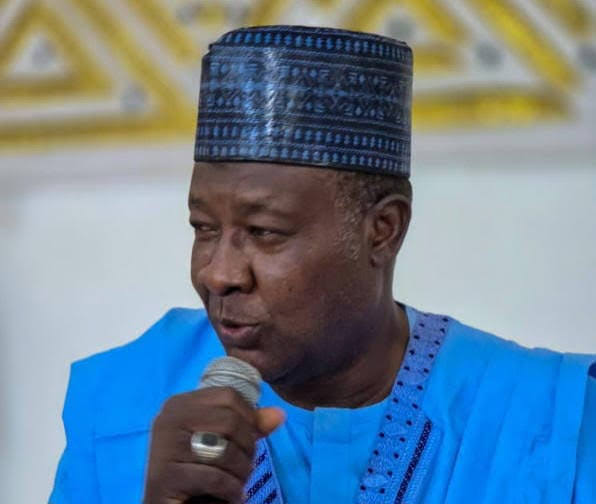
On Monday, Kenneth Okonkwo, the actor, lawyer and political commentator, posted his reaction on X. Okonkwo, now a supporter of former Vice-President Atiku Abubakar, argued that the president's story was not a moment of shared hardship. To him, it was a confession. If the president cannot guarantee uninterrupted water and electricity at the very seat of power, he argued, there is little basis for believing his administration can provide basic infrastructure to the rest of the country. His message, in essence, was that if Aso Rock has no water and no light, ordinary Nigerians have no hope.
That framing is political, and it should be read as such. Okonkwo is an opposition voice in a season when the opposition is looking for every advantage. His conclusion that the episode proves the failure of the administration is an opinion, not an established finding. But the power of his argument does not rest on his politics. It rests on a gap that almost every Nigerian already feels, the gap between official promises of progress and the reality of dry taps and dark rooms.
The facts of the outage itself remain thin. Tinubu did not say how long the water was off. He did not say what caused it. He did not say whether it affected the whole Villa complex or only his private quarters. A disruption could have come from a technical fault, scheduled maintenance, a problem with the Federal Capital Territory's water network, or a failure in the Villa's own internal systems. As far as public reporting shows, the Presidency has not offered a technical explanation. It would be unfair to assume the cause was mismanagement, and equally unfair to assume it was a harmless blip. What is clear is that the president himself chose to tell the story, and that he tied it to a broader national problem.
That choice matters, because the Presidential Villa is no ordinary building.
Aso Rock, the name Nigerians use for the Villa and the presidential complex beneath the giant granite outcrop in Abuja, is the most guarded and best-funded residence in the country. It became the seat of government after the capital moved from Lagos to Abuja in 1991. It has its own security apparatus, its own clinic, its own staff and its own budget lines, and it is supposed to have backup systems for nearly everything. In a country where millions of homes rely on generators and boreholes because public supply is unreliable, the Villa is meant to be the place where things simply work.
When things fail there, the failure carries symbolic weight far beyond the inconvenience. Aso Rock is shorthand for the Nigerian state itself. A dry tap in the president's bathroom becomes, in the public imagination, a picture of the state's limits. That is exactly why Okonkwo's argument has traction. It takes a small domestic moment and turns it into a metaphor that is easy to understand and hard to dismiss.
Nigeria has seen this kind of moment before. In 2017, then First Lady Aisha Buhari publicly criticized the State House clinic. She said she had been unable to get basic care there and that the facility lacked items as simple as syringes. She questioned how a clinic with a large budget could fail at the basics. Her comments caused a political storm. They were widely read as an indictment of waste and poor management at the heart of government, coming from inside the president's own household. The State House later responded with assurances and reviews. But the image stuck. If the president's own clinic could not function, what did that say about public hospitals across the country?
Tinubu's shaving story belongs to the same family of revelations. It is unusual for the most powerful person in the country to admit that his own home suffers the failures his government is meant to fix. Supporters may call it honesty. Critics, like Okonkwo, call it proof.
To understand why the remark struck such a nerve, it helps to look at the scale of the crisis it touches.
Electricity is the most visible failure. Nigeria has long had installed generation capacity well above what it actually delivers. For years, the grid has typically supplied only a fraction of that capacity, often in the range of 4,000 to 5,000 megawatts, for a country of more than 200 million people. By comparison, South Africa, with a far smaller population, has historically run a grid many times larger, even during its own years of rolling blackouts. Nigeria's gap between supply and need is one of the largest in the world.
The national grid has also suffered repeated collapses. In 2024 alone, the grid failed several times, plunging large parts of the country into darkness for hours or days. Each collapse brought statements from officials, promises of investigations and pledges of upgrades. Each was followed, sooner or later, by another. Problems run through the whole system: gas supply shortages to power plants, vandalism of pipelines and transmission lines, aging infrastructure, weak distribution networks and a long-running dispute over tariffs and debts between generation companies, distribution companies and the government.
Nigerians adapted the way people in crisis always adapt. They bought generators. Millions of small petrol and diesel generators hum across the country every night. Businesses, hospitals, schools, telecom towers and wealthy homes all depend on them. Nigeria is often described as one of the largest markets for small generators in the world. That self-reliance comes at a heavy price. Fuel is expensive, especially since the removal of the petrol subsidy in 2023. Generator fumes cause illness and, too often, deaths from carbon monoxide poisoning. The noise is constant. And every naira spent on private power is a naira not spent on growth.
The Tinubu administration has made reforms in this area, and they deserve a fair hearing. The Electricity Act of 2023, signed shortly after Tinubu took office, allowed states to regulate and develop their own electricity markets. That ended decades of near-total federal control and opened the door for states such as Lagos, Enugu and others to build their own systems. The government has also pushed tariff reform. In April 2024, regulators sharply raised tariffs for customers in "Band A," those promised at least 20 hours of supply a day, as part of an effort to move the sector toward cost-reflective pricing. Officials argued that without realistic tariffs, investors would never put money into the sector, and supply would never improve.
Those reforms were controversial. Many customers complained that they were paying more without getting the promised hours of supply. Labor unions protested. Critics said the government was asking citizens to pay for improvements that had not yet arrived. Supporters said reform is always painful at first and that the old system of underpriced, unreliable power was a dead end. Both sides have a point. Reform of Nigeria's power sector has been attempted for more than two decades, from the unbundling of the old National Electric Power Authority to the 2013 privatization. Each phase brought hope. None has yet delivered reliable, nationwide supply.
Water is the quieter crisis, but in some ways it is deeper.
Tens of millions of Nigerians lack access to safely managed drinking water, according to repeated assessments by UN agencies and Nigeria's own surveys. In many cities, public water supply is irregular or absent. Households rely on boreholes, wells, water vendors and sachet water, known as "pure water." In rural areas, women and children often walk long distances to fetch water from streams and ponds. Poor sanitation and unsafe water contribute to outbreaks of cholera and other waterborne diseases, which strike Nigeria with grim regularity, especially during the rainy season.
Even Abuja, the planned capital, has struggled. The FCT's water supply relies heavily on dams and treatment plants built for a far smaller population than the city now holds. Abuja has grown rapidly since the move from Lagos, and its satellite towns and suburbs have sprawled faster than water networks can follow. Many residents in areas such as Kubwa, Lugbe, Nyanya and Karu rely on boreholes and tanker deliveries because pipes either do not reach them or run dry. Central districts have generally fared better, but outages occur there too. If the Villa's supply was affected by the wider FCT network, the president experienced in one morning what many Abuja residents live with routinely.
There is also a cost dimension to water that rarely makes headlines. Boreholes require pumps, and pumps require electricity. When the grid fails, those pumps run on generators. That links Nigeria's water crisis directly to its power crisis. A household without grid power often loses water as well. Tinubu's own phrase captured that connection: "No light, no water." In Nigeria, the two failures tend to arrive together.
This is the irony that gives Okonkwo's criticism its edge. What the president said at a prayer meeting is what critics, economists, engineers and ordinary citizens have been saying for years. No light, no water, no development. It is a summary that could have come from an opposition manifesto. It came, instead, from the man who has held power since May 2023.
There are two ways to read that.
The generous reading is that Tinubu was being candid. He was speaking to family, in a spiritual setting, and he spoke plainly about a problem he says he intends to solve. "So we will correct all this," he said. Leaders who acknowledge problems are, in principle, better placed to fix them than leaders who deny them. Some Nigerians will appreciate a president who admits the Villa is not immune to the country's troubles. It cuts against the image of a political class living in a bubble of comfort.
The critical reading is the one Okonkwo chose. In this view, the remark is an accidental admission that, after more than three years in office, the administration has not solved even the problem closest to home. The phrase "you won't know punishment there too" invites the obvious question: if the president feels punished by a single morning without water, what about the millions who live without reliable water every day? Critics will also note that the setting, a prayer session, fits a long Nigerian pattern of leaders framing public failures as burdens to be endured with faith rather than problems to be fixed through policy. That criticism is pointed and arguably harsh. Supporters of the president would reject it, arguing that his promise to "correct all this" shows a commitment to action, not resignation.
The truth may contain both. A president can be sincere and still be responsible for results. Candor earns some credit, but voters will ultimately judge outcomes.
That brings the story to the messenger.
Kenneth Okonkwo is one of the most recognizable faces in Nigerian popular culture. He rose to fame as the lead actor in Living in Bondage, the 1992 film widely credited with launching Nollywood as a commercial industry. His role as Andy Okeke, a man who sacrifices his wife in a ritual for wealth and is then haunted by guilt, became one of the most iconic performances in Nigerian film history. For a generation of Nigerians, Okonkwo's face is tied to the birth of a cultural industry that now ranks among the most prolific film industries in the world.
He is also a lawyer, and over the years he has moved steadily into politics. His political journey has crossed party lines. He became most prominent nationally during the 2023 election, when he served as a leading spokesman for the Labour Party presidential campaign of Peter Obi. In that role, he was a forceful and frequent defender of Obi on television and social media, often clashing with supporters of both Tinubu and Atiku. After the election, his relationship with the Labour Party soured amid the party's internal crises, and he later left. He has since aligned himself with Atiku Abubakar, the former vice-president and perennial presidential contender who ran against both Tinubu and Obi in 2023.
That journey matters for how his criticism is received. Tinubu's supporters will point out that Okonkwo is a partisan figure with a clear interest in damaging the president ahead of 2027. They will say his argument is opportunism dressed up as public concern. Some Obi supporters, still bitter about his departure from the Labour Party camp, may also dismiss him. Okonkwo's defenders, on the other hand, will say his message should be judged on its merits, not on his party history. A dry tap is a dry tap, no matter who points it out.
Atiku's own role adds another layer. The former vice-president has spent decades building a political brand around economic management and private-sector growth. He ran for president in 2007, 2019 and 2023, among other attempts, and has made clear he intends to contest again. In 2025, he joined the African Democratic Congress as part of a broad opposition coalition effort aimed at challenging Tinubu in 2027. Opposition figures in that camp have repeatedly attacked the administration over the cost of living, insecurity and infrastructure. Okonkwo's post fits neatly into that strategy. It takes a story told by the president himself and turns it into a case study of what the opposition calls failed governance.
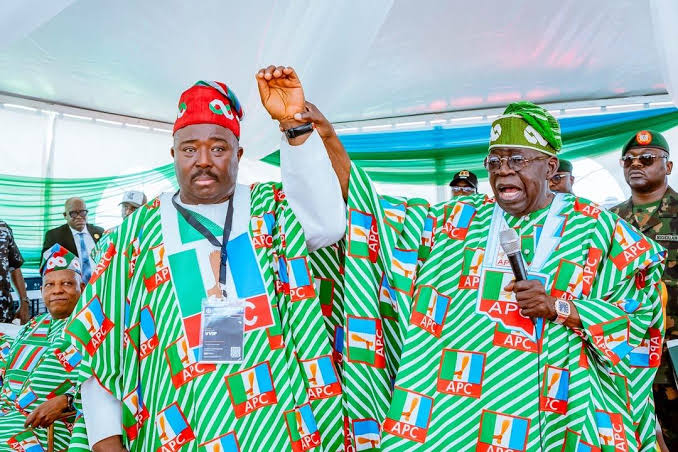
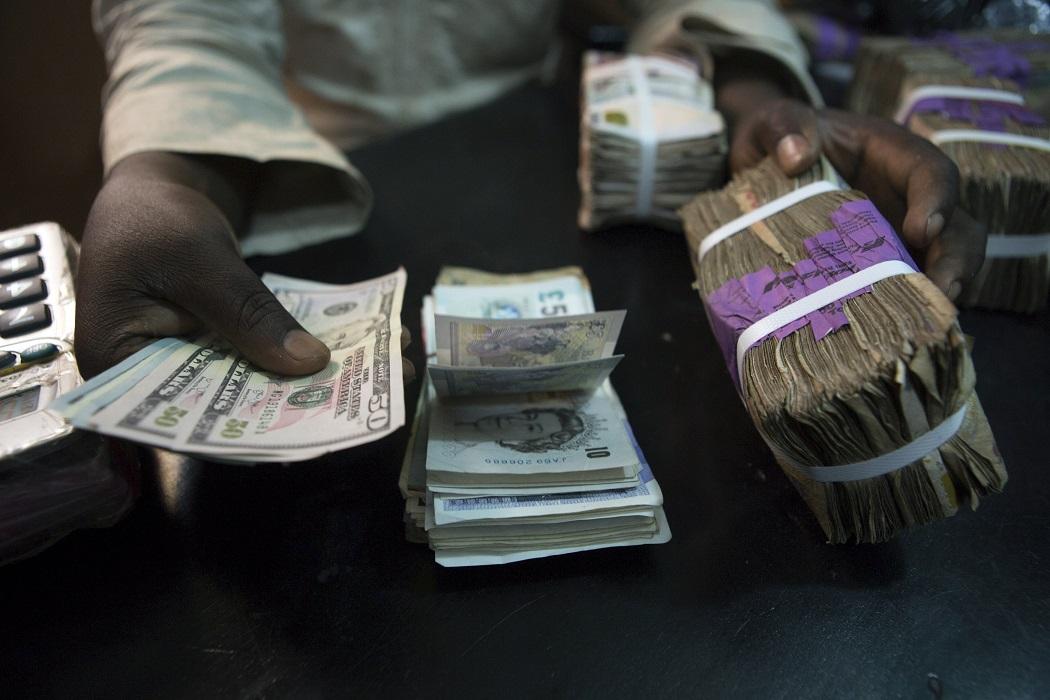
The timing could hardly be better for the opposition, or worse for the ruling party. Nigeria is moving into the early stages of the 2027 general election season. Just days ago, Tinubu was in Ibadan, where he publicly endorsed the All Progressives Congress governorship candidates for Lagos, Ogun and Oyo states at a campaign rally at Mapo Hall. Opposition parties are regrouping across the South-West and beyond. The naira is under fresh pressure from festive demand and early election spending, closing at N1,394 to the dollar at the official market on Friday and trading at N1,460 on the parallel market on Sunday. In this environment, every gaffe, every slip and every unguarded remark becomes political material.
Infrastructure is fertile ground for that kind of campaign. Unlike complex debates over exchange rates or fiscal policy, power and water are things every voter understands. Most Nigerians do not need an economist to tell them whether the lights came on last night or whether the tap ran this morning. A single sentence such as "No light, no water" can travel faster than any policy document. Opposition strategists know that. They will likely repeat the president's words back to him many times before the polls open.
The ruling party has its own counterarguments, and they are not trivial. The APC will argue that Nigeria's infrastructure deficit was built over decades, under governments of many parties, including the Peoples Democratic Party administrations in which Atiku served as vice-president from 1999 to 2007. Billions of dollars were spent on power during those years, critics of the PDP era note, with results that fell far short of expectations. The administration will point to the Electricity Act, tariff reforms, gas development efforts, investments in transmission and the progress of the Presidential Power Initiative, the partnership with Germany's Siemens begun under the previous government to upgrade the grid. It will argue that structural reforms take time to show results and that the country is laying foundations that previous governments avoided.
Those arguments carry weight in policy circles. Whether they carry weight with voters is less certain. Political campaigns are rarely won on promises of long-term structural reform. They are won on how people feel about their daily lives. And for many Nigerians, daily life over the past three years has included the shock of subsidy removal, the collapse and partial recovery of the naira, high food inflation and persistent power and water problems. The administration says the worst of that pain is behind the country. The opposition says the pain continues. The president's own story about his morning shave gives the opposition a convenient way to make its case.
There is a deeper question beneath the political sparring. Why, after decades of spending and repeated reform programs, does Nigeria still struggle to provide reliable power and water, even at its seat of government?
Part of the answer is money, and how it is managed. Nigeria's infrastructure needs are enormous, and public revenue has long been heavily dependent on oil, which brings volatile and often insufficient funding. Large portions of the federal budget go to salaries, debt service and recurrent costs, leaving limited room for capital investment. When capital projects are funded, they are often delayed, underfunded or poorly executed. Critics have long alleged that corruption, inflated contracts and abandoned projects have drained infrastructure budgets. Those allegations have been documented in many cases and denied in others. The pattern of contracts awarded and projects left unfinished is familiar to most Nigerians.
Another part of the answer is maintenance. Nigeria has a long history of building infrastructure and then failing to maintain it. Water treatment plants fall into disrepair. Pipes leak. Transformers burn out and are not replaced for months. Communities sometimes raise money to replace local transformers themselves. Maintenance rarely wins political credit. A new dam or power plant brings a ribbon-cutting ceremony. Fixing a pump does not.
A third part of the answer is coordination. Water and electricity in Nigeria involve federal, state and local authorities, along with private companies, regulators and agencies. Responsibilities often overlap or fall through the cracks. The Electricity Act's shift of power to states may help in the long run, but in the short term it adds complexity. Water supply is largely a state and local responsibility, with wide differences in performance across the country. In the FCT, responsibility sits with the FCT Administration and its water board, under the minister of the Federal Capital Territory.
If the Villa outage stemmed from the FCT network, that raises its own questions about the capital's infrastructure planning. If it stemmed from the Villa's internal systems, it raises questions about management of the State House and its substantial budget. Either way, the episode invites scrutiny that the government may not welcome. Journalists, lawmakers and civil society groups may ask how much the State House spends on utilities and maintenance, what backup systems exist and why they did not prevent the disruption. Those are legitimate questions. Answers would help the public judge whether the outage was a rare glitch or a symptom of something larger.
There is also an emotional dimension that should not be underestimated. Nigerians have a sharp sense of the distance between their leaders and themselves. Officials travel in convoys, live behind high walls and often receive medical care abroad. Former President Muhammadu Buhari spent long periods in London for medical treatment during his time in office. Many Nigerians saw that as proof that their leaders did not trust the systems they governed. In that context, a president saying he too lost water can be heard in two ways. It can be heard as a sign that leaders are not as insulated as people think. Or it can be heard as a reminder that even the most privileged home in the country cannot escape the failures the government has not fixed.
For Okonkwo and the opposition, the second reading is the useful one. For the Presidency, the challenge is to turn the remark back toward the first. That would mean showing, quickly and visibly, that "we will correct all this" is more than a phrase. A clear account of the outage, a commitment to specific improvements and evidence of progress in power and water supply would help. Silence, or a dismissive response, would leave the opposition's version unchallenged.
The episode also holds a lesson about political communication in the age of social media. Tinubu's remark was made in a private-feeling setting, among family and in prayer. In earlier eras, such comments might have stayed in the room or appeared in a few newspaper reports. Today, they are clipped, posted and shared within hours. A single sentence can become a meme, a hashtag or a campaign line overnight. Okonkwo's post on X is a reminder that every word a president says can be weaponized by opponents, regardless of the setting or intent. Political leaders who want to connect with audiences through personal stories must also anticipate how those stories will be read by people who want them to fail.
The story will resonate beyond Nigeria's borders too, especially in Ghana. Ghanaians have their own word for power cuts: "dumsor," roughly meaning "off and on." Years of rolling blackouts, especially between 2012 and 2016, shaped Ghanaian politics and helped turn public opinion against the government of the day. Power supply became a central election issue, and it has returned as a political flashpoint whenever outages resurface. Ghanaian voters know how quickly infrastructure failures can define a government's image. They also know that promises to fix power are easy to make and hard to keep. For readers across West Africa, the Aso Rock episode will feel familiar: a leader acknowledging a problem, critics pouncing, and citizens waiting to see whether anything changes.
What happens next is uncertain. The Presidency may respond directly to Okonkwo, or it may ignore him and let the story fade. Officials may clarify the cause of the outage, or the matter may remain unexplained. The opposition will almost certainly keep using the president's words in speeches, posts and campaign materials. Whether the episode becomes a lasting symbol or a passing headline will depend on events that have little to do with one morning in the Villa. If power and water supply improve noticeably over the coming year, the remark may be remembered as a moment of honesty from a president who delivered. If they do not, it may be remembered as the moment the president described his own government's record in a single line.
For now, the facts are simple. Tinubu said the water went off while he was shaving at the Villa on a Wednesday. He said, "No light, no water, no electricity, no development," and promised to correct it. Kenneth Okonkwo, speaking for a rival political camp, said the admission exposes the failure of the administration. The cause of the outage has not been publicly explained. The Presidency has not, as far as public reporting shows, responded to the criticism.
What is beyond dispute is the problem the president named. Nigerians do not need a story from Aso Rock to know what it means to wake up without water or spend the night without power. They live it. The president's remark did not reveal a new crisis. It confirmed an old one, from the most powerful address in the country.
In politics, the hardest words to escape are often your own. Tinubu said them at a prayer meeting. His opponents intend to make sure voters hear them again in 2027.