
THE NAIRA IS SLIPPING AGAIN, AND THE 2027 ELECTION SEASON HAS NOT EVEN STARTED. CAN NIGERIA'S FX REFORMS SURVIVE CHRISTMAS AND THE CAMPAIGN?
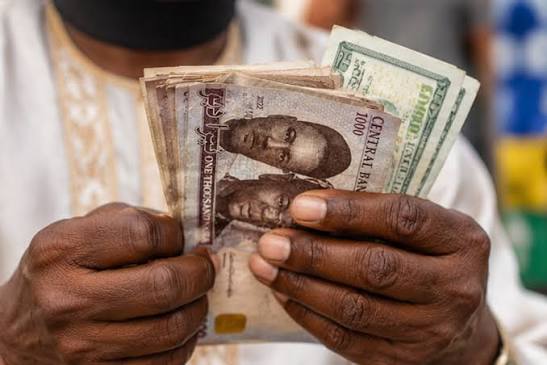
The naira closed at N1,394 to the dollar at the official foreign exchange market on Friday, November 20, 2026. That extended a losing streak that began midweek. The currency lost N6 on Friday. It had already lost N8.01 on Thursday, closing at N1,388/$, and N16.99 on Wednesday, when it slipped to N1,379.99/$ from N1,363/$ on Tuesday. In three trading sessions, the official rate weakened by N31, or about 2.3 percent. Market data suggest Friday's close was the naira's weakest official level since at least late October. The pressure is sharper on the street. At the parallel market, the naira traded at N1,460/$ on Sunday, November 22, down from N1,440/$ on Thursday and N1,375/$ a month earlier. That is a slide of roughly 6 percent in about four weeks. The gap between the official and parallel rates has widened to about N66, or close to 5 percent. Some currency dealers said they were willing to offer better rates to buyers of large volumes, which suggests the market still has dollars to sell even as prices rise. Analysts and traders link the renewed pressure to two seasonal forces arriving together. The first is year-end festive demand for dollars, driven by travel, imports and overseas payments. The second is the early build-up to the 2027 general elections, when political spending has historically been linked to stronger demand for hard currency. The weakness so far is modest compared with the naira's collapse in 2023 and early 2024. But it tests the credibility of the Central Bank of Nigeria's (CBN) foreign exchange reforms. It also threatens the hard-won slowdown in inflation and raises questions for households, businesses and neighboring economies, including Ghana, that trade closely with Nigeria.
The numbers are small on any single day. Six naira on Friday. Eight naira on Thursday. Seventeen naira on Wednesday. Taken one at a time, none of these moves would alarm a seasoned currency trader in Lagos. Together, they tell a different story.
On Tuesday, November 17, the naira closed at N1,363 to the dollar at Nigeria's official foreign exchange market. By Friday, it had fallen to N1,394. In three sessions, the currency lost N31, about 2.3 percent of its value. Wednesday's drop of N16.99, to N1,379.99/$, was the sharpest. Thursday added another N8.01, taking the rate to N1,388/$. Friday's N6 decline pushed the naira close to the symbolic N1,400 line that analysts have been watching for weeks.
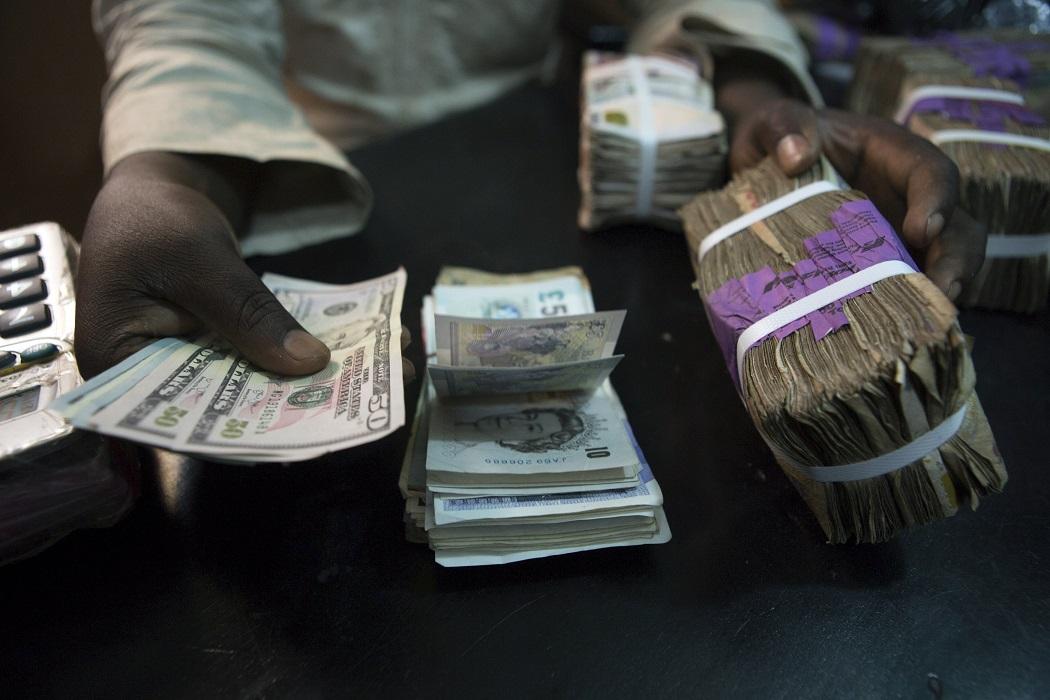
On the street, the move has been faster. At the parallel market, where bureau de change operators and informal dealers buy and sell cash dollars, the naira traded at N1,460/$ on Sunday. It had been at N1,440/$ on Thursday. A month earlier, it changed hands at about N1,375/$. In other words, the street rate has lost roughly N85 in four weeks. The parallel naira is now weaker than the official naira by about N66, a gap of close to 5 percent.
That gap matters more than the headline rate. For most of the past two years, Nigeria's economic managers have worked to close the distance between the official and parallel markets. A narrow gap is one of the clearest signs that a currency regime is working. It shows that people who need dollars can mostly get them through formal channels, at prices close to what the street charges. A widening gap signals the opposite. It suggests demand is spilling out of the official system into informal markets, where buyers are willing to pay a premium for speed, cash or anonymity.
There is one detail in the market reports that cuts against the alarm. Some currency traders said they were willing to offer lower rates to buyers purchasing large volumes. That is not what a market in panic looks like. In the worst periods of Nigeria's recent currency history, dealers hoarded dollars, rationed them and charged more for big orders, not less. A dealer offering a volume discount has dollars to sell and wants to move them. That suggests liquidity remains in the system and that, at least for now, the pressure reflects demand rising faster than supply rather than a collapse in supply itself.
So the honest reading is mixed. The naira is under renewed pressure. The direction of travel in November has been clearly downward. But the market has not broken, and the moves so far are measured in single-digit percentages, not the 30 and 40 percent plunges Nigerians lived through after 2023. The question is whether this is a seasonal wobble that fades in January, or the start of a longer slide as the country heads into a high-spending election year.
To answer that, it helps to look at the two forces most often blamed for the current pressure.
The first is the calendar. Every year, demand for dollars rises in Nigeria as December approaches. Importers stock up on goods for the festive season, from rice and vegetable oil to electronics, clothing and spare parts. Many need foreign currency to pay suppliers abroad before shipments leave port. Families pay for international travel. Students abroad need fees and upkeep for the next term. Companies settle foreign obligations before closing their books for the year. Some Nigerians buy dollars simply as a store of value before the holidays, when banks slow down and access to formal channels becomes harder.
That seasonal demand is predictable. What makes it harder to manage is that supply does not always rise to match it. The festive season does bring some dollars into the country. Diaspora Nigerians often send more money home in December. Many visit, bringing foreign cash that eventually lands in bureau de change counters and bank accounts. The phenomenon popularly known as "Detty December" has turned Lagos into a destination for returning Nigerians and foreign visitors, many spending in dollars or converting at the street rate. In some years, these inflows have helped steady the parallel market late in the month. But the timing rarely lines up neatly. Importers and travelers need dollars in November and early December. Diaspora inflows tend to peak later, often around Christmas itself. That mismatch can push rates weaker before they stabilize.
The second force is politics, and it is more contentious.
Nigeria's next general elections are due in 2027. Although voting is still some way off, the political machinery is already turning. Aspirants are building coalitions, courting party structures and preparing for primaries. Campaign organizations are forming. Money is starting to move. In Nigeria, as in many democracies, elections are expensive. Candidates and parties spend heavily on travel, rallies, media, mobilization and logistics. Some of that spending is perfectly legal. Some of it is not.
For decades, Nigerian elections have been associated with a specific kind of currency demand. Politicians and their allies have often preferred to hold and move campaign funds in US dollars. Dollar notes are compact. A large sum fits in a small bag. They hold their value better than naira during periods of inflation. They are also harder to trace than bank transfers. Reports from past election cycles, including the party primaries ahead of the 2023 elections, described delegates allegedly receiving payments in foreign currency. Those claims were widely reported and widely denied, and few were ever tested in court. But the perception that election seasons drive dollar hoarding is deeply rooted among traders, analysts and ordinary Nigerians.
If that pattern repeats, the effect on the currency market is straightforward. Politically connected buyers acquire dollars ahead of the primaries and campaigns. They tend to buy in cash, through informal channels, often in large volumes. They are less sensitive to price because the money is being spent for political, not commercial, purposes. That kind of demand pushes the parallel rate weaker and widens the gap with the official market. It also removes dollars from circulation for months, reducing the supply available to importers and families.
It is important to treat this argument with care. There is no hard, public data that separates "political" dollar demand from ordinary demand. Bureau de change operators do not report how much of their business comes from campaign finance. The link between elections and currency pressure is based on patterns, market commentary and the timing of past episodes, not on precise measurement. It is also true that the 2027 cycle is still early. The heaviest spending, if it follows past patterns, would usually come closer to party primaries and the campaign proper. The current pressure may reflect anticipation of that spending, with traders and savers buying dollars now because they expect the naira to weaken later. Expectations can become self-fulfilling in currency markets.
History gives that expectation some weight. In the run-up to the 2015 elections, the CBN devalued the naira in November 2014, as oil prices collapsed and political uncertainty grew. In February 2015, it closed its main dollar auction window, and the official rate slid further. The combination of falling oil revenue and a tense contest between President Goodluck Jonathan and Muhammadu Buhari put heavy pressure on the currency. The 2019 cycle was calmer, partly because the CBN had introduced the Investors' and Exporters' window, which brought in portfolio dollars and kept the official rate stable. The 2023 cycle was chaotic in a different way. The CBN's naira redesign and cash withdrawal limits, introduced months before the vote, caused severe cash shortages and disrupted the economy. The parallel market naira swung wildly during that period.
Each of those episodes was shaped by unique conditions. But they share a common thread. Election years in Nigeria tend to bring uncertainty, heavier government and private spending, and stronger demand for safe-haven assets. The dollar is the most important of those assets. Investors also tend to wait. Foreign portfolio investors, who bring dollars into Nigerian bonds and treasury bills, often slow their inflows or pull money out as elections approach, waiting to see who wins and what policies follow. That can reduce dollar supply just as demand rises.
To understand why this matters so much now, Nigerians need to remember how far the naira has traveled since 2023.
When President Bola Tinubu took office in May 2023, Nigeria's foreign exchange system was deeply broken. The official rate was held artificially strong, at around N460 to the dollar, while the parallel market traded far weaker. Dollars at the official rate were rationed. Many businesses could not get them at all. A large backlog of unpaid foreign exchange obligations had built up, and foreign investors struggled to take their money out of the country. The gap between the official and street rates created huge opportunities for arbitrage. People with access to cheap official dollars could resell them on the street at a large profit. Critics argued the system rewarded connections more than productivity.
In June 2023, the CBN moved to unify the country's multiple exchange rate windows and let the naira trade closer to market levels. The decision was historic. It was also brutal. The naira fell sharply, first to around N750 to the dollar and then much further. By early 2024, the official rate had moved past N1,500 at its weakest points, while the parallel rate went higher still. In a matter of months, the naira lost most of its value against the dollar. Combined with the removal of the petrol subsidy, announced on Tinubu's inauguration day, the devaluation sent prices soaring.
Under Governor Olayemi Cardoso, who took charge of the CBN in September 2023, the central bank followed unification with a broader package of reforms. It raised interest rates aggressively to fight inflation and attract investors. It worked to clear the backlog of foreign exchange obligations. It tightened rules on bureau de change operators. It introduced the Electronic Foreign Exchange Matching System, which went live in December 2024 and was designed to make official trading more transparent by matching buyers and sellers electronically and publishing trades in real time. It also pushed to restore confidence among foreign portfolio investors.
Those reforms helped. Through 2025, the naira stabilized and then strengthened from its weakest levels. Foreign portfolio inflows returned. Nigeria's external reserves climbed above $40 billion during 2025, according to CBN data, giving the central bank more room to support the market when needed. The gap between official and parallel rates narrowed significantly, at times to just a few percent. The rates seen in recent weeks, in the N1,360 to N1,400 range at the official market, point to a currency that has recovered meaningful ground from its worst point, even after this month's decline.
That recovery is precisely why the current slippage draws attention. Nigeria's reform program rests heavily on credibility. Investors, businesses and households have been asked to trust that the new system is market-based, transparent and stable enough to plan around. Every episode of renewed weakness tests that trust. If the naira weakens moderately in response to seasonal demand and then recovers, the system looks healthy. A flexible currency is supposed to move. If the weakness deepens, the parallel premium widens and the CBN is seen to be scrambling, confidence could erode quickly.
The central bank has several tools available. The most direct is intervention. With reserves at elevated levels compared with 2023, the CBN can sell dollars into the official market to meet demand and slow the naira's fall. It has done this before, often without public announcement, and market participants watch daily trading volumes for signs of it. Intervention works best when it smooths temporary pressure rather than fighting a lasting trend. If the bank spends heavily to defend a particular level and fails, it risks losing reserves and credibility at the same time.
The second tool is interest rates. The CBN's high policy rate has helped attract foreign investors to naira assets, bringing in dollars. The bank had begun to ease policy as inflation slowed, but any sustained currency weakness could make it more cautious about further cuts. Higher rates support the naira but weigh on borrowing, investment and growth. That trade-off becomes harder in an election cycle, when governments generally want stronger growth and cheaper credit.
The third set of tools is regulatory. The CBN can tighten oversight of bureau de change operators, enforce rules on cash dollar transactions and monitor unusual flows. It has used such measures in the past. Critics argue that heavy-handed controls can push activity further underground and recreate the distortions the reforms were meant to remove. Supporters say some rules are needed to stop speculation and money laundering, especially in a period when political cash may be moving.
Then there is communication. In currency markets, what a central bank says can matter as much as what it does. Clear signals that the bank is watching the market, has adequate reserves and will act to prevent disorderly moves can calm traders. Silence or mixed messages can feed speculation. As the election approaches, the CBN will also face pressure to show it is independent of politics. Any perception that monetary policy is being bent to suit electoral goals would damage confidence.
None of these tools works in isolation from the broader economy. Nigeria's currency ultimately depends on how many dollars the country earns and how many it needs. Oil remains the largest source of export earnings and government revenue. Crude production has improved in recent years after a period of heavy theft and pipeline vandalism, but output and prices both matter. Global oil prices can swing for reasons far beyond Nigeria's control, from OPEC+ decisions to wars and shipping disruptions. When oil earnings fall, the CBN has fewer dollars to work with. When they rise, the naira has more support.
Non-oil exports, diaspora remittances and foreign investment are the other main sources of dollars. Remittances are especially important. Nigerians abroad send home tens of billions of dollars a year, according to World Bank estimates, making the country one of the largest remittance recipients in Africa. The unification of exchange rates encouraged more of those funds to flow through formal channels, because the official rate became closer to the street rate. If the parallel premium widens again, some of that money could shift back to informal routes, reducing the dollars available to the official market. That is one reason a widening gap can become self-reinforcing.
The domestic refinery story also matters. The Dangote refinery and the expected recovery of other refining capacity were meant to reduce Nigeria's huge bill for imported petrol, diesel and aviation fuel. Fuel imports have historically been one of the biggest sources of dollar demand. Any progress in local refining eases pressure on the naira. Any setback, whether from supply disruptions, crude feedstock problems or policy disputes, adds to it.
For ordinary Nigerians, the exchange rate is not an abstract number on a trader's screen. It shows up in market prices within weeks.
Nigeria imports a large share of what it consumes, from wheat and sugar to pharmaceuticals, machinery and electronics. Even locally produced goods often depend on imported inputs. Bread needs imported wheat. Poultry farmers need imported feed ingredients and vaccines. Manufacturers need imported machine parts and raw materials. When the naira weakens, all of these become more expensive in local currency. Businesses pass on those costs. Consumers pay more.
That link between the currency and prices is one of the main reasons inflation surged after 2023. The devaluation and subsidy removal together pushed inflation to its highest levels in nearly three decades. Food prices rose especially fast, hurting the poorest households most. In early 2025, the National Bureau of Statistics rebased the consumer price index, changing the base year and updating the basket of goods. The rebased figures showed a lower inflation rate, and inflation continued to ease through 2025 as the naira stabilized. Many economists credited the stronger currency, along with tighter monetary policy, for much of that improvement.
That is why even a modest depreciation now carries risk. A slowdown in inflation built partly on a steady naira can reverse if the naira weakens for long. The effect would not be immediate. Prices respond to exchange rate changes with a lag, and a 2 to 6 percent move is far smaller than the shocks of 2023 and 2024. But the festive season already brings higher prices for food, transport and household goods. If currency weakness adds to that, many families will feel a squeeze in December and January.
Traders and shoppers in Lagos markets often describe the naira in practical terms. When the dollar rate rises, importers reprice their goods, sometimes the same day. Retailers follow. A bag of rice, a carton of noodles, a phone charger or a set of car tires can cost noticeably more within weeks. Some sellers raise prices in anticipation, even before their own costs rise, to protect themselves against further weakness. That behavior can make inflation stickier, especially when people expect the currency to keep falling.
Businesses face their own challenges. Companies that import inputs must decide whether to buy dollars now, before the rate weakens further, or wait in the hope that the naira recovers. Firms that borrowed in dollars see their debt burdens rise in naira terms. Multinationals that repatriate profits get fewer dollars for the same naira earnings. Small businesses, which often lack access to formal FX channels, may turn to the parallel market and pay the higher rate. For many firms, the bigger problem is not the level of the exchange rate but its unpredictability. A stable rate, even a weak one, allows planning. A moving rate forces companies to build in buffers and charge more.
There are winners too. Exporters earn more naira for every dollar they bring home. Nigerian manufacturers that compete with imports gain some price advantage. Families receiving remittances from abroad get more naira for each dollar sent. Diaspora Nigerians visiting for Christmas will find their dollars stretch further in Lagos, Abuja and Port Harcourt. Over time, a more competitive exchange rate is supposed to encourage local production and reduce dependence on imports. That is part of the logic behind the reform program. But those benefits take years to build, while the costs of a weaker currency arrive quickly.
Savers face a familiar dilemma. Many Nigerians who lived through the currency shocks of recent years now keep some savings in dollars as protection. When the naira starts to weaken again, the instinct to convert grows stronger. That behavior is rational for individuals. Collectively, it adds demand for dollars and can deepen the depreciation. Breaking that cycle requires confidence that the naira will hold its value, which in turn depends on credible policy, stable inflation and adequate reserves.
The political dimension adds a further layer of uncertainty. Governments approaching elections often face pressure to spend more. Higher spending can mean larger budget deficits, more borrowing and, in some cases, more money creation. In the past, Nigeria's central bank financed large amounts of government spending through its "Ways and Means" overdraft facility, a practice economists blamed for fueling inflation and weakening the naira. The current CBN leadership has said it will not repeat that approach. Keeping that promise during an election cycle will be an important test.
Fiscal discipline matters because markets look ahead. If investors believe the government will loosen spending sharply before 2027, they may expect higher inflation and a weaker naira, and move their money accordingly. If they see a credible budget and a central bank that holds its line, they may stay. That makes the 2027 budget process, revenue performance and borrowing plans as important to the naira's outlook as anything happening at bureau de change counters.
The opposition will no doubt seize on the naira's weakness as evidence that the government's economic program is failing. The government will point to the recovery since 2024, higher reserves and lower inflation as proof that reforms are working. Both narratives will shape how voters see the economy. In truth, the currency's path will depend on a mix of policy, politics, oil markets and global conditions that no single side fully controls. A few weeks of depreciation do not prove the reforms have failed. Nor does the recovery of the past two years guarantee stability through an election year.
There is also a global backdrop. Interest rates in the United States and other major economies influence how much foreign capital flows to emerging markets like Nigeria. When US rates are high, investors have less reason to take risks in frontier markets. When they fall, money tends to flow outward in search of higher returns. Geopolitical tensions, trade disputes and shocks to commodity prices can all shift these flows quickly. Nigeria's currency, like those of other emerging economies, is exposed to these forces regardless of domestic policy.
For readers in Ghana and across West Africa, the naira's movements are more than a neighbor's problem.
Nigeria is by far the largest economy in West Africa, and its currency affects trade across the region. Ghanaian traders who buy goods in Nigeria, from textiles and cosmetics to food products and building materials, see their costs change with the naira. A weaker naira makes Nigerian goods cheaper in cedi terms, which can help Ghanaian importers and consumers. It can also make it harder for Ghanaian manufacturers to compete with Nigerian products in their own market and in shared regional markets. Informal cross-border trade along the Lagos-Abidjan corridor, which passes through Benin and Togo, responds quickly to these shifts.
Ghanaian businesses operating in Nigeria, and Nigerian businesses operating in Ghana, also feel the effects. Nigerian banks, telecom firms, insurers and manufacturers have a strong presence in Ghana. Ghanaian investors hold stakes in Nigerian firms. Currency movements change the value of earnings, investments and dividends crossing the border. A sustained naira slide reduces the cedi value of Nigerian earnings for Ghanaian stakeholders, and vice versa.
There is a human side too. Thousands of Nigerian students attend universities in Ghana, paying fees in cedis or dollars. When the naira weakens, their families must spend more naira to keep them in school. Nigerian professionals and traders living in Ghana send money home, and their remittances are worth more in naira. Ghanaians in Nigeria face the reverse calculation.
Ghana also offers a mirror. The cedi has its own history of election-season pressure. In election years, Ghana has often seen higher government spending and currency weakness, followed by painful adjustments. The country's severe debt crisis, which led to a default in 2022 and an IMF-backed recovery program, showed how quickly currency, inflation and debt problems can reinforce one another. The cedi's strong rebound in 2025, after years of decline, showed how quickly confidence can return when inflation falls and policy steadies. Ghanaian readers will recognize the dynamics now playing out in Nigeria: seasonal demand, political spending, central bank intervention and the constant battle to keep the official and street rates close together.
At the regional level, the naira's stability matters for broader economic integration. The African Continental Free Trade Area and the Pan-African Payment and Settlement System were designed in part to reduce dependence on the US dollar for trade between African countries. If businesses in Lagos and Accra could settle trades directly in naira and cedis, they would need fewer dollars and face less exposure to swings in the greenback. Progress has been gradual. Volatile local currencies make such arrangements harder to build, because traders prefer to hold the currency they trust most. A stable naira would help the region reduce its reliance on the dollar. An unstable one strengthens the dollar's grip.
ECOWAS has long discussed a common currency, the Eco, though repeated delays and disagreements over design and timing have stalled the project. Nigeria's size makes its monetary policy decisive for any such plan. Persistent volatility in the naira, especially if linked to election cycles, is one reason other member states have been cautious about tying their currencies to Nigeria's. The current episode will not change that debate overnight, but it reinforces existing concerns.
What happens next will depend on a few key signals.
The first is the gap between the official and parallel markets. If the gap stays at around 5 percent or narrows, the current weakness looks like normal seasonal movement within a working system. If it widens toward 10 percent or more, that would suggest deeper stress and possible leakage of demand into informal channels.
The second is the CBN's response. Watch for signs of intervention in official trading, changes in reserve levels and any shift in the tone of the central bank's statements. A calm, confident posture backed by evidence of adequate reserves would support the market. Sudden regulatory crackdowns or emergency measures would suggest concern.
The third is the behavior of foreign portfolio investors. If they continue to hold Nigerian assets through the festive season and into the early election year, the naira will have support. If they begin to exit, pressure could build quickly.
The fourth is the pattern after Christmas. If diaspora inflows and lower import demand in January help the naira recover, the current slide will look seasonal. If it continues into the new year, as political activity intensifies, the election-pressure argument will gain weight.
The fifth is fiscal policy. The government's spending plans for 2027, how it funds them and whether the central bank holds firm on financing will shape expectations for inflation and the currency.
There is also a question of scale and perspective that is easy to lose in daily headlines. The naira at N1,394 to the dollar is weaker than it was a week ago. It is still considerably stronger than it was at its weakest point in early 2024. A move of N31 in three sessions is meaningful, but it is not a crisis. The parallel market's slide of about N85 in a month is more concerning, yet the willingness of dealers to offer discounts for large purchases suggests dollars remain available. The current episode looks less like a collapse and more like a stress test.
Stress tests, though, reveal weaknesses. Nigeria's economy still depends heavily on oil, still imports much of what it consumes, and still struggles to attract steady long-term foreign investment. Its election cycles still carry a reputation for heavy cash spending. Its citizens still remember how fast the naira lost value in 2023 and 2024, and many act quickly to protect themselves at the first sign of weakness. Those structural realities make the currency vulnerable to exactly the kind of seasonal and political pressure now building.
The reform program has made progress. The exchange rate is more market-driven. The official and parallel markets are closer than they have been in years. Reserves are higher. Inflation has eased from its peak. Foreign investors are more willing to engage. These are real gains. But they were achieved during a period without the added strain of a national election. The months ahead will show whether the new system is strong enough to absorb the pressures of an election year, or whether old patterns return.
For a trader in Balogun Market or a family planning Christmas in Enugu, those big questions translate into simple ones. Will prices rise again? Should I buy dollars now? Will my salary stretch through January? The answers depend on decisions made in the CBN's offices in Abuja, in party headquarters, in the budget office and in oil markets thousands of miles away.
The naira has slipped before, and it has recovered before. What Nigerians want now is not a perfect exchange rate but a predictable one. They want to know that seasonal demand will not turn into a spiral, and that election spending will not again come at the expense of their savings and their grocery bills. Over the next few months, the country will find out whether its hard-won reforms can deliver that predictability when politics and the calendar push hardest.