THE SAME WASHINGTON THAT THREATENED NIGERIA NOW APPLAUDS ITS MILITARY: US PRAISES RESCUE OF 125 KIDNAP VICTIMS, BUT MILLIONS OF NIGERIANS STILL LIVE AT THE MERCY OF GUNMEN
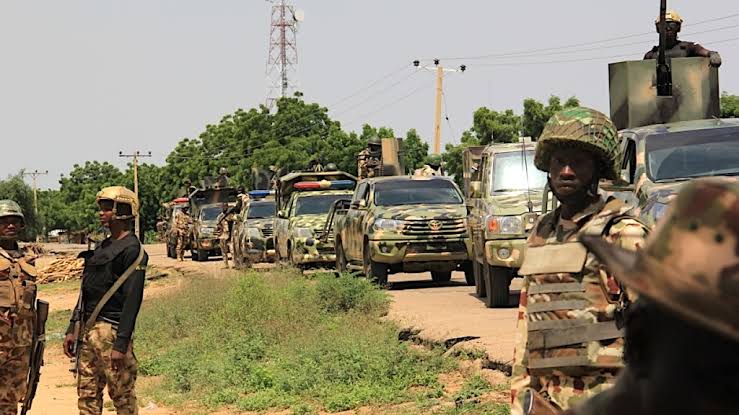
The United States has praised the Nigerian military for operations this month that rescued 125 kidnapping victims and dismantled terrorist camps across the country. The US Bureau of African Affairs made the commendation on Wednesday in a statement posted on its X handle. It also praised the recovery of weapons and the clearance of explosive devices. "The United States commends Nigerian military operations this month that have rescued 125 kidnapping victims, along with the dismantling of Islamic terrorist camps, the recovery of weapons, and clearance of explosive devices," the statement read. The praise marks a clear change in tone from Washington. About a year ago, the US designated Nigeria a Country of Particular Concern and openly threatened military action over the killing of Christians. The commendation is a diplomatic win for Abuja. It also raises hard questions at home. Is the recognition deserved? Does it reflect real progress? And will it mean anything for the millions of Nigerians who still travel, farm and send their children to school in fear of kidnappers and armed groups?
For once, the message from Washington about Nigeria's security was praise, not a warning. The United States has publicly commended the Nigerian military for operations this month that rescued 125 kidnapping victims and dismantled terrorist camps in different parts of the country.
The US Bureau of African Affairs, the arm of the State Department that handles relations with countries south of the Sahara, posted the commendation on its X handle on Wednesday. It praised the rescues and the destruction of terrorist hideouts. It also praised the recovery of weapons and the clearance of explosive devices, the roadside bombs and improvised mines that have killed and maimed soldiers and civilians for more than a decade.
"The United States commends Nigerian military operations this month that have rescued 125 kidnapping victims, along with the dismantling of Islamic terrorist camps, the recovery of weapons, and clearance of explosive devices," the statement read.
It was only a few lines on social media. But in diplomacy, a few lines can say a lot, especially when you remember where the relationship stood not long ago.
In late 2025, Nigeria and the United States were at their most tense point in years. Washington designated Nigeria a Country of Particular Concern over religious freedom, a label usually reserved for governments accused of tolerating or committing severe violations. President Donald Trump went further. He warned that the United States could take military action in Nigeria if the killing of Christians continued, and he used language that alarmed many in Abuja and across Africa. Nigerian officials rejected the framing. They insisted that terrorists and bandits in Nigeria kill Muslims and Christians alike, and that the country's security crisis is far more complicated than a single religious story.
Against that background, a public pat on the back from the State Department is a significant change in tone. Washington has gone from threatening to act on its own in Nigeria to praising the Nigerian military for doing the job itself. For the federal government and the Armed Forces of Nigeria, that is a diplomatic win they will welcome and almost certainly promote.
The wording of the statement still deserves attention. The phrase "Islamic terrorist camps" reflects the way the current US administration frames violence in Nigeria. Many Nigerian officials, religious leaders and security analysts prefer to avoid labels that tie terrorism to any faith. They point out that the victims of Boko Haram, the Islamic State West Africa Province (ISWAP) and bandit gangs include huge numbers of Muslims in the northeast and northwest. The same words that read as plain description in Washington can sound loaded in a country where religion and ethnicity are sensitive fault lines. The praise is real, but so is the reminder that Washington still sees Nigeria's crisis through its own lens.
There is also a question many Nigerians will ask right away. Are 125 rescues a lot, or a little?
For the 125 people who are now free, and for their families, the answer is simple. Every rescued person is a life returned. It is a mother back with her children, a farmer back on his land, a student back in a classroom. Kidnap victims in Nigeria are often held for weeks or months in forest camps. They are beaten, starved and threatened while their families scramble to raise ransom money. Any operation that brings them home without that ransom changes lives.
But measured against the scale of the crisis, the number looks small. A survey by the National Bureau of Statistics estimated that Nigerians suffered about 2.2 million kidnapping incidents in just one year, between May 2023 and April 2024. The same survey estimated that families paid around ₦2.2 trillion in ransom during that period. Even if those figures are rough, they paint a terrifying picture. Kidnapping in Nigeria is not a rare crime. It is a business, and in some areas it is a way of life for armed gangs.
Mass school abductions have become one of the most painful symbols of that crisis. The world first took notice in 2014, when Boko Haram seized 276 schoolgirls from Chibok in Borno State. Many of them are still missing years later. Since then, abductions have hit schools in Zamfara, Katsina, Kaduna, Kebbi, Niger and other states. In March 2024, gunmen took schoolchildren from Kuriga in Kaduna State. Just last November, Nigerians watched in horror as schoolgirls were abducted in Kebbi State and hundreds of pupils and staff were seized from a Catholic school in Niger State. Each attack forced schools to close and parents to choose between education and safety.
The violence takes many forms. In the northeast, Boko Haram and ISWAP have waged an insurgency since 2009 that has killed tens of thousands of people and displaced millions. In the northwest, armed gangs commonly called bandits raid villages, steal cattle, tax farmers and kidnap travelers on major highways. Newer groups such as Lakurawa have emerged in the border areas with Niger. In the North Central region, attacks on farming communities in states like Plateau and Benue have left villages burned and families in mourning. In parts of the southeast, separatist violence and criminal gangs have created their own climate of fear.
To respond, the Nigerian military is stretched across almost every part of the country. Operation Hadin Kai fights insurgents in the northeast. Operation Fansan Yamma targets bandits in the northwest. Operation Safe Haven and Operation Whirl Stroke deal with violence in the North Central states. Troops are deployed in nearly all 36 states, often doing work that police would handle in other countries. Air strikes, ground raids, forest clearance operations and checkpoint duties go on daily. Soldiers face ambushes, roadside bombs and long deployments far from home, often with equipment and welfare concerns that have drawn public complaints.
That is why the mention of explosive devices in the US statement matters. Improvised explosive devices have become a deadly weapon for insurgents in the northeast and, increasingly, in other regions. They are planted on roads used by troops, farmers and traders. Clearing them saves lives that never make the headlines, because the bomb that is found and destroyed never kills anyone. The recovery of weapons matters too. Every rifle and box of ammunition taken off armed groups is one less tool for the next raid on a village.
Still, praise from abroad does not end the debate at home. Many Nigerians have grown tired of military announcements that list numbers of rescued victims, neutralized terrorists and destroyed camps while attacks continue elsewhere. Critics say operations often push armed groups from one forest to another rather than defeating them. They point to communities that are attacked again weeks after troops leave. Some ask why kidnap kingpins whose names are widely known in their areas remain free. Others raise concerns about civilian casualties in air strikes, including past incidents in which villagers were mistakenly killed.
Supporters of the military see things differently. They argue that soldiers are fighting several wars at once over a vast territory with dense forests and porous borders. They say the armed forces rarely get credit when things go right and always get blamed when things go wrong. To them, an outside commendation from a major world power is recognition that Nigerian troops are making real sacrifices and achieving real results.
Both sides have a point. The truth on the ground is mixed. There are areas where security has improved and communities are rebuilding. There are others where fear is as strong as ever.
What makes this commendation especially important is what it suggests about the direction of US-Nigeria relations. Washington and Abuja need each other. Nigeria is Africa's most populous country, one of its largest economies and a key player in West African security. Instability in Nigeria can spread across the Sahel, a region where military coups, jihadist expansion and the withdrawal of Western forces have changed the security map in recent years. With Mali, Burkina Faso and Niger now outside the regional bloc ECOWAS and turning to other partners, Nigeria has become even more central to American thinking about the region.
For Nigeria, the United States remains an important source of military equipment, training and intelligence. Nigeria has bought American aircraft, including the A-29 Super Tucano light attack planes used against insurgents. Closer security cooperation could mean better intelligence sharing, more training and faster access to equipment. Public praise often signals that relations are warming behind closed doors.
That warming could carry both benefits and risks. Greater cooperation could strengthen Nigeria's ability to track and strike armed groups. It could also bring more outside pressure on how operations are run, including on human rights and the protection of civilians. Nigeria will want help on its own terms. It does not want to be lectured or treated as a battleground for someone else's priorities. How both governments manage that balance will shape the relationship in the months ahead.
For ordinary Nigerians, however, foreign praise matters far less than daily safety. A trader in Kaduna still worries about the Abuja-Kaduna highway. A farmer in Benue still wonders whether this season's harvest will be safe to collect. A mother in Zamfara still thinks twice before sending her daughter to school. A family in Katsina may still be selling land or borrowing from relatives to pay a ransom. For these Nigerians, the real test is not what is said in a statement in Washington. It is whether they can sleep, travel, farm and learn without fear.
Insecurity also feeds directly into the cost of living. When farmers cannot reach their fields, food production drops and prices rise. When highways are dangerous, transporters charge more, and those costs end up in market prices. When communities flee their homes, they lose income and depend on aid. Kidnapping drains savings from families who are already struggling. In many ways, Nigeria's security crisis and its economic crisis are the same crisis seen from two angles.
That is why the military's success, if it continues, could be felt far beyond the battlefield. Safer roads mean cheaper goods. Safer farms mean more food. Safer schools mean a better educated next generation. But those gains depend on more than military raids. Security experts have long argued that lasting peace requires better policing, stronger local governance, real prosecution of kidnappers and their sponsors, control of arms smuggling, and economic opportunities for young people who might otherwise be recruited by armed groups.
The rescued 125 deserve to be celebrated. So do the soldiers who carried out these operations, often at great personal risk. The recognition from the United States is a sign that Nigeria's efforts are being noticed at the highest levels of foreign policy. It may also signal that the harsh rhetoric of the past year is giving way to a more practical partnership.
But the deeper challenge remains. Nigeria cannot measure victory by a single month of good results or a single statement of praise. It will measure it by the day kidnapping stops being a booming industry, when schools no longer need armed guards and families no longer keep ransom money in mind every time a loved one travels.
Until that day comes, the applause from Washington will sound good in Abuja. In the villages, on the highways and in the forest communities where the war is actually fought, people are still waiting for the peace that statements cannot deliver.