ADICHIE'S SON DIED. EURACARE SAYS IT IS NOT THEIR FAULT. A COURTROOM WILL NOW DECIDE.
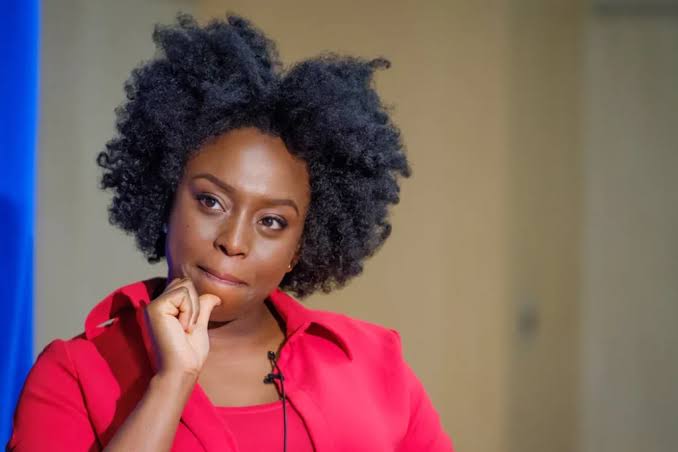
The Lagos State Coroner's Court has fixed January 19, 2027, to begin the inquest into the death of Nkanu, son of world famous author Chimamanda Ngozi Adichie and her husband, Dr. Ivara Esege. Nkanu died on January 7, 2026, while receiving medical treatment at Euracare Multi Specialist Hospital in Lagos. The Coroner, Magistrate Atinuke Adetunji, set the date on Wednesday, November 18, at the Magistrate Court in Igbosere, after lawyers for all parties agreed on how the inquest would run, including the order in which witnesses will testify. She directed every party to file and exchange sworn statements and to make their witnesses available. Adichie and Esege have accused the hospital of prima facie breaches of its duty of care, while Euracare has rejected the negligence allegations as inaccurate and unfounded. The case has become a national test of whether grieving families can get real answers when a loved one dies in a private Nigerian hospital, and of how far a coroner's inquest can go in delivering them.
Chimamanda Ngozi Adichie has spent her life turning private pain into words the whole world understands. Her novels have explored war, love, migration and loss. Her speeches have been quoted in classrooms, boardrooms and pop songs across five continents. Yet nothing she has ever written can soften the grief at the center of this story. Her son, Nkanu, died on January 7, 2026, while receiving medical treatment at Euracare Multi Specialist Hospital in Lagos. Nearly a year later, she and her husband are still searching for answers, and now a Lagos courtroom has been asked to find them.
On Wednesday, November 18, 2026, that search moved one step forward. The Lagos State Coroner's Court fixed January 19, 2027, as the start date for a full inquest into Nkanu's death. The Coroner, Magistrate Atinuke Adetunji, made the order while sitting at the Magistrate Court in Igbosere, Lagos Island. The date was set after lawyers representing all parties appeared before the magistrate and reached agreement on the modalities for how the inquest would proceed, including the order in which witnesses will be called to testify. Magistrate Adetunji then gave clear and firm directions. Every party must file and exchange their clients' statements on oath before the January date, and all parties must ensure their witnesses are ready when the inquest resumes.
Those procedural steps matter more than they might appear. Sworn statements commit each side to a version of events in writing, before they ever step into the hearing room. Exchanging them in advance removes the element of surprise and forces every party to look clearly at what the other side intends to say. When witnesses are required to be present, it reduces the risk of repeated adjournments that have swallowed years in many Nigerian legal proceedings and left grieving families waiting far longer than any parent should have to wait for answers about their child.
At the heart of the inquest is a sharp and painful disagreement. Adichie and Dr. Ivara Esege, a medical doctor himself, have accused Euracare of prima facie breaches of its duty of care in the treatment of their son. The Latin phrase "prima facie" means at first sight or on the face of it. The parents are not, at this stage, claiming a proven verdict. They are saying that, based on what the evidence already appears to show, the hospital failed in the standard of care it owed their child. That is a serious and carefully worded legal position, and one that the inquest will now be asked to examine.
Euracare has rejected every part of that accusation. The hospital has stated publicly that it denies all allegations of medical negligence and that the claims against it are inaccurate and unfounded. Euracare is a private, high end facility that positions itself among the top tier of Lagos healthcare, marketing specialist services that it says meet international standards. Its reputation, its license and the trust of its patients all sit inside this process now. Neither side's account has been tested in open court. The inquest beginning in January is precisely where that testing will take place, with witnesses under oath, records examined and lawyers on both sides asking the hardest possible questions.
Part of the reason this case has drawn such intense national attention is the woman at its center. Chimamanda Ngozi Adichie was born in Enugu and grew up in Nsukka, in a house on the campus of the University of Nigeria where her father was a professor of statistics. She began writing early and never stopped. Her debut novel, Purple Hibiscus, announced an extraordinary talent. Half of a Yellow Sun, her account of the Nigerian Civil War, won the Orange Prize for Fiction and reached readers around the world who had never thought about Biafra. Americanah dissected race, identity and belonging across three continents. Her TED talk, "We Should All Be Feminists," became a cultural landmark, sampled by Beyoncé and read in schools across Europe. Her more recent novel, Dream Count, returned her to the bestseller lists and confirmed that her voice had only grown stronger with time.
That global profile means very little in a moment of grief, but it means a great deal in public discourse. The attention this case has received is partly a reflection of her fame, and that is a double edged thing. It brings scrutiny to a case that might otherwise have been settled quietly, behind the walls of a private hospital and the closed doors of an insurance settlement. It forces questions into public view that the healthcare system would perhaps prefer not to answer. At the same time, it places a mother and a father who are still mourning their child inside a media story that moves on its own terms, faster and louder than grief ever does.
Through it all, what Adichie and Dr. Esege have asked for is something many Nigerians understand deeply and viscerally. They want to know what happened to their child. They want someone to explain, clearly and honestly, what went wrong. They want those who were responsible for Nkanu's care to account for every decision made in those final hours. That desire is not unique to powerful or famous families. It is what every parent who has watched a child die in a hospital ward and then walked out into the light with no explanation has wanted. The difference here is that this family has the resources, the legal counsel and the public platform to insist on an answer.
That is why the case feels personal to so many Nigerians who have never met Chimamanda Adichie and whose children have never been admitted to a facility like Euracare. Ask almost any Nigerian family about hospitals and you will hear a story. A relative who waited hours in an emergency ward before anyone checked their blood pressure. A misdiagnosis that was not caught until a second or third visit, by which time the window for treatment had narrowed. A hospital that demanded a deposit before it would admit a patient in crisis. A death that came with a death certificate but no explanation, no meeting, no honest account of what the doctors did and what they perhaps should have done differently.
Nigeria's public hospitals have been under immense strain for decades. Underfunding, broken equipment, persistent shortages of drugs and specialists, and the ongoing loss of trained medical staff to better paid positions abroad have left the system struggling to meet demand. The wave of emigration by Nigerian doctors and nurses, so widespread that it has been given its own name in the vernacular, has drained capacity from hospitals that were already under pressure. Those who remain work long shifts, often without adequate support, in institutions that cannot always give them the tools they need to do their jobs well.
Private hospitals emerged to fill the space, particularly for Nigerians wealthy enough to pay for them. Facilities like Euracare represent the top of that market. For many middle class and wealthy Nigerian families, choosing a private specialist hospital is a deliberate act of faith. They are paying not just for clean wards and new equipment, but for the belief that their loved ones will be safer there than in the public system. Nkanu's death has shaken that faith in a way that no corporate statement or denial can easily repair. If a family with every possible advantage, connections, education, money and a doctor in the household, can still find itself in a coroner's court demanding answers about how their child died in an elite hospital, many Nigerians are quietly asking what that means for them and their families when they walk into a facility with far less to offer.
Nigeria does have formal systems meant to oversee the practice of medicine. The Medical and Dental Council of Nigeria is responsible for registering practitioners and can discipline doctors for professional misconduct through its own disciplinary tribunal. The Lagos State Health Facility Monitoring and Accreditation Agency, commonly known as HEFAMAA, is empowered to register, monitor and sanction private health facilities operating in the state. Patients who believe they have suffered negligence may also pursue civil claims through the courts. In theory, these mechanisms exist precisely for cases like this one.
In practice, families who have tried to use these routes will tell you they are slow, expensive and difficult to navigate without specialist legal help. Medical negligence cases can run for many years before reaching any conclusion. Obtaining complete medical records from a hospital that is under scrutiny is not always straightforward. Finding independent medical experts willing to testify about the failings of colleagues can be difficult in a profession where relationships and reputations are closely guarded. Many families exhaust their savings, their energy and their years before receiving anything resembling a formal answer. Many more give up long before that point, not because they stopped wanting the truth but because the system made the cost of finding it too high to bear.
A coroner's inquest is a different kind of process, and it is worth explaining clearly what it can and cannot do, because public understanding of it is uneven. Under the Lagos State Coroners System Law, certain categories of death must be reported to the coroner and may be subject to formal investigation. These include deaths that are sudden, violent, unexplained, or that occur in circumstances requiring examination in the public interest. Deaths that happen during certain forms of medical care may fall within that category, depending on the specifics. Once a coroner decides to hold an inquest, the process becomes a public, formal fact finding hearing.
The coroner's job is to establish who died, when and where they died, and how the death came about. To do that, the coroner can hear testimony from witnesses, including doctors, nurses, hospital administrators and independent medical experts. The coroner can examine clinical records, laboratory results, pathology findings and any other documentation relevant to the patient's care. Lawyers representing the family and the hospital, and potentially others with an interest in the proceedings, can appear and ask questions. All of this takes place in public. Members of the press and the public can attend. The proceedings are part of the formal record.
At the conclusion of the inquest, the coroner delivers findings on the cause and circumstances of death. In Lagos, the coroner also has the power to make recommendations aimed at preventing similar deaths from occurring in the future. Those recommendations can extend far beyond the individual case. They can address hospital procedures, staff training protocols, emergency response standards, record keeping practices and the adequacy of regulatory oversight. A well conducted inquest can generate institutional lessons that save lives long after the case itself is closed.
What an inquest cannot do is equally important to understand. It is not a criminal trial. The coroner does not find anyone guilty of an offence. It is not a civil case. The coroner does not award damages or compensation to the family. It cannot order a hospital to close its doors or strip a doctor of their license. If the findings suggest that a criminal offence may have been committed, the matter can be referred to the police or the prosecutor's office for further investigation. If they point to professional misconduct, the relevant regulatory body can be invited to act. If the family chooses to pursue a civil claim for negligence, the evidence gathered during the inquest may become part of that wider legal process. But none of those consequences follows automatically from a coroner's finding. The inquest opens the door. It does not walk through every door itself.
Fairness demands that Euracare's position be treated with the same care as the family's. The hospital has denied the allegations clearly and in public. Its staff, the doctors and nurses who treated Nkanu, have their own professional records and reputations at stake. Medicine is a high pressure discipline in which decisions must sometimes be made under uncertainty, with incomplete information and in limited time. Not every death in a hospital is the result of negligence, and public opinion, particularly on social media where this case has been extensively discussed, can reach verdicts long before evidence is weighed. The inquest exists precisely to give every party a formal platform, to ensure that the hospital's account is heard in full, that its records can be presented, that its witnesses can be examined, and that any conclusion reached is based on evidence rather than emotion or assumption.
When the hearing opens on January 19, 2027, there will be many pairs of eyes on that courtroom in Igbosere for reasons that go beyond this single case. People will be watching to see whether the process moves efficiently or whether delays begin to pile up before the first witness has finished speaking. They will be watching to see whether the same rules and standards apply equally to a world famous family and a powerful private institution. They will be watching whether the coroner's findings, whatever they turn out to be, translate into any real and lasting change in how unexplained hospital deaths are investigated across Lagos and the rest of the country.
If the inquest is conducted well, it has the potential to do something genuinely important. It could strengthen public trust in the idea that formal accountability is possible in Nigerian healthcare, that grieving families do not have to accept silence, and that hospitals, regardless of how expensive or prestigious, cannot place themselves beyond scrutiny. It could prompt HEFAMAA and other regulatory bodies to sharpen their oversight of private facilities. It could encourage other families who have lost loved ones in similar circumstances to pursue formal answers rather than accepting that the system will never give them any.
If the inquest stalls, or if it concludes without clear and credible findings, it will confirm what many Nigerians already suspect. That accountability in this country depends more on who you are and who you know than on the strength of any institution. That the formal systems exist on paper but rarely deliver in practice. That grief, in the absence of power, goes unanswered.
For now, the instructions have been given. Sworn statements must be filed. Witnesses must be ready. The date has been set and agreed upon. What happens next depends on whether every party honors those commitments and whether the court holds the line when it matters.
Nothing that emerges from the January hearing will bring Nkanu back. No finding, no recommendation, no formal verdict, however thorough or however fair, can undo what happened on January 7, 2026. For Adichie and Dr. Esege, that is the irreducible fact at the center of everything. Their son is gone. The question they are carrying into that courtroom is not one that can be fully answered by any law or any coroner. But the question that can be answered, the question of how he died and whether the care he received met the standard it should have, is now formally before a court.
In a country where too many families bury their children without ever learning the truth, that is not nothing. It may, depending on what January brings, turn out to be a great deal more than nothing.
The world knows Chimamanda Ngozi Adichie as a storyteller. In January, she will sit in a Lagos courtroom, waiting for others to tell the story she most needs to hear.