N60 MILLION TO MAKE A PREGNANCY DISAPPEAR? EFCC DRAGS PRECIOUS CHIJIOKE TO COURT OVER ALLEGED ABORTION SCAM THAT EXPOSES NIGERIA'S DANGEROUS SECRET MARKET OF SHAME AND SILENCE
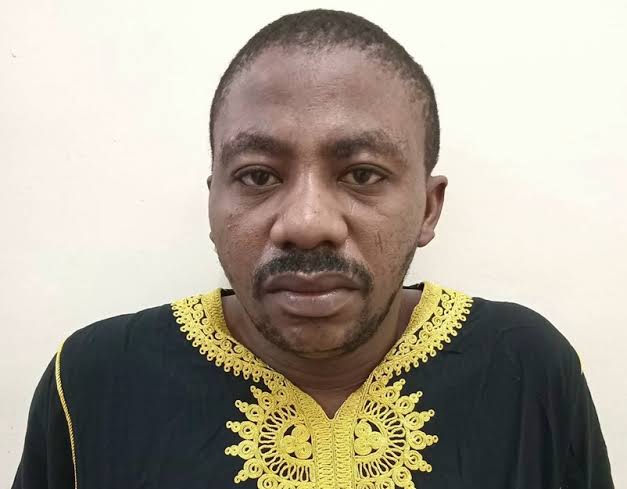
The Economic and Financial Crimes Commission (EFCC) has arraigned Precious Chibuike Chijioke before Justice M.S. Liman of the Federal High Court in Maitama, Abuja. The arraignment took place on Wednesday, November 18, 2026, and was handled by the commission's Abuja Zonal Directorate. Chijioke faces a one count charge of advance fee fraud. Prosecutors allege that between January and December 2025, he collected N60 million in instalments from a man named Jude Adegbayo. According to the charge, he did so by falsely claiming he would arrange the termination of a pregnancy involving a woman named Anita Iroughene Ero and would also take care of any complications that followed. The EFCC says he kept the money for himself. The alleged offence contravenes Section 1(1)(a) of the Advance Fee Fraud and Other Related Offences Act, 2026, and is punishable under Section 1(3) of the same law. Chijioke pleaded not guilty. His lawyer, Vincent Okondion, made an oral bail request on health grounds. Justice Liman told the defence to file a formal bail application and ordered that Chijioke be remanded at the Kuje Correctional Centre until that request is heard. Trial is set to begin on January 28, 2027. The case stands out for its unusual subject and its staggering sum. It also shines a light on a type of fraud that thrives on secrecy, fear and shame. Because abortion is heavily restricted under Nigerian law, people seeking it often avoid official channels and rarely speak up when something goes wrong. That silence can make them ideal targets. Chijioke is presumed innocent until proven guilty, and the court will decide whether the prosecution can prove its case.
Most fraud cases in Nigeria follow a familiar script. There is a fake investment, a fake contract, a fake visa or a fake romance. The case that opened at the Federal High Court in Maitama, Abuja, on Wednesday, November 18, 2026, is different. According to the Economic and Financial Crimes Commission, a man collected N60 million by promising to arrange a woman's abortion and to handle any medical complications that followed. The amount alone is startling. The nature of the promise is even more so. It touches on pregnancy, secrecy, fear and money, a mix that makes this one of the more unusual fraud prosecutions the commission has brought to court in recent memory.
The defendant is Precious Chibuike Chijioke. He was brought before Justice M.S. Liman by the EFCC's Abuja Zonal Directorate and arraigned on a single count of advance fee fraud. The charge covers a period of roughly one year, from January to December 2025. Prosecutors allege that during that time, Chijioke falsely represented to a man named Jude Adegbayo that he would facilitate the termination of a pregnancy involving a woman named Anita Iroughene Ero. He also allegedly promised to take care of any complications that arose from the procedure. Relying on those representations, the EFCC says, Adegbayo paid him N60 million in instalments, money the commission claims Chijioke obtained for his own benefit.
The charge sheet sets out the allegation in formal language. It states that the defendant, "sometimes between January 2025 to December 2025, in Abuja within the jurisdiction of the Honourable Court, by the false pretence that you were going to facilitate the termination of a pregnancy of one Anita Iroughene Ero, as well as take care of complications that arose from said termination… with intent to defraud obtained the sum of Sixty Million Naira (N60,000,000), in tranches for yourself, from one Jude Adegbayo." Notably, the charge as quoted refers to the defendant as Precious Chibuzor Chijioke, while the EFCC identified him as Precious Chibuike Chijioke. Small discrepancies like this sometimes surface in court documents and may be addressed as the case proceeds.
The commission says the alleged offence contravenes Section 1(1)(a) of the Advance Fee Fraud and Other Related Offences Act, 2026, and is punishable under Section 1(3) of the same Act. Advance fee fraud, at its core, involves obtaining money or property from someone through a false promise or pretence. The victim hands over money in advance, believing a service, benefit or outcome will follow. It never does, or it was never intended to. Nigeria's laws treat this kind of offence seriously, and convictions can carry significant prison terms.
Chijioke denied the allegation. When the charge was read to him, he pleaded not guilty. His lawyer, Vincent Okondion, then made an oral application for bail, citing his client's health condition. Justice Liman did not grant bail on the spot. Instead, the judge directed the defence to file a formal written bail application and ordered that Chijioke be remanded at the Kuje Correctional Centre while that application is heard and decided. The court then adjourned the case to January 28, 2027, for the start of trial. That means the defendant could spend weeks in custody before the bail question is settled, depending on how quickly the application comes before the court.
It is important to be clear about what the charge does and does not say. It is an allegation, not a finding of guilt. Chijioke is presumed innocent under the Nigerian Constitution until the prosecution proves its case beyond reasonable doubt. The charge also does not accuse Anita Iroughene Ero or Jude Adegbayo of any wrongdoing. The public record so far does not explain the relationship between Adegbayo and Ero, why Adegbayo was paying, whether an abortion was ever carried out, or what the "complications" mentioned in the charge involved. Those details may emerge at trial. Until then, speculation about the private lives of the people named in the case would be unfair and could cause real harm.
What the charge does reveal is a pattern that fraud investigators know well. The alleged scheme ran for about a year and involved payments in tranches rather than a single lump sum. That detail matters. Fraud built on repeated payments often relies on a slow escalation of demands. A person pays a first amount for a promised service. Then a new need appears. There is a complication, a new expense, a hospital bill, a specialist to pay, a problem that must be fixed urgently. Each new request comes with a reason that feels convincing in the moment. By the time the victim realizes something is wrong, the total has grown far beyond what they ever imagined spending.
Psychologists often describe this as the sunk cost trap. Once someone has invested money, time or emotion into something, it becomes harder to walk away. Stopping payment feels like admitting that everything already paid was wasted. So people keep paying, hoping the next payment will finally end the problem. Fraudsters understand this instinct and use it with precision. The mention in the charge of "complications" that arose from the termination fits neatly into this pattern. Complications create urgency, and urgency shuts down careful thinking.
Shame is the other powerful weapon in a case like this. Abortion is one of the most sensitive subjects in Nigerian society. It carries deep religious, cultural and moral weight. Under Nigerian law, abortion is largely prohibited, with narrow exceptions generally limited to saving the life of the woman. That legal reality pushes many people toward secrecy. Those who seek to end a pregnancy, or who are trying to help someone else do so, often avoid hospitals, avoid official records and avoid telling family or friends. They look for discreet arrangements, and they are often willing to pay heavily for silence and speed.
That is exactly the kind of environment in which fraud thrives. A person who fears exposure is less likely to ask hard questions. They are less likely to demand receipts, check credentials or verify claims. They are far less likely to go to the police when something goes wrong, because doing so could expose the very secret they were trying to protect. Fraudsters who target people in such situations are, in effect, betting that their victims will stay quiet. In many cases, that bet pays off. The fact that this matter reached the EFCC and a federal court suggests that, at least here, the alleged victim decided to speak up.
The vulnerability goes beyond the person paying. When a pregnancy is involved, the woman at the center faces the greatest physical and emotional risk. Unsafe abortion remains a serious public health problem in Nigeria. Health researchers have long estimated that a large number of abortions in the country take place in unsafe conditions, often carried out by untrained providers in unregulated settings. Complications from unsafe procedures are a significant contributor to maternal illness and death. When the business of ending pregnancies operates in the shadows, women are exposed not only to fraud but to danger. Any promise to "take care of complications" carries life and death stakes if it turns out to be empty.
This is why the case has stirred such strong reactions. Some Nigerians see it purely as a story about greed, about a man accused of milking a desperate situation for an extraordinary sum. Others see it as a story about how restrictive laws and social stigma create hidden markets that are easy to exploit. Still others focus on the moral questions surrounding abortion itself. These debates are not new, but cases like this force them back into public view. Regardless of where people stand on abortion, there is broad agreement that exploiting fear and desperation for profit is wrong.
The size of the sum also raises eyebrows. N60 million is a vast amount of money for most Nigerians. It is far more than the cost of a legitimate medical procedure or even extensive hospital care. For many families, it represents a lifetime of savings. The scale of the alleged payments suggests either deep desperation, significant wealth or both. It also suggests that the alleged scheme may have involved repeated pressure over many months. How the money was transferred, where it went and whether any of it can be recovered are questions the trial may help answer.
The EFCC's role in this case reflects its broad mandate. The commission was established in the early 2000s to investigate and prosecute economic and financial crimes, including fraud, money laundering and corruption. Its zonal directorates handle cases across the country, and the Abuja Zonal Directorate is among its busiest. The commission is best known for high profile corruption investigations involving politicians and public officials, and for its long campaign against internet fraud. Yet a large share of its work involves private individuals who say they were cheated by other individuals. Cases like this one show that fraud in Nigeria comes in countless forms, and the agency must follow the money wherever it leads.
The commission's record has drawn both praise and criticism over the years. Supporters point to its many convictions, recovered assets and public awareness campaigns. Critics argue that some cases move too slowly, that pretrial detention is sometimes overused and that the agency can be selective in its targets. The trial of Chijioke will be judged on its own merits. The prosecution must prove that a false representation was made, that it was made with intent to defraud and that the money was obtained as a result. The defence will have every opportunity to challenge the evidence and present its own account.
The bail question will also draw attention. Okondion's request was based on his client's health condition, a ground that courts often take seriously. Justice Liman's decision to require a formal application is a routine procedural step. It allows the court to examine medical evidence and hear arguments from both sides before deciding. In the meantime, Chijioke remains in custody at Kuje. How quickly the bail application is heard, and how the court weighs his health against any concerns raised by the prosecution, will be watched closely by legal observers.
Beyond the courtroom, the case carries lessons for ordinary Nigerians. Fraud rarely looks like fraud when it begins. It often starts with someone who seems helpful, connected or trustworthy, offering to solve a frightening problem. The warning signs are familiar. A demand for payment in advance. Repeated requests for more money. Pressure to act quickly. Instructions to keep everything secret. A refusal to provide proof, records or verifiable contacts. Anyone who encounters these signs, whatever the situation, should pause and seek trusted advice before paying more.
There is a broader societal lesson too. As long as sensitive health matters are surrounded by silence, people will keep turning to hidden channels, and some of those channels will be run by predators. Better access to accurate health information, confidential counselling and trustworthy medical care can reduce that risk. Families, religious communities and health workers can play a role by making it easier for people in crisis to seek help without fear of humiliation. Law enforcement can help by making it clear that victims of fraud will be heard, even when the circumstances are uncomfortable.
The trial is set to begin on January 28, 2027. Until then, many questions remain open. Did Chijioke make the promises the EFCC describes? Was any procedure ever arranged? Where did the N60 million go? Why did the payments continue for so long? The answers will come through evidence, testimony and cross examination, not through rumor or social media judgment. What is already clear is that this case has opened a window into a world that most Nigerians prefer not to discuss, a world where fear, shame and secrecy can become very expensive, and where those who are most desperate are often the easiest to exploit.