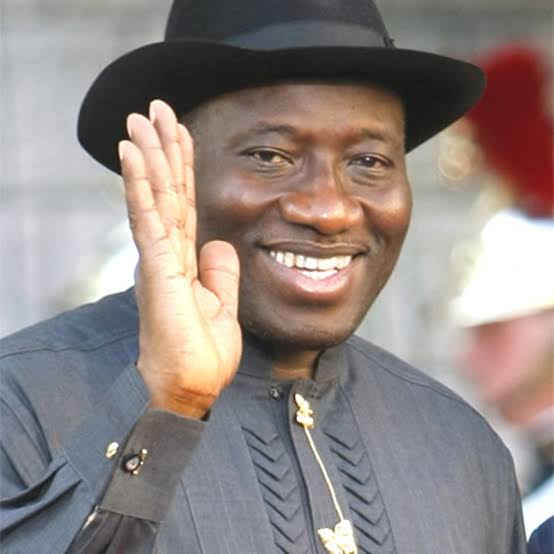
A POLISH TOURIST ACCUSES THE 92-YEAR-OLD EMIR OF DAURA OF INAPPROPRIATE TOUCHING. THE PALACE SAYS IT IS CHECKING WHETHER THE VIDEO IS EVEN REAL
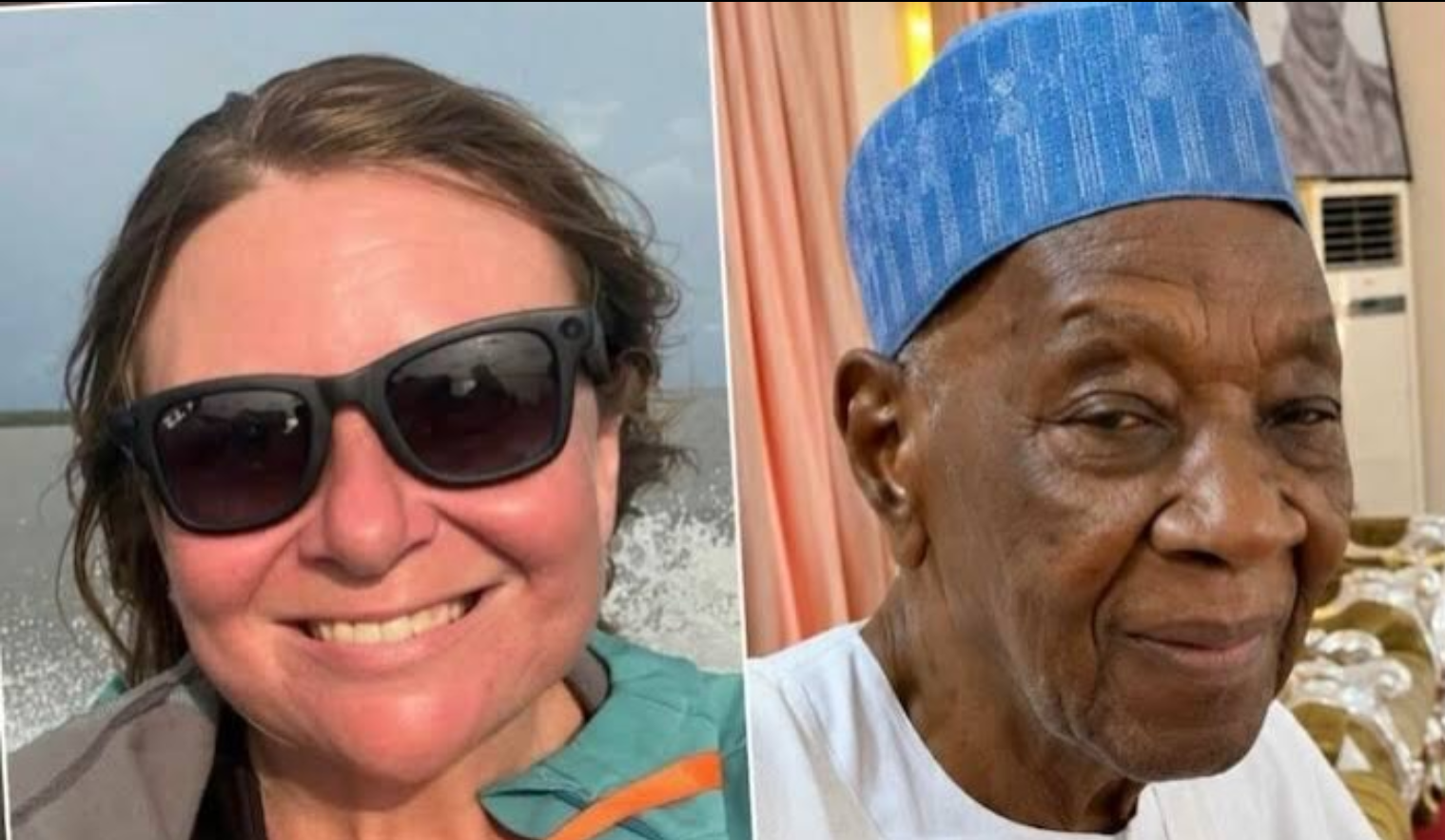
The Daura Emirate Council in Katsina State says it is investigating a viral video. In the video, a Polish tourist, Mirka Czee, accuses the 92-year-old Emir of Daura, Faruk Umar Faruk, of touching her inappropriately during a visit to his palace. Reports say she has repeated the allegation since the video began spreading. The emir has not been charged with any offense. As far as public reporting shows, no police complaint has been confirmed and no findings have been made. The allegation remains unproven. The emirate's spokesperson, the Sarkin Labaran Daura, Ibrahim Daura, confirmed that the council knows about the video. He said the emirate is examining the footage to see whether it is authentic or whether it was manipulated or artificially generated. "We are examining the video to ascertain its authenticity and establish that it has not been created or altered using technology," he said. He added that the emirate would issue an official statement after its review. That statement had not been released at the time of writing. The case touches several sensitive issues at once. It involves one of northern Nigeria's most historic thrones. It involves the hometown and resting place of former President Muhammadu Buhari. It also involves the safety of foreign visitors, the power gap between revered rulers and the women who accuse them, and the growing use of "it might be AI" as a response to damaging footage. For now, the questions are many and the confirmed facts are few.
A palace visit is supposed to be a highlight of any trip to northern Nigeria. Visitors take photos in the courtyard, greet the royal guards and, if they are lucky, meet the emir himself. For one Polish tourist, that visit has become the center of a storm that has reached far beyond Katsina State.
The Daura Emirate Council says it is probing a video now spreading widely on social media. In it, a foreign woman identified as Mirka Czee accuses the Emir of Daura, Faruk Umar Faruk, of touching her inappropriately while she was visiting his palace. The emir is 92 years old. He is one of the oldest serving traditional rulers in Nigeria.
The emirate has not denied the allegation, and it has not accepted it. Instead, its first public response has focused on the video itself.
Speaking for the council, the Sarkin Labaran Daura, Ibrahim Daura, confirmed that the emirate was aware of the footage. Sarkin Labaran is a traditional title that roughly means the emirate's chief spokesman or information officer. He said the council was examining the video to establish whether it was authentic. He also said it was checking whether the footage had been manipulated or artificially generated.
"We are examining the video to ascertain its authenticity and establish that it has not been created or altered using technology," he said.
He added that the emirate would issue an official statement once it had finished its review. As of Monday, that statement had not been published.
It is important to be precise about what is known. A woman has made a public allegation in a video. Reports say she has since repeated it. The emirate says it is reviewing the footage. Those are the facts.
Several things are not known. There is no public confirmation that any complaint has been filed with the Nigeria Police Force or any other authority. No investigation by a law enforcement agency has been announced. No independent expert has publicly assessed the video. The emir has not, as far as public reporting shows, spoken personally about the claim. The full details of the alleged encounter, including the date, who else was present and what any footage actually shows, have not been independently verified.
That means the allegation is just that: an allegation. Emir Faruk Umar Faruk is entitled to the presumption of innocence. Mirka Czee is entitled to be heard and to have her claim taken seriously. Both things can be true at once, and fair coverage has to hold them together.
To understand why this story has drawn so much attention, you have to understand Daura.
Daura is a town in the far north of Katsina State, close to the border with the Republic of Niger. It is small by the standards of Kano or Katsina city. In history and culture, though, it holds a place few towns can match.
According to Hausa tradition, Daura is where the Hausa states began. The legend tells of Bayajidda, a prince from the east who arrived in Daura and killed a serpent that had blocked the town's well, stopping people from drawing water on most days of the week. As a reward, he married the queen of Daura. Their descendants, the story goes, founded the seven original Hausa states. The Kusugu well, linked to that legend, is still shown to visitors today. For many Hausa people, Daura is something like a spiritual home.
That history is one reason the town draws tourists, researchers and cultural travelers. The palace, the well and the town's traditional festivals give visitors a living link to centuries of northern Nigerian history. A visit to the emir's palace is part of that experience.
Daura also has a modern claim to fame. It is the hometown of former President Muhammadu Buhari. Buhari, who led Nigeria as a military head of state from 1983 to 1985 and as an elected president from 2015 to 2023, retired to Daura after leaving office. He died in London in July 2025 and was buried in Daura days later. During his presidency, the town drew a steady stream of politicians, officials and visitors. Its emirate became one of the most visible in the country.
That link to Buhari adds political weight to any controversy involving Daura's palace. Some Nigerians will read the story through a political lens. Others may assume that powerful interests will try to protect the throne. Still others may suspect that the allegation itself is part of some wider agenda. None of those assumptions is supported by public evidence. They show, however, how quickly a single video can become tangled in the country's larger divisions.
Emir Faruk Umar Faruk has led the Daura Emirate since 2007. Over nearly two decades, he has presided over the town's ceremonies, conferred traditional titles and received dignitaries from across Nigeria and abroad. For many residents, he is a father figure and a symbol of continuity. His age and long reign mean that, for a generation of people in Daura, he is the only emir they have known.
That standing helps explain the strength of the reaction online. Some users have rushed to defend the emir, calling the claim impossible or insulting. Others have rushed to condemn him, treating the video as proof. Both reactions run ahead of the facts.
The role of traditional rulers in Nigeria is part of the background here.
Nigeria's constitution does not give emirs, obas, obis and other traditional rulers formal powers of government. Yet their influence is enormous. In the north, emirs serve as religious and cultural leaders. They mediate disputes, help maintain community peace, advise governments and act as bridges between ordinary people and political leaders. Politicians court them, especially in election seasons. Their approval can carry real weight in their communities.
In practice, however, traditional rulers are also under the authority of state governments. State laws govern how emirs are appointed, disciplined and, in some cases, removed. Governors have deposed emirs in the past. The most famous recent case came in 2020, when Kano State removed Muhammadu Sanusi II as emir, before he was reinstated in 2024. Those episodes show that thrones in Nigeria are powerful but not untouchable.
Allegations of personal misconduct against a sitting first-class emir are rare in public. Palace culture in northern Nigeria places strong emphasis on respect, discretion and loyalty. Courtiers protect the dignity of the throne. Complaints, when they exist, are often handled privately. A public accusation, made on video by a foreign visitor and spread across social media, breaks with that tradition in a dramatic way.
That is part of what makes the emirate's response significant. The council chose to speak publicly and promise a statement. That shows it understands the matter cannot simply be ignored. How it handles the review, and how transparent it is about the results, will shape public trust in the outcome.
The emirate's focus on whether the video is real raises one of the most important questions of this era.
Artificial intelligence tools can now create fake images, voices and videos that look convincing to the untrained eye. These "deepfakes" have been used around the world to spread false claims about politicians, celebrities and ordinary people. Nigeria has seen its share. During the 2023 general election, audio clips circulated that politicians said were fabricated or altered. Fake videos of public figures promoting investment schemes have also spread widely online. Concerns about AI-generated content are real and growing.
So the emirate's decision to check the footage is, in principle, reasonable. Any serious review of a viral video should ask basic questions. Who recorded it? When? Has it been edited or cut? Does the audio match the images? Are there signs of digital manipulation? Independent experts in digital forensics can examine files for clues, such as inconsistencies in lighting, shadows, facial movement or metadata. Those checks take time and skill.
But there is another side to the deepfake debate that matters just as much. Researchers sometimes call it the "liar's dividend." As fake videos become more common, it becomes easier for anyone caught in a real video to claim it was fake. The mere possibility of AI manipulation can cast doubt on authentic evidence. That creates a serious risk for people who make allegations, especially women alleging misconduct by powerful men.
Nothing in the emirate's statement claims the video is fake. Ibrahim Daura said the council is checking whether it was created or altered. That is a question, not a conclusion. Still, the framing matters. If the review focuses only on the footage and not on the accuser's account, it may leave important questions unanswered.
There is also a practical problem. Based on the reporting so far, the accuser has not simply posted a clip and vanished. Reports say she has repeated her allegation. If a person speaks for herself, on camera, about her own experience, the question is not only whether the footage is real. It is also whether her account is accurate, and how it can be fairly tested. That requires listening to her, not only analyzing pixels.
A credible process would likely involve more than a palace review. Independent verification of the video by qualified experts would help. A formal complaint to the police, if the accuser chooses to make one, would open the matter to a proper legal investigation with rights for both sides. Witnesses who were present at the palace during her visit could be identified and heard. Transparency about who carries out the review, and what methods they use, would help the public trust the result, whatever it is.
There is an obvious concern when an institution investigates allegations against its own head. The emirate council serves the emir. Its members owe their titles and positions to the throne. That does not mean they cannot be fair. But it does mean the public may be reluctant to accept their findings without outside checks. Many institutions around the world, from churches to sports bodies to corporations, have faced the same problem. Internal reviews often struggle to win trust unless they are open to independent scrutiny.
The gender and power dimensions of the case are hard to ignore.
On one side is a 92-year-old monarch, a revered figure surrounded by courtiers, guards and centuries of tradition. On the other is a foreign woman, far from home, in a country whose language, laws and customs she may not fully know. The gap in power, status and influence between them is vast.
Women who allege sexual misconduct by powerful men often face heavy costs. They may be accused of lying, seeking money or fame, or working for someone else's agenda. Their private lives may be dragged into public view. In Nigeria, high-profile allegations against influential figures, including religious leaders and public officials, have often ended with accusers facing more pressure than the people they accused. Many women decide that speaking up is not worth the risk.
Some of that pressure is already visible online in this case. Social media users have mocked the accuser, questioned her motives and suggested she wants attention. Others have argued that the emir's age makes the claim unbelievable. Age is not evidence either way. It does not prove an allegation, and it does not disprove one.
At the same time, public figures have rights too. A false allegation can destroy a reputation built over decades. In a world of viral clips, a person can be judged guilty by millions of strangers in a few hours, long before any facts are tested. That is why caution matters. The right response is not to believe or dismiss the accuser automatically. It is to insist on a process that is fair to both sides.
Culture adds another layer. In many conservative Muslim communities in northern Nigeria, physical contact between men and women who are not related is limited. Many traditional rulers and religious leaders avoid shaking hands with women at all. Palace etiquette for female visitors often includes specific rules about dress, posture and greetings. Some commentators have pointed to these norms in arguing the allegation is unlikely. Others have argued that norms describe expected behavior, not what every individual actually does. Neither argument settles the matter. Only evidence can.
The case also raises uncomfortable questions for tourism.
Nigeria has worked for years to attract more foreign visitors. Its tourism potential is huge, from the Osun-Osogbo Sacred Grove and the Durbar festivals of the north to Obudu Mountain, Yankari Game Reserve and the beaches of Lagos. In recent years, foreign travel vloggers and solo travelers have helped show a different side of Nigeria to global audiences. Many of them visit palaces and meet traditional rulers, often filming the experience for social media.
Those visits bring attention and goodwill. They also carry risks for visitors, especially women traveling alone. Travelers may not know local customs, may not have trusted local contacts and may not know how to report a problem. In some cases, they may not trust local authorities to take a complaint seriously.
Whatever the truth of this specific allegation, the episode is likely to be discussed in travel communities abroad. Some potential visitors may hesitate. Others may ask what protections exist for tourists who say they have been harmed. That makes the handling of this case a test not just for the emirate but for Nigeria's image as a destination.
There are basic steps that could help. Tourism authorities could provide clear guidance to visitors on palace etiquette and on how to report problems. Palaces and heritage sites that receive foreign guests could set clear codes of conduct for everyone involved. Police units trained to handle complaints from visitors, including complaints of sexual misconduct, could make reporting easier. And tour operators could ensure that guests, especially women, are accompanied by trusted guides.
Nigeria's legal framework does offer protection. Laws in the country criminalize sexual assault and indecent assault. The Violence Against Persons (Prohibition) Act of 2015 broadened legal protection against many forms of abuse and has been adopted by many states. Anyone, including a foreign visitor, can file a complaint with the police. The question is whether the system works quickly and fairly when the accused is powerful and the accuser is far from home.
Ghanaian readers will find parts of this debate familiar. Ghana's chiefs and queen mothers hold deep cultural authority, and disputes involving traditional leaders often stir strong public feeling. Ghana has also invested heavily in heritage tourism, from the 2019 "Year of Return" to ongoing efforts to attract diaspora and foreign visitors. In both countries, traditional institutions are a major part of the tourism experience. In both, how those institutions handle allegations of misconduct will affect how safe visitors feel and how much the public trusts the institutions themselves.
The story also highlights a broader shift in how accountability works. In the past, a visitor's complaint about a palace encounter might never have left the palace walls. Today, a smartphone video can reach millions of people in a day. That shift gives a voice to people who once had none. It also exposes the accused to instant public judgment, sometimes before facts are checked. Traditional institutions built on discretion are now operating in a world where almost nothing stays private.
What happens next will depend on several developments.
The first is the emirate's official statement. Ibrahim Daura has promised one after the review. Its tone, its detail and its conclusions will matter. A statement that explains who examined the video, how they did it and what they found would be more credible than a short denial or a vague promise.
The second is independent analysis of the footage. If qualified digital forensic experts, independent of the palace, examine the video and share their findings, the public will have firmer ground to stand on.
The third is the accuser's next step. Mirka Czee may choose to file a formal complaint with Nigerian authorities, seek help from the Polish embassy, or continue speaking publicly. Her choices will shape whether the matter moves from social media into a formal process.
The fourth is the response of state and federal authorities. The Katsina State Government oversees traditional institutions in the state. Tourism and police authorities may also have a role. So far, as far as public reporting shows, none has publicly commented.
The fifth is how the public conversation evolves. Online debate has already been heated. Responsible coverage, and responsible sharing, can help keep the focus on facts rather than assumptions.
For now, the facts are limited. A Polish tourist, Mirka Czee, has accused the 92-year-old Emir of Daura, Faruk Umar Faruk, of touching her inappropriately during a visit to his palace. The allegation has not been proven. The Daura Emirate Council says it is examining the video to determine whether it is authentic or was manipulated or artificially generated. Its spokesperson has promised an official statement after the review. That statement has not yet been released.
Daura has given Nigeria a legend about a stranger who arrived from far away and was welcomed into the town's story. This time, a stranger's story has put the palace itself under scrutiny. The truth of what happened inside those walls is not yet known. What Nigerians, and the world, will be watching for is whether the search for that truth is fair, open and taken seriously by everyone involved.