
US IMMIGRATION OFFICIALS ARREST MAN DAYS AFTER HE WINS $1 MILLION IN MASSACHUSETTS LOTTERY
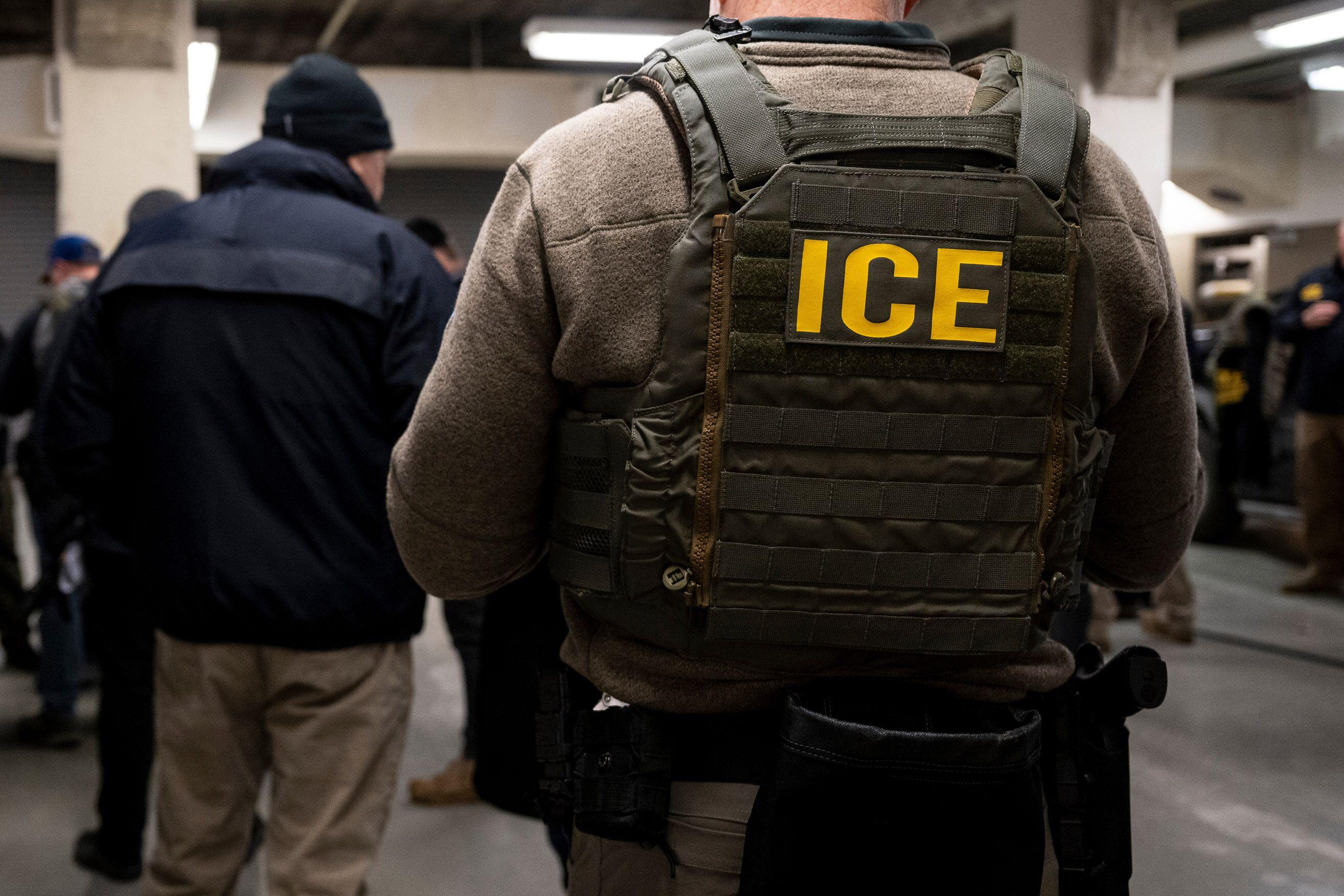
Ariel Antonio Velasquez-Morales, a Salvadoran national who won $1 million from a Massachusetts State Lottery scratch-off ticket, was arrested by U.S. Immigration and Customs Enforcement officers in East Boston on November 24, 2026, just days after lottery officials published a photograph celebrating his victory. Velasquez-Morales purchased a $10 winning ticket and elected to receive a one-time cash payment of $650,000 before taxes. According to ICE, he entered the United States unlawfully in 2013 and had been subject to a removal order since 2014. The agency announced his arrest on Wednesday using the same photograph previously published by the lottery. Although he remains in immigration custody pending removal, authorities have not confirmed whether the publicity surrounding his winnings contributed to his arrest or whether his detention will affect his ability to retain the money.
A Salvadoran man who won $1 million from a Massachusetts State Lottery scratch-off ticket has been arrested by United States Immigration and Customs Enforcement, turning what appeared to be a life-changing financial victory into an uncertain legal battle over his future in the country. Ariel Antonio Velasquez-Morales was detained by federal immigration officers in East Boston on Tuesday, November 24, 2026, just days after the Massachusetts State Lottery publicly celebrated his winnings by sharing a photograph of him holding an oversized ceremonial check. ICE confirmed his arrest on Wednesday, November 25, using the same photograph that lottery officials had previously published to announce his success. According to the federal agency, Velasquez-Morales entered the United States unlawfully in 2013 and had been subject to an immigration judge's removal order since 2014.
Velasquez-Morales purchased his winning $10 ticket in East Boston through the Massachusetts State Lottery's $2,000,000 50X Cashword scratch-ticket game. Although the advertised value of his prize was $1 million, he elected to receive the money through a single cash payment of $650,000 before taxes rather than collecting the full advertised amount through installment payments. The Massachusetts State Lottery awarded him the prize on November 18 and subsequently published a photograph of the smiling winner on Saturday, November 21. Three days after that photograph appeared on social media, federal immigration officers detained him during enforcement operations in East Boston.
The unusual sequence of events has generated considerable public attention, particularly because ICE chose to reproduce the lottery photograph when announcing the arrest. The image, which had initially been published as part of the lottery's routine promotion of successful participants, subsequently became associated with the federal government's immigration enforcement activities. However, authorities have not publicly established whether the publication of the photograph directly contributed to locating Velasquez-Morales or whether his arrest resulted from an investigation that was already underway. The timing has prompted speculation about a possible connection, but the available evidence does not establish that his lottery victory was the reason immigration officers targeted him.
According to ICE, Velasquez-Morales entered the United States from El Salvador in 2013 and was initially encountered by federal border authorities in Texas. He was subsequently released after receiving instructions to appear before an immigration judge. An order directing his removal from the United States was issued in 2014, but he remained in the country for more than a decade after that decision. Federal immigration authorities have identified the outstanding removal order as the legal basis for his detention, rather than alleging that he committed an offense by purchasing a lottery ticket or collecting his winnings.
David Wesling, the acting director of ICE's Enforcement and Removal Operations office in Boston, defended the arrest by emphasizing the length of time Velasquez-Morales had remained in the United States following the issuance of the removal order. The agency maintained that its officers were carrying out an existing immigration enforcement decision and indicated that Velasquez-Morales would remain in custody pending his removal from the country. However, his precise detention location and the anticipated timetable for his deportation were not established in the initial reporting. ICE also declined to provide certain news organizations with further information about the circumstances that led officers to locate and detain him.
The case has raised immediate questions about the future of Velasquez-Morales' lottery winnings, particularly whether his immigration status could affect his ability to retain the money. His decision to accept the cash option means that the advertised $1 million prize was converted into a one-time payment of $650,000 before applicable tax deductions. Immigration officials have not announced that the money has been confiscated, frozen or otherwise placed under government control. No verified evidence has established that the lottery intends to revoke the prize or that his detention automatically deprives him of legal ownership of the funds.
The distinction between eligibility to participate in a state lottery and authorization to reside in the United States is central to understanding the case. Massachusetts lottery rules generally permit individuals aged 18 and above who are physically present in the state to purchase tickets and win prizes, subject to applicable claim requirements. United States citizenship is not ordinarily a universal condition for participating in state lotteries. An individual may consequently be eligible to purchase a winning ticket while remaining subject to separate federal immigration restrictions.
Winning a lottery prize does not, however, provide an individual with lawful immigration status or protection against the enforcement of an existing removal order. Immigration eligibility is determined through federal legislation and administrative procedures that operate independently of the financial circumstances of the person concerned. Although substantial personal wealth may be relevant to certain immigration categories, receiving lottery winnings does not automatically confer permanent residency, citizenship or authorization to remain in the United States. In Velasquez-Morales' case, the lottery award did not invalidate the removal order that ICE says had remained outstanding since 2014.
Questions surrounding the prize also involve the difference between its advertised value and the amount actually received by the winner. State lotteries frequently offer participants a choice between receiving the full advertised jackpot through payments distributed over an extended period or accepting a smaller immediate cash settlement. Individuals choosing the cash option receive access to a substantial amount of money without waiting for future installment payments, but the amount is generally lower than the advertised prize. Applicable federal and state taxes can further reduce the sum available to the winner, meaning Velasquez-Morales' actual financial benefit would be less than the $650,000 gross cash payment.
The tax obligations associated with lottery winnings generally remain relevant regardless of an individual's immigration circumstances. Noncitizens may face different withholding requirements depending on their tax residency classification and other applicable provisions. The exact amount withheld from Velasquez-Morales' prize has not been publicly established, and his individual tax circumstances remain unknown. It would therefore be inaccurate to suggest that he received the entire advertised $1 million or retained the complete $650,000 without deductions.
His detention could nevertheless create practical difficulties concerning access to the money, particularly if the prize was deposited into a financial account requiring identification documents or personal authorization for certain transactions. Individuals held in immigration detention may encounter challenges communicating with financial institutions, managing personal property and arranging legal representation. If Velasquez-Morales is ultimately removed from the United States, additional considerations could arise concerning international transfers and the management of assets held within the country. Those possibilities do not establish that his winnings have been seized, and their eventual significance will depend on his individual circumstances and any arrangements made on his behalf.
The case has also renewed discussions about the public disclosure of lottery winners' identities. State lottery organizations frequently publish photographs and names of successful participants to promote their games and demonstrate that prizes are being distributed to members of the public. Those promotional activities can generate positive publicity for lottery operators while providing winners with an opportunity to celebrate their success. However, the public dissemination of personal information can create consequences that extend beyond the original purpose of the announcement.
In Massachusetts, information concerning lottery winners is generally subject to public disclosure arrangements, although certain prizes may be claimed through legally established entities such as trusts. Such arrangements can provide a degree of privacy depending on the applicable rules and circumstances. The available reporting does not establish whether Velasquez-Morales considered alternative claim arrangements or whether he specifically understood the potential implications of having his photograph published. It also remains unclear whether the lottery photograph provided immigration authorities with information they did not already possess.
The publication of the image by ICE has contributed to a wider public discussion concerning the manner in which federal agencies communicate immigration enforcement activities. Supporters of the administration's enforcement approach maintain that publicizing arrests can demonstrate the implementation of existing immigration laws and reinforce the government's commitment to executing removal orders. Critics argue that using an individual's celebratory photograph in an arrest announcement risks turning a personal legal matter into a public spectacle. These differing perspectives concern the communication strategy surrounding enforcement as well as the underlying policy governing immigration detention and removal.
The circumstances of Velasquez-Morales' arrest should also be understood within the distinction between civil immigration enforcement and criminal prosecution. A removal order is an immigration adjudication directing an individual to leave the United States and does not, by itself, establish that the person has been convicted of a criminal offense unrelated to immigration. ICE's announcement identified Velasquez-Morales as an individual subject to an existing removal order. No independently established information accompanying the announcement indicates that his lottery winnings were connected to fraud, theft, money laundering or another financial crime.
Under the immigration enforcement framework, federal authorities can detain certain individuals while arrangements are made to execute final removal orders. The duration of detention and availability of further legal remedies depend on individual circumstances, including the procedural history of the person's immigration case. In some situations, individuals may seek to reopen proceedings or obtain other forms of judicial or administrative relief. However, no confirmed information has established whether Velasquez-Morales has filed such an application, retained legal counsel or obtained an order temporarily preventing his removal.
His arrest comes amid the Trump administration's continuing efforts to strengthen immigration enforcement throughout the United States. Federal authorities have prioritized the execution of outstanding removal orders as part of a broader policy intended to address unauthorized immigration. The approach has generated substantial legal and political debate, with disagreements concerning enforcement priorities, detention conditions, procedural protections and the consequences for individuals who have established longstanding connections within American communities.
Supporters of stricter immigration enforcement argue that existing removal orders should be implemented consistently, regardless of an individual's financial circumstances or the length of time they have remained in the country. From that perspective, a substantial lottery prize does not alter the government's responsibility to enforce a legally issued immigration decision. Immigrant rights advocates, meanwhile, have raised concerns about the humanitarian consequences of removing people who have spent many years in the United States, particularly where deportation may disrupt established employment, family relationships and community connections. The details of Velasquez-Morales' personal circumstances have not been sufficiently disclosed to establish how those broader concerns apply to him.
El Salvador, his reported country of origin, has historically been a significant source of migration to the United States. Salvadoran nationals have migrated for various reasons, including employment opportunities, family reunification, economic difficulties and concerns about personal security. Over several decades, Salvadoran communities have become established in numerous American cities, contributing to local economies and maintaining close relationships with relatives in Central America. However, the circumstances that originally led Velasquez-Morales to enter the United States in 2013 have not been publicly established, and no conclusions should be drawn about his personal motivations without additional evidence.
For individuals confronting deportation after spending extended periods in another country, the process can involve substantial personal and financial adjustments. Returning to a country of origin may require securing accommodation, establishing new employment or business arrangements and rebuilding relationships after years of absence. In Velasquez-Morales' case, the lottery prize could potentially provide significant financial resources during such a transition, provided he retains access to the money. Whether he will be able to manage or transfer those funds following his detention remains among the unanswered questions surrounding the case.
The Massachusetts State Lottery's involvement appears to have been limited to administering the prize and publishing information concerning the winner through its ordinary promotional channels. No verified evidence has established that lottery officials coordinated with ICE to arrange the arrest or specifically referred Velasquez-Morales to immigration authorities. Similarly, ICE has not confirmed that its officers began investigating him because of the lottery announcement. Establishing a direct relationship between the two events would require additional information concerning the enforcement operation and the manner in which authorities identified his location.
The striking contrast between the two announcements has nevertheless contributed to the widespread attention surrounding the story. The first presented Velasquez-Morales as the recipient of an extraordinary financial opportunity, while the second identified him as an individual facing removal from the United States. The photograph connecting those announcements has become the defining public image of a case involving two separate legal and administrative systems. Its significance lies partly in the sudden change in circumstances experienced by the winner, whose financial success was followed almost immediately by federal detention.
As of Thursday, November 26, several important questions remained unresolved. Immigration authorities had not provided a detailed account explaining how Velasquez-Morales was located, while the status of his lottery funds and any legal challenges to his removal remained unclear. His precise detention location and the date on which he could be returned to El Salvador had also not been publicly confirmed. Further developments may establish whether he has access to legal representation and whether his longstanding removal order remains subject to any available procedural challenge.
For now, the established facts are that Velasquez-Morales won a $1 million Massachusetts lottery prize, elected to receive a $650,000 cash payment before taxes and was subsequently detained by federal immigration officers enforcing what ICE describes as an outstanding removal order issued in 2014. His financial victory did not provide protection against that order, but neither has his arrest been shown to invalidate his entitlement to the prize. The case has consequently become a prominent example of how financial opportunity, public exposure and immigration enforcement can intersect in unexpected circumstances.
What began as an opportunity for Velasquez-Morales to transform his financial circumstances has developed into a period of uncertainty concerning his freedom, residency and ability to manage his newly acquired wealth. The final outcome will depend on the enforcement of the immigration order, any legal remedies available to him and the arrangements governing his lottery winnings. Until those questions are resolved, the case remains a remarkable intersection of personal fortune and federal immigration policy, with the fate of both the winner and his financial assets attracting widespread public attention.