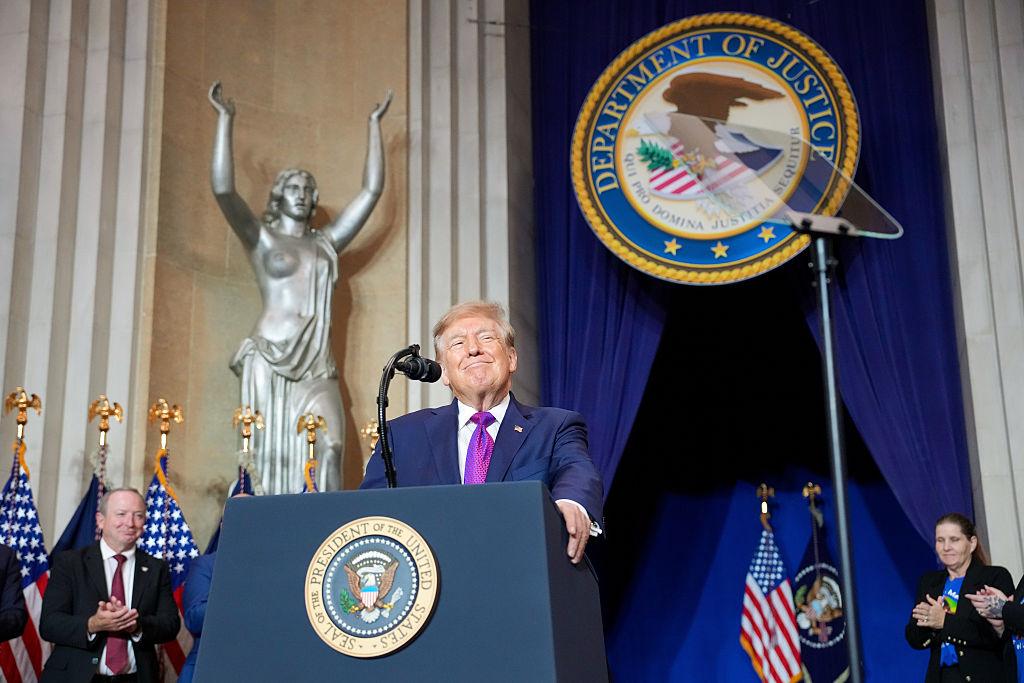
TRUMP SAYS HE PRESSED PUTIN TO END RUSSIAN MILITARY AGGRESSION IN EUROPE AS DIPLOMATIC EFFORTS INTENSIFY
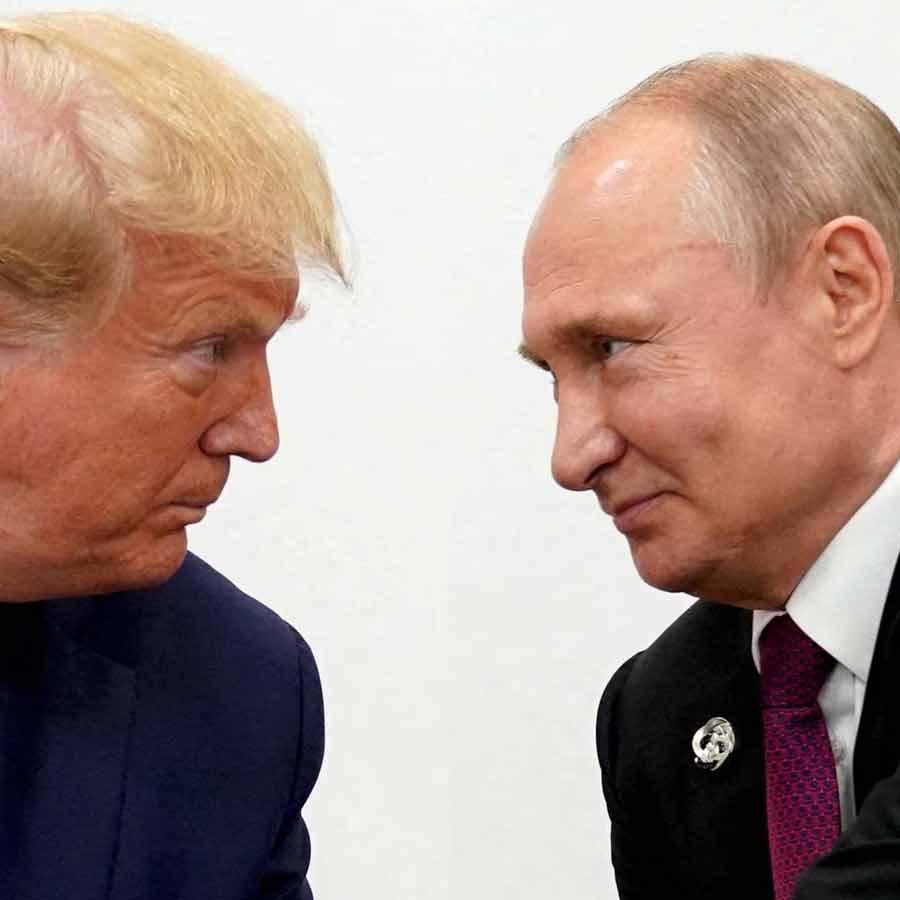
U.S. President Donald Trump has reportedly said he pressed Russian President Vladimir Putin to end Russia's military aggression in Europe during diplomatic discussions connected to talks in China. The remarks have renewed attention to international efforts to end the Russia-Ukraine war and the potential role of Beijing in facilitating negotiations. The conflict continues to raise significant concerns involving Ukrainian sovereignty, European security, humanitarian assistance and international economic stability. Although direct diplomatic engagement could provide opportunities for negotiations, no confirmed ceasefire agreement or specific commitment from Putin has been established in the supplied report.
U.S. President Donald Trump has said he pressed Russian President Vladimir Putin to end Russia's military aggression in Europe during diplomatic discussions connected to talks in China, renewing attention to Washington's efforts to secure a negotiated resolution to the war in Ukraine. Trump's reported remarks come against the backdrop of continuing international disagreements over the conditions necessary to establish a lasting peace and the security guarantees required to prevent further hostilities. The American president's comments suggest that communication with Moscow remains an important component of his administration's diplomatic approach, although there has been no independently established agreement committing Russia to ending its military operations.
The reported intervention places renewed emphasis on the relationship between Washington, Moscow and Beijing as international efforts to address the conflict continue. China maintains significant diplomatic and economic relations with Russia while occupying an influential position in international discussions concerning European security. Its relationship with Moscow has prompted considerable interest in whether Beijing could contribute to diplomatic efforts aimed at reducing hostilities. However, the existence of diplomatic communication between the three powers does not independently establish that they have reached a common position regarding the future of Ukraine or the wider European security environment.
Trump's assertion that he directly pressed Putin to end Russian aggression also raises questions about the extent to which American diplomatic engagement can influence Moscow's military and political decisions. Russia's full-scale invasion of Ukraine, launched in February 2022, has developed into a prolonged conflict with substantial humanitarian, economic and geopolitical consequences. Successive international initiatives have sought to establish conditions for negotiations, but fundamental disagreements over territorial sovereignty, military withdrawal and long-term security arrangements have complicated efforts to achieve a comprehensive settlement.
For Ukraine, the central issue remains the protection of its sovereignty and territorial integrity under international law. Ukrainian authorities have repeatedly maintained that negotiations must address the consequences of Russian military operations rather than simply establish a temporary reduction in fighting. Kyiv has also emphasized the importance of security guarantees capable of preventing renewed aggression following any negotiated agreement. Those concerns reflect Ukraine's experience of previous diplomatic arrangements that failed to establish a lasting resolution to the conflict.
Russia, meanwhile, has presented its own conditions for negotiations, including demands concerning Ukraine's security relationships and the status of territories occupied by Russian forces. Moscow has also repeatedly raised objections to NATO's expansion and Western military involvement in Ukraine. Those positions remain disputed by Ukraine and its international partners, which maintain that sovereign states possess the right to determine their own security arrangements. The disagreements illustrate why establishing a ceasefire and negotiating a comprehensive political settlement involve distinct diplomatic challenges.
Trump's latest reported comments are particularly significant because of his longstanding emphasis on direct communication with international leaders as a mechanism for addressing major geopolitical disputes. His approach to the Russia-Ukraine conflict has frequently involved calls for negotiations and criticism of the prolonged financial and military costs associated with the war. Supporters of direct diplomatic engagement argue that communication between Washington and Moscow is necessary to establish realistic conditions for ending hostilities. Critics caution that negotiations conducted without adequate Ukrainian participation or enforceable security commitments could produce an agreement that fails to address the underlying causes of the conflict.
The role of China in the wider diplomatic process remains another important consideration. Beijing has consistently presented itself as supporting a political resolution to the conflict while maintaining extensive economic and strategic relationships with Moscow. Chinese officials have previously advocated negotiations and expressed opposition to the further escalation of hostilities. Nevertheless, China has faced criticism from Western governments over aspects of its relationship with Russia, particularly concerning trade and the supply of goods that may support Russian industrial capabilities.
China's economic relationship with Russia gives Beijing a degree of influence that distinguishes it from many other international actors. Russia has increasingly developed commercial relationships with Asian markets as Western sanctions have restricted aspects of its access to European and North American economies. Trade involving energy resources, industrial equipment and other commodities has consequently become an important component of the relationship between Moscow and Beijing. Whether that economic influence can be translated into diplomatic pressure sufficient to alter Russian military policy remains uncertain.
European governments have a direct interest in the outcome of any diplomatic engagement involving Trump, Putin and Chinese officials. Russia's invasion has fundamentally altered security planning across the continent, prompting several European countries to increase defense expenditure, strengthen military preparedness and reconsider longstanding assumptions about regional stability. The conflict also contributed to Finland and Sweden joining NATO, developments that expanded the alliance's membership and changed the strategic environment in Northern Europe. Those changes demonstrate that the consequences of the war extend considerably beyond Ukraine's internationally recognized borders.
Concerns about Russian activities across Europe have also expanded beyond conventional military operations. European authorities have investigated suspected cyberattacks, espionage, sabotage and interference campaigns attributed in some cases to Russian-linked actors. Moscow has denied various allegations concerning its involvement in such activities, and individual incidents require separate evidential assessments. Nevertheless, these security concerns have contributed to growing discussions about how European governments can protect critical infrastructure, democratic institutions and essential public services against potential external threats.
The phrase concerning Russian military aggression across Europe should therefore be understood within its appropriate context. Russia's full-scale conventional war is being fought primarily in Ukraine, while other European countries have raised concerns about different forms of Russian military pressure and suspected hostile activity. There is no basis for interpreting Trump's reported remarks as confirmation that Russia is conducting conventional military invasions throughout Europe. Distinguishing between the war in Ukraine and wider regional security concerns remains essential to accurately describing the geopolitical situation.
NATO's position continues to represent a major consideration in discussions surrounding European security. The alliance maintains collective defense arrangements intended to deter attacks against its members, while individual NATO countries have provided Ukraine with varying forms of military, humanitarian and economic assistance. Ukraine is not a NATO member and does not receive the collective defense guarantees that apply to member states. The distinction has become central to discussions concerning the type of security commitments that might accompany any future peace agreement.
A comprehensive settlement would require consideration of issues extending beyond an immediate cessation of military operations. Questions concerning territorial control, displaced populations, prisoners of war, civilian protection, reconstruction and accountability for alleged violations of international humanitarian law would remain important even if a ceasefire were established. The implementation of security arrangements would also require mechanisms for monitoring compliance and responding to potential violations. Without credible provisions addressing those matters, an agreement could reduce immediate hostilities without resolving the broader conflict.
The humanitarian consequences of the war continue to provide urgency to international diplomatic efforts. Millions of Ukrainians have experienced displacement, disruption to essential services and damage to their communities since the beginning of Russia's full-scale invasion. Families have faced prolonged separation, while hospitals, schools, residential buildings and energy infrastructure have suffered extensive damage. The restoration of those services will require substantial resources even after active hostilities eventually end, creating long-term responsibilities for Ukraine and its international partners.
Energy security remains another major dimension of the conflict. Russia historically occupied an important position in European energy markets, supplying substantial quantities of natural gas and other resources to countries across the continent. The invasion prompted European governments to accelerate efforts to diversify energy supplies and reduce dependence on Russian imports. Those adjustments have involved significant investments in alternative infrastructure and commercial relationships, while also contributing to wider discussions concerning energy affordability and economic resilience.
The economic consequences have extended beyond Europe, particularly through disruptions affecting agricultural exports, commodity prices and international supply chains. Ukraine and Russia have historically played important roles in global markets for agricultural products and fertilizers. Interruptions associated with the conflict have affected countries dependent on imported food and agricultural inputs, including several African economies. Consequently, diplomatic efforts to reduce hostilities carry potential implications for food security and economic stability far beyond the immediate region.
For African governments, the conflict has created a complex diplomatic environment involving relationships with Western countries, Russia and China. Several African nations have sought to maintain independent foreign policy positions while emphasizing the importance of sovereignty, international cooperation and peaceful conflict resolution. The economic effects of the war have also reinforced calls for stronger domestic agricultural production and reduced vulnerability to external commodity shocks. A sustainable resolution could help improve international economic predictability, although the extent of those benefits would depend on subsequent developments.
China's involvement in discussions concerning Russia and Ukraine also reflects the changing distribution of influence within international diplomacy. Beijing has expanded its engagement in global political and economic affairs, presenting itself as an important participant in efforts to resolve international disputes. Its ability to communicate with Moscow while maintaining diplomatic relationships with European governments provides opportunities for engagement that may not be available to every international actor. However, effective mediation would require the confidence of the parties directly involved and a willingness to address their fundamental concerns.
The possibility of stronger cooperation between Washington and Beijing on European security would carry broader geopolitical significance. Relations between the United States and China remain influenced by disagreements concerning trade, technology, military competition and regional security in Asia. Cooperation on individual international crises does not necessarily indicate a wider resolution of those disputes. Nevertheless, diplomatic engagement concerning the Russia-Ukraine conflict could demonstrate that the two powers retain opportunities to communicate on matters involving shared international interests.
One of the principal challenges confronting negotiations is the question of enforcement. Diplomatic assurances can establish political commitments, but their effectiveness depends on whether the participating governments possess the willingness and capacity to implement them. Any proposed settlement involving military withdrawals, security guarantees or territorial arrangements would require clearly defined obligations and credible mechanisms for assessing compliance. Ukraine's international partners would also need to determine what assistance or diplomatic consequences might follow if those commitments were violated.
The sanctions imposed on Russia by the United States, European Union and other governments remain another important element of the diplomatic environment. These measures have targeted various sectors of the Russian economy, financial institutions and individuals associated with the government or military establishment. Negotiations concerning a future settlement could potentially involve discussions about the conditions under which particular restrictions might be modified. However, no verified information accompanying Trump's latest reported remarks establishes that Washington has agreed to remove specific sanctions or offer Moscow particular economic concessions.
European leaders will also be concerned about ensuring that their security interests are adequately represented in any negotiations. The consequences of Russian military activity have prompted governments across the continent to strengthen cooperation on defense planning, intelligence sharing and critical infrastructure protection. A diplomatic arrangement negotiated primarily between larger international powers could generate concerns if European countries believe that their security priorities have not been sufficiently considered. Sustained consultation between Washington, Kyiv and European partners would therefore remain important throughout any prospective negotiations.
Ukraine's participation is equally fundamental because decisions concerning its territory, political independence and future security directly affect its population and institutions. Diplomatic engagement between the United States and Russia can contribute to establishing conditions for negotiations, but it cannot independently determine Ukraine's acceptance of a proposed settlement. Agreements affecting sovereign rights require consideration of the position of the state directly concerned. The distinction remains particularly important when reports of discussions between international leaders generate expectations about potential breakthroughs.
Despite Trump's reported assertion that he pressed Putin to end Russian military aggression, important questions remain concerning Moscow's response and whether the discussions produced any concrete diplomatic commitments. No independently verified transcript of the exchange has been established in the information available for this report. It also remains unclear whether Chinese officials participated directly in the discussions referenced by Trump or whether his remarks concerned separate diplomatic engagements associated with talks in China. Those uncertainties make it premature to conclude that a new trilateral peace initiative has been formally established.
The distinction between diplomatic rhetoric and measurable progress will become increasingly important as international attention turns toward the possibility of renewed negotiations. Public statements expressing a desire to end hostilities may demonstrate political intent, but substantive progress requires commitments that can be translated into changes on the ground. Evidence of agreed negotiation schedules, verified reductions in fighting, humanitarian arrangements or formal security discussions would provide stronger indications that diplomatic efforts are moving toward a meaningful settlement.
For now, Trump's reported comments indicate continued American engagement with the question of ending Russia's war against Ukraine and addressing the wider security concerns affecting Europe. China remains an important international actor because of its relationship with Moscow, while Ukraine and European governments continue to have direct interests in the outcome of any negotiations. The effectiveness of the reported diplomatic intervention will depend on whether subsequent discussions produce concrete commitments consistent with international law and capable of addressing the security concerns of the parties involved.
Nearly five years after Russia launched its full-scale invasion of Ukraine, the international community continues to confront the challenge of ending a conflict whose consequences have reshaped European security and affected economies across the world. Diplomatic communication between Washington, Moscow and Beijing may provide opportunities to explore possible solutions, but the existence of such communication does not guarantee that the fundamental disagreements can be overcome. A lasting settlement will require more than assurances from individual leaders, involving enforceable commitments, meaningful Ukrainian participation and arrangements capable of preventing renewed hostilities. Until those conditions are established, the significance of Trump's reported appeal to Putin will remain dependent on the concrete diplomatic and military developments that follow.