U.S. FEDERAL JUDGE BLOCKS TRUMP’S LATEST ATTEMPT TO RESTRICT BIRTHRIGHT CITIZENSHIP FOR CHILDREN OF FOREIGN WORKERS
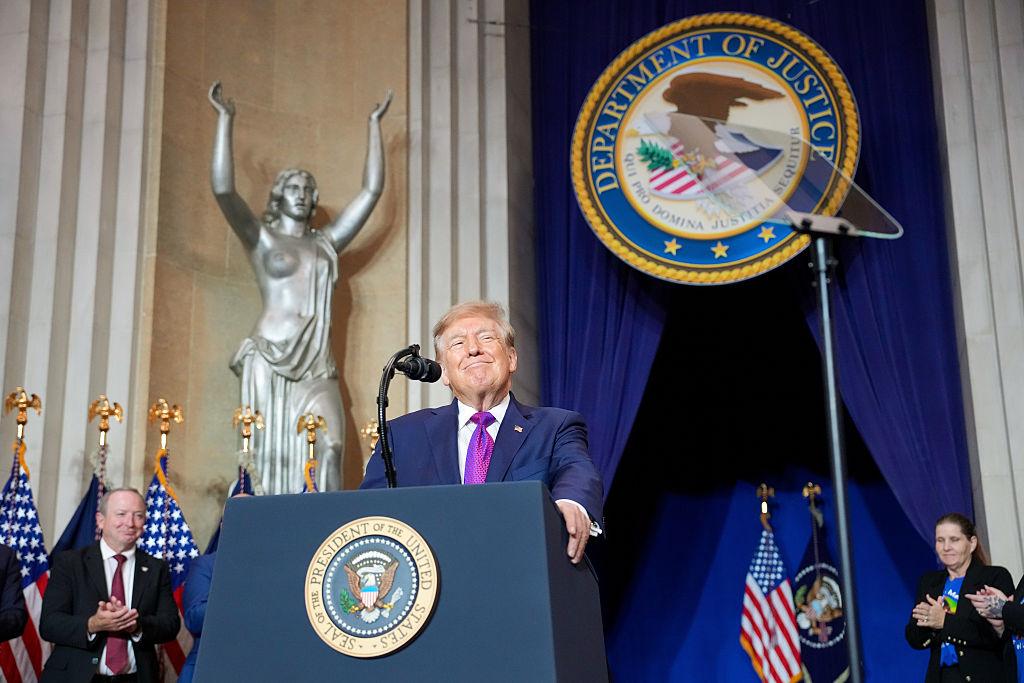
A federal judge in Washington, D.C., has blocked President Donald Trump's latest attempt to restrict birthright citizenship for children born in the United States to certain foreign workers and other categories of noncitizen parents. U.S. District Judge Christopher Cooper issued a preliminary injunction on November 25, 2026, concluding that the administration's August executive order was highly likely to violate the Fourteenth Amendment and federal immigration law. The decision protects a nationwide class of eligible children, including those born to international organization employees and certain children born through commercial surrogacy. It represents the second federal court ruling against the revised policy following a September injunction in Maryland and comes nearly five months after the Supreme Court rejected Trump's original birthright citizenship restrictions. Further proceedings are expected, with both parties directed to submit a joint status report by December 4.
A federal judge in Washington, D.C., has blocked President Donald Trump's latest attempt to restrict birthright citizenship, delivering another significant legal setback to the administration's efforts to narrow the constitutional protections available to children born in the United States to foreign nationals. U.S. District Judge Christopher Cooper issued a preliminary injunction on Wednesday, November 25, 2026, preventing federal agencies from enforcing an executive order signed by Trump in August against a nationwide class of affected children. The ruling specifically protects children born to certain foreign government employees, international organization workers and other individuals targeted by the revised citizenship policy. The decision comes nearly five months after the U.S. Supreme Court rejected Trump's original attempt to restrict automatic citizenship for children born to undocumented immigrants and foreign nationals temporarily residing in the country.
Cooper, who was appointed to the federal judiciary by former President Barack Obama, concluded that the administration's latest executive order was highly likely to violate both the Citizenship Clause of the Fourteenth Amendment and existing federal immigration law. His ruling emphasized that the constitutional principle of citizenship by birth applies to individuals born within the United States who are subject to its jurisdiction, and that the president cannot independently introduce additional exceptions through executive action. The judgment represents the second federal court decision blocking the revised policy, following a separate injunction issued by a Maryland judge in September. Together, the rulings have created substantial legal obstacles to the administration's continued efforts to redefine who qualifies for American citizenship at birth.
The latest case, known as Nathan v. Trump, was filed on September 28 by several civil rights organizations representing individuals whose children faced the possibility of being denied recognition as American citizens under the August executive order. The organizations involved include the American Civil Liberties Union, its affiliates in several states, the Legal Defense Fund, Asian Law Caucus and Democracy Defenders Fund. Their lawsuit challenged the administration's authority to establish citizenship restrictions extending beyond the historically recognized exceptions to the Fourteenth Amendment. The plaintiffs maintained that the revised policy threatened to deprive children of constitutional rights because of their parents' employment, immigration circumstances or arrangements surrounding their birth.
One of the central plaintiffs is an infant identified in court documents by the pseudonym Nathan, who was born in Washington, D.C., in August 2026 to parents employed by international organizations. Neither parent is an American citizen, placing the child within a category potentially affected by Trump's revised executive order. The case has highlighted the uncertainty confronting foreign professionals who lawfully reside in the United States while working for international institutions and whose children would ordinarily qualify for American citizenship by birth. The parents' legal representatives argued that employment by an international organization does not automatically place a family outside the jurisdiction of the United States or establish a constitutionally valid basis for denying citizenship to their American-born children.
Another plaintiff identified in the proceedings is a child referred to as Eleanor, who was born through a commercial surrogacy arrangement in the United States in October 2026. Her parents are not American citizens, and her circumstances placed her within another category targeted by the executive order. The inclusion of children born through surrogacy demonstrates how the administration's revised citizenship restrictions extended beyond the immigration status of foreign workers. The lawsuit consequently brought together families facing different personal circumstances but confronting a common legal question concerning whether the circumstances of their parents or birth arrangements could justify withholding citizenship otherwise protected by the Constitution.
The executive order at the center of the dispute, officially designated Executive Order 14418, was signed by Trump on August 6, 2026, under the title Continuing to Protect the Meaning and Value of American Citizenship. The administration introduced the directive after its earlier attempt to restrict birthright citizenship was rejected by the Supreme Court, presenting the revised measures as consistent with exceptions that it believed remained permissible under existing constitutional law. Rather than seeking to exclude all children born to undocumented immigrants or temporary visitors, the new order identified specific categories of individuals whose citizenship federal agencies were instructed not to recognize when neither parent was an American citizen.
Those categories included children whose parents were employed by foreign governments or certain international organizations, children whose parents were classified under the order's definition of an alien enemy, and children whose parents had allegedly engaged in commercial or fraudulent arrangements to obtain citizenship for them. The administration also addressed births occurring in certain United States territories where citizenship is not automatically conferred by federal statute. The revised framework reflected an attempt to establish narrower restrictions following the Supreme Court's rejection of the broader January 2025 executive order. However, the latest judicial ruling found that several of the newly defined categories continued to encompass individuals constitutionally entitled to American citizenship.
The policy concerning foreign government and international organization employees has been particularly contentious because it extended beyond the longstanding exception involving children born to accredited foreign diplomats possessing diplomatic immunity. Under traditional interpretations of American citizenship law, children born to certain foreign diplomats do not automatically acquire American citizenship because their parents occupy a special legal position that places them outside ordinary American jurisdiction in important respects. Employees of international organizations and other foreign government personnel, however, do not necessarily possess the same degree of immunity. Cooper found that the administration's revised definitions extended citizenship restrictions to children whose circumstances were materially different from those covered by the historically recognized diplomatic exception.
The distinction carries considerable significance for international professionals living in the United States under specialized immigration arrangements, including individuals working for organizations such as the United Nations, World Bank and International Monetary Fund. Employees of these institutions may reside in the country under visas associated with international employment, while their families remain subject to particular provisions of American law. Their presence in the United States can extend across several years, during which they may establish households, raise children and participate in local communities. The administration's attempt to treat such employment as grounds for excluding children from birthright citizenship introduced uncertainty into arrangements that had previously operated under established legal interpretations.
Cooper's ruling certified a nationwide class of children eligible for protection through the lawsuit, meaning that its immediate benefits extend beyond the individually named plaintiffs. The protected group includes children born in the United States on or after August 6, 2026, whose parents are not American citizens and who fall within the first three categories established by the executive order. Children born to accredited foreign diplomatic officers are excluded from the certified class, while the provision concerning certain United States territories was not resolved through the latest injunction. Those limitations are important because the judgment does not invalidate every provision of the August order for every conceivable circumstance.
The preliminary injunction prevents the Department of Homeland Security, Department of State and Social Security Administration from enforcing the challenged directive against members of the certified class while the litigation continues. Federal agencies must therefore refrain from relying on the executive order to deny citizenship recognition to children covered by the court's ruling. In practical terms, the judgment addresses potential restrictions involving American passports, Social Security documentation and other official records through which individuals establish their citizenship. It does not independently guarantee approval of every individual application, since applicants must still satisfy the ordinary documentation and eligibility requirements applicable under federal law.
The significance of those documents extends far beyond international travel or routine administrative identification. Recognition as an American citizen can determine a person's ability to obtain a United States passport, establish an unrestricted right to reside in the country and access opportunities governed by citizenship requirements. For families whose children face uncertainty concerning their legal status, delays or refusals involving official documentation can create substantial difficulties affecting healthcare arrangements, international travel and future educational opportunities. A child whose citizenship remains disputed may encounter administrative obstacles even where the underlying constitutional question has not yet received a final judicial determination.
The lawsuit also highlighted concerns about new administrative requirements introduced by federal agencies in response to the August executive order. According to court-related reporting, the Social Security Administration indicated that an American birth certificate would not necessarily constitute sufficient evidence of citizenship for individuals covered by the revised policy. The State Department also introduced additional declaration requirements for certain passport applications involving children whose parents were not American citizens. Such measures illustrated how a change in executive policy could affect the ordinary processes through which families obtain documentation for newborn children, even before the courts reached a definitive conclusion concerning the legality of the underlying restrictions.
The constitutional foundation of the dispute dates back to the adoption of the Fourteenth Amendment in 1868, following the American Civil War and the abolition of slavery. The amendment established that individuals born or naturalized in the United States and subject to its jurisdiction are citizens of the country and the state in which they reside. Its adoption was intended, among other objectives, to secure citizenship for formerly enslaved people and their descendants after earlier judicial decisions had denied fundamental rights to African Americans. Over subsequent generations, the Citizenship Clause became a central component of American constitutional law and the country's approach to determining citizenship at birth.
One of the most influential judicial interpretations of that provision emerged in 1898 through the Supreme Court's decision in United States v. Wong Kim Ark. The case involved a man born in San Francisco to Chinese parents who were not eligible to become American citizens under the immigration laws operating at the time. After traveling abroad, Wong Kim Ark was denied entry into the United States by immigration authorities, prompting a legal challenge concerning his constitutional status. The Supreme Court ultimately established that his birth within American territory conferred citizenship despite his parents' foreign nationality, reinforcing a broad interpretation of the Fourteenth Amendment that has influenced citizenship law for more than a century.
That historical decision became particularly important during the litigation surrounding Trump's original executive order, which he signed on January 20, 2025, immediately after returning to the White House. The first directive sought to deny automatic citizenship to certain children born in the United States where their mothers were unlawfully present or temporarily admitted and their fathers were neither American citizens nor lawful permanent residents. The policy generated immediate legal challenges from civil rights organizations, affected families and state governments, many of which argued that the president lacked constitutional authority to introduce such restrictions through executive action.
The administration defended its original position by arguing that the phrase concerning jurisdiction within the Fourteenth Amendment should be interpreted more narrowly than the understanding that had guided American citizenship policy for generations. Its supporters maintained that automatic citizenship should not necessarily extend to children whose parents lacked permanent legal ties to the United States. The policy was also presented as part of a broader immigration enforcement strategy intended to discourage unauthorized migration and prevent perceived exploitation of American citizenship laws. Opponents argued that those policy objectives could not override constitutional protections established through the Fourteenth Amendment.
On June 30, 2026, the Supreme Court rejected the administration's original executive order in Trump v. Barbara, upholding a broad interpretation of birthright citizenship through a 6–3 decision. The judgment represented a major defeat for the administration's initial approach and reaffirmed the protection available to children born in the United States whose parents were unlawfully or temporarily present in the country. Although the justices differed in aspects of their legal reasoning, the court rejected the restrictions imposed by the January 2025 directive. The decision subsequently became an important legal foundation for challenges against the administration's revised August policy.
Trump responded to that ruling by introducing additional measures targeting what his administration described as birth tourism and other circumstances through which foreign nationals might seek to obtain American citizenship for their children. The administration maintained that the revised restrictions addressed categories of individuals who did not fall within the citizenship protections recognized by the Supreme Court. Its August executive order presented the new policy as an attempt to implement that interpretation rather than revive the original directive in its entirety. Civil rights organizations, however, argued that the administration had attempted to create new exceptions that remained incompatible with both the constitutional text and the court's June decision.
The controversy concerning birth tourism involves the practice of foreign nationals traveling to the United States to give birth so that their children may acquire American citizenship. Supporters of additional immigration restrictions argue that such arrangements can be used to obtain citizenship benefits without establishing substantial long-term connections to the country. Critics of attempts to deny citizenship on that basis distinguish between possible violations of immigration or visa requirements by adults and the independent constitutional rights of children born within American territory. That distinction has become particularly important as the administration seeks to address alleged misconduct by parents through measures affecting the citizenship status of their children.
The inclusion of commercial surrogacy within the August order generated further legal concerns because reproductive arrangements can involve individuals from several different countries and complex questions concerning legal parentage. American states maintain different regulations governing surrogacy, while foreign governments may apply their own citizenship and family laws to children born through such arrangements. The administration's attempt to restrict birthright citizenship in cases involving commercial transactions consequently introduced another layer of uncertainty for affected families. The court's decision provides interim protection for eligible children while leaving the wider legal disputes surrounding the executive order subject to further proceedings.
Judge Cooper's assessment also addressed the administration's expanded interpretation of the historical exception concerning alien enemies. Traditional discussions of that exception have focused on circumstances involving hostile forces occupying American territory, rather than automatically extending to children born to individuals suspected of belonging to organizations designated as security threats. The administration sought to apply the concept more broadly through its August executive order. However, the court concluded that the challenged provisions encompassed children who remained subject to American law, making the new restrictions highly likely to conflict with established citizenship protections.
The distinction between the alleged conduct of a parent and the constitutional status of a child occupies a central position in the wider legal debate. Governments possess authority to investigate criminal activity, enforce immigration regulations and address national security concerns through appropriate legal mechanisms. Those responsibilities do not necessarily establish that citizenship rights can be withheld from a child based on allegations against a parent. The plaintiffs' legal challenge emphasizes that birthright citizenship is determined through constitutional and statutory criteria rather than an assessment of whether an individual's parents possess particular employment, immigration or personal characteristics.
The November ruling follows a separate judicial decision issued in Maryland on September 2, when another federal court granted preliminary relief against the administration's revised executive order. That case protected a different group of children whose parents were unlawfully or temporarily present in the United States. The latest Washington ruling extends judicial protection to additional categories of individuals affected by the August directive, creating overlapping but distinct legal barriers to its enforcement. The administration would need to obtain appropriate relief from the relevant courts before it could enforce the challenged provisions against individuals protected by those injunctions.
The fact that the latest decision takes the form of a preliminary injunction is also significant. Such an order is generally issued when a court concludes that the party seeking protection is likely to succeed on the underlying legal claim and faces harm that cannot adequately be addressed after the proceedings have concluded. It preserves the relevant rights and circumstances while litigation continues, rather than representing a final judgment resolving every issue raised in the lawsuit. Cooper's decision therefore provides immediate protection to the certified class while allowing the government to continue presenting its legal arguments through subsequent proceedings.
The judge also declined the government's request to suspend the effect of the injunction while any appeal was pursued. That decision means the protection granted to the certified class remains effective unless it is subsequently modified or overturned by an appropriate court. Both parties have been directed to submit a joint status report by December 4, 2026, providing information about the next stages of the litigation. As of Thursday, no verified announcement had established whether the administration had formally filed an appeal against Wednesday's ruling.
The American Civil Liberties Union welcomed the decision, arguing that the constitutional protection of birthright citizenship cannot be repeatedly narrowed through executive orders introducing new categories of exclusion. Lawyers representing the plaintiffs maintained that American-born children should not be denied recognition as citizens because their parents work for foreign governments or international organizations, or because of other circumstances surrounding their birth. Their response emphasized the continuing relevance of the Supreme Court's June judgment and the need for federal agencies to comply with established citizenship law. No specific response from the Trump administration to Cooper's latest ruling had been established in the reporting available at the time of publication.
For foreign professionals and their families, the case illustrates the consequences that immigration policy changes can have even on individuals residing in the United States through lawful employment arrangements. A worker's visa may determine the conditions under which that individual is permitted to live and work in the country, but the constitutional status of a child born within American territory involves a separate legal question. The latest judgment reinforces that distinction for children covered by the certified class. It does not, however, grant permanent residency or citizenship to their parents, whose immigration status remains governed by the applicable laws and regulations.
The controversy also carries wider implications for international institutions employing personnel from around the world. Organizations headquartered in the United States frequently depend on the ability to recruit qualified professionals from different countries, many of whom relocate with their families for extended periods. Uncertainty surrounding the citizenship status of their children can introduce additional personal and administrative considerations into such decisions. Although no verified evidence establishes that the August order has caused a substantial departure of international workers from the United States, the litigation demonstrates how domestic immigration policies can affect families associated with institutions operating across national borders.
Beyond the immediate circumstances of the affected families, the dispute reflects a broader constitutional question concerning the limits of presidential authority. Executive orders provide presidents with an important mechanism for directing federal agencies and implementing government policies, but they remain subject to constitutional protections and legislation enacted by Congress. Courts can intervene when executive directives are challenged on the grounds that they exceed those limits. The repeated litigation surrounding Trump's citizenship policies has therefore become an important example of the relationship between executive power, judicial oversight and rights established through the Constitution.
Supporters of the administration's broader immigration agenda maintain that the government should possess effective tools to address unauthorized migration, national security concerns and arrangements intended to exploit immigration benefits. Civil rights organizations argue that such objectives must be pursued without weakening constitutional rights or introducing restrictions that the president lacks authority to establish. The latest court decision addresses that disagreement through an assessment of the administration's legal authority rather than a determination of whether its broader immigration policy objectives are desirable. Further litigation may examine additional questions concerning the interpretation and enforcement of the revised executive order.
For now, Wednesday's injunction provides immediate protection to children who meet the conditions of the nationwide class, including eligible American-born children of international organization employees. The ruling preserves the legal recognition available under existing citizenship protections while the court continues examining the administration's revised policy. However, it does not resolve questions concerning every provision of Executive Order 14418, particularly those involving accredited foreign diplomats and certain United States territories. Families whose circumstances fall outside the certified class may therefore continue to face different legal considerations requiring separate assessment.
Nearly two years after Trump launched his renewed effort to restrict birthright citizenship, the policy remains constrained by a series of judicial decisions examining its compatibility with the Fourteenth Amendment. The Supreme Court's June judgment rejected the administration's original approach, while subsequent federal court rulings have prevented enforcement of significant portions of its revised August directive. The Washington decision has now extended protection to additional children whose citizenship was threatened by restrictions involving their parents' employment and other circumstances surrounding their birth. With further proceedings expected and the possibility of an appeal remaining open, the legal confrontation continues to center on whether the executive branch can alter the conditions under which American citizenship is recognized without departing from constitutional protections that have guided the country for more than a century.