TWO DEAD 17 INJURED AS BROOKLYN BUILDING COLLAPSES INTO CONSTRUCTION SITE
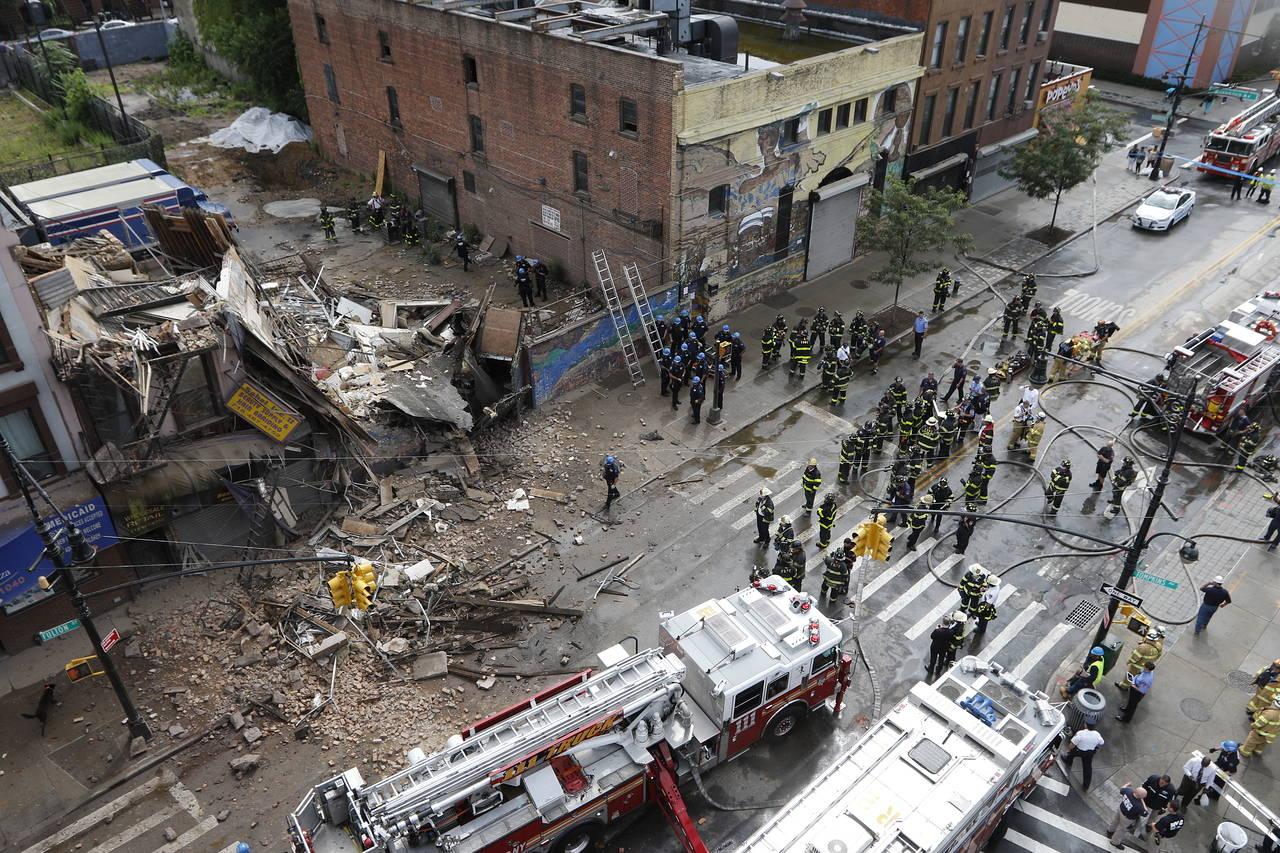
At least two people have been killed and 17 others injured, including seven children, after a three story building collapsed beside an excavation site in Brooklyn’s Flatbush neighborhood. Four victims were reported in critical condition, and rescue crews continued searching the rubble overnight because officials could not determine how many people remained unaccounted for. The cause remains under investigation, with city building inspectors examining the collapsed property and neighboring construction site.
At least two people have been killed and 17 others injured after a three story residential and commercial building collapsed in Brooklyn’s Flatbush neighborhood, sending sections of the structure crashing into an adjoining excavation site and triggering a large scale rescue operation involving hundreds of firefighters, emergency medical workers and search specialists. The collapse happened shortly after 4 p.m. Wednesday near the intersection of Flatbush and Bedford avenues, where the building at 1321 Flatbush Avenue suddenly gave way beside an active construction site. New York City officials said seven children were among those injured, while four victims were in critical condition and several others suffered injuries described as non life threatening. Rescue teams continued working through the night because authorities could not immediately determine how many residents, workers or visitors were inside the building at the time of the collapse.
The New York City Fire Department said the incident quickly became a major technical rescue operation as crews arrived to find large sections of the building reduced to piles of masonry, timber, metal and household debris. Parts of the structure had fallen into the neighboring excavation site at 2625 Bedford Avenue, complicating the search because firefighters had to work across unstable rubble while also monitoring the condition of the remaining walls and nearby buildings. FDNY Commissioner Lillian Bonsignore said 19 people were known to have been directly affected, including the two people who died, the injured civilians and one firefighter who suffered minor injuries during the emergency response.
Firefighters and emergency medical teams managed to pull several survivors from the wreckage in the hours after the collapse. Local television footage showed rescuers carrying victims away on stretchers while firefighters climbed through broken floors and sections of exposed apartments. At least four survivors were reportedly rescued from the debris several hours after the building came down, including a pregnant woman who was brought out alive after crews located her beneath the rubble. The successful rescues offered hope that others might still be found, but officials cautioned that the search would be difficult and could continue for days because of the size and instability of the collapse zone.
Mayor Zohran Mamdani described the collapse as devastating and asked New Yorkers to keep the victims and their families in their thoughts as emergency crews continued their work. He said the immediate priority was locating anyone who might still be trapped and making sure surrounding buildings remained safe. City officials also urged people to stay away from the area because Flatbush Avenue and nearby streets were closed to traffic while heavy rescue equipment, ambulances and fire vehicles occupied the scene.
The exact cause of the collapse remained unknown early Thursday. Officials confirmed that construction and excavation work was taking place directly beside the building, but they had not determined whether that activity contributed to the structural failure. The city Department of Buildings sent inspectors to the scene to examine both the collapsed property and neighboring structures and to review permits, construction records and any previous violations connected to the site.
The building contained a ground floor commercial space and residential apartments above it. When it collapsed, part of the structure fell toward the neighboring construction excavation, leaving rooms exposed to the street and sending a large volume of debris into the work site below. Images from the scene showed bedroom furniture, walls and other household items visible inside what remained of the upper floors, illustrating how suddenly the structure had failed.
Authorities said they were still trying to establish exactly how many people had been inside. That uncertainty was one of the main reasons the rescue operation continued overnight. Officials were checking resident lists, speaking with relatives and construction managers and comparing those accounts with information from hospitals and emergency crews to determine whether anyone remained unaccounted for.
The FDNY deployed search dogs, drones, specialized cameras and technical rescue teams to locate possible survivors. Firefighters also used buckets, saws and vacuum equipment to remove debris carefully rather than relying entirely on heavy machinery that could endanger anyone trapped beneath unstable sections. This slower method can significantly extend rescue operations, but it allows crews to listen for voices, detect movement and reduce the risk of causing secondary collapses.
Commissioner Bonsignore said the department could not immediately say how long the search would take because the rubble had to be removed methodically. She emphasized that crews would continue treating the operation as a rescue for as long as there was a reasonable possibility that someone could still be alive inside the collapse zone. The department brought in personnel trained specifically for structural collapses, confined space operations and urban search and rescue.
A nearby firefighting crew reached the scene within approximately one minute of the initial emergency call, according to city officials. That rapid response allowed firefighters to begin locating victims almost immediately and likely contributed to the number of people rescued alive. Residents in the surrounding area described hearing a powerful crashing sound before seeing dust and debris spread across the street.
One witness described the noise as resembling an explosion. Others said they heard people screaming and rushed toward the site before emergency crews ordered the public back because of the danger posed by unstable walls and falling debris. The chaotic first minutes of a building collapse are particularly dangerous because weakened sections can continue falling after the initial failure, placing both victims and rescuers at risk.
The city’s Department of Buildings began examining whether excavation work next door may have affected the building’s foundation. Excavation beside an existing structure requires careful engineering, shoring and monitoring because removing soil can change the pressure supporting neighboring walls and foundations. However, officials stressed that it was too early to conclude that construction caused the collapse, and investigators were considering multiple possible explanations.
Inspectors were expected to review engineering plans, permits, inspection records and complaints associated with both properties. They may also examine whether the collapsed building had existing structural defects, whether work at the neighboring site was being carried out according to approved plans and whether any recent changes to the property could have weakened it.
The city previously recorded at least one building violation associated with the property earlier in the year, according to local reporting, although that issue was described as resolved. Investigators will still review the complete enforcement history to determine whether earlier complaints or violations provide any indication of structural problems before Wednesday’s collapse. A resolved violation by itself does not establish a connection to the incident.
The number of children injured has added to the shock surrounding the disaster. Seven children were among those treated after the collapse, according to the FDNY. Authorities did not immediately release their ages or detailed conditions, citing medical privacy and the rapidly developing nature of the emergency.
Four people were reported critically injured, while other victims were taken to hospitals with injuries that were not believed to be life threatening. Emergency medical teams established treatment areas near the collapse site before transporting patients to several hospitals across Brooklyn. Officials said one firefighter also suffered minor injuries during rescue work but was expected to recover.
The identities of the two people who died had not been publicly released early Thursday pending notification of their families. The Office of the Chief Medical Examiner was expected to formally identify the victims and determine their causes of death after recovery operations were completed.
The disaster brought hundreds of emergency personnel into one of Brooklyn’s busiest corridors. Flatbush Avenue is a major commercial and transportation route through the borough, and road closures created significant disruption as emergency vehicles, cranes and rescue equipment occupied the intersection. Police asked drivers and pedestrians to avoid the neighborhood so rescue workers could move equipment freely.
Nearby residents were also concerned about whether other buildings could be unsafe. Department of Buildings engineers conducted structural inspections around the collapse zone to determine whether adjoining properties needed to be evacuated or stabilized. In urban neighborhoods where buildings share walls or stand only feet apart, one collapse can damage neighboring foundations and create additional risks.
Officials were particularly focused on walls left standing after the building failed. Unsupported masonry can collapse without warning, especially when rescue crews begin removing rubble around the base. Firefighters established safety zones and continuously monitored the remaining structure while search teams worked beneath and beside it.
Heavy rescue equipment was expected to become increasingly important once crews completed the most delicate parts of the search. Excavators and cranes can remove large slabs and sections of wall much more quickly, but they are generally introduced only after rescue commanders are confident they will not endanger survivors hidden beneath the debris.
Urban building collapses often require a combination of engineering expertise and emergency rescue techniques. Firefighters may need to build temporary supports known as shoring systems to stabilize sections of a structure before entering them. Cameras and listening devices can also be inserted through narrow openings to detect survivors in spaces too dangerous for rescuers to enter immediately.
Wednesday’s collapse occurred while construction activity in New York City remains intense, particularly in neighborhoods where older buildings sit beside redevelopment projects. The city has extensive regulations governing excavation, demolition and structural support because construction work in dense neighborhoods can create risks for neighboring properties if engineering safeguards fail.
Investigators will therefore need to determine whether the neighboring project was following required procedures. They will likely examine how deep the excavation was, what support systems had been installed, whether engineers had inspected the site recently and whether any cracks or movement had been reported in the collapsed building before the incident.
Residents and local business owners may also be interviewed as part of the investigation. Their accounts could help establish whether there were warning signs such as unusual noises, cracks, shifting floors or doors that suddenly became difficult to open. Such signs can sometimes indicate structural movement, although buildings can also fail suddenly without obvious warning.
The city may eventually issue emergency orders requiring stabilization, demolition or repairs to surrounding properties depending on what inspectors find. Those decisions are usually made after engineers determine whether the remaining walls can be safely preserved or whether they pose a continuing danger to the public.
For families waiting for news, however, the technical investigation remained secondary to the rescue effort. Relatives gathered near the area and contacted hospitals while officials worked to identify everyone believed to have been in the building. Because the property contained both residential and commercial spaces and sat beside an active construction site, authorities said establishing a complete list of people present could take time.
Construction workers were among the injured, according to early local reports. That raises the possibility that some victims were in the excavation site rather than inside the building when it collapsed. Investigators will need to establish where each person was located because that information could help reconstruct the direction and sequence of the structural failure.
The collapse occurred during the afternoon when both residents and construction workers were likely to be present. That timing may have contributed to the relatively high number of casualties compared with a similar incident occurring overnight when commercial spaces and work sites were empty.
Emergency responders faced additional challenges as darkness arrived. Portable lighting systems were brought into the area so firefighters could continue searching safely overnight. Night operations can slow rescue work because visibility is reduced and crews must be even more cautious about hazards such as broken gas lines, electrical cables and unstable debris.
Utility companies were expected to shut off gas and electricity around the collapse zone while the investigation continued. Damaged utility lines can create secondary dangers including fires, explosions and electrical shocks, so isolating them is a standard part of major structural collapse operations.
New York City has experienced several serious building collapses in recent years, prompting repeated scrutiny of construction enforcement and aging building infrastructure. Each incident has led to renewed questions about whether inspections and safety regulations are strong enough to detect dangerous conditions before structures fail.
The city maintains a system for residents to report cracks, leaning walls and other structural concerns through the Department of Buildings and 311. Emergency conditions can lead to immediate inspections, evacuation orders and enforcement against property owners. Investigators will examine whether any such complaints were made about the Flatbush property before Wednesday.
Mayor Mamdani said the city would provide additional information as the investigation develops. He thanked firefighters, paramedics, police officers, building inspectors and other responders who rushed to the scene and emphasized that the rescue effort would continue for as long as necessary.
The mayor also asked New Yorkers not to speculate about the cause until engineers and investigators complete their work. With a neighboring excavation site clearly visible beside the collapsed structure, questions about construction have already become a major focus, but officials said drawing conclusions before reviewing the evidence could be misleading.
The FDNY’s technical rescue teams are among the most experienced urban search units in the country, having responded to major structural failures, crane accidents and other complex emergencies. Their work at the Flatbush site requires crews to balance speed with caution because rescuers know that victims can survive for long periods in pockets created when floors and walls collapse around furniture or structural supports.
Those survival spaces are one reason crews continue searching even when initial conditions appear catastrophic. People have been found alive many hours and sometimes days after building collapses, particularly when debris creates voids that protect them from the weight above.
Search dogs can detect human scent through debris and help crews identify areas that require closer inspection. Drones equipped with cameras can also examine unstable sections from above without exposing firefighters to unnecessary risk. The combination of technology and manual searching allows rescuers to cover the site systematically.
Authorities said a complete search of the collapse area could take several days. Even after rescue operations end, crews must continue recovering debris so investigators can examine structural components and determine what failed first. Engineers may preserve specific pieces of foundation, wall or support material as evidence.
The investigation could eventually involve both city agencies and private engineering experts. If wrongdoing or serious safety violations are discovered, the case could lead to civil penalties, criminal referrals or lawsuits from victims and their families.
Property owners, contractors, engineers and developers associated with both sites may all face scrutiny depending on what investigators uncover. At this stage, however, authorities have not accused any person or company of causing the collapse.
The unanswered questions remain significant. Officials still need to determine the identities of the victims, whether anyone remains trapped, exactly how many people were inside or near the building and what caused a structure standing on one of Brooklyn’s busiest avenues to suddenly give way.
The strongest confirmed facts are that the three story building collapsed shortly after 4 p.m. Wednesday, fell partly into an adjoining construction excavation, killed at least two people and injured 17 others, including seven children. Rescue crews pulled several survivors from the debris and continued searching overnight because authorities could not confirm that everyone had been accounted for.
Until engineers complete their investigation, the cause must remain officially undetermined. The neighboring excavation will undoubtedly receive close scrutiny, but officials have not yet established that it triggered the collapse. The Department of Buildings is inspecting the work site, the remaining structure and nearby properties while FDNY teams continue the search.
For the Flatbush community, the disaster has transformed a busy neighborhood intersection into a rescue zone filled with emergency lights, heavy equipment and families awaiting news. The two confirmed deaths have already made the collapse a major tragedy, while the possibility that others remain beneath the debris means the emergency is not yet over.
The immediate focus remains on finding anyone who could still be trapped and supporting the injured. Only after rescue crews are confident that the site has been fully searched will attention turn completely toward determining why the building fell and whether the disaster could have been prevented.