ISRAEL ORDERS MILITARY TO STEP UP IRAN STRIKE READINESS AS TEHRAN THREATENS WIDER WAR
Israel’s security cabinet has reportedly ordered the military to increase preparations for possible new strikes on Iran as Tehran warns that another attack could trigger retaliation beyond the Middle East. Iranian security chief Mohsen Rezaei says military bases involved in attacks against Iran could be targeted from West Asia to Europe, while the IRGC has announced that it no longer considers itself bound by its previous 2,000km missile range limit. The military escalation is unfolding alongside continuing diplomatic efforts aimed at preventing another major round of fighting.
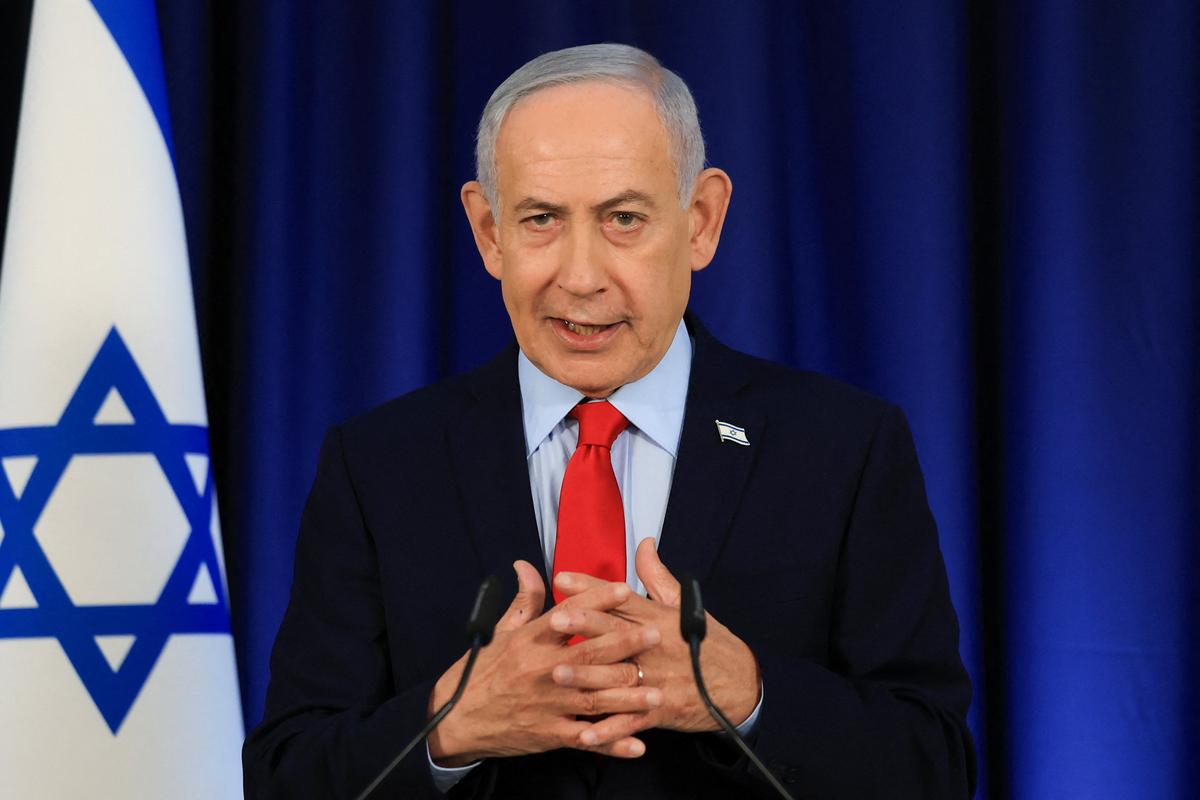
Israel has reportedly ordered its military to increase preparations for possible new strikes on Iran, raising fears of another major escalation in a conflict that has already spread across the Middle East and disrupted global energy markets, shipping routes and regional security. Israeli media reported that the security cabinet chaired by Prime Minister Benjamin Netanyahu issued new directives to the armed forces to strengthen operational readiness against Iran, while officials in Tehran responded with warnings that another attack would be met with retaliation extending far beyond the immediate region. The exchange comes at a particularly dangerous moment because diplomatic efforts led by Qatar and other intermediaries are still attempting to prevent a return to large scale fighting between Iran, Israel and the United States.
According to Israel’s public broadcaster KAN, the security cabinet instructed the military to step up preparations for possible action against Iran and warned that some of the measures under consideration could themselves create conditions capable of triggering another major war. The reports did not disclose specific targets, operational timelines or the exact scale of military preparations, and Israel has not publicly announced that a decision to launch strikes has already been made. The significance lies instead in the fact that the country’s highest security decision making body is reportedly directing the military to prepare for renewed offensive operations while negotiations aimed at limiting the conflict remain unresolved.
The timing has created additional political controversy inside Israel because Netanyahu is currently serving in a caretaker capacity following the October parliamentary election, which left his governing coalition without a majority. Opposition leader and former military chief Gadi Eisenkot, who has been given an opportunity by President Isaac Herzog to try to form a government, publicly warned Netanyahu not to use the military for major offensive operations unless Israel faces a direct and immediate threat. Eisenkot’s intervention reflects concern that decisions capable of restarting full scale war should not be taken casually while Israel’s political leadership remains unsettled and negotiations over a new government continue.
Netanyahu has nevertheless maintained a hard line toward Tehran and has repeatedly argued that Israel’s confrontation with Iran cannot end while the Iranian state retains the military and strategic capabilities that his government considers a threat. Israeli officials have previously targeted Iranian nuclear facilities, missile infrastructure, military installations and senior commanders, while arguing that Iran’s missile programme, regional alliances and nuclear ambitions pose an existential security challenge. Tehran rejects that characterization and insists that its military capabilities are defensive and that its nuclear programme is intended for peaceful purposes, although Western governments continue to raise concerns about Iran’s enrichment activities and restrictions on international inspections.
Iran’s response to the latest Israeli preparations has been unusually expansive. Mohsen Rezaei, secretary of Iran’s Supreme National Security Council, warned that if another war is launched against the country, every military facility involved in supporting the attack could become a target, including bases located outside the Middle East. His warning specifically suggested that Iranian retaliation could extend from West Asia into Europe if European based facilities are used to support attacks against Iran, creating a potential escalation pathway involving NATO countries and U.S. military infrastructure far beyond the Gulf.
That threat is consistent with a broader shift in Iranian military messaging over recent weeks. The Islamic Revolutionary Guard Corps has announced that it no longer considers itself bound by its longstanding self imposed 2,000 kilometre limit on ballistic missile range, a policy that previously kept most Iranian operational planning focused on Israel, Gulf states and nearby U.S. military installations. Iranian commanders have said that future retaliation will not be geographically constrained if Tehran concludes that outside countries are directly supporting attacks against it.
The change does not automatically mean Iran has deployed a large operational arsenal of long range missiles capable of striking every part of Europe, and military analysts continue to debate the true range, reliability and payload capabilities of Iranian systems. However, Iran has demonstrated significant expertise in ballistic missile and space launch technology, and Western governments have long warned that some technologies used in its civilian space programme could potentially support longer range missile development. The political significance of Tehran’s announcement is therefore considerable even where the precise operational capabilities remain uncertain.
Iran has also accelerated preparations on the ground. The Revolutionary Guard says it is constructing additional underground facilities for missile production and weapons storage, while authorities have expanded civilian military training programmes in Tehran. Recent images from the Iranian capital show women volunteers receiving weapons training, practising tactical exercises and participating in programmes promoted by the state as preparation for possible renewed attacks from the United States or Israel.
Those mobilisation efforts appear designed both to improve domestic preparedness and to signal that Tehran believes the possibility of renewed conflict remains real. Iranian commanders have repeatedly said that vulnerabilities identified during earlier rounds of fighting have been addressed and that new weapons, tactics and defensive systems are now available. They have also warned that another campaign would be more unpredictable and geographically wider than earlier exchanges.
The immediate strategic backdrop remains the broader U.S. and Israeli confrontation with Iran, which began earlier in 2026 and has already included air strikes, missile attacks, maritime confrontations and repeated threats involving the Strait of Hormuz. U.S. forces have carried out new targeted strikes on Iranian territory in recent weeks, even as President Donald Trump has publicly suggested that large scale military action may not be necessary if diplomatic efforts produce progress.
Trump said on November 9 that further major U.S. military action against Iran did not appear necessary “at this point,” reflecting growing efforts inside Washington to test whether economic pressure, the naval blockade and indirect negotiations can produce an agreement without another major bombing campaign. Secretary of State Marco Rubio has also argued that existing economic pressure may be sufficient unless Iran crosses what Washington considers critical red lines.
That apparent U.S. caution contrasts with Israel’s reported decision to increase military preparations. The difference does not necessarily mean Washington and Jerusalem are openly divided, but it highlights different strategic calculations about how much pressure should be applied while negotiations continue. Israel has historically taken a more aggressive position toward Iran’s nuclear and missile programmes and has repeatedly insisted that it reserves the right to act independently if it believes diplomacy is failing.
Tehran has meanwhile maintained that it will not negotiate under military coercion and has rejected U.S. demands that it transfer its stockpile of highly enriched uranium out of the country. Iranian security officials say enriched material will remain in Iran and can be used for civilian purposes, including potential nuclear powered maritime projects. Western governments remain concerned because uranium enriched to 60 percent is significantly above the level typically required for civilian power generation and is closer technically to weapons grade material, although Iran continues to deny that it is pursuing a nuclear weapon.
The disagreement over enriched uranium has become one of the biggest obstacles to a broader settlement. Russia has reportedly offered to take custody of some Iranian material as part of a possible diplomatic arrangement, but Tehran has rejected the idea. U.S. officials have indicated that Iran’s nuclear programme must be part of any agreement capable of ending the conflict, while Iranian officials insist that Washington must first address sanctions, military attacks and restrictions on shipping.
The Strait of Hormuz remains another major source of tension. Iran has used its control and influence around the waterway as strategic leverage, while the United States has deployed military resources to keep commercial shipping moving and enforce what Washington describes as a naval blockade against Tehran. The strait is one of the world’s most important energy routes, meaning renewed military confrontation could quickly affect global oil and gas prices.
Oil markets have already responded to the latest developments. Brent crude rose after reports of renewed Israeli preparations and Iran’s rejection of U.S. proposals concerning its nuclear stockpile, reflecting concern that another escalation could threaten energy infrastructure or shipping. Market movements remain highly sensitive to military statements because even limited attacks around Iran, the Gulf or the Strait of Hormuz can create expectations of supply disruption.
Iran has also warned that its response to another attack could extend beyond conventional military targets. Officials have previously suggested that undersea cables, data infrastructure and other strategic assets connected to countries supporting U.S. or Israeli operations could become vulnerable. Those threats are part of an increasingly asymmetric deterrence strategy intended to convince Washington, Israel and their partners that renewed attacks would impose costs well beyond the battlefield.
The risk of attacks on European based military facilities is particularly sensitive because U.S. forces operate from bases across the continent. Iran has previously issued warnings to countries including Bulgaria over the use of local facilities by American aircraft, and Iranian officials have discussed the possibility of targeting bases that directly support military operations against Tehran. Such an attack would dramatically broaden the conflict and could force European governments into much more direct military involvement.
European countries have so far generally supported diplomatic efforts and expressed concern about a wider war. Several governments have maintained sanctions and criticised Iran’s nuclear and regional policies, but many have also pushed Washington and Tehran toward negotiations rather than another open military confrontation. Iranian analysts themselves have warned that attacks on European territory could isolate Tehran diplomatically and produce a much broader international response.
Israel’s domestic political situation adds another layer of uncertainty. Netanyahu’s coalition lost its majority in the October election, and Eisenkot is now attempting to form a new government from a fragmented parliament. If he succeeds, Israel could soon have a leadership with a different approach to the Iran conflict, although national security concerns about Tehran remain widespread across the Israeli political spectrum.
Eisenkot’s warning against major military action during the caretaker period therefore reflects both constitutional and strategic concerns. He has not argued that Israel should ignore genuine threats from Iran, but has said the military should not be deployed into a major new confrontation unless the danger is immediate. His position appears intended to prevent a caretaker government from making irreversible decisions while political negotiations over a new administration continue.
Netanyahu’s supporters reject suggestions that national security decisions should be delayed because of domestic politics. They argue that Iran does not pause its military preparations while Israel negotiates coalition agreements and that any credible threat must be addressed according to security assessments rather than parliamentary timing. That dispute is likely to intensify if intelligence officials recommend operational action before a new government is formed.
The Israeli military itself has not publicly disclosed the nature of the preparations ordered by the cabinet. Increased readiness could involve intelligence gathering, air defence, long range strike planning, refuelling preparations, missile defence coordination or exercises designed to prepare for Iranian retaliation. Without official details, claims about specific targets or an imminent attack should be treated cautiously.
The absence of an announced strike order is important because military readiness does not automatically mean military action is inevitable. Governments regularly increase preparedness during periods of high tension to preserve options and strengthen deterrence. However, the current environment makes the Israeli decision particularly significant because Iran and Israel have already exchanged direct attacks, reducing the political and psychological barriers that once made such confrontation exceptional.
Any new Israeli strike would almost certainly be evaluated partly through the experience of earlier exchanges. Iran has used ballistic missiles, drones and attacks on regional military infrastructure in response to previous Israeli and U.S. operations, while Israel has relied heavily on long range air power, intelligence operations and missile defence. Both sides have since claimed to have improved their capabilities, increasing uncertainty over how another round would unfold.
Iran’s leadership is openly attempting to convince adversaries that the next confrontation would be broader and more expensive. Supreme Leader Mojtaba Khamenei has instructed military commanders to prepare for immediate retaliation without geographic restrictions if the country is attacked again. Iranian military officials have also described a shift toward a more offensive doctrine designed to prevent opponents from assuming that Tehran will simply absorb limited strikes without expanding the battlefield.
At the same time, diplomatic efforts have not collapsed. Qatar and other intermediaries continue to explore possible arrangements between Washington and Tehran, and U.S. officials have acknowledged that some communication remains active even as military pressure continues. Iranian officials have submitted proposals outlining conditions for ending the conflict, although Washington has described several of Tehran’s demands as unrealistic.
Among the disagreements are sanctions, the naval blockade, nuclear restrictions, the status of the Strait of Hormuz and the wider regional security structure. Iran wants guarantees against renewed attacks and greater control over the conditions governing the strait, while the United States and its allies want stronger restrictions on Iran’s nuclear and missile programmes and assurances about shipping and regional attacks.
The negotiations therefore face enormous obstacles even without the latest Israeli preparations. Every new military directive or retaliatory threat makes diplomacy more difficult because each side fears that the other is using talks merely to gain time or improve its battlefield position. Iran has repeatedly cited previous breakdowns in negotiations as evidence that it cannot trust Western guarantees, while Israeli officials argue that Tehran has used diplomacy in the past to preserve strategic capabilities.
The result is an increasingly unstable condition in which all sides say they are open to diplomacy while simultaneously preparing for renewed war. That combination can sometimes strengthen deterrence by making the consequences of escalation clear, but it can also increase the risk of miscalculation if one side interprets preparations as evidence that an attack is imminent.
A preemptive strike becomes especially dangerous in such an environment. Iranian officials have openly discussed the possibility of acting first if they become convinced that another assault is unavoidable, while Israel has historically relied on preventive military action when it believes critical threats are approaching. If both sides adopt that logic simultaneously, routine military movements or intelligence activity could potentially be interpreted as preparations for attack.
Regional governments are watching the situation closely because they could become targets even if they are not direct participants in the conflict. U.S. military bases are located across several Gulf states, and Iran has warned that facilities used to support attacks could be considered legitimate targets. Those governments therefore have a strong interest in preventing their territory from becoming part of an expanded battlefield.
The United Arab Emirates and other Gulf states have publicly warned that a comprehensive settlement remains difficult and that the region could face a prolonged period of instability. Their economies depend heavily on trade, aviation, energy exports and investment, all of which can be damaged by sustained military uncertainty even without direct attacks.
The humanitarian consequences of further escalation would also be severe. Iran has already experienced strikes on military and civilian infrastructure, while Israeli cities and regional bases have faced missile and drone attacks. Another large exchange could produce casualties, displacement and new damage across several countries at the same time.
The wider global impact could be equally serious because renewed attacks around the Gulf could disrupt oil exports and commercial shipping. Higher energy prices would affect economies far beyond the Middle East, while insurance premiums and shipping costs could rise quickly if companies perceive the Strait of Hormuz as unsafe.
For now, the clearest verified development is that Israel’s security cabinet has reportedly instructed the military to increase preparations for possible action against Iran. That is not the same as confirmation that an attack has been authorised or scheduled, and no public evidence establishes that strikes are imminent.
Iran’s response, however, shows that Tehran is taking the possibility seriously. Its leadership is publicly warning that another attack could trigger retaliation extending into Europe, while military commanders are expanding missile capabilities, underground infrastructure and civilian mobilisation.
The next phase will depend heavily on whether diplomatic efforts can produce a credible framework before either side decides that negotiations have failed. Washington appears to be signalling some reluctance to return immediately to large scale military operations, while Israel is keeping the option of renewed strikes visibly alive.
That divergence leaves the region in an extremely fragile position. Israel wants to preserve freedom of military action, Iran wants adversaries to believe that any new attack will carry far greater costs, and the United States is attempting to combine military pressure with negotiations.
The danger is that deterrence can collapse quickly if one side concludes that the other is preparing to strike first. With Israeli forces increasing readiness and Iran openly threatening retaliation without geographic limits, even a relatively small military incident could trigger decisions that move faster than diplomats can contain.
For now, another full scale Israel Iran confrontation is not inevitable, but the latest developments have brought the possibility back into sharp focus. The military preparations, expanded Iranian missile doctrine and increasingly global warnings from Tehran show that any new round of fighting could be broader than the exchanges that preceded it, with consequences stretching from the Gulf and Israel to European military facilities and the global energy market.