DEMOCRATS DEMAND ANSWERS AFTER 8 YEAR OLD HAITIAN BOY IS TAKEN INTO FEDERAL CUSTODY DURING ICE CHECK IN
California Democrats are demanding answers after an eight year old Haitian boy was taken into federal custody during a scheduled immigration appointment in San Diego. Video appears to show the third grader being led away by armed officers with his hands apparently restrained. ICE says the man accompanying him could not prove legal guardianship, so the boy was classified as an unaccompanied child and transferred to the Office of Refugee Resettlement. Senators Alex Padilla and Adam Schiff and four House members are demanding information about the child’s location, safety and reunification with family.
Democratic lawmakers in California are demanding answers from the Trump administration after an eight year old Haitian boy was taken into federal custody during a scheduled immigration appointment in San Diego, an incident that has intensified criticism of the government’s immigration enforcement policies and raised new questions about the treatment of children during deportation proceedings. The boy, a third grade student at Fay Elementary School in San Diego, attended the required appointment with the uncle he had been living with after his father was removed from the United States. Video recorded outside the federal immigration office shows several armed federal officers leading the child away, while lawmakers who reviewed the footage said he appeared to have been placed in restraints despite showing no visible sign of resistance or threat.
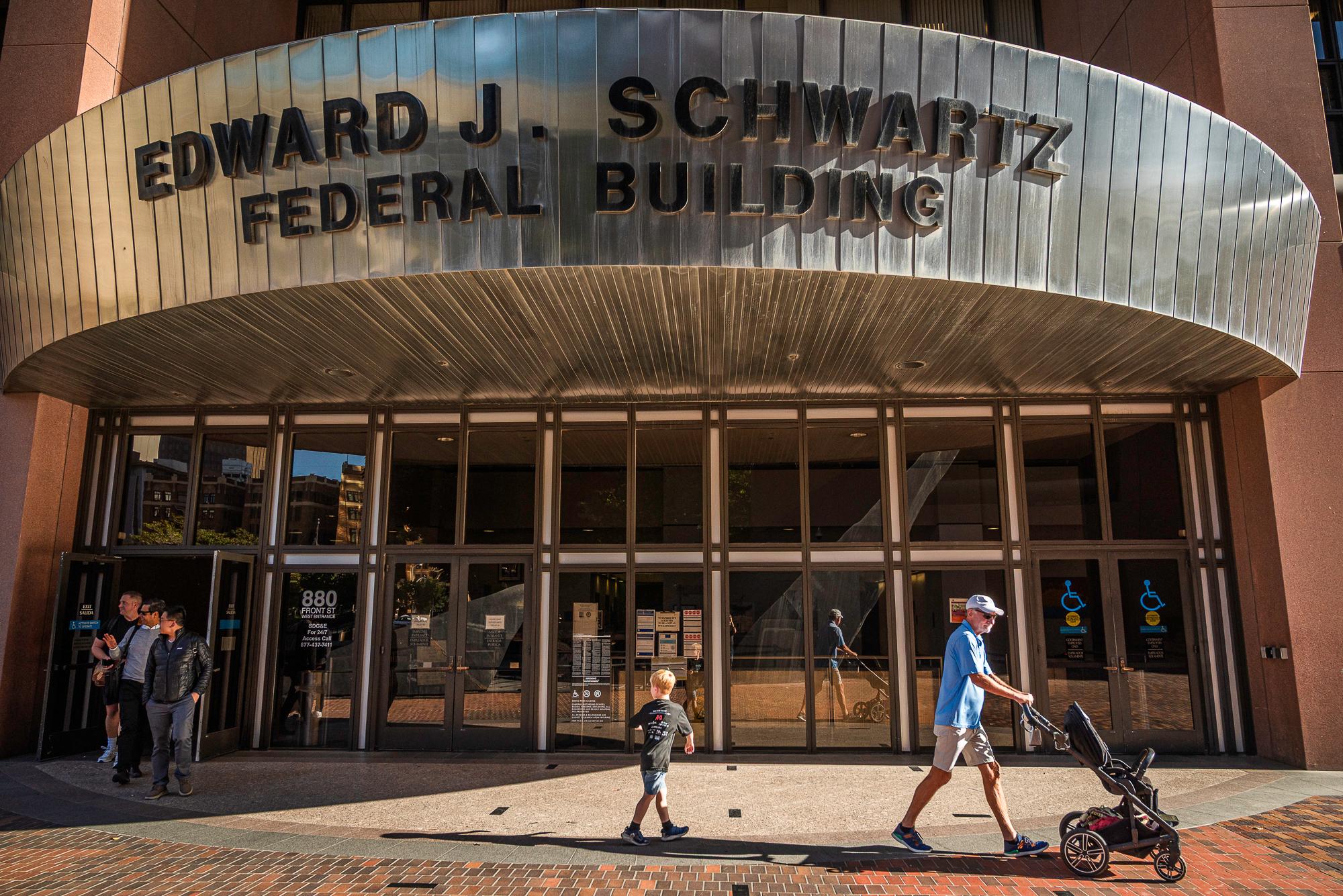
The incident took place at the Edward J. Schwartz Federal Building in downtown San Diego after the child was summoned for an immigration check in. Local advocates and school officials said the boy had been living with his uncle and cousins since his father was deported more than a year ago, and his uncle brought him to the appointment because the family did not want to violate immigration requirements. Instead of leaving with his caregiver after the meeting, the child was taken into federal custody and separated from the man who had accompanied him.
The boy’s immigration situation became more precarious after he lost Temporary Protected Status earlier this year. Haitians had previously been allowed to live and work temporarily in the United States under the humanitarian designation because of instability, insecurity and dangerous conditions in Haiti. The Trump administration ended that protection for large numbers of Haitian nationals, leaving many families vulnerable to detention and removal and creating uncertainty for children who had been living in the United States for years.
The case quickly attracted national attention after video of the child being escorted away was circulated by local advocates and media organizations. The footage reportedly shows three armed immigration officers walking the boy from the immigration office toward an elevator. Lawmakers said his hands appeared to be restrained, although federal officials have not provided a detailed public explanation of what restraints were used, why they were considered necessary or whether standard procedures were followed for a child of his age.
California Senators Alex Padilla and Adam Schiff joined Representatives Juan Vargas, Sara Jacobs, Mike Levin and Scott Peters in sending a formal letter to Homeland Security Secretary Markwayne Mullin and Health and Human Services Secretary Robert F. Kennedy Jr. demanding answers about the child’s treatment, location and safety. The lawmakers said the apparent use of restraints on an eight year old who appeared calm and compliant raised serious concerns about whether federal officers exercised appropriate judgment.
The six Democrats asked the administration to explain the legal basis for taking the child into custody and separating him from the person who brought him to the appointment. They also requested confirmation of his current whereabouts, whether his relatives had been informed of where he was being held and what steps federal agencies were taking to reunite him with family members or another appropriate caregiver.
The lawmakers said the incident was especially troubling because the boy had appeared voluntarily for a required immigration proceeding. They argued that people who comply with government instructions should not fear that a routine appointment will suddenly result in the detention of a child or separation from family. The case has therefore become part of a wider debate about whether aggressive enforcement at immigration offices discourages families from complying with legal requirements.
ICE and the Department of Homeland Security have pushed back strongly against the criticism. Federal officials said the boy was not taken into custody as punishment and was not placed in an ordinary adult immigration detention facility. According to DHS, the man who brought him to the appointment identified himself as the child’s uncle but could not provide documentation establishing that he was the legal guardian.
The government says that issue triggered requirements under federal law concerning unaccompanied immigrant children. Officials cited the William Wilberforce Trafficking Victims Protection Reauthorization Act, which provides protections for minors who enter or remain in the United States without a parent or legally recognized guardian. Under that framework, federal immigration authorities are generally required to transfer such children to the custody of the Office of Refugee Resettlement rather than keep them in standard ICE detention.
ICE said that once officers determined the accompanying adult could not establish legal guardianship, the child was treated as an unaccompanied minor. The agency said it acted out of concern for the boy’s safety and transferred him to the Office of Refugee Resettlement, which operates shelters and other placements for children in federal immigration custody.
That explanation has not satisfied advocates or local school officials. They argue that the child had an established home, school and family environment in San Diego and that federal officials were aware he had been living with relatives after his father’s removal. The central disagreement is therefore not simply whether federal law allows unaccompanied children to be placed in government custody, but whether the boy should reasonably have been classified as unaccompanied in the first place.
San Diego Unified School District officials have expressed particular concern because the child was an enrolled third grader whose teachers and classmates knew him as part of the school community. District leaders said his sudden disappearance into federal custody caused fear among students, parents and immigrant families who worry that similar events could happen to their own children.
The district said the boy’s uncle had cared for him after his father left the United States and had attempted to follow immigration rules by bringing him to the appointment. School officials questioned whether removing the child from that household served his best interests and argued that federal agencies should have explored less disruptive alternatives before separating him from the family he knew.
The Haitian Bridge Alliance and other immigration advocacy groups have also become involved in the case. Advocates say the boy had been living with relatives and was not abandoned or wandering without adult care. They argue that placing him in government custody could cause psychological harm, particularly because he had already experienced separation from his father.
Child welfare specialists have long warned that sudden separation from familiar caregivers can be traumatic for young children, especially when it occurs during an intimidating encounter with armed officers. The potential use of handcuffs or other restraints has therefore become one of the most emotionally charged elements of the case.
Federal officials have not publicly released the boy’s name, which is appropriate because of his age and immigration status. His identity has also generally been protected by news organizations and advocacy groups seeking to avoid exposing a child involved in a sensitive legal matter.
Questions about the exact date of the incident have appeared in different reports, with some accounts referring to November 4 and others to November 5. The broader sequence is clear, however. The boy attended a scheduled immigration proceeding at the federal building in downtown San Diego during the first week of November and was transferred into federal custody immediately afterward.
The lawmakers’ letter specifically asks DHS and HHS to provide a complete timeline. They want to know when the child was first taken into custody, when he was transferred to the Office of Refugee Resettlement and whether his relatives were informed throughout the process.
They are also seeking records explaining the decision to classify him as an unaccompanied child. That question could become legally important because federal law distinguishes between children who genuinely have no parent or legal guardian available and those who may be living with relatives whose guardianship has not been formally documented.
Immigrant families often rely on relatives to care for children after a parent is detained, deported, dies or leaves the country. In many cases, those caregiving arrangements are informal and do not involve court issued guardianship papers. Critics of ICE argue that rigidly requiring formal documents can separate children from stable family environments even when authorities have no evidence that the caregiver poses a danger.
DHS argues that the opposite risk is also serious. Officials say immigration authorities cannot simply hand children to any adult claiming a family relationship because trafficking, exploitation and fraudulent guardianship arrangements do occur. Federal agencies therefore say they have a duty to verify legal authority before releasing a child.
That tension sits at the center of the San Diego case. The government says it acted to protect the boy. His advocates say the government itself caused the harm by removing him from people who had already been caring for him.
The dispute also comes during an aggressive period of immigration enforcement under President Donald Trump’s second administration. ICE arrests have increased across California and other states as the government pursues a broader deportation campaign against people who have lost legal status or whose immigration cases remain unresolved.
The administration has defended that approach as enforcement of existing law. Officials argue that immigration rules are meaningless if people who no longer qualify for protected status are allowed to remain indefinitely without consequences. They also say scheduled check ins are legitimate opportunities to review a person’s legal status and determine whether further action is required.
Democrats and immigrant rights groups counter that the administration’s policies are increasingly sweeping up children, asylum applicants, longtime residents and people who are actively complying with immigration procedures. They argue that enforcement has become unnecessarily punitive and is creating widespread fear in schools, churches and immigrant communities.
The Haitian community in California has been especially affected because of changes to Temporary Protected Status. Many Haitian families built lives in the United States under the assumption that they would remain protected while conditions in Haiti remained dangerous. The end of that status has exposed adults and children to deportation proceedings even when they have strong community ties.
Haiti continues to face severe instability, including gang violence, political breakdown and humanitarian problems. Supporters of continued protection argue that returning people to those conditions is dangerous. The Trump administration has maintained that temporary protection cannot become permanent by default and that immigration law requires the government to reassess whether emergency protections remain necessary.
The eight year old boy’s case has now become a symbol of that broader policy conflict. Supporters of tougher enforcement may view the case as an example of federal agencies following legal procedures designed to protect children. Critics see it as evidence that immigration enforcement has become so rigid that a third grader can appear for an appointment and leave in federal custody.
Senator Padilla has been particularly outspoken on immigration enforcement in California. As ranking member of the Senate Judiciary Committee’s immigration subcommittee, he has repeatedly demanded access to detention facilities and information about enforcement operations. His involvement in the boy’s case ensures that the controversy will receive continued congressional attention.
Senator Schiff has also called for clearer answers from the administration. Both senators joined the San Diego House delegation in emphasizing that the first priority should be confirming the child’s location and ensuring that he is safe.
Representative Vargas, whose district includes areas with large immigrant communities, has argued that the child should be returned to the family members who have been caring for him. He and other lawmakers have questioned whether separating the boy from his uncle was proportionate to any uncertainty about legal guardianship.
Representatives Jacobs, Levin and Peters have similarly demanded a detailed explanation of why the situation could not have been resolved without taking the child into custody. Their letter asks whether federal officials considered alternatives, including temporary placement with verified relatives while documentation was reviewed.
The Department of Health and Human Services also has a major role because the Office of Refugee Resettlement falls under HHS. Once ICE transfers an unaccompanied child, HHS becomes responsible for placement, care and efforts to identify a suitable sponsor.
The process typically involves verifying the identity and background of relatives or other adults before a child can be released. Depending on the circumstances, that screening can take days or considerably longer.
Advocates worry that the boy could remain separated from his family during that process. They say the government should prioritize reunification because he already had an established caregiver and home in San Diego.
Federal officials say the screening is necessary precisely because children can be vulnerable to abuse or trafficking. The challenge is determining how much evidence should be required before a relative can be recognized as a safe caregiver.
The apparent use of restraints creates a separate question from the guardianship dispute. Even if officers had legal authority to take the child into custody, lawmakers want to know why physical restraints would have been necessary for an eight year old who appeared cooperative.
ICE has not publicly provided a detailed account explaining the restraint issue. The agency’s broader response has focused primarily on its claim that critics are misrepresenting a child protection transfer as an ordinary immigration arrest.
Video evidence will likely remain important as lawmakers examine that claim. Footage can show how officers physically handled the boy, although it may not reveal every conversation or event that occurred before the recording began.
Congressional investigators could request body camera footage, internal ICE reports and communications from the officers involved. Those records could clarify whether restraints were used, what risk assessment was made and who authorized the transfer.
The controversy also highlights how immigration enforcement increasingly intersects with local school systems. Teachers and administrators may suddenly lose contact with students who are detained, deported or separated from caregivers, leaving schools to support classmates and families with limited information.
San Diego Unified officials have said immigration enforcement fears are affecting school communities. Parents may become reluctant to attend appointments, send children to school events or interact with government agencies if they believe routine contact could result in detention.
The administration argues that such fears are often amplified by political rhetoric and inaccurate claims about enforcement. ICE says it follows federal law and does not indiscriminately target children.
The boy’s case may provide a test of those competing narratives because it involves documented video, a known school community and direct statements from both federal officials and elected lawmakers.
There is also a broader legal issue surrounding Haitian Temporary Protected Status. The revocation of protections has created thousands of cases in which people who were previously authorized to remain in the United States now face immigration proceedings.
For children, the consequences can be particularly complicated because their legal status may depend on their parents or broader humanitarian programs they did not choose for themselves. An eight year old has little control over immigration paperwork, travel decisions or guardianship arrangements.
That reality is one reason lawmakers are demanding that child welfare considerations receive greater weight. They argue that even when immigration law permits enforcement, agencies should use discretion to minimize unnecessary trauma.
DHS officials have repeatedly said the administration will enforce immigration law consistently regardless of age or political pressure. At the same time, federal law contains special protections for children, creating a complicated system in which enforcement and welfare obligations can operate simultaneously.
The San Diego case sits directly inside that contradiction. ICE says taking the boy away was a protective action. Critics say the child needed protection from the enforcement process itself.
The role of the Office of Refugee Resettlement will now be closely watched. Lawmakers want confirmation that the boy is in a licensed child care setting, has access to legal representation and can communicate with relatives.
They have also asked whether his family has received clear information about how to secure his release. For families unfamiliar with immigration law, navigating sponsor requirements and federal paperwork can be extremely difficult.
Advocates are calling for legal assistance to be provided quickly. Immigration proceedings involving children can be complex, and minors do not automatically receive government appointed lawyers in the same way defendants do in criminal court.
That lack of guaranteed representation has long been criticized by immigrant rights groups. They argue that expecting young children to navigate immigration court without legal counsel is fundamentally unfair.
Supporters of the existing system respond that immigration proceedings are civil rather than criminal and that nonprofit legal organizations often provide assistance. The practical availability of such help, however, varies widely.
The boy’s school district has already become an important advocate because educators know his personal circumstances and can document his community ties. School records can also help establish his residence, caregiving arrangements and daily life before the detention.
Those details may become relevant if his uncle or another family member applies to become his approved sponsor. HHS officials generally consider family relationships, background checks and the suitability of the home before releasing a child.
The government has not publicly said whether the uncle has now provided additional documentation or whether another relative has been identified. That information is among the details lawmakers want the administration to disclose.
The case has also prompted renewed criticism of immigration appointments being used as enforcement opportunities. Advocates say people are told to appear for required check ins and then detained when they comply, creating a system that effectively punishes cooperation.
ICE maintains that check ins exist specifically to monitor immigration status and that officers cannot ignore legal violations discovered during those appointments. The agency says individuals are informed that enforcement action may occur depending on their cases.
The question becomes more sensitive when the person appearing is a child. Critics argue that agencies should handle minors through child welfare channels rather than standard immigration enforcement tactics.
The Trump administration has made clear that it intends to continue large scale immigration enforcement despite Republican losses in the recent midterm elections. Homeland Security officials have said deportation operations will continue even as the White House discusses possible adjustments to the tone of its immigration strategy.
That means cases involving children and families are likely to remain politically significant. Democrats preparing to take greater control of Congress are expected to increase oversight of ICE and DHS, including investigations into detention conditions, family separation and enforcement around schools and courthouses.
The Haitian boy’s case could become one of the first major examples used in those hearings. It combines several issues Democrats have already prioritized, including treatment of minors, the end of protected status and the use of federal enforcement authority during routine immigration proceedings.
Republicans and administration officials are likely to defend the agency by emphasizing the guardianship issue. They will argue that releasing a child to an adult without verified legal authority could itself constitute negligence.
The dispute may therefore depend heavily on facts that have not yet been fully disclosed. If the uncle had substantial evidence of a longstanding caregiving relationship but lacked only formal paperwork, critics will argue that ICE acted too aggressively. If federal officials had specific reasons to doubt the relationship or safety of the household, the government’s explanation would carry greater weight.
So far, no public evidence suggests the uncle was accused of abusing or trafficking the child. The government’s explanation has focused on the absence of formal proof of legal guardianship rather than an allegation that he posed a danger.
That distinction will likely remain central as the controversy develops. Lawmakers are asking whether a paperwork problem justified physically separating an eight year old from his caregiver and transferring him into federal custody.
They also want to know whether officials considered the emotional impact of the decision. Children who have already experienced parental separation, migration and uncertainty may be especially vulnerable to trauma when taken into custody by armed officers.
Immigration agencies have policies governing the treatment of minors, and lawmakers may seek to determine whether those policies were followed. If restraints were used, the circumstances and authorization for that decision will be examined closely.
The case has already generated anger within San Diego’s Haitian community. Families affected by the end of Temporary Protected Status say the incident reinforces fears that children are not protected from immigration enforcement even when they are enrolled in school and living with relatives.
Community organizations are urging families to seek legal advice before attending immigration appointments. That response illustrates one of the unintended consequences critics warn about. Aggressive enforcement at check ins may encourage people to avoid appointments altogether.
Federal officials argue that avoiding required hearings can create additional legal problems and make removal orders more likely. They say the solution is compliance with immigration law rather than refusal to engage with authorities.
That tension is unlikely to disappear quickly. The administration remains committed to enforcement, while Democratic lawmakers and immigrant rights organizations are preparing more aggressive oversight.
For the eight year old at the center of the controversy, the immediate issue is much simpler. His family and lawmakers want confirmation that he is safe and a clear path toward reunification.
The administration says he has been placed in the care of the Office of Refugee Resettlement because federal officials could not verify the legal guardianship of the man who brought him to the appointment. Critics say that explanation does not answer why the child appeared to be restrained or why a family based solution was not arranged immediately.
Those unanswered questions are now at the heart of the congressional inquiry. Senators Padilla and Schiff and Representatives Vargas, Jacobs, Levin and Peters have demanded that DHS and HHS explain what happened and disclose what they are doing to reunite the child with family.
Until those answers are provided, the case will remain one of the most controversial recent examples of the human consequences of the Trump administration’s immigration crackdown. It raises fundamental questions about how immigration laws should be enforced when the person involved is not an adult accused of evading authorities, but an eight year old child who appeared for a required government appointment and left in federal custody.