TEENAGER FIGHTING FOR LIFE AFTER FALLING FROM TRAIN ON SYDNEY HARBOUR BRIDGE
A 17 year old boy is in critical condition after falling from a train onto the tracks of the Sydney Harbour Bridge at about 11:30 a.m. on Thursday. NSW Ambulance says he suffered serious injuries to his head, chest and pelvis and was taken to Royal North Shore Hospital after being treated by paramedics and a CareFlight medical team. Police are investigating how the fall occurred, with later reports indicating investigators are examining whether he had been riding on the exterior of the moving train.
A teenage boy is fighting for his life in hospital after falling from a moving train onto railway tracks on the Sydney Harbour Bridge, triggering a major emergency response and causing widespread disruption across one of the city’s busiest commuter routes. Emergency services were called to the rail corridor between Wynyard and Milsons Point stations at about 11:30 a.m. on Thursday after reports that a person had fallen from a train. Police later confirmed that the injured person was a teenage boy, while NSW Ambulance said he suffered serious injuries to his head, chest and pelvis before being transported in critical condition to Royal North Shore Hospital.
The incident immediately brought police, paramedics, rail authorities and specialist medical teams to the Harbour Bridge. A CareFlight helicopter landed at nearby Bradfield Park with a medical team that joined NSW Ambulance paramedics in treating the boy before he was moved to hospital by road. The severity of his injuries prompted an intensive emergency response, with the rail corridor closed while rescuers worked on the tracks and police began investigating how the teenager came to fall from the train.
NSW Police said officers from the Police Transport Command and Sydney City Police Area Command were called to the scene after reports that someone had fallen onto the tracks. Investigators were told that the boy had fallen from a train travelling across the Harbour Bridge, although the circumstances surrounding the incident remain under investigation. Authorities have not yet released a final official account explaining exactly where the teenager had been positioned immediately before the fall or what caused him to lose his grip or balance.
Later reports identified the teenager as a 17 year old and said police were examining witness accounts and CCTV footage indicating that he may have been riding on the exterior of the train. The dangerous activity is sometimes described as train surfing or buffer riding, in which people climb onto external parts of a train while it is moving. Police had not formally concluded their investigation at the time of the latest update, and the circumstances remain subject to further examination.
The possibility that the teenager was outside the passenger compartment has become a major focus because such behaviour carries an extreme risk of catastrophic injury. People riding on exterior sections of trains can be struck by infrastructure, lose their grip during acceleration or braking, fall onto live tracks or be hit by another service. Authorities have repeatedly warned that rail corridors contain hazards that may not be immediately visible to passengers and that entering restricted areas can result in death or life changing injuries.
The boy’s injuries demonstrate the seriousness of the incident. NSW Ambulance said he suffered trauma to multiple parts of his body, including his head, chest and pelvis. Those injuries were considered serious enough for paramedics and CareFlight specialists to provide advanced treatment before transferring him to Royal North Shore Hospital, one of Sydney’s major trauma centres.
The decision to transport the teenager by road rather than by helicopter does not indicate that his condition was less serious. CareFlight medical teams frequently travel with critically injured patients after landing near an incident and can accompany them in an ambulance when road transport is considered the safest or fastest option from the scene.
Emergency services had to work in a particularly difficult environment because the incident occurred on the Sydney Harbour Bridge rail corridor. The tracks run directly alongside one of the city’s most important road links, leaving limited space for emergency crews and requiring rail services to be stopped while paramedics and police entered the area.
Sydney Trains suspended services across the Harbour Bridge as the emergency response unfolded. T1 North Shore Line trains were stopped between Wynyard and North Sydney, while services on the T9 Northern Line also experienced delays as the disruption affected the wider rail network.
Transport for NSW advised commuters to avoid relying on normal rail services through the affected section and consider alternative transport. Passengers travelling between the city and the North Shore were encouraged to use Sydney Metro services where possible, while commuters were told to allow additional travel time and monitor station announcements and information displays.
The interruption caused significant delays because the Harbour Bridge rail corridor is one of the principal links connecting Sydney’s central business district with the North Shore. Thousands of commuters use the route each day, and even a relatively short closure can affect services across multiple lines.
Replacement buses were initially unavailable between the affected stations, adding to the disruption. That meant many passengers had to use the Metro, existing bus services, ferries or other transport while emergency crews remained on the tracks.
The closure was not simply a precautionary traffic measure. Rail operators had to keep trains away from the area because paramedics and police were working directly inside the rail corridor, where moving trains would have created an immediate danger to both the injured boy and the emergency personnel treating him.
Services were eventually able to resume after emergency crews cleared the tracks, although Transport for NSW warned passengers to expect continuing delays as the rail timetable recovered. Train networks can take considerable time to return to normal following an unexpected closure because services and crews become displaced across the system.
Police have now begun reconstructing the moments before the fall. Investigators are expected to review CCTV footage from the train, stations and railway infrastructure, as well as information from passengers and other witnesses who may have seen the teenager before or during the incident.
Reports indicate that two other young people may have been with the boy and are assisting police. Their accounts could become important in establishing exactly what happened and whether the teenager had deliberately climbed onto an external section of the train or whether another sequence of events led to the fall.
Investigators may also examine the train itself to determine where the boy could have been positioned and whether physical evidence supports witness descriptions. Rail vehicles carry cameras and other monitoring equipment that can sometimes provide useful information during investigations.
Police have appealed for anyone with information to come forward. Witnesses who were travelling on trains in the area or were near the Harbour Bridge rail corridor at approximately 11:30 a.m. may be able to provide photographs, video or observations that help establish the sequence of events.
The investigation will also consider whether the teenager entered a restricted part of the train before it departed a station or gained access while the service was already moving. Modern passenger trains are designed to prevent people from accessing dangerous external areas, but determined individuals may still attempt to climb onto couplings, rear sections or other prohibited spaces.
Train surfing has periodically become a concern in cities around the world, particularly among young people seeking excitement or recording dangerous stunts for social media. Authorities have repeatedly warned that the practice can result in fatal falls, electrocution and collisions with infrastructure.
Sydney’s rail network presents additional risks because trains travel through tunnels, beneath overhead electrical infrastructure and close to trackside structures. A person riding outside a carriage can encounter hazards with little or no warning.
The Harbour Bridge itself is an especially dangerous location for such activity. The railway tracks are elevated high above surrounding roads and water and run through a constrained transport corridor where there is virtually no safe space outside designated rail areas.
The incident is expected to renew public discussion about rail safety and the influence of online videos showing dangerous behaviour. Transport authorities have previously warned that social media content can encourage young people to attempt risky stunts without understanding how quickly conditions can become deadly.
Authorities may also examine whether additional physical barriers, surveillance or public education measures could reduce the risk of people accessing exterior sections of trains. However, rail operators consistently emphasise that the most important safety rule is simple. Passengers must remain inside designated areas and never enter tracks or other restricted parts of the network.
The teenager’s age has added to public concern. At 17, he is still a minor, and authorities are expected to protect his identity while the investigation and medical treatment continue. Police and hospitals have not publicly released his name.
His family is likely to receive information directly through police and medical teams rather than through public statements. Hospitals typically provide only limited updates in cases involving minors unless relatives authorise additional information.
At the time of the latest reports, the teenager remained in critical condition. That description means doctors considered his injuries serious and potentially life threatening, although it does not predict the eventual outcome.
Head trauma can be particularly dangerous because internal injuries may not be immediately visible and can worsen rapidly. Chest injuries can affect breathing and internal organs, while pelvic injuries can involve severe bleeding and require complex surgery.
The fact that paramedics were able to reach the teenager quickly may improve his chances, but the long term impact of his injuries will depend on their severity and how he responds to treatment.
Emergency response times were helped by the incident’s proximity to central Sydney and major medical facilities. Bradfield Park provided a nearby landing area for the CareFlight helicopter, allowing the specialist team to reach the scene without attempting to land directly on the bridge.
The operation involved coordination between NSW Police, NSW Ambulance, CareFlight, Transport for NSW and Sydney Trains. Such coordination is necessary during rail emergencies because train movements must be stopped before medical personnel can safely enter tracks.
The incident began during the daytime when trains and surrounding roads were busy, increasing the potential disruption. Rail staff had to manage large numbers of passengers while emergency services concentrated on the injured teenager.
Passengers waiting at Wynyard, Milsons Point, North Sydney and other stations were told to monitor changing service information. Some services were terminated early or redirected as controllers attempted to prevent trains from entering the closed corridor.
The Sydney Metro became an important alternative because its route provides another connection between the city and North Sydney. Transport authorities encouraged commuters who could use the Metro to do so while the bridge rail line remained unavailable.
The emergency demonstrated how a single incident on a critical piece of infrastructure can affect a much larger transport system. The Harbour Bridge is one of only a limited number of high capacity transport crossings connecting central Sydney with areas north of the harbour.
When the rail corridor is closed, passengers must be redistributed across other trains, buses, ferries and Metro services. That sudden increase in demand can create congestion beyond the immediate area where the emergency occurred.
For police, however, transport disruption remains secondary to determining what happened to the teenager. Investigators will need to establish whether his actions were deliberate, whether anyone encouraged or assisted him and whether there were opportunities to prevent the incident before the train reached the bridge.
If other teenagers were involved in dangerous behaviour, police may also consider whether any offences occurred. The immediate focus, however, remains gathering evidence and understanding the circumstances rather than announcing charges.
Authorities are likely to speak with train crew members as part of the investigation. Drivers and guards may be able to provide information about unusual events before the incident, including emergency alarms, reports from passengers or activity around the exterior of the train.
Rail operators may also inspect onboard data and surveillance systems. Modern trains record substantial operational information that can help investigators determine speed, braking and other factors around the time of an incident.
There has been no suggestion that the train itself suffered a mechanical failure. The investigation is currently focused on how the teenager came to be outside or fall from the train rather than on any confirmed equipment defect.
There has also been no report that another train struck the boy after he fell onto the tracks. Emergency services were able to access him and begin treatment once the corridor was secured.
That point is significant because a fall onto an active rail line can easily result in a secondary collision. The rapid suspension of services may have prevented an already serious incident from becoming even worse.
Police have not confirmed whether power to the rail corridor was switched off during the rescue, although electrical safety procedures are normally part of emergency responses where personnel must enter restricted rail areas.
The Sydney Harbour Bridge carries overhead electrical systems used to power trains, creating another potential hazard for anyone outside a carriage. Even without direct contact, high voltage rail infrastructure can be extremely dangerous.
Transport safety campaigns frequently warn passengers that rail environments contain risks that are not always obvious. Electrical equipment, high speed trains and narrow clearances make tracks particularly unforgiving.
Young people may underestimate those dangers when attempting stunts for excitement or social media attention. Police and transport agencies have repeatedly urged parents and schools to discuss rail safety with teenagers.
The incident could now become an important example in those campaigns because of the severity of the boy’s injuries. Authorities may use the case to reinforce warnings that train surfing can cause devastating consequences within seconds.
Social media companies may also face renewed calls to remove or limit videos that encourage dangerous rail behaviour. Platforms generally prohibit content that promotes harmful activities, but enforcement can be difficult when videos are uploaded rapidly or framed as entertainment.
There is currently no confirmed public evidence that the Sydney teenager was filming himself or attempting a stunt specifically for social media. Reports about possible train surfing should therefore be separated from speculation about his motive.
That distinction is important while police continue investigating. Even if CCTV shows him riding outside the train, investigators would still need evidence before concluding why he did so.
The public response has largely focused on the seriousness of the incident and concern for the boy’s recovery. Images of ambulances, emergency crews and the CareFlight response around Milsons Point quickly circulated as commuters encountered the unexpected closure.
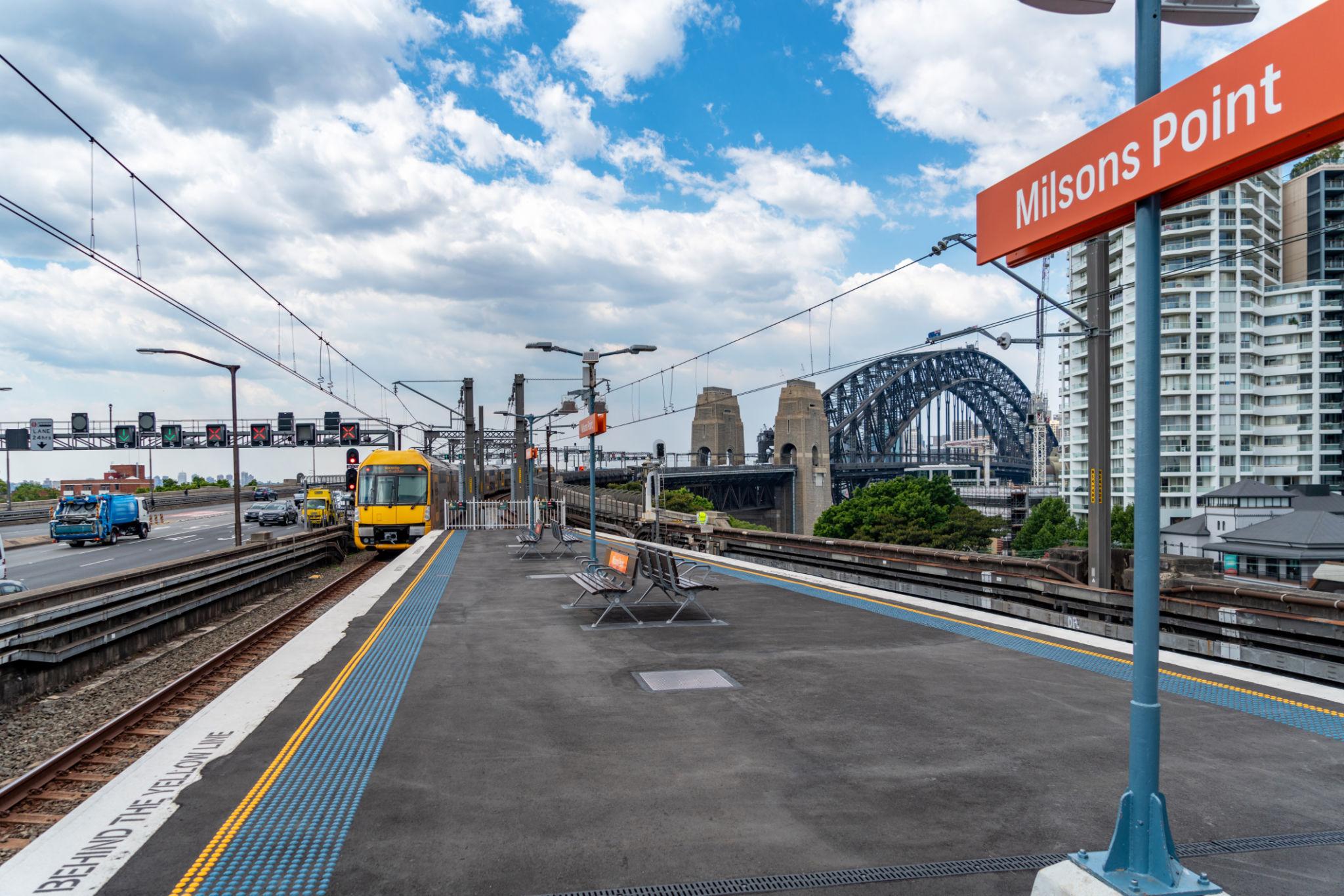
Milsons Point is normally one of Sydney’s busiest and most recognisable stations because of its location beside the Harbour Bridge and close to major tourist attractions. The emergency transformed the area into a response zone as police and paramedics controlled access to the tracks.
The station itself remained central to managing the disruption because passengers arriving from the North Shore had to be redirected before services could cross the bridge.
Wynyard played a similar role on the city side. Trains were prevented from continuing through the affected section, forcing commuters to change their routes.
The Transport Management Centre issued updates advising passengers that services were not running normally and that they should use alternative transport. Those warnings remained in place until rail authorities were confident emergency personnel had cleared the corridor.
The event occurred at a time when Sydney’s public transport network increasingly relies on multiple modes operating together. The Metro provided an alternative during the rail shutdown, demonstrating the value of having another high capacity connection beneath the harbour.
However, unexpected transfers can still create significant confusion for passengers unfamiliar with alternate routes. Transport staff were deployed to help direct commuters while electronic displays and announcements provided updates.
Once the tracks reopened, delays continued because trains were no longer in their scheduled positions. Some passengers experienced longer waits even after the immediate emergency had ended.
Transport authorities advised commuters to continue allowing additional travel time throughout the recovery period. That is standard following major service suspensions because it can take hours for a complex rail network to fully return to schedule.
The investigation into the teenager’s fall may take considerably longer. Police will need to review footage, interview witnesses and obtain information from rail authorities before determining whether any charges or additional safety recommendations are appropriate.
If investigators confirm that the boy was train surfing, authorities may examine how he accessed the exterior section and whether station staff or passengers had an opportunity to notice him before the train entered the bridge.
Those findings could help rail operators identify potential weaknesses in surveillance or access controls. They could also inform future education campaigns aimed at preventing similar behaviour.
There is no indication at this stage that authorities intend to blame rail staff for the incident. The investigation remains focused on establishing the facts.
The strongest confirmed information is that a teenage boy fell from a train onto the tracks of the Sydney Harbour Bridge at approximately 11:30 a.m. on Thursday and suffered multiple serious injuries. He was treated by NSW Ambulance and CareFlight specialists before being transported to Royal North Shore Hospital in critical condition.
Police are investigating how the fall happened, while later media reporting suggests they are examining the possibility that the 17 year old had been riding on the outside of the train. That aspect should remain attributed to investigators and reporting until police issue a final finding.
The emergency suspended T1 North Shore Line services between Wynyard and North Sydney and caused delays on the T9 Northern Line. Sydney Trains encouraged commuters to use Metro services or other transport while the tracks were unavailable.
Services later began resuming, but passengers were warned that delays would continue as the network recovered from the interruption.
For the teenager and his family, however, the transport disruption is far less important than his medical condition. He remains critically injured after a fall that turned an ordinary Thursday morning train journey across one of Australia’s most famous landmarks into a major rescue operation.
The incident now serves as a stark reminder of how dangerous railway environments can be outside designated passenger areas. Police are continuing their investigation, while doctors at Royal North Shore Hospital work to treat the boy’s serious head, chest and pelvic injuries.
Until investigators complete their work, questions remain about exactly how he came to fall from the train. What is already clear is that the incident was severe enough to shut one of Sydney’s most important rail corridors, bring specialist emergency teams onto the Harbour Bridge and leave a 17 year old teenager fighting for his life.