ISRAEL’S POLITICAL DEADLOCK PUTS FUTURE OF NETANYAHU’S FAR-RIGHT ALLIES UNDER SCRUTINY
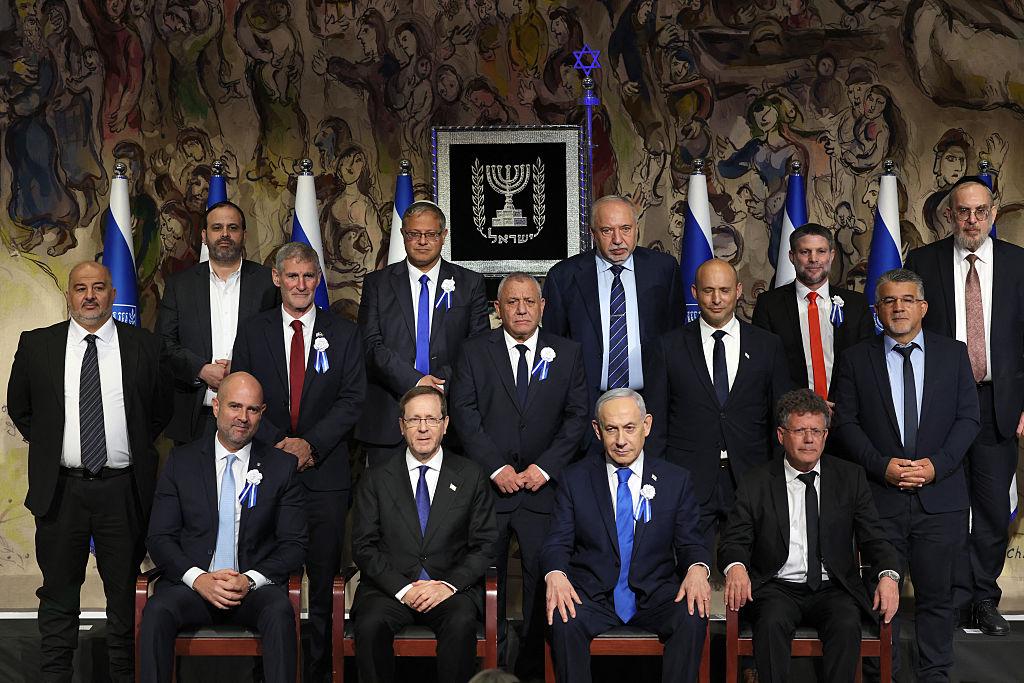
Israel’s October 27 election has left the future of far-right ministers Bezalel Smotrich and Itamar Ben-Gvir uncertain as opposition leader Gadi Eisenkot attempts to form a government capable of replacing Benjamin Netanyahu. Netanyahu’s bloc won 53 seats, short of the 61 required for a majority, while Eisenkot’s four-party alliance secured 48 and Arab-led parties won a record 19. Ben-Gvir’s Otzma Yehudit retained seven seats and Smotrich’s Religious Zionism-Zehut won six, ensuring both remain important figures on Israel’s nationalist right even if they lose their cabinet positions. President Isaac Herzog has given Eisenkot the first mandate to form a government, but significant disagreements over Arab-party support, ultra-Orthodox military exemptions and possible cooperation with Netanyahu leave the outcome unresolved.
JERUSALEM — Israel’s post-election political deadlock has placed renewed attention on the future of the far-right parties that helped sustain Benjamin Netanyahu’s government, as opposition leader Gadi Eisenkot attempts to assemble a governing coalition capable of ending the country’s longest-serving prime minister’s latest period in power. Israel’s October 27 election left Netanyahu’s religious-nationalist bloc with 53 seats in the 120-member Knesset, short of the 61 required for a majority, while Eisenkot’s four-party opposition alliance won 48 seats and two Arab-led parties secured a combined 19. President Isaac Herzog subsequently gave Eisenkot the first opportunity to form a government after he received the largest number of parliamentary recommendations, creating the possibility that Finance Minister Bezalel Smotrich and National Security Minister Itamar Ben-Gvir could move from influential cabinet positions into opposition even though both of their parties survived the election and retained significant representation in parliament.
The result represents a substantial change from the balance of power that allowed Netanyahu to govern with one of the most right-wing coalitions in Israeli history. Likud remained the largest individual party with 27 seats, but Netanyahu no longer commands an automatic majority with his established allies. Ben-Gvir’s Otzma Yehudit won seven seats with about 5.7 percent of the vote, while the Religious Zionism-Zehut list led by Smotrich secured six seats with just over 5 percent. Together they hold 13 seats, enough to remain a significant force within the nationalist right but not enough to guarantee their continued influence over government policy if Eisenkot succeeds in constructing an alternative coalition.
Eisenkot, a former Israel Defense Forces chief of staff whose Yashar party won 21 seats, was given 28 days to try to form a government, with the possibility of an extension. His challenge is formidable because the parliamentary arithmetic requires cooperation among parties that disagree profoundly on questions ranging from Palestinian citizens of Israel and military conscription to religion, settlements and the future of Netanyahu himself. Eisenkot’s four-party bloc consists of Yashar, Naftali Bennett’s Together alliance, Yair Golan’s Democrats and Avigdor Lieberman’s Yisrael Beitenu, but its 48 seats remain 13 short of a majority. The record 19 seats won by the Joint List and Ra’am could theoretically provide the numbers needed to remove Netanyahu, yet Eisenkot and some of his partners have been reluctant to construct a government formally dependent on Arab parties.
That difficulty has made the fate of Smotrich and Ben-Gvir inseparable from the wider coalition negotiations. If Eisenkot can form a government without Netanyahu, the two far-right ministers would almost certainly lose the unusually powerful positions they have occupied since Netanyahu returned to office at the end of 2022. Smotrich, as finance minister and a minister with authority over significant aspects of civilian administration in the occupied West Bank, has been central to settlement expansion and policies designed to strengthen Israeli control over the territory. Ben-Gvir, as national security minister, has exercised political influence over the police and has become one of the most outspoken advocates of harder military and security policies toward Palestinians.
Both men have pushed Israeli politics further to the right on issues including West Bank settlements, Palestinian statehood, Gaza and the use of state power against Palestinian militants and suspected attackers. They have repeatedly advocated measures that critics inside and outside Israel describe as annexationist or discriminatory, while their supporters argue that those policies respond to persistent security threats and reject diplomatic approaches they believe have failed. Smotrich and Ben-Gvir have both opposed the establishment of an independent Palestinian state, supported expanding Jewish settlements in the occupied West Bank and promoted policies intended to consolidate Israeli sovereignty over areas Palestinians seek for a future state.
Their influence became particularly important after the Hamas-led attacks on southern Israel on October 7, 2023, which killed about 1,200 people according to Israeli authorities and resulted in roughly 250 people being taken hostage. Israel’s subsequent military campaign in Gaza killed tens of thousands of Palestinians, according to Gaza health authorities, displaced much of the territory’s population and triggered widespread international criticism and legal scrutiny. Throughout the war, Ben-Gvir and Smotrich consistently pressed Netanyahu to pursue more aggressive policies, opposed arrangements they believed would allow Hamas to survive and at various points threatened political consequences if the prime minister accepted ceasefire or hostage agreements they considered too concessionary.
Their rhetoric has also generated major international controversy. Smotrich has spoken in favor of encouraging Palestinians to leave Gaza and has promoted Israeli settlement in the territory after the war, positions rejected by the United States and many other governments. Ben-Gvir has made similar arguments and has repeatedly called for a larger Israeli presence in Gaza. Both ministers have also supported policies in the West Bank that critics say amount to steps toward de facto annexation, although Netanyahu’s governments have stopped short of formally annexing most of the territory.
Those positions have made the possibility of their removal from government particularly consequential for Israel’s relationships with Washington, European governments and Arab states. Western officials have repeatedly criticized Israeli settlement expansion and statements by far-right ministers advocating Palestinian displacement, while several governments have imposed sanctions on extremist settlers or criticized measures weakening the Palestinian Authority. A government led by Eisenkot would not necessarily reverse Israel’s broad opposition to Palestinian statehood or fundamentally transform its security policy, but it could reduce the direct influence of ministers who have openly championed settlement expansion and annexation.
Eisenkot himself is not campaigning as a traditional peace-process candidate. He opposes the creation of a Palestinian state under current conditions and has said Israel must retain overriding security control between the Jordan River and the Mediterranean Sea. He also insists that Hamas must be disarmed before Israel completes any military withdrawal from Gaza and has said Israel should be prepared to resume fighting if necessary. His disagreements with Netanyahu and the far right therefore concern the method, structure and political objectives of Israeli policy as much as the basic security principles underlying it.
One important distinction is the West Bank. Eisenkot has opposed unauthorized settlement outposts, condemned settler violence against Palestinians and rejected construction in the strategically sensitive E1 area east of Jerusalem, where international critics say Israeli building could severely undermine the territorial continuity of a future Palestinian state. Netanyahu’s government, with Smotrich exercising substantial authority over settlement policy, oversaw a rapid expansion of settlement planning and the legalization of previously unauthorized outposts. That record means an Eisenkot government could alter the pace and administrative mechanisms of settlement expansion even if it does not revive negotiations toward Palestinian statehood.
Ben-Gvir’s future raises different questions because his political identity is closely tied to internal security, policing and Jewish nationalist activism. Before becoming national security minister, he was known as a lawyer and activist associated with the most hardline elements of Israel’s settler movement. Earlier in his life, he was convicted of incitement to racism and supporting a terrorist organization, convictions he has since sought to distance from his current political role. His rise from the margins of Israeli politics into a senior cabinet position became one of the defining features of Netanyahu’s 2022 coalition.
As national security minister, Ben-Gvir sought greater influence over police policy and pushed for expanded civilian gun ownership following the October 7 attacks. His ministry promoted the distribution of firearms to eligible Israeli civilians, a policy supporters said was necessary to allow communities to defend themselves during attacks. Critics warned that rapid expansion of civilian weapon possession could increase violence and weaken safeguards. Ben-Gvir also repeatedly clashed with police officials, the attorney general and other institutions over questions surrounding the minister’s authority to influence operational policing decisions.
Smotrich’s position has been equally consequential because he combined control of the Finance Ministry with additional responsibilities affecting the West Bank. The arrangement allowed him to influence both national budgets and administrative policies governing settlements and Palestinian communities in territory occupied by Israel since 1967. Critics accused him of using those authorities to advance a gradual annexation strategy without requiring a formal parliamentary declaration, while Smotrich and his allies argued that Jewish communities in the West Bank should no longer be governed through temporary military arrangements.
International law considers Israeli settlements in the occupied West Bank illegal, a position supported by most of the international community and international legal institutions. Israel disputes that characterization and argues that the territory’s legal status is more complicated because it was not under recognized Palestinian sovereignty before 1967. The settlement issue remains one of the most difficult obstacles to any future Israeli-Palestinian agreement and one of the areas where the composition of Israel’s next government could produce meaningful policy differences.
Despite their controversial reputations, the election demonstrated that neither Smotrich nor Ben-Gvir has disappeared from Israeli politics. Ben-Gvir’s Otzma Yehudit increased its representation from six seats in the outgoing Knesset to seven, while Smotrich’s Religious Zionism-Zehut alliance secured six seats after entering the campaign at times facing questions over whether it would pass Israel’s 3.25 percent electoral threshold. Their combined support shows that a substantial segment of Israeli voters continues to favor a nationalist platform considerably to the right of Likud on territory, security and Palestinian issues.
That electoral survival matters because even if Eisenkot removes them from government, they could become prominent opposition voices attacking any coalition they consider insufficiently aggressive. Ben-Gvir has built a political brand around challenging governments from the right and could portray compromises involving Arab parties, ultra-Orthodox parties or territorial restraint as betrayals of nationalist voters. Smotrich could similarly use his position outside government to mobilize settlers and religious-nationalist constituencies against policies he believes weaken Israeli control over the West Bank.
The possibility of another election also means their parties could quickly regain leverage. Eisenkot does not yet possess a governing majority, and his negotiations face deep structural obstacles. The two Arab-led parties gave him enough recommendations to receive the presidential mandate before Netanyahu, but Eisenkot has resisted forming a conventional coalition dependent on them. Avigdor Lieberman has also opposed establishing a minority government relying on Arab-party support, while disagreements over military service exemptions complicate any attempt to bring ultra-Orthodox parties into an alternative coalition.
The military conscription issue has become particularly difficult after the prolonged wars that followed October 7. Ultra-Orthodox parties want protections for exemptions allowing many yeshiva students to avoid compulsory military service, while Eisenkot, Lieberman and other opposition figures have called for a broader sharing of the military burden. Israel’s Supreme Court has ruled that the government cannot continue funding military-age religious students who lack valid deferments under expired legal arrangements, adding constitutional and budgetary pressure to negotiations.
If Eisenkot cannot resolve those conflicts, Netanyahu could receive his own opportunity to form a government. The prime minister’s 53-seat bloc begins closer to a majority than Eisenkot’s formal 48-seat alliance, but it still needs additional lawmakers to reach 61. Netanyahu has called for a broad government involving Zionist parties but has faced firm opposition from several leaders who campaigned specifically on removing him from office. A unity agreement could theoretically exclude or reduce the power of Smotrich and Ben-Gvir if centrist parties demanded their removal as a condition for joining Netanyahu, but there is no confirmed agreement of that kind.
Netanyahu has relied heavily on both men to maintain his parliamentary majority in recent years, while also periodically distancing himself from their most controversial statements. That balancing act allowed him to present himself internationally as the ultimate decision-maker while assuring right-wing coalition partners that their priorities would receive substantial government support. Smotrich and Ben-Gvir, in turn, repeatedly used the threat of coalition instability to pressure Netanyahu over Gaza, hostage negotiations, settlement policy and security decisions.
The election weakened that arrangement because Netanyahu can no longer automatically offer his far-right allies access to government. The bloc’s 53 seats leave all of its parties dependent on finding new partners, meaning Likud may ultimately have to choose between preserving its alliance with Smotrich and Ben-Gvir or making concessions to centrist and opposition politicians who regard them as unacceptable coalition partners.
Gadi Eisenkot has made opposition to the far right a significant part of his political identity. A former military commander who served as Israel’s chief of staff from 2015 to 2019, he entered politics after decades in the armed forces and has presented himself as a security-focused alternative to Netanyahu. His son Gal and nephew Maor were killed while serving in Gaza after the October 7 attacks, personal losses that have been central to public understanding of his wartime role but have not prevented him from sharply criticizing the Netanyahu government’s management of the conflict.
Eisenkot argues that Israel requires a government focused on national reconstruction, institutional reform and restoring public trust following the failures surrounding October 7. His coalition negotiations have been framed around creating what he calls a broad national emergency government, but the term conceals major ideological differences among potential participants. Bennett comes from the religious-nationalist right, Lieberman is a secular nationalist, Golan leads a left-leaning party and the Arab parties represent constituencies that have frequently been excluded from governing coalitions.
The election results made Arab political representation impossible to ignore. The Joint List won 11 seats and Ra’am secured eight, giving Arab-led parties a combined 19 seats, their strongest representation in the Knesset. Both recommended Eisenkot for the first attempt at forming a government, giving him more presidential endorsements than Netanyahu even without a formal coalition agreement. Their support could become decisive, but participation by Arab parties remains politically contentious in Israel, particularly after years of war.
Netanyahu has argued that a government dependent on Arab parties would be unstable and dangerous during a period of regional conflict. He has also made allegations of electoral fraud involving Arab voting, claims for which he has not presented evidence sufficient to establish widespread fraud. Israeli election officials have defended the validity of the vote, while some allegations have been referred for investigation without changing the certified result.
The dispute has further polarized coalition negotiations and intensified the question of whether opposition leaders are willing to rely on Arab lawmakers to remove Netanyahu and his far-right allies. Ra’am previously made history by participating in the Bennett-Lapid coalition formed in 2021, demonstrating that an Arab party could support an Israeli government under certain circumstances. The current environment is considerably more difficult after the Gaza war, however, and several opposition leaders remain wary of repeating that arrangement.
For Palestinians, the outcome is likely to produce differences in tone and policy but not necessarily the fundamental transformation that some international observers might expect from Netanyahu’s removal. Reuters reported before the election that both Netanyahu and Eisenkot oppose establishing an independent Palestinian state under present conditions and both insist on continued Israeli security control. The major contrast lies partly in Eisenkot’s opposition to unauthorized settlement outposts, settler violence and some expansion plans promoted by the current coalition.
That distinction could become important diplomatically. Smotrich and Ben-Gvir have been among the figures most strongly associated internationally with proposals for annexation, settlement expansion and encouraging Palestinian emigration. Their exclusion from government could improve communication between Israel and European governments and reduce some of the friction surrounding the conduct of the war and West Bank policy, but disagreements over Gaza, Palestinian sovereignty and Israeli military control would remain.
The United States will also watch the coalition negotiations closely. Successive U.S. administrations have maintained extensive military and diplomatic support for Israel while criticizing settlement expansion and some rhetoric from far-right ministers. The composition of the next Israeli government could affect discussions over regional normalization, reconstruction in Gaza, security arrangements and relations with Arab governments, particularly if Smotrich and Ben-Gvir lose direct influence over policy.
For Netanyahu, their future is tied to his own. If he retains power through a new coalition built around the 53-seat bloc, Smotrich and Ben-Gvir would have strong grounds to demand substantial roles in return for their continued loyalty. If Netanyahu instead pursues a unity coalition with centrist opponents, their exclusion could become part of the price of an agreement. If Eisenkot forms a government, they would become opposition leaders with significant parliamentary platforms from which to challenge the new administration.
None of those outcomes is assured. Israel’s fragmented party system routinely produces lengthy coalition negotiations, unexpected alliances and governments combining parties that had spent election campaigns attacking one another. The president’s decision to give Eisenkot the first mandate does not mean Netanyahu has been removed from power; he remains caretaker prime minister while coalition talks continue and could receive another opportunity if Eisenkot fails.
The immediate political question is therefore not whether Israel’s far right has vanished, but whether it will continue to exercise executive power. The October election showed that Smotrich and Ben-Gvir retain a meaningful electoral constituency, and their combined 13 seats could remain important in any future right-wing government. At the same time, the loss of Netanyahu’s parliamentary majority has created the first realistic prospect in years that both ministers could be removed simultaneously from the centers of policymaking.
Their departure from government would not automatically move Israel sharply toward the political left. Eisenkot, Bennett and Lieberman all hold strongly security-oriented positions, and the coalition currently being discussed would still contain significant right-wing and nationalist elements. What would change most clearly would be the degree of direct government influence held by parties advocating annexation, aggressive settlement expansion and policies aimed at encouraging Palestinians to leave Gaza.
The next several weeks will determine whether that shift actually occurs. Eisenkot must reconcile parties that agree on replacing Netanyahu but differ significantly over what should follow, while Netanyahu is attempting to preserve his political alliances and convince lawmakers that only a government led by him can provide stability during continuing regional security challenges. Smotrich and Ben-Gvir, meanwhile, remain important actors rather than spectators, because the failure of an alternative coalition could quickly restore their bargaining power.
Israel’s election has therefore produced a paradoxical result for the far right. Smotrich and Ben-Gvir survived at the ballot box and together emerged with more than one-tenth of the Knesset, yet the broader coalition that gave them ministerial power lost its majority. Whether they return to government, remain powerful opposition figures or find themselves sidelined by a broader coalition will depend on negotiations that are still unresolved.
For Israel’s domestic politics, Palestinians in Gaza and the West Bank and governments attempting to influence the region’s next phase, those negotiations carry consequences far beyond the distribution of cabinet posts. The policies championed by Smotrich and Ben-Gvir have shaped settlement expansion, policing, Gaza strategy and the wider debate over Israel’s territorial ambitions. Their future will therefore serve as one of the clearest indicators of whether the election produces a substantive change in governing direction or merely a new configuration of parties around many of the same security and territorial disputes.