
EU CLINCHES 2027 BUDGET DEAL AS COP31 PUTS CLIMATE FINANCE, TRADE AND COMPETITIVENESS UNDER GLOBAL SPOTLIGHT
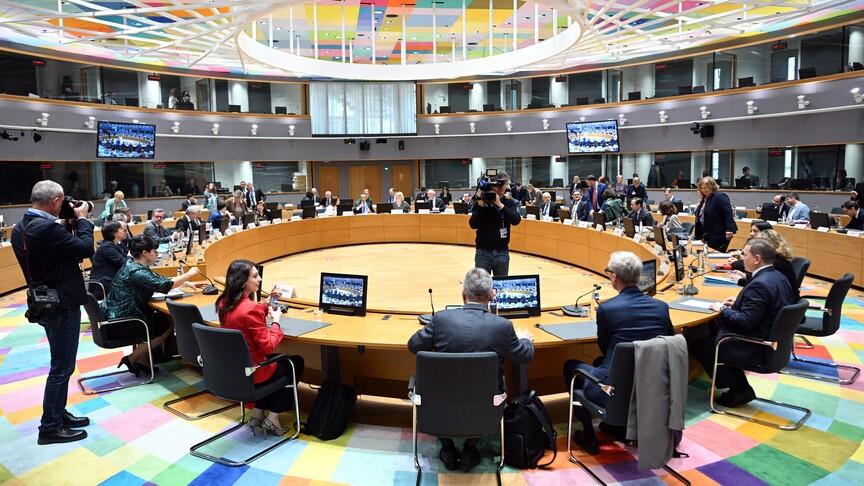
The EU Council and European Parliament have reached a political agreement on the bloc’s 2027 annual budget, setting commitments at €199.7 billion and payments at €211.5 billion, with formal approval still required within 14 days. The agreement comes as COP31 continues in Antalya, Türkiye, where climate finance, trade, competitiveness and implementation of the Paris Agreement have dominated the first week of negotiations. The EU says it provided €32.3 billion in public climate finance in 2025 and mobilised another €9.3 billion privately, while governments and businesses at COP31 are increasingly focused on how trade policy, carbon pricing and private investment can support the clean-energy transition.
European Union institutions have reached agreement on the bloc’s 2027 annual budget as political and business leaders simultaneously confront a much broader debate over climate finance, industrial competitiveness and changing trade rules at the COP31 climate summit in Türkiye. The Council of the European Union and European Parliament concluded negotiations on November 11 with a compromise providing €199.7 billion in commitments and €211.5 billion in payments, bringing the final annual budget of the EU’s current 2021 to 2027 Multiannual Financial Framework close to formal adoption. The agreement comes as governments face growing demands to finance defence, support Ukraine, strengthen borders, invest in research and technology, protect agriculture and accelerate the clean-energy transition without imposing unsustainable new costs on national budgets.
The budget settlement corrects earlier expectations that Brussels would spend the middle of November locked in difficult conciliation talks. Parliament and the Council had entered the formal negotiation period with substantially different spending priorities, but negotiators reached a compromise several days before the November 16 conciliation deadline. The agreement now moves into the formal approval stage, under which both institutions have 14 days to endorse the deal, with the Council expected to take its vote on November 23 before the budget can complete the adoption process.
The final numbers represent a significant increase from the Council’s earlier negotiating position, which had proposed €191.88 billion in commitments and €202.07 billion in payments before special instruments were included. Parliament had pushed for greater spending in areas including research, health, education, agriculture, civil protection, military mobility, border management and humanitarian assistance. The compromise reflects elements of both positions, giving the Union more financial room than the Council’s initial proposal while still preserving a reserve under existing expenditure ceilings.
The agreed budget allocates the largest share of commitments to cohesion, resilience and values, at almost €75.8 billion, followed by more than €57.1 billion for natural resources and the environment. The single market, innovation and digital programmes receive approximately €22 billion in commitments, while more than €15.5 billion is directed toward neighbourhood and international programmes. Migration and border management receive about €5.8 billion, while security and defence are allocated just over €3 billion in commitments, illustrating how the EU is attempting to maintain traditional economic and social programmes while responding to a security environment transformed by war, migration pressures and geopolitical competition.
The budget also contains specific provisions connected to Ukraine, including €650 million associated with the Ukraine support loan, while broader neighbourhood and external-action spending is expected to continue supporting Kyiv and other partners. European governments have repeatedly argued that the war in Ukraine has fundamentally changed the spending requirements facing the Union, particularly as member states increase defence budgets, finance military assistance and prepare for the possibility of greater responsibility for European security.
Council negotiators framed the compromise as an attempt to balance strategic ambition with fiscal restraint. Simon Harris, Ireland’s Tánaiste and Minister for Finance, who served as the Council’s chief negotiator, said the 2027 budget had to give the Union sufficient resources to protect peace, security and prosperity while avoiding unnecessary additional burdens on national taxpayers. That tension between collective European ambitions and the willingness of governments to contribute more money has shaped budget negotiations throughout the current financial cycle.
The 2027 agreement also leaves €710.1 million available below existing expenditure ceilings, giving the EU some ability to respond to unexpected crises during the year. Maintaining such flexibility has become increasingly important because the Union has repeatedly had to redirect resources during the current budget period in response to the COVID-19 aftermath, Russia’s war against Ukraine, energy-market disruption, migration pressures and instability in the Middle East.
The budget is particularly significant because it is the final annual spending plan under the current Multiannual Financial Framework, which runs from 2021 through 2027. Attention is already shifting toward negotiations over the next long-term EU budget beginning in 2028, where disagreements are expected to become even more difficult because governments must decide how much funding should go toward defence, climate investment, industrial policy, agriculture, regional development and enlargement.
Those questions are increasingly connected to the debates unfolding hundreds of kilometres away in Antalya, where governments, companies, financial institutions and civil society groups are meeting at COP31. The United Nations climate conference began on November 9 and will continue until November 20, with Türkiye hosting the summit and Australia serving as President of Negotiations. European leaders arrived at the conference attempting to defend the EU’s climate agenda while responding to growing domestic pressure over industrial costs and competitiveness.
COP31 has been described by organisers as a summit focused heavily on implementation rather than simply announcing another round of climate promises. UN Climate Change Executive Secretary Simon Stiell used the opening of the conference to argue that governments now need to accelerate practical solutions capable of turning previously agreed targets into real changes in energy systems, transport, industry and finance. The emphasis reflects growing frustration that international climate diplomacy has produced ambitious commitments while implementation and financing continue to lag behind what scientists say is necessary.
The European Union has made climate finance one of the central elements of its position in Antalya. In 2025, the EU and its 27 member states provided €32.3 billion in public climate finance to developing countries and mobilised another €9.3 billion in private investment. European officials say the challenge now is not only increasing financial flows but making existing funding easier for vulnerable countries to access, particularly where complicated approval procedures and financing conditions can delay projects for years.
That debate has become especially important for developing countries, which argue that climate targets cannot be met if poorer states are required to take on additional debt to finance adaptation, clean energy and disaster recovery. Governments from Africa, small island states and other vulnerable regions have pressed wealthy economies for greater use of grants, faster disbursement and more accessible climate funds. European governments broadly accept the need for additional finance but continue to face pressure at home to demonstrate that international spending produces measurable results.
The EU has placed particular emphasis on implementing the New Collective Quantified Goal on Climate Finance agreed through the UN climate process. European officials argue that achieving global climate targets will require contributions from governments, development banks, private investors and other financial institutions rather than relying solely on traditional public aid. This approach has led to increased focus on mechanisms capable of using public money to attract much larger volumes of private capital into clean-energy infrastructure and climate-resilience projects.
Türkiye itself used COP31 to announce one of the summit’s largest early financing agreements. The Turkish government and the Asian Infrastructure Investment Bank reached a $1.6 billion climate-policy financing deal aimed at supporting reforms in areas including renewable energy, carbon markets and sustainable finance. The agreement was presented as an example of how large-scale international finance can be linked directly to government policy changes designed to accelerate the transition toward lower-carbon growth.
The financing announcement came alongside new renewable-energy agreements, including a major Türkiye-Saudi Arabia plan involving 3,000 megawatts of wind capacity. Such deals demonstrate how the climate conference is increasingly functioning not simply as a diplomatic negotiation but as a marketplace for energy investment, infrastructure financing and partnerships between governments and corporations.
Business participation has consequently become more prominent. The COP31 Business and Investment Summit held in Antalya on November 12 and 13 brought together more than 1,500 participants from 55 countries under the theme “From Ambition to Delivery.” Turkish officials used the gathering to argue that private-sector involvement will be essential because governments alone cannot provide the trillions of dollars required for the global energy transition, climate adaptation and industrial transformation.
The business discussions have focused heavily on whether climate investment can support economic growth rather than being treated simply as a regulatory cost. Turkish Vice President Cevdet Yılmaz argued that reducing dependence on imported fossil fuels could improve macroeconomic stability, while calling for more finance-ready projects, appropriate investment instruments and greater cooperation between governments and private companies. The central message was that climate commitments will remain aspirational unless countries develop projects that banks, pension funds and other investors can actually finance.
Trade has emerged as an equally important issue because climate policy is increasingly affecting how goods move across borders. COP31 dedicated November 13 to Finance and Trade, with discussions involving the World Trade Organization, UN Trade and Development, the International Chamber of Commerce, OECD representatives and government ministers. Their discussions reflected growing concern that the global transition to cleaner production could generate new trade conflicts if countries adopt different carbon-pricing systems, subsidies and industrial policies.
The European Union sits at the centre of that debate because of its Carbon Border Adjustment Mechanism, which imposes carbon-related costs on certain imported goods based on the emissions generated during production. Brussels argues that the system prevents European industries subject to strict carbon rules from being undercut by imports produced under weaker environmental standards. Trading partners, particularly developing countries and carbon-intensive exporters, have warned that such policies can operate like protectionist barriers if they are not accompanied by finance and technology support.
The trade debate therefore goes beyond tariffs. Renewable-energy deployment depends on international supply chains for solar panels, wind turbines, batteries, critical minerals and electrical equipment, while industrial decarbonisation requires access to technologies often produced in only a small number of countries. Trade restrictions designed to protect domestic industries can therefore conflict with climate goals if they make clean-energy technology more expensive or difficult to obtain.
European policymakers increasingly recognise that tension. The EU wants to preserve its climate standards and accelerate emissions reductions while also protecting industries such as steel, aluminium, chemicals and automotive manufacturing from high energy prices and global competitors receiving significant state support. That has led Brussels to revise parts of its carbon-market framework and consider more flexible measures for industrial companies while insisting that the overall direction toward climate neutrality remains unchanged.
For European businesses, the issue is increasingly one of competitiveness rather than whether climate change should be addressed. Industrial leaders have argued that Europe risks losing investment to the United States, China and other regions if energy remains expensive and regulatory requirements become too complicated. Investors, however, have also warned EU leaders against weakening carbon-market rules so significantly that companies lose the long-term certainty required to finance clean industrial projects.
COP31 has exposed those competing pressures clearly. European governments are pushing expanded electrification and renewable energy, developing nations are demanding larger and more accessible climate-finance flows, fossil-fuel-producing countries continue defending a major role for oil and gas, and vulnerable island states are warning that incremental changes will not protect them from worsening sea-level rise and extreme weather. Negotiators must therefore find common ground among countries whose economic interests and exposure to climate impacts differ dramatically.
Small island states have become particularly prominent in Antalya. Pacific countries have argued that wealthy governments must move more quickly on emissions while increasing adaptation and loss-and-damage finance. New initiatives announced during the first week include a resilience programme seeking to raise more than $1 billion for 14 island economies, including $250 million expected from the Green Climate Fund.
The EU has tried to position itself as a bridge between developed and developing countries by emphasising its status as the world’s largest provider of public climate finance. However, European negotiators face criticism from some developing states that the bloc’s financing commitments remain insufficient compared with the scale of needs, while policies such as carbon border pricing can impose additional costs on exporters that lack the resources to decarbonise quickly.
European officials respond that the bloc has already reduced greenhouse-gas emissions substantially while maintaining economic growth and is on course toward its 2030 emissions target and legally binding objective of climate neutrality by 2050. They argue that other major economies must increase their ambition rather than expecting European taxpayers to finance the global transition alone.
The EU’s negotiating position for COP31 acknowledges that temporarily exceeding the Paris Agreement’s 1.5 degree Celsius temperature threshold is increasingly likely. European governments nevertheless insist that every additional fraction of warming matters and that the world should pursue an “overshoot, peak and decline” pathway designed to bring temperatures back toward the Paris goal later in the century. This marks a more realistic but politically difficult phase of climate diplomacy in which governments are increasingly discussing how to manage overshoot rather than pretending it can certainly be avoided.
The bloc is also calling for implementation of existing nationally determined contributions, faster submission of missing national climate plans and continued movement away from fossil fuels. Clean electrification has become a particular European priority because it links climate action with energy security by reducing dependence on imported oil and gas.
Russia’s invasion of Ukraine strengthened that argument inside Europe. The energy shock that followed the invasion exposed the economic vulnerability created by heavy dependence on imported fossil fuels, particularly Russian gas. Renewable energy, grids, storage and domestic clean-power production are therefore increasingly framed not only as environmental policies but as strategic security investments.
That shift helps explain why climate policy and EU budget policy are becoming increasingly connected. Brussels must finance research, electricity infrastructure, industrial innovation and regional transition assistance at the same time it is increasing defence spending and supporting Ukraine. Each additional strategic priority creates pressure on limited EU resources and on national governments already facing fiscal constraints.
The €57.1 billion in 2027 commitments under natural resources and environment therefore sits within a wider political struggle over how Europe pays for the transition. Much of that heading also supports agriculture, making it impossible to treat the figure as purely climate spending. European policymakers must simultaneously support farmers, meet environmental obligations and respond to political resistance against regulations perceived as increasing production costs.
Farm protests and wider cost-of-living concerns have already encouraged European governments to adjust parts of the Green Deal. The debate is no longer simply between supporters and opponents of climate action but increasingly about pace, affordability and distribution. Governments want to avoid a situation where households or industrial workers believe they are bearing disproportionate costs while other regions maintain less demanding standards.
That political reality is evident in COP31 negotiations. European representatives continue calling for global emissions reductions but are more openly linking climate ambition to industrial competitiveness and energy affordability. The shift does not mean the EU has abandoned its climate targets, but it reflects the increasing political difficulty of implementing them during a period of geopolitical instability and weak economic growth.
The United States, China and other major economies also shape Europe’s calculations. American industrial subsidies have attracted investment into clean technology, while China dominates global production of solar panels, batteries and many critical minerals. European leaders increasingly argue that climate policy must include industrial strategy if the continent is to avoid replacing dependence on Russian fossil fuels with dependence on Chinese clean-energy technology.
Trade policy becomes central under that approach. Europe is seeking partnerships for critical minerals, diversified clean-technology supply chains and greater domestic manufacturing while maintaining climate rules for imported products. Yet developing economies worry that stricter European standards could limit their access to one of the world’s largest markets unless they receive investment to upgrade their industries.
COP31’s trade track is attempting to address precisely that problem by encouraging coordination rather than a proliferation of conflicting national rules. Participants have discussed how trade policy can support climate action, strengthen resilient value chains and allow developing countries to participate more fully in clean industrial growth. The success of that effort will depend on whether wealthy economies are willing to combine environmental requirements with meaningful technology and financing partnerships.
The World Trade Organization’s presence at the summit illustrates how climate diplomacy has moved beyond environmental ministries. Carbon pricing, green subsidies and clean-tech manufacturing now influence trade policy, foreign investment and national economic security. Decisions that once belonged mainly to climate negotiators increasingly involve finance ministers, trade ministers and corporate executives.
European businesses therefore have a direct interest in what happens at COP31. Clear international standards can reduce the risk that companies must comply with completely different carbon rules in every market, while stronger global climate commitments can create demand for European technologies in renewable power, energy efficiency, electrification and industrial engineering. At the same time, businesses fear that unilateral European regulation could increase their costs if competitors elsewhere face weaker requirements.
This tension will continue after Antalya. The EU is reviewing its emissions-trading rules and industrial policies while implementing carbon border measures and developing its Clean Industrial Deal. Those decisions will determine whether European policymakers can combine climate neutrality with stronger manufacturing competitiveness.
The 2027 budget will provide part of the financial foundation for that strategy, but it cannot fund everything. With less than €200 billion in commitments across the entire EU budget, Brussels remains heavily dependent on national governments, private investors and institutions such as the European Investment Bank to finance the scale of infrastructure required for the transition.
That is one reason climate-finance discussions increasingly focus on mobilising private capital rather than relying exclusively on government budgets. Pension funds, insurers, banks and asset managers control enormous pools of capital, but they require investable projects with predictable rules and acceptable risks. Governments can use guarantees, development-bank financing and regulatory frameworks to make projects more attractive without paying the entire cost directly.
Developing countries argue that this model works better for profitable renewable-energy projects than for adaptation measures such as flood defences, drought resilience and coastal protection, which may generate social benefits without producing clear financial returns. They therefore continue demanding larger amounts of grant-based public finance for adaptation and loss and damage.
The EU acknowledges that concern and has placed particular emphasis at COP31 on improving access to existing funds. European officials argue that money is often delayed by complex application procedures, fragmented funding mechanisms and weak project preparation. Making climate finance easier to obtain could therefore increase its impact even without immediately creating an entirely new financing system.
The discussion also carries importance for Africa. African governments need enormous investment in electricity systems, climate-resilient agriculture, transport and adaptation while trying to expand economic growth and reduce poverty. European trade rules and climate finance can either support that transition or make it more difficult depending on how policies are designed.
The Mediterranean dimension has received particular attention in Antalya. The European Commission used COP31 to announce climate-related actions under its Pact for the Mediterranean, focusing on cooperation around water scarcity, extreme heat, biodiversity, food systems, energy and infrastructure. Southern Europe, North Africa and the Middle East are experiencing many of the same climate pressures despite significant differences in income and institutional capacity.
Türkiye occupies a strategically important position in that conversation because it is simultaneously an EU trading partner, major industrial economy, energy transit country and climate-vulnerable Mediterranean state. Hosting COP31 allows Ankara to present itself as a bridge between Europe, emerging economies and the wider developing world while attracting clean-energy and infrastructure investment.
The unusual governance arrangement for COP31 reflects that bridging role. Türkiye is hosting the conference while Australia serves as President of Negotiations, an arrangement designed to reconcile competing bids to lead the summit. The structure has added another diplomatic dimension to a conference already marked by geopolitical tensions.
Wars and security crises have repeatedly entered the climate discussions. UN Secretary-General António Guterres and other leaders have warned that conflicts cannot be allowed to displace climate action, even as governments devote increasing financial resources to defence. Europe faces that tension acutely because it is simultaneously increasing military spending, financing Ukraine and attempting to fund the green transition.
The 2027 EU budget therefore provides a revealing snapshot of European priorities at a difficult moment. Billions are being allocated to cohesion, agriculture, research, migration, external action and defence while Brussels tries to maintain climate commitments and economic competitiveness. The budget cannot resolve those competing pressures, but its composition shows how deeply they have become interconnected.
The agreement also avoids the risk of beginning 2027 without an adopted budget, which would have forced the EU to operate under provisional monthly spending limits. Such an outcome would have complicated programme implementation at a moment when policymakers want greater flexibility to respond to geopolitical and economic shocks.
Formal approval is still required, meaning the budget is not legally complete. The Council and Parliament must endorse the compromise within the prescribed 14-day period, and the Council is expected to act on November 23. However, because political agreement has already been reached, the remaining process is substantially different from the intense negotiation described in earlier reports.
COP31 remains far less settled. Negotiators in Antalya still have another week to bridge differences over climate finance, fossil fuels, adaptation, trade and implementation. The first week has produced new initiatives and investment commitments, but the most difficult political decisions often emerge during the final days of UN climate summits.
European officials will be attempting to protect the central elements of their negotiating position while avoiding isolation. The EU wants stronger implementation of the Paris Agreement and continued transition away from fossil fuels, but it must also respond to developing countries demanding finance and to domestic industries demanding greater competitiveness.
That balance will determine Europe’s influence in the next phase of global climate policy. The bloc remains one of the largest sources of international climate finance and one of the most heavily regulated major economies, but that leadership creates economic and political costs that European governments increasingly want other countries to share.
For businesses, the outcome matters because climate rules are rapidly becoming trade rules, investment rules and industrial rules. Companies planning factories, energy projects or global supply chains need to know how carbon pricing, border measures and subsidies will develop across major markets. Uncertainty can delay investment even when businesses broadly support decarbonisation.
For governments, the challenge is even greater. They must design policies capable of reducing emissions without undermining growth, secure enough financing to support vulnerable populations and manage trade tensions created by different national climate strategies. COP31 is therefore testing whether climate diplomacy can evolve from promises into an economic framework capable of managing the transition.
The agreement on the EU’s 2027 budget and the negotiations in Antalya are separate processes, but they are connected by the same underlying question: how much governments are willing and able to spend on strategic priorities during an era of war, economic competition and climate disruption. Europe has now largely settled its spending framework for next year, but the global financing challenge being debated at COP31 is measured not in hundreds of billions but in trillions.
The next stage will show whether governments can convert the political language of climate implementation into actual capital flows, infrastructure and industrial change. Europe’s budget agreement gives Brussels greater certainty about its own finances for 2027, while COP31 is forcing European leaders, companies and their international partners to confront a much larger question about how the global transition will be paid for and how its costs and opportunities will be distributed.
For the European Union, success will depend on combining those two agendas rather than allowing them to compete. Climate policy that damages industrial competitiveness will face increasing political resistance, while an industrial strategy that abandons emissions goals risks higher long-term climate costs and weaker international credibility. The emerging European approach is therefore increasingly focused on clean investment, resilient supply chains, trade coordination and targeted public financing rather than climate regulation in isolation.
As COP31 moves into its second week and Brussels prepares the formal adoption of the 2027 budget, Europe is entering a decisive phase in both debates. The budget compromise shows that EU institutions can still reach agreement despite competing pressures, while the Antalya negotiations will test whether similar compromise is possible at the global level. The outcome could shape not only climate policy but investment flows, trade relationships and industrial strategy across Europe and beyond for years to come.