EUROPE FORMS JOINT UKRAINE PEACE TEAM AS U.S.-LED TALKS EXPAND AND RUSSIA-UKRAINE STRIKES INTENSIFY
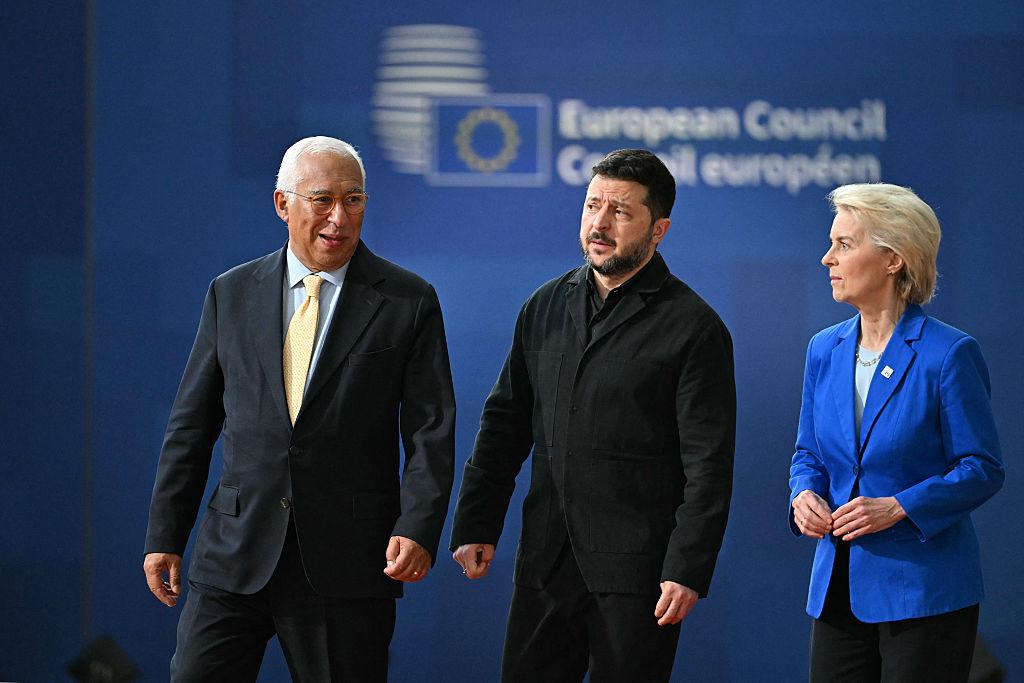
European leaders have agreed that EU institutions and the E5 countries of France, Germany, Italy, Poland and the United Kingdom will jointly represent Europe in future negotiations aimed at ending Russia’s war against Ukraine. António Costa announced the arrangement after an informal summit in Dublin, arguing that Europe must speak with one coordinated voice as U.S.-led talks broaden to include future European security arrangements. The diplomatic move came amid major military escalation, with Russia claiming it intercepted 1,198 Ukrainian drones during a massive overnight attack while Ukrainian officials reported that Russian strikes on Zaporizhzhia injured 50 people, including eight children.
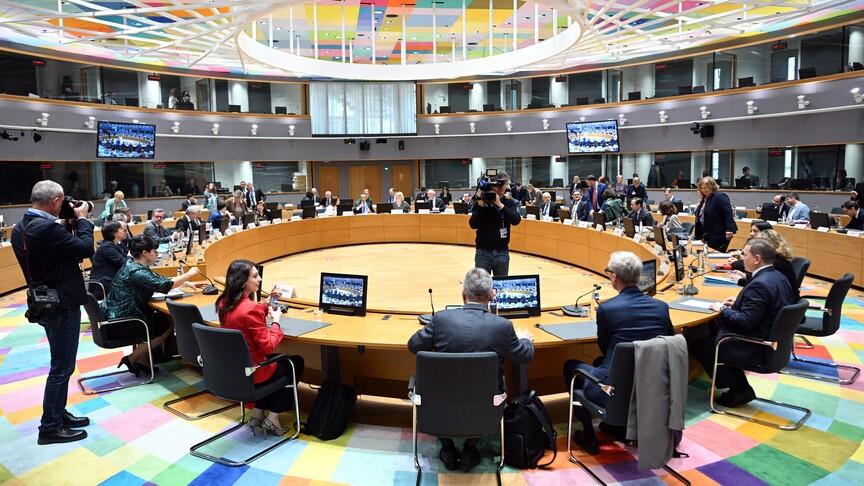
European leaders have agreed to create a joint negotiating team to represent the continent in future talks aimed at ending Russia’s war against Ukraine, moving to secure a formal European role as United States-led diplomacy increasingly expands beyond a possible ceasefire into questions about the future security architecture of Europe itself. European Council President António Costa announced the agreement after an informal meeting of European Union leaders in Dublin on Friday, November 13, 2026, saying EU institutions and five major European countries will work together as one team in negotiations involving Ukraine, Russia and the United States. The diplomatic move came during another violent escalation in the war, with Russia carrying out damaging attacks on the Ukrainian city of Zaporizhzhia while Moscow claimed its air defences confronted almost 1,200 Ukrainian drones in one of the largest long-range aerial assaults reported since the full-scale invasion began.
Costa said Europe’s negotiating structure will combine representatives from European Union institutions with the E5 members of the Coalition of the Willing, comprising France, Germany, Italy, Poland and the United Kingdom. The arrangement gives both the EU and several of Europe’s most influential military and diplomatic powers direct representation in discussions about a possible peace settlement, security guarantees for Ukraine and the broader relationship between Russia and the European security system. The United Kingdom’s inclusion is particularly significant because it is no longer an EU member but remains one of Ukraine’s most important military supporters and a central participant in the Coalition of the Willing.
The decision follows months of concern among European governments that negotiations driven primarily by Washington and Moscow could eventually produce decisions affecting European security without adequate European participation. U.S. envoys have intensified diplomatic activity involving both Ukraine and Russia, including recent talks in Abu Dhabi, and European governments have become increasingly concerned as discussions have widened beyond territorial questions and ceasefire arrangements to include issues such as NATO’s future role, long-term security guarantees and the architecture that has shaped European defence since the end of the Cold War.
Costa made clear that European leaders view those questions as matters in which they must have direct involvement rather than simply accepting an agreement reached elsewhere. He said Europe’s security begins with Ukraine’s security and stressed that the continent must speak with one clear and united voice in negotiations that could reshape the strategic balance across Europe. He also insisted that only Ukraine has the legitimacy to make decisions concerning its territory and sovereignty, reinforcing a long-standing European position that no peace settlement should impose territorial concessions on Kyiv without Ukrainian consent.
The European Council president also argued that a team rather than a single envoy is appropriate because all major parties already operate through negotiating delegations. The United States has been represented by multiple officials, while Ukraine maintains its own negotiating team and Russia similarly relies on several senior representatives. Costa said Europe’s structure reflects the need to bring together the institutions responsible for EU policy with the countries most directly involved in designing postwar security guarantees for Ukraine.
The E5 format is expected to give France, Germany, Italy, Poland and Britain particularly prominent roles. France and Britain are nuclear powers and permanent members of the United Nations Security Council, Germany remains Europe’s largest economy and one of Ukraine’s biggest financial and military supporters, Poland is a frontline NATO state bordering Ukraine and Belarus, while Italy has participated closely in wider European diplomatic and security initiatives. Together with EU institutions, those governments are expected to coordinate positions before and during future negotiations rather than allowing individual European states to pursue competing approaches.
European Union foreign policy chief Kaja Kallas had earlier indicated that she had been mandated to represent European interests in negotiations, but the final agreement established a broader collective structure rather than relying on a single political figure. Reports indicate that national security advisers from the E5 countries could play important roles in the discussions, although the complete list of individual negotiators had not been formally announced when Costa presented the framework.
The decision comes after U.S. negotiators Steve Witkoff and Jared Kushner held talks involving Russian and Ukrainian delegations in Abu Dhabi and subsequently briefed Russian President Vladimir Putin and Ukrainian President Volodymyr Zelenskyy. The diplomatic discussions have been described as increasingly ambitious because participants are considering not simply how to halt fighting but what security arrangements would follow a settlement. That has created anxiety among some European capitals because Moscow has long demanded fundamental changes to NATO deployments and Western military activity near Russia.
Russia has repeatedly argued that the war cannot be resolved without addressing what the Kremlin describes as the underlying causes of the conflict, including NATO expansion and Western military cooperation with Ukraine. European governments reject Moscow’s argument that Russia should have authority over the sovereign security choices of neighbouring states and maintain that the invasion itself destroyed the security arrangements that had previously existed between Russia and the rest of Europe.
The widening agenda therefore creates a difficult diplomatic challenge. A ceasefire in Ukraine could potentially reduce immediate bloodshed, but an agreement that allows Russia to dictate NATO policy or restrict the sovereign decisions of European countries would be unacceptable to many governments in the alliance. European leaders are trying to ensure that negotiations about Ukraine do not evolve into negotiations about Europe conducted without Europeans at the table.
Costa directly addressed that concern, saying the principles governing European security for decades must remain the foundation of any settlement. He emphasised Ukraine’s sovereignty, the European Union’s role in Ukraine’s future reconstruction and membership process, and the Coalition of the Willing’s responsibility for potential security guarantees. He also said any military guarantees would have to be coordinated closely with NATO, recognising that many of the countries expected to provide protection to Ukraine are members of the alliance.
The diplomatic push comes at a moment when events on the battlefield are demonstrating how far the conflict remains from a stable ceasefire. On the night of November 12 into November 13, Ukraine launched an exceptionally large long-range drone attack against targets across Russia. Russia’s Defence Ministry claimed its air defences intercepted 1,198 Ukrainian drones over Russian territory and Russian-occupied Crimea, a figure that would make the operation one of the largest drone attacks of the war if accurate. The Russian figure could not be independently verified and should therefore be treated as Moscow’s official claim rather than an independently established count.
Russian regional authorities reported that strikes or falling debris affected several regions and killed at least seven people while wounding 17 others. Ukraine said one of the targets was the large Volgograd oil refinery, part of Kyiv’s continuing campaign against Russian energy infrastructure that it argues helps finance and supply Moscow’s military operations. Russian officials said other industrial and civilian sites were also affected during the barrage, while air defence systems operated across a vast geographical area extending toward Moscow.
The Ukrainian campaign against refineries, oil depots and other energy infrastructure has intensified as Kyiv attempts to impose economic and logistical costs on Russia despite facing a larger conventional military. Long-range drones have allowed Ukraine to strike facilities hundreds of kilometres from the front line at far lower cost than conventional cruise missiles. Russia has responded by expanding air defences around strategic facilities while continuing much larger missile and drone campaigns against Ukraine’s cities, electricity system and military targets.
Russia launched 117 drones at Ukraine during the same period, according to Ukrainian authorities, with attacks reported across several regions. Zaporizhzhia, a major southeastern Ukrainian city located relatively close to the front, suffered particularly severe damage during repeated strikes on Friday. Residential buildings, private homes and industrial infrastructure were hit as emergency workers responded to fires and collapsed structures.
Ukrainian officials said the number of people injured in the Zaporizhzhia attacks eventually rose to 50, including eight children. Earlier official updates had reported much lower numbers as emergency crews searched damaged apartment buildings, explaining why initial international reports listed 13 or 30 injured before the casualty count increased. Rescue workers freed people trapped inside apartments while firefighters battled fires in residential buildings and vehicles damaged during the attacks.
The violence in Zaporizhzhia extended across several separate strikes rather than a single explosion. Ukrainian authorities reported attacks on residential neighbourhoods, industrial facilities and apartment buildings during the day, with at least two deaths reported in local accounts. Reuters separately reported that more than 50 people were injured in Zaporizhzhia and that attacks elsewhere, including Odesa, also caused fatalities. The precise overall casualty figures remained subject to updates as emergency crews completed searches and hospitals treated the wounded.
The escalation demonstrates the contradiction at the heart of the current diplomatic moment. Negotiators are discussing possible peace arrangements and postwar security guarantees while both Russia and Ukraine continue some of the largest long-range attacks of the conflict. Each side appears determined to demonstrate that it retains the ability to impose serious costs on the other even as international pressure grows for a negotiated settlement.
For Ukraine, the enormous drone operation can be interpreted as an attempt to show that Russia cannot assume military dominance simply because its forces hold more territory and possess greater conventional resources. Kyiv has increasingly relied on domestically produced drones and other unmanned systems to offset shortages of manpower and expensive Western missiles, turning long-range drone warfare into one of the most important technological features of the conflict.
For Moscow, continued strikes on Ukrainian cities and infrastructure maintain pressure on Kyiv while reinforcing the Kremlin’s argument that Russia can sustain the war unless negotiations address its demands. Russia has repeatedly targeted Ukraine’s energy system during colder months, forcing authorities to repair damaged electricity infrastructure while managing emergency outages. Ukraine and its Western supporters describe many of those attacks as attempts to weaken civilian morale, while Moscow says it strikes military and military-related infrastructure.
European officials say that pattern of continuing Russian attacks is one reason they remain cautious about the prospects for peace. Costa said the coming weeks would test whether Russia is genuinely prepared to bring the war to an end, arguing that continued strikes on Ukrainian civilians create doubts about Moscow’s intentions. European leaders have maintained that diplomatic engagement should continue, but they have resisted calls to reduce support for Ukraine before Russia demonstrates a willingness to agree to acceptable settlement terms.
EU governments are therefore attempting to pursue diplomacy and military support simultaneously. They have committed financial assistance to Ukraine, supplied weapons and ammunition, supported training missions and expanded defence-industrial production while also participating in discussions about how a future peace could be enforced. The Coalition of the Willing has become a central mechanism for considering what European countries might contribute to security guarantees after fighting stops.
Those guarantees remain among the most difficult unresolved questions. Ukraine wants assurances strong enough to prevent Russia from using a ceasefire to rebuild its military and launch another invasion years later. Russia, meanwhile, objects to arrangements that could place Western military forces or infrastructure permanently inside Ukraine, creating a fundamental disagreement about what a secure postwar settlement would look like.
European governments have discussed several possible models, including long-term arms supplies, intelligence support, air defence cooperation, training missions and potential deployments by willing countries after a ceasefire. No final structure has been agreed, and the scale of any European military presence would depend on the terms of a peace settlement and the willingness of individual governments to participate.
The United States remains crucial because European security still depends heavily on American military capabilities, intelligence and nuclear deterrence. That makes Washington’s diplomatic leadership important, but it also creates concern when U.S. and Russian negotiators begin discussing broader European security without direct European participation. The new joint team is designed partly to close that gap.
The inclusion of the United Kingdom also demonstrates that European security cooperation over Ukraine has increasingly developed outside the formal boundaries of the European Union. Britain left the EU in 2020 but has remained one of Kyiv’s strongest military supporters and has worked closely with France on the Coalition of the Willing. European leaders appear to have concluded that excluding Britain from a peace negotiating team because of Brexit would make little strategic sense when London could play a major role in future security guarantees.
Poland’s inclusion carries similar strategic importance. The country has become a major logistics hub for Western military assistance to Ukraine and has dramatically expanded its own defence spending because of concerns about Russia. Warsaw has consistently argued that any settlement must prevent Moscow from rebuilding the military capacity necessary for further aggression against Ukraine or other countries on NATO’s eastern flank.
Germany and France bring different forms of influence. Berlin provides extensive military and financial support, while Paris has pushed strongly for Europe to develop greater strategic autonomy and the ability to defend itself even if U.S. priorities change. Italy has taken a more cautious approach to certain military questions while remaining part of the Western coalition supporting Ukraine, giving the European team representation from several different political perspectives within the continent.
That diversity is both a strength and a potential complication. European governments have often differed over sanctions, weapons deliveries, Russian energy and the degree of risk they are willing to accept in confronting Moscow. Creating a team does not automatically eliminate those disagreements, which means its effectiveness will depend on whether members can develop common negotiating positions before entering talks.
Costa said the purpose of the arrangement is precisely to create that coordination. Rather than allowing countries to speak independently and potentially send contradictory messages, EU institutions and E5 governments are expected to consult closely and represent agreed European principles. Those principles include Ukrainian sovereignty, resistance to territorial changes imposed by force, Ukraine’s right to pursue EU membership and the need for credible long-term security guarantees.
Ukraine has welcomed stronger European involvement because its leaders have repeatedly warned against agreements negotiated without Kyiv. Zelenskyy has also urged European governments to pay close attention to discussions about security guarantees and NATO’s future because those arrangements could determine whether any ceasefire becomes permanent or simply produces another temporary pause in the conflict.
The question of territory remains among the most politically explosive issues. Russia controls significant areas of eastern and southern Ukraine and has declared several occupied regions to be part of the Russian Federation, claims rejected by Ukraine and most of the international community. Kyiv has resisted formally recognising Russian sovereignty over occupied territory, while Moscow has demanded acknowledgment of what it calls new territorial realities.
Costa’s statement that only Ukraine can decide questions concerning its territory is intended to prevent outside powers from negotiating away Ukrainian land. European governments fear that forcing Kyiv to accept territorial concessions without meaningful security guarantees could establish a precedent that military conquest can permanently change internationally recognised borders.
At the same time, diplomatic pressure to find a workable compromise is increasing as the war approaches its fifth year. Hundreds of thousands of soldiers are believed to have been killed or wounded, thousands of Ukrainian civilians have died, millions have been displaced and infrastructure across Ukraine has suffered enormous destruction. European governments have spent tens of billions of euros supporting Kyiv while simultaneously increasing their own defence budgets.
Russia has also paid a substantial cost in military casualties, equipment losses and economic disruption, although Moscow has reorganised significant parts of its economy around the war effort. Western sanctions have limited access to some technologies and financial markets, but Russia has maintained important trade relationships with China, India and other countries while continuing weapons production.
The inability of either side to secure a decisive battlefield victory has increased interest in negotiations, but it has not eliminated their incompatible demands. Russia wants recognition of territorial changes and limits on Ukraine’s military alignment, while Kyiv seeks sovereignty, security guarantees and protection against renewed invasion. Bridging that gap remains the central challenge facing U.S., Ukrainian, Russian and now formally organised European negotiators.
The latest attacks show why confidence between the parties remains exceptionally low. Ukraine’s nearly 1,200-drone assault, based on the Russian Defence Ministry’s count, demonstrated Kyiv’s ability to threaten infrastructure deep inside Russia, while Russian attacks on Zaporizhzhia and other Ukrainian cities again produced civilian casualties. Each escalation reinforces arguments on both sides that reducing military pressure before a settlement would weaken their negotiating position.
International humanitarian concerns will therefore remain central to diplomatic discussions. European leaders continue calling for prisoner exchanges, the return of Ukrainian civilians and children taken to Russian-controlled territory, and measures to protect civilian infrastructure. Confidence-building steps in those areas could potentially create momentum even if a comprehensive political settlement remains distant.
European governments also want to ensure that Ukraine’s future membership in the European Union is not negotiated away as part of a security bargain with Moscow. Costa said EU institutions have a central role in determining Ukraine’s European future because membership decisions belong to the union and applicant country rather than outside powers. Ukraine’s accession process has advanced during the war and has become an important symbol of the country’s long-term political orientation.
Economic reconstruction represents another major European interest. Rebuilding Ukraine is expected to require hundreds of billions of dollars, and European institutions are likely to provide a substantial share of future financing. Any peace settlement will therefore have direct implications for sanctions policy, frozen Russian assets, reconstruction funding and foreign investment.
Europe’s new negotiating team must navigate all of those questions while maintaining unity among 27 EU member states and coordinating with Britain, Ukraine, NATO and the United States. That makes the structure more complicated than appointing a single envoy, but European leaders appear to have concluded that the complexity reflects the reality of the continent’s security interests.
The next rounds of diplomacy will reveal whether Russia accepts meaningful European participation. Moscow has previously questioned the usefulness of including European governments it regards as strongly aligned with Ukraine. Russian negotiator Vladimir Medinsky expressed uncertainty about what there was to discuss with European representatives who travelled to Abu Dhabi but were not included in the direct talks.
That attitude has reinforced European concern that Moscow would prefer to negotiate major security questions primarily with Washington. Russia has historically viewed European security through its relationship with the United States and NATO, while many European governments insist that their own sovereignty means they must participate directly in decisions affecting their defence arrangements.
The United States now faces the challenge of balancing those positions. Washington wants to maintain diplomatic momentum and bring both Russia and Ukraine toward an agreement, but excluding Europe could make implementation difficult because European states would be expected to finance reconstruction, provide security guarantees, maintain sanctions or deploy forces after a ceasefire.
The newly announced team therefore gives Washington a clearer European counterpart. Instead of dealing with competing requests from multiple capitals, American negotiators can work with a coordinated group representing both EU institutions and the countries most heavily involved in Ukraine’s future security.
Whether that coordination produces progress remains uncertain. Previous diplomatic initiatives have repeatedly encountered the same fundamental disagreements over territory, sovereignty and military alignment. Establishing a negotiating structure is therefore only the beginning of a much more difficult process.
The timing of the announcement nevertheless gives it considerable significance. Europe has spent months debating how to avoid being sidelined while American diplomacy accelerated, and the Dublin agreement provides an answer by creating a formal team rather than waiting for Washington or Moscow to determine the continent’s representation.
It also sends a political message that Europe intends to remain involved even if U.S. policy changes. European leaders increasingly acknowledge that they may have to assume greater responsibility for Ukraine’s long-term security and for their own defence regardless of the eventual outcome of the war.
For Ukraine, that commitment could become especially important if negotiations require difficult compromises. Kyiv wants confidence that its European partners will remain engaged after a ceasefire rather than reducing support once large-scale fighting stops. The credibility of any settlement may therefore depend as much on the strength of postwar guarantees as on the language of the peace agreement itself.
For Russia, Europe’s stronger negotiating presence could make talks more complicated because several of the countries joining the team favour maintaining significant military support for Ukraine. Moscow may nevertheless have to deal with them if a settlement requires changes to sanctions, European military deployments or long-term reconstruction arrangements.
The conflict is therefore entering a diplomatic phase that is broader than a traditional ceasefire negotiation. Questions about Ukraine’s territory remain central, but negotiations are increasingly touching NATO, European defence, sanctions, reconstruction and the future relationship between Russia and the West.
That makes the European team potentially one of the most consequential diplomatic structures created since the war began. Its success will depend on whether it can preserve unity while negotiating with actors whose strategic objectives remain sharply different.
The battlefield continues to provide a grim reminder of what is at stake. Residents of Zaporizhzhia spent Friday dealing with fires, shattered apartments and injured children while emergency workers searched damaged buildings. Inside Russia, communities were also confronting casualties and damage from an enormous Ukrainian drone campaign that demonstrated how deeply the war can now reach beyond the front.
Those parallel attacks illustrate how the conflict has evolved into a long-range technological war in which civilians and strategic infrastructure hundreds of kilometres from combat lines can be affected. Drone production has increased dramatically on both sides, making it possible to launch attacks on a scale that would have been difficult to imagine during the early stages of the invasion.
The danger is that technological escalation continues even while diplomats negotiate. Neither side wants to appear weak at the negotiating table, creating incentives to demonstrate military capability immediately before or during peace discussions. That dynamic can produce an environment in which diplomatic progress and battlefield escalation occur simultaneously.
European leaders are attempting to prevent that contradiction from destroying the emerging diplomatic process. Costa has called on Russia to demonstrate genuine willingness to end the war and said continued attacks will be judged against Moscow’s diplomatic statements. At the same time, Europe continues supporting Ukraine militarily because leaders argue that negotiations are more likely to succeed if Kyiv is not forced to negotiate from a position of vulnerability.
The coming weeks will therefore provide an early test of the new European arrangement. EU institutions and the E5 must determine who will participate in specific meetings, what positions they will present and how disagreements among European governments will be resolved before negotiations begin.
They must also coordinate continuously with Ukraine. Costa’s insistence that Kyiv alone can decide questions of sovereignty and territory is designed to reassure Ukrainian leaders that European participation will not become another mechanism through which outside powers impose a settlement.
The broader objective is a peace agreement capable of surviving after the guns fall silent. Europe’s experience with the failed Minsk agreements has made many governments deeply sceptical of ceasefires that lack credible enforcement mechanisms. A temporary pause followed by renewed Russian military action would leave Ukraine and its neighbours facing the same security problem several years from now.
That is why security guarantees have become inseparable from discussions about peace. The negotiations are no longer simply about where troops stop fighting but about what military, economic and political arrangements would prevent the conflict from restarting.
The agreement reached in Dublin does not resolve those questions, but it ensures Europe intends to be present when they are discussed. France, Germany, Italy, Poland, Britain and EU institutions will now attempt to present a coordinated position alongside Ukraine as American negotiators continue trying to bridge the enormous gap between Kyiv and Moscow.
As those negotiations develop, events on the battlefield will continue shaping their urgency and difficulty. Russia’s strikes on Zaporizhzhia and Ukraine’s massive drone attack inside Russia demonstrate that neither side has stopped using military pressure while diplomacy advances. The contrast between conference rooms in Dublin and Abu Dhabi and burning buildings hundreds of kilometres away captures the central reality of the current moment: peace negotiations are gaining structure, but the war itself remains intensely active.
Europe’s decision to form a joint negotiating team is therefore both a diplomatic intervention and a strategic warning. European leaders are signalling that any agreement affecting Ukraine, NATO or the future security order of the continent cannot be settled solely between Washington and Moscow. Whether that position produces a durable peace will depend on negotiations that remain extraordinarily difficult, but after months of uncertainty Europe has at least established who will speak when those decisions are made.