DISEASE FEARS GROW IN BESIEGED TAIZ AS HEALTH OFFICIALS WARN FALLING CASE COUNTS MAY HIDE WORSENING CRISIS
Health officials in Yemen’s besieged city of Taiz are warning that falling recorded infection numbers may conceal a worsening disease crisis because thousands of residents can no longer reach hospitals and clinics. The latest four-week reporting period recorded 5,642 cases, including 5,228 cases of acute watery diarrhea, 232 suspected dengue cases and 182 suspected cholera cases, but officials say the real number could be far higher. Yemen’s internationally recognized government accuses the Houthis of tightening the siege and restricting food, water, medicine and fuel, while the Houthis deny responsibility and blame government forces for road closures. The United Nations says road closures and insecurity are preventing critical supplies from reaching the city, while Human Rights Watch has warned that deliberately depriving civilians of essentials could amount to the war crime of starvation if the legal threshold is met.
TAIZ, YEMEN — Health officials in Yemen’s besieged city of Taiz are warning that an apparent decline in recorded infections may be masking a worsening public health emergency as road closures, fuel shortages and restricted access to hospitals leave thousands of sick residents unable to seek treatment. The warning comes as Yemen’s internationally recognized government accuses the Iran-aligned Houthi movement of tightening its encirclement of Taiz and blocking the movement of food, safe drinking water, medicines and fuel into government-held areas, while the Houthis deny responsibility and say forces aligned with the government are responsible for closing roads. The dispute is unfolding against a rapidly deteriorating humanitarian backdrop in which aid agencies say hospitals are running short of fuel and medical supplies, hundreds of thousands of people have lost access to essential healthcare and disease surveillance is becoming less reliable precisely as the conditions that drive cholera, acute watery diarrhea and dengue fever worsen.
Figures from the Epidemiological Surveillance Department at Taiz’s Public Health and Population Office show that 5,642 cases across three major disease categories were recorded during the latest four-week reporting period. Of those, 5,228 were cases of acute watery diarrhea, 232 were suspected dengue fever and 182 were suspected cholera. The number of reported watery diarrhea cases fell compared with the previous reporting period, but local health officials cautioned that the reduction should not be interpreted automatically as evidence that disease transmission is slowing. Dr. Yasin Abdulmalik, director of the epidemiological surveillance department, said many residents are increasingly unable to reach hospitals or health centers because roads have been cut, transport costs have risen and fuel has become scarce, meaning infections that would previously have appeared in official statistics may now be going unrecorded.
Abdulmalik said the true number of people unable to reach health facilities could be more than double the number currently being documented, illustrating the difficulty of measuring the scale of the outbreak under siege conditions. Taysir al-Samiei, a health communications official at Taiz’s Public Health and Population Office, said the ability of patients to reach hospitals had fallen by between 60 and 70 percent by the end of the second week of the intensified siege. The implication is particularly serious for epidemiological surveillance because falling attendance at clinics can produce the appearance of improvement even while infection continues spreading in neighborhoods and rural districts beyond the reach of formal health monitoring.
The crisis has deepened since early October, when renewed fighting around Taiz intensified and access through the city’s remaining major supply routes was severely disrupted. Yemen’s internationally recognized government has accused Houthi forces of tightening a long-running siege around the city and surrounding districts, saying the restrictions are preventing essential commodities from reaching nearly two million people. Human Rights Watch said in late October that Houthi forces had blocked major roads linking Taiz with the rest of the country and warned that restricting access to food, water and medicine could amount to the war crime of using starvation as a method of warfare if the legal threshold is met. The Houthis have denied that characterization and told Human Rights Watch that government forces, not Houthi forces, were responsible for blocking access roads.
The competing claims require careful distinction because both sides have participated in road closures as fighting has shifted around Taiz. Human Rights Watch documented that government-aligned and Houthi forces had both blocked some routes because of hostilities, but it also said residents, civil society workers and United Nations officials placed primary responsibility for the severe shortages on the Houthis. The organization reported that Houthi forces had encircled Taiz since 2015 and that the situation deteriorated sharply in October after further Houthi advances cut or threatened the remaining major supply routes into the government-held city. In a separate investigation, Human Rights Watch said explosives were used in October to severely damage the Hayjat al-Abd road, an important route into Taiz, although it said it could not conclusively determine responsibility for all attacks on the road.
The United Nations has independently confirmed that road closures and insecurity are preventing vital supplies from entering Taiz and the surrounding area. Humanitarian Coordinator for Yemen Laurent Bukera said on October 20 that fuel shortages were threatening hospital power supplies and medical oxygen, while the prices of remaining food and fuel had more than doubled. He warned that water production in the city had been cut sharply and called on the Houthi de facto authorities to open safe passage for commercial goods, food, medicine and humanitarian assistance. The United Nations has also emphasized that all parties are required under international humanitarian law to facilitate humanitarian access and protect civilians and civilian infrastructure.
The World Food Programme said in October that it had been unable to reach more than 600,000 people in Taiz who depended on humanitarian assistance. The agency described the situation as especially alarming because many districts were already classified as facing emergency levels of hunger, while wheat flour supplies were close to exhaustion and food remaining in local markets could last only a limited period if access restrictions continued. The inability to move aid into the city has turned what was already a severe food security problem into a broader threat involving malnutrition, disease and the potential collapse of essential public services.
Health services have come under equally intense pressure. The United Nations Office for the Coordination of Humanitarian Affairs said nearly 250,000 people had lost access to essential healthcare, including more than 186,000 children younger than five. More than 1,400 cases of acute diarrhea and suspected cholera were reported during a single week earlier in the crisis, while 12 hospitals were either at risk of closing or had already reduced services because of shortages of fuel and critical supplies. Humanitarian organizations have warned that hospitals are operating with dwindling oxygen, blood products, anesthesia, surgical equipment and medicines while simultaneously treating increasing numbers of war wounded and people suffering from preventable diseases.
The water crisis is one of the central drivers of the worsening health emergency. Dr. Fares al-Absi, a consultant in diabetes, endocrinology and obesity, said residents were increasingly relying on unsafe water sources because safe drinking water was either unavailable or sold at sharply inflated prices. He said access to the al-Dhabab water basin, one of the major sources supplying tanker trucks, had been restricted and estimated that only about 8 percent of Taiz’s water requirements were currently being met. Many local wells are unsuitable for human consumption, increasing the risk that households without access to trucked water will use contaminated sources for drinking, cooking and washing.
Unsafe water is particularly dangerous in a city already experiencing cases of acute watery diarrhea and suspected cholera. Cholera can spread rapidly where sewage systems fail and people cannot reliably access clean drinking water, while severe diarrhea can become fatal within hours without adequate treatment and rehydration. Children, older people and those weakened by malnutrition are particularly vulnerable. Yemen has endured repeated cholera outbreaks during more than a decade of war, and its damaged water, sanitation and health infrastructure makes outbreaks harder to control than in countries with functioning public services.
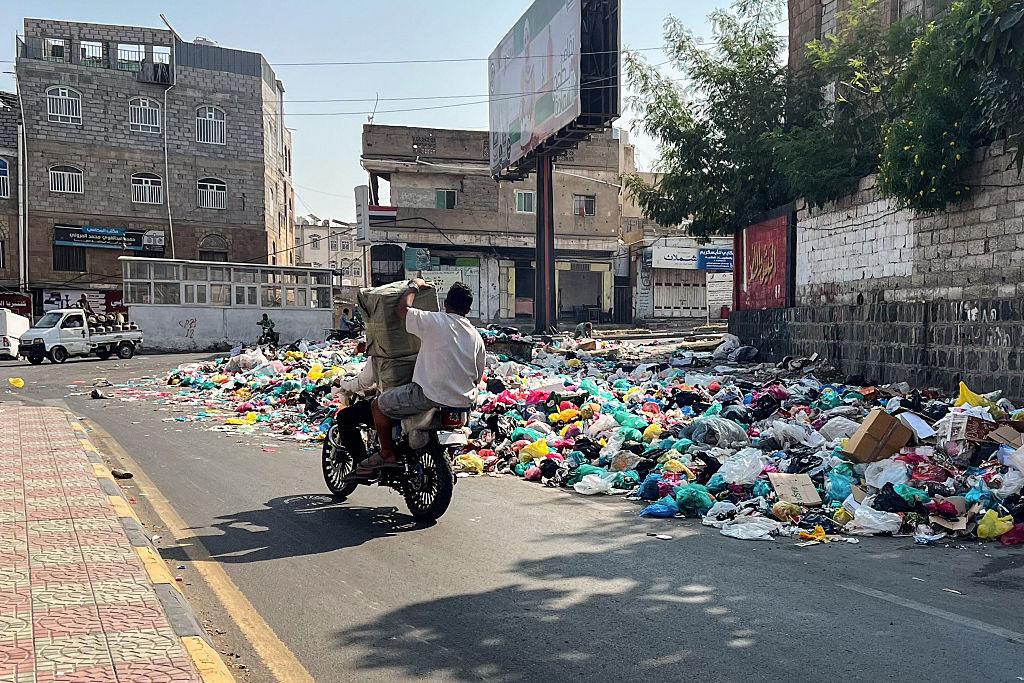
The accumulation of rubbish across Taiz is creating a second major disease risk. Fuel shortages have limited the ability of municipal authorities to operate waste collection vehicles, while officials have accused Houthi forces of preventing sanitation trucks from reaching a landfill west of the city. The Houthis have not publicly accepted responsibility for the waste crisis. Streets and residential neighborhoods have increasingly filled with uncollected garbage, creating conditions that can contaminate water and food while also providing breeding sites for disease-carrying insects.
Dengue fever is among the diseases health officials fear could spread further under those conditions. The virus is transmitted by mosquitoes that breed in stagnant water, including containers and pools commonly found around homes where regular water supply systems have collapsed. When families are forced to store water in open containers and rubbish accumulates in streets, mosquito populations can increase rapidly. The 232 suspected dengue cases recorded during the latest reporting period may therefore represent only part of the burden if residents are unable to travel to health facilities for diagnosis.
The public health emergency is developing alongside the renewed military struggle for Taiz, which has again become one of the most important battlegrounds in Yemen’s long-running war. The Houthis seized the capital, Sanaa, in 2014 and forced the internationally recognized government to retreat, prompting a Saudi-led military intervention the following year. Taiz became one of the conflict’s defining front lines because much of the city remained under anti-Houthi control while Houthi forces held surrounding areas and important roads. The result was years of restrictions on movement, intermittent fighting and a prolonged humanitarian crisis even during periods when combat declined elsewhere in the country.
A United Nations-brokered truce in 2022 sharply reduced cross-border attacks and large-scale fighting, although it never produced a comprehensive peace agreement. That relative calm collapsed in 2026 amid renewed regional confrontation and escalating fighting inside Yemen. Houthi forces made significant territorial gains along parts of the Red Sea coast and around Taiz, while government forces, supported by Saudi Arabia, launched counteroffensives in an effort to regain strategic ground and reopen supply routes.
Taiz is strategically important because of its location between northern Yemen, the southern government-held territories and the Bab el-Mandeb Strait, one of the world’s most important shipping corridors. Control of the city and surrounding roads affects military access between the highlands, Aden and the Red Sea coast. A Houthi capture of Taiz would represent a major setback for the internationally recognized government and could bring Houthi forces closer to important southern areas, while a government breakthrough could reopen supply routes and reduce pressure on civilians.
The city’s military importance, however, has repeatedly exposed civilians to disproportionate suffering. Humanitarian organizations say people have been displaced multiple times by fighting around the front lines, while families who remain inside Taiz face rising food prices, fuel shortages, shelling and poor access to healthcare. The International Organization for Migration reported that more than 200,000 people had been displaced during the latest escalation across Yemen, with Taiz absorbing a substantial share of those fleeing fighting elsewhere.
The growing population pressure has further strained health services and water supplies. Families arriving in Taiz often stay in schools, unfinished buildings, shops or crowded temporary accommodation with limited sanitation. Displacement camps and informal shelters are particularly vulnerable to infectious disease because clean water and toilets are frequently inadequate, while residents may lack enough money to purchase medicine or travel to hospitals. Aid agencies have warned that new displacement is arriving in a city whose existing services were already operating close to breaking point.
Malnutrition is compounding those risks. Humanitarian assessments indicate that millions of Yemeni children under five remain acutely malnourished nationwide, including hundreds of thousands suffering severe acute malnutrition. Malnourished children have weaker immune systems and are far more likely to die from illnesses such as diarrhea and measles that would ordinarily be treatable. In Taiz, where food prices have risen sharply and humanitarian deliveries have been disrupted, aid officials fear that declining access to nutrition programs could worsen mortality even if official disease statistics appear to improve.
The humanitarian crisis has also become entwined with accusations of violations of the laws of war. Human Rights Watch said the deliberate obstruction of food, water and medicine to civilians could amount to unlawful starvation if carried out intentionally as a method of warfare. International humanitarian law does not prohibit the siege of enemy military forces in itself, but parties must distinguish between military objectives and civilians and cannot deliberately deprive civilians of objects indispensable to their survival. Aid must be allowed to reach populations in need, subject to legitimate security procedures that are not used as a pretext for arbitrary obstruction.
The Houthis have rejected accusations that they are responsible for the road closures and have argued that forces supporting the internationally recognized government are blocking access. Government commanders, meanwhile, have acknowledged closing certain routes for military and security reasons during periods of intense fighting, including after alleged Houthi infiltration attempts. That means responsibility for individual closures can vary by location and date, even as humanitarian organizations broadly describe Houthi territorial advances and control of major access points as the principal reason supplies have become so difficult to move into Taiz.
The death of an infant from the al-Shaqab area has become one of the most emotionally charged symbols of the crisis. A video circulated on November 10 showed a woman holding the shrouded body of a baby identified as Gaza Ali Abdulmughni al-Shaqab, saying the child died after the family could not obtain emergency treatment because roads were blocked. The Yemeni Network for Rights and Freedoms alleged that a vehicle carrying the baby to hospital had been attacked by Houthi forces on mountain roads. That specific allegation has not been independently verified, and the Houthis have broadly denied responsibility for the closures, but the case has intensified concern about the consequences of restricted access to emergency medical care.
The danger is that more deaths may occur outside hospitals and therefore remain largely invisible in official records. In functioning health systems, increases in diarrhea, cholera or dengue are detected partly because patients reach clinics where cases can be recorded, laboratory testing can be conducted and outbreaks can be mapped. When travel becomes too expensive or dangerous, the surveillance system loses visibility. Health officials may then see fewer registered cases not because fewer people are sick, but because fewer people are capable of reaching medical care.
That dynamic explains why Taiz health officials are warning against interpreting falling infection numbers as encouraging news. Fuel prices have risen dramatically, transport fares have increased and many rural roads into the city are either blocked or unsafe. For families living several kilometers from the nearest functioning hospital, the cost of transportation alone can make treatment impossible. For those needing repeated care, including dialysis patients or people with chronic illnesses, the disruption can be life-threatening even without contracting an infectious disease.
The crisis is also eroding the ability of hospitals themselves to remain open. Medical facilities require fuel to power generators, especially in a country where the electricity grid has been heavily damaged by war. Oxygen production, refrigeration for medicines, operating theaters and emergency equipment can all depend on electricity generated from diesel. When fuel deliveries are interrupted, hospitals may be forced to ration services, postpone non-emergency procedures or close wards entirely.
Aid agencies have repeatedly warned that Taiz is approaching precisely that point. Hospitals have reported dwindling emergency stocks, while some medical centers have reduced services because they cannot guarantee electricity or obtain essential supplies. Dialysis programs are particularly vulnerable because treatment requires specialized equipment, clean water and regular supplies that cannot easily be substituted. Interruptions can become fatal within days for patients with severe kidney failure.
The renewed fighting has made humanitarian negotiations more difficult. The United Nations has called on the Houthis to halt military escalation around Taiz and has urged all parties to reopen roads and guarantee safe civilian movement. UN Special Envoy Hans Grundberg warned in October that the intensified conflict posed grave risks to civilians and civilian infrastructure and said freedom of movement and humanitarian access must be maintained. Those appeals have so far failed to produce a durable reopening of major supply routes.
The deterioration in Taiz also reflects the broader collapse of humanitarian conditions across Yemen after more than a decade of war. Millions of people depend on aid, the economy remains fractured between rival authorities and health workers frequently operate without reliable salaries or supplies. Years of conflict have damaged hospitals, schools, water networks, roads and power infrastructure, leaving communities less able to absorb another major military escalation.
International funding shortages have compounded the problem. Humanitarian organizations operating in Yemen have repeatedly reduced programs because donor contributions failed to meet appeals, leaving food assistance, health services and nutrition programs operating with limited resources even before the latest fighting. When access is then cut by military operations, the combination can turn chronic deprivation into acute crisis.
Taiz now sits at the intersection of those pressures. The city faces a renewed military siege, restricted supply routes, increasingly scarce water, high fuel prices, accumulated waste, disrupted healthcare and a population enlarged by displacement. Each factor increases vulnerability to disease, while the collapse of transport and health access simultaneously makes outbreaks harder to measure.
The latest disease figures therefore provide only a partial picture. The 5,642 documented cases are significant in their own right, but health officials believe many more infections are occurring outside the formal medical system. If that assessment is correct, the reduction in recorded diarrhea cases may be one of the clearest warning signs of the crisis rather than evidence that it is easing.
The immediate priority identified by the United Nations and humanitarian organizations is restoring safe access for aid, fuel, food, medicine and water. Without that, hospitals will continue running down emergency stocks, families will rely increasingly on unsafe water and waste will continue accumulating in residential neighborhoods. Even if fighting were to decline, rebuilding the health system and restoring sanitation could take considerably longer.
The unresolved dispute over responsibility for the road closures is unlikely to disappear quickly. Yemen’s government continues to accuse the Houthis of using the siege to weaken the city, while the Houthis maintain that government forces are responsible for restricting roads. Independent organizations have documented road closures by multiple armed actors but have consistently emphasized the impact of Houthi control around the city and called specifically on the group to permit access.
For civilians in Taiz, the consequences are less abstract. Whether a road is closed for military reasons, security concerns or deliberate pressure, the result can be the same for a family unable to obtain medicine, clean water or transportation to a hospital. The city’s worsening disease indicators show how quickly restrictions on movement can become a public health emergency, especially in a place where sanitation, healthcare and nutrition were already fragile before the latest escalation.
The next several weeks will be critical in determining whether Taiz moves toward stabilization or a deeper humanitarian collapse. Health officials will be watching whether recorded infections continue falling while hospital attendance declines, aid agencies will be pressing for access to hundreds of thousands of people they can no longer reach and negotiators will continue trying to reopen routes into the city. Until those roads are reliably accessible, the official disease numbers will remain difficult to interpret and the true extent of illness among people trapped beyond the health system may remain substantially higher than the figures currently being reported.