FORMER DELTA GOVERNOR EMMANUEL UDUAGHAN DIES AT 71 IN ABUJA AS FAMILY, POLITICAL ASSOCIATES AND DELTA RESIDENTS MOURN
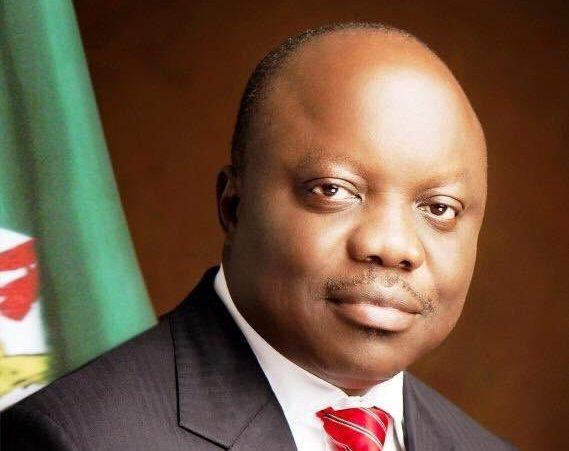
Former Delta State Governor Dr Emmanuel Eweta Uduaghan has died at the age of 71. His family confirmed that he passed away on Monday morning, October 19, while reports from people close to the family said he died in an Abuja hospital after a period of illness. Uduaghan served as Delta State Commissioner for Health from 1999 to 2003, Secretary to the State Government from 2003 to 2007 and governor for two terms from 2007 to 2015. His death has triggered mourning across Delta State and among political associates, while his family is expected to announce funeral arrangements later.
Former Delta State Governor Dr Emmanuel Eweta Uduaghan has died at the age of 71, ending the life of a medical doctor turned politician who rose through some of the most influential positions in Delta State government before serving two full terms as governor from 2007 to 2015. His family confirmed that he died on the morning of Monday, October 19, 2026, while reports from people close to the family said he passed away in an Abuja hospital after a period of illness. His death came only a few days before what would have been his 72nd birthday on October 22, adding another emotional dimension to the announcement as relatives, political associates and residents across Delta State began mourning one of the most recognisable political figures in the state’s recent history.
The family announced his death in a statement signed by Toju Uduaghan on behalf of the wider Uduaghan family. The statement described his passing as a profound loss to his relatives, Delta State and Nigeria, while reflecting on his years of public service and the role he played within his immediate and extended family. Beyond the political titles that defined much of his public life, relatives remembered him as a father, grandfather, brother, uncle and family leader whose influence stretched far beyond government. The family asked friends, associates and Nigerians to keep them in prayer as they begin preparations for his burial and other funeral arrangements.
Uduaghan’s death was confirmed by several Nigerian media organisations on Monday. Channels Television reported that a family source said the former governor died in Abuja after a period of illness, although the official family statement did not provide detailed medical information or disclose the specific condition that led to his death. For that reason, the most responsible account is that he died after an illness, without speculating about a diagnosis that his family has not publicly confirmed. No hospital statement had been released at the time of reporting, and there was no official medical briefing providing further details about his final days.
Born on October 22, 1954, Uduaghan trained as a medical doctor before entering full-time politics and public administration. His medical background remained an important part of his public identity throughout his career and was one of the qualities that distinguished him from many other politicians of his generation. He initially built his professional reputation in medicine before moving into public service, eventually combining his medical experience with politics at a time when Nigeria was returning to democratic government in 1999.
His major entry into Delta State government came when he was appointed Commissioner for Health in 1999 under the administration of then-Governor James Ibori. He held the position until 2003 and was responsible for overseeing public health policy, hospitals and healthcare administration across the state. His tenure in the health ministry helped raise his political profile and placed him within the inner circle of the state administration, giving him direct experience in managing one of the most socially important sectors of government.
After four years as health commissioner, Uduaghan was appointed Secretary to the Delta State Government in 2003, moving into one of the most powerful administrative offices in the state. As SSG, he became deeply involved in policy coordination, government administration and political decision-making, serving in that role until 2007. His years in the position helped prepare him for the governorship and strengthened his influence within the Peoples Democratic Party structure in Delta.
In 2007, Uduaghan was elected governor of Delta State, succeeding James Ibori and beginning an eight-year period that would make him one of the most consequential political figures in the state’s Fourth Republic history. He was later re-elected and remained in office until 2015, completing two full terms. During those years, his administration dealt with major issues involving infrastructure, healthcare, education, security, economic diversification and the challenge of governing one of Nigeria’s most important oil-producing states.
One of the most recognisable policies associated with his administration was the “Delta Beyond Oil” initiative, which sought to reduce the state’s heavy dependence on petroleum revenue and encourage investment in other sectors. Uduaghan repeatedly argued that an oil-producing state could not build a sustainable future if its economy depended almost entirely on crude oil receipts. His administration therefore promoted agriculture, tourism, transportation, small business development and other areas that could generate employment and economic activity outside the petroleum industry.
The “Delta Beyond Oil” policy became one of the defining slogans of his time in office and continued to be associated with him long after he left Government House. Supporters saw the strategy as an attempt to prepare Delta for a future in which oil revenues might no longer provide the same level of financial security, while critics argued that diversification efforts did not progress quickly enough to fundamentally change the state’s economic structure. Nevertheless, the policy highlighted an issue that remains relevant today, particularly as Nigeria continues to grapple with declining oil revenues, exchange-rate pressures and the need for stronger non-oil economic activity.
Uduaghan’s administration also invested in roads, transport systems, public infrastructure and healthcare. His medical background influenced some of his government’s health programmes, particularly those focused on maternal health, child health and access to medical services. He frequently emphasised the importance of preventive healthcare and better access to treatment, and his administration promoted initiatives intended to reduce the financial burden of medical care for vulnerable residents.
Infrastructure development also featured prominently during his two terms. Delta State’s geography includes major urban centres, oil-producing communities, riverine areas and rural settlements, making infrastructure planning particularly difficult. Governments have to balance competing demands from communities that often feel entitled to a larger share of development because of their contribution to the state’s oil wealth. Uduaghan’s administration therefore operated in an environment where every major project could quickly become politically sensitive.
His years as governor also coincided with a period of intense security concern in the Niger Delta. Militancy, kidnapping, pipeline attacks and disputes over resource control remained major issues during the late 2000s and early 2010s. The federal government’s Niger Delta amnesty programme emerged during this period, and state governments played an important role in supporting peace initiatives, engaging youth groups and attempting to reduce the appeal of armed militancy.
Uduaghan frequently presented himself as an advocate of dialogue and economic opportunity as tools for addressing insecurity in oil-producing communities. He argued that lasting peace in the Niger Delta required more than military deployments and needed to include development, employment and stronger relationships between government, oil companies and host communities. These issues became an important part of his wider political identity, particularly because Delta remained one of the most strategically important states in Nigeria’s energy economy.
His political career was also closely connected to the wider Ibori political structure in Delta State. Uduaghan served under James Ibori before succeeding him as governor and remained associated with the political network that dominated Delta politics for many years. That relationship was frequently discussed by both supporters and critics, particularly during debates about political succession and influence within the state.
Despite those associations, Uduaghan gradually built his own political base and remained relevant long after his governorship ended. After leaving office in 2015, he continued to participate in national and state politics, offering commentary on governance, security and the development of the Niger Delta. He remained an influential figure among political actors in Delta and continued to be consulted on major political and community issues.
His party affiliations also changed after he left office. In 2018, Uduaghan left the Peoples Democratic Party and joined the All Progressives Congress, a move that generated significant political attention because of his long history within the PDP. Two years later, in 2020, he returned to the PDP, describing the move as a return to his political home. His movements between the parties reflected the broader political realignments that have become common among senior Nigerian politicians.
As an Itsekiri political leader, Uduaghan was also influential beyond party structures. He remained connected to traditional and community affairs and was often involved in discussions concerning Warri, oil-producing communities and the wider Niger Delta. His position as a former governor, doctor and senior political figure gave him a voice that carried weight across several different constituencies.
The Itsekiri community has historically played an important role in the politics and economy of Delta State, particularly around Warri and the oil-producing areas. Uduaghan’s prominence meant that he was frequently expected to speak on questions involving resource development, traditional authority, political representation and relations between different ethnic groups in the state. His death therefore represents a loss not only to the political class but also to a broader network of community and traditional relationships.
The family’s statement announcing his death placed significant emphasis on his personal character and family relationships, reminding the public that his life extended beyond politics. Relatives described him as a man whose influence was felt within his family and who remained deeply connected to those around him. That perspective is particularly important when prominent public figures die because the political discussion can quickly overshadow the private grief being experienced by relatives.
The timing of his death, only days before his 72nd birthday, has also added to the sense of loss. Family members and associates who might ordinarily have been preparing birthday messages and celebrations are now facing funeral planning and condolence visits. That proximity to his birthday is likely to feature prominently in tributes over the coming days as friends and former colleagues reflect on his life.
Delta State officials, political figures and associates began mourning him shortly after the family announcement became public. Tributes are expected from former governors, serving governors, lawmakers, party leaders, traditional rulers and senior figures from across the Niger Delta. Many of those messages are likely to focus on his years of public service, his medical background and the role he played in shaping Delta State politics during the first two decades of Nigeria’s Fourth Republic.
His death also comes at a time when Delta politics remains highly competitive, with former governors, incumbent officials and national political parties continuing to shape the state’s direction. Uduaghan was one of the elder statesmen whose opinions and political relationships still carried influence even though he had been out of office for more than a decade.
That continued relevance helps explain why his passing has attracted attention beyond his immediate political party. Former governors in Nigeria often remain influential after leaving office because they retain relationships with lawmakers, traditional rulers, business leaders and national party structures. Uduaghan belonged firmly to that group.
His legacy will inevitably be debated in the days and weeks ahead. Supporters will point to his health programmes, infrastructure projects, economic diversification agenda and efforts to promote stability in the Niger Delta. Critics may revisit controversies and policy shortcomings associated with his administration. Both perspectives form part of the historical record and will shape how future generations assess his eight years as governor.
What is not in dispute is the length and breadth of his public service. From 1999 to 2015, he held three major positions in Delta State government without a significant break, first as Commissioner for Health, then as Secretary to the State Government and finally as governor. That 16-year period placed him at the centre of state decision-making during some of the most important years of Nigeria’s post-military democratic era.
His professional transition from medicine to politics also remains one of the notable features of his career. He began his working life as a doctor, entered government through the health sector and ultimately became responsible for the administration of an entire state. That progression gave him a distinctive profile among his contemporaries and helped shape the public image he carried throughout his political career.
The health sector is likely to feature prominently in many tributes because it represented both his professional foundation and one of the policy areas he continued to emphasise as governor. Medical professionals and health-sector organisations may therefore join political leaders in mourning him and reflecting on his contribution to public healthcare in Delta.
His administration’s focus on economic diversification is also likely to receive renewed attention because Nigeria continues to struggle with many of the same structural issues that informed the “Delta Beyond Oil” agenda. State governments still face pressure to reduce their dependence on federal allocations and oil revenue while creating jobs through agriculture, manufacturing, services and technology.
The fact that those challenges remain unresolved gives Uduaghan’s diversification message continuing relevance. Whether his administration achieved enough practical progress is open to debate, but the economic problem he identified remains central to Delta’s future.
His time in office also coincided with substantial oil revenues, giving the administration significant opportunities for public investment. That period is likely to be reassessed as analysts and residents compare the resources available to his government with the development outcomes achieved.
Such reassessment is normal after the death of a long-serving political leader. Public memory often becomes more detailed as journalists revisit budgets, policies, speeches and major events from an administration.
Uduaghan’s political relationships will also form part of that reflection. His ties to James Ibori, his role in the PDP, his later move to the APC and his eventual return to the PDP all illustrate the complex alliances that have shaped Delta politics.
He remained active enough after leaving office that his political journey did not end with his governorship. Instead, he became part of the senior political class whose influence was expressed through endorsements, consultations and interventions in major public debates.
His death therefore closes more than one political chapter. It ends a career that began in professional medicine, expanded into public administration and eventually reached the highest elected office in Delta State.
For younger Nigerians who remember him mainly as a former governor, the coming days will likely provide a fuller picture of his earlier life and political rise. For older residents who lived through his years in office, his death may trigger memories of specific policies, political battles and development projects.
In Warri and other parts of Delta, mourning is likely to carry a strong community dimension because of his longstanding connections to the region. Traditional leaders and community organisations are expected to participate in funeral activities once the family announces formal arrangements.
At the time of this report, no burial date had been officially released. The family has not yet provided a detailed programme for funeral ceremonies, and any dates circulating without confirmation should therefore be treated cautiously.
The Delta State Government may also announce official honours after discussions with the family. Former governors are often recognised with formal state participation in funeral ceremonies, although exact arrangements depend on both family preferences and government decisions.
Until those plans are made public, the most important confirmed information remains the family’s announcement of his death and the outline of his long career.
Dr Emmanuel Eweta Uduaghan served Delta State in senior public office for 16 consecutive years and remained politically relevant for more than a decade after leaving Government House. His career covered healthcare, state administration, executive leadership and political elder statesmanship.
His death at 71 removes one of the most recognisable figures from Delta’s modern political history.
For his family, however, the political significance is secondary to the personal loss of a husband, father, grandfather, brother and uncle. The statement announcing his death reflected that reality and asked Nigerians to remember the family in prayer.
For Delta State, his passing is an opportunity to reflect on the era he helped shape and the policies that defined his years in government.
For Nigeria’s political establishment, it marks the death of another prominent figure whose career stretched from the early days of the Fourth Republic into the modern political period.
Whatever conclusions history ultimately reaches about his administration, Emmanuel Uduaghan’s place in the political history of Delta State is secure. His years as commissioner, secretary to the state government and two-term governor ensured that he played a central role in the state’s development and politics for more than a decade and a half.
His passing now brings that long public journey to an end, leaving behind a legacy that will continue to be discussed by family members, political allies, critics and generations of Delta residents who lived through his years in power.