GUNMEN SHOOT MIYETTI ALLAH CHAIRMAN IN PLATEAU AS FRESH ATTACK DEEPENS TENSION IN MANGU
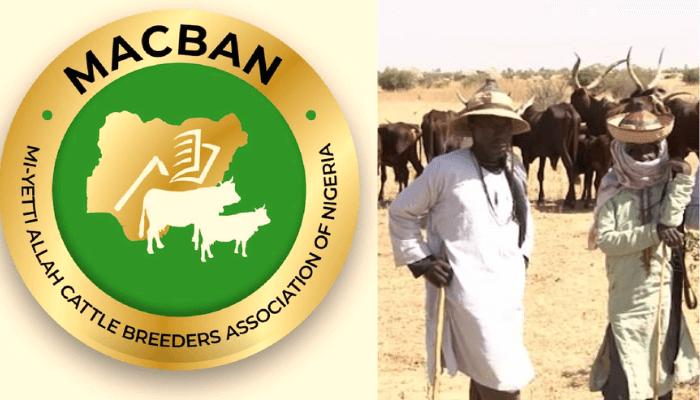
Gunmen have shot and injured Alhaji Yakubu, Chairman of the Miyetti Allah Cattle Breeders Association of Nigeria in Langai Ward, Mangu Local Government Area of Plateau State. Security-focused reports carried preliminary allegations against a local militia group, but the identities of the attackers and the motive have not been independently established. Law-enforcement authorities are investigating, while detailed information about Yakubu’s current medical condition has not yet been publicly released. The shooting comes amid recurring attacks, cattle rustling and reprisals that have heightened tensions between farming and herding communities in Mangu.
Gunmen have shot and injured Alhaji Yakubu, Chairman of the Miyetti Allah Cattle Breeders Association of Nigeria in Langai Ward, Mangu Local Government Area of Plateau State, adding another violent incident to an area already struggling with recurring attacks, cattle rustling, reprisals and deep mistrust between farming and herding communities. The shooting was reported on Sunday, October 18, after security analyst and counter-insurgency publication Zagazola Makama said preliminary information indicated that Yakubu had been targeted by armed assailants. His exact medical condition was not immediately disclosed, and no verified information available at the time of publication confirmed whether he remained in hospital, required surgery or had been discharged.
The identity of the attackers also remains unconfirmed. Zagazola Makama reported preliminary allegations that members of a Mwaghavul militia group may have been responsible, but the publication itself stressed that the allegation had not been independently established. TheCable, Daily Post and other Nigerian outlets repeated the claim with similar caution, making clear that the identities of the gunmen and the circumstances surrounding the attack were still under investigation. VNTV therefore cannot responsibly present any ethnic, community or militia group as responsible until law-enforcement authorities establish the facts.
The shooting has renewed concern about the security situation in Mangu, one of the Plateau communities most frequently affected by cycles of violence. Residents from different ethnic and occupational groups have repeatedly accused one another of attacks on people, farms, livestock and property, while security agencies have struggled to prevent individual incidents from producing further retaliatory violence. The result has been an environment in which an attack against one person can quickly become part of a much larger narrative of collective blame, even when investigators have not yet identified the perpetrators.
That risk is especially serious in the case of a local MACBAN chairman because Miyetti Allah represents cattle breeders and pastoralist interests across Nigeria, including Fulani herding communities that have themselves reported attacks in Plateau. Any attack on a visible community leader can generate anger among members who fear they are being deliberately targeted, while neighbouring communities may simultaneously point to previous violence suffered by their own residents. Security agencies must therefore investigate the shooting as an individual criminal incident while also preventing rumours or unverified accusations from fuelling wider confrontation.
The incident comes amid an already tense period for MACBAN members in Plateau State. Earlier in October, the association suspended the movement of cattle to the Kara Bukuru Livestock Market in Jos South Local Government Area after a series of attacks on herders and vehicles transporting livestock. The suspension, which was scheduled to remain in place until October 20, followed an attack in which gunmen reportedly opened fire on herders returning from the market, killing two people and injuring eight others. MACBAN said the temporary restriction was intended both to mourn those killed and to reduce the risk of further attacks against its members.
The Plateau State MACBAN leadership has repeatedly called for restraint rather than reprisals. In its October communiqué, the association appealed to security agencies to investigate recent killings and urged members not to take the law into their own hands. That appeal becomes even more important following the attack on Yakubu because local leaders can play a major role in either calming communities or allowing anger to escalate.
Mangu has experienced repeated violence involving farmers, herders, vigilantes and armed groups over the years. The conflict is often described too simply as a dispute between farmers and Fulani herders, but the reality is considerably more complicated. Competition over land and grazing routes, cattle rustling, revenge attacks, political disputes, criminal activity, ethnic mistrust and longstanding insecurity all overlap, making it difficult to assign every incident to a single cause.
Recent reports illustrate how quickly accusations move in both directions. In September, the Mwaghavul Development Association accused armed Fulani attackers of killing members of Mwaghavul communities in Mangu, including a 29-year-old man in Kinat and a 55-year-old man who was reportedly beheaded in Kikyau. Those allegations were made by community representatives and were not the same as findings of a completed police investigation.
MACBAN and Fulani representatives have likewise accused members of other communities of killing herders, poisoning cattle and rustling livestock. In April, Plateau MACBAN Chairman Ibrahim Yusuf Babayo said cattle belonging to Fulani residents had been poisoned or killed in several communities and complained that no arrests or compensation had followed. Berom representatives denied involvement in some of the incidents attributed to their members.
This pattern of competing allegations is one reason the latest attack must be reported carefully. Identifying Alhaji Yakubu as a victim is straightforward because multiple reports confirm that he was shot and injured. Identifying who shot him is not. Preliminary accusations are not equivalent to evidence established through arrests, forensic investigation, eyewitness verification and prosecution.
TheCable reported that law-enforcement authorities were investigating the circumstances surrounding the shooting. At the time of publication, however, no police statement naming suspects or announcing arrests had been located. No credible report had established a motive either. It is therefore unclear whether the attack was connected to the broader farmer-herder conflict, a personal dispute, criminal activity, cattle-related tensions or another motive entirely.
Further information about the location and timing of the shooting also remained limited. Current reporting identifies Yakubu as the MACBAN chairman for Langai Ward and confirms that the attack occurred in Mangu Local Government Area, but the exact road, village or building where he was shot had not been consistently published by reliable outlets at the time VNTV reviewed the reports. That gap is important because location can help investigators determine whether the incident fits a known pattern of roadside attacks, targeted shootings near residences or communal confrontations.
Yakubu’s medical condition is another area where speculation should be avoided. Multiple reports say he survived the attack and was injured, but they do not provide a detailed clinical update. The absence of such information means reports describing him as critically wounded, stable or recovering should not be repeated unless his family, MACBAN or medical authorities confirm them.
The attack has raised fears of retaliation because Mangu has experienced cycles in which one violent incident is followed by another. Community leaders and security agencies have repeatedly warned that reprisals make investigations more difficult and widen the number of victims. When people respond to an attack by targeting unrelated members of another ethnic or occupational group, responsibility shifts from the original perpetrators to a broader cycle of collective violence.
That danger is particularly acute where livestock is involved. Cattle theft can trigger armed retaliation because animals represent significant household wealth, while attacks on farmers can destroy livelihoods and reinforce perceptions that communities are under organised threat. Once trust collapses, rumours about missing cattle or unidentified gunmen can quickly become enough to provoke confrontation.
Security forces operating in Plateau include the police, military units and locally backed security structures. Operation Enduring Peace has responsibility for supporting security across parts of Plateau and neighbouring states, while Plateau’s Operation Rainbow provides an additional state-level security framework. These bodies are expected to work with community leaders to gather intelligence, respond to attacks and prevent escalation.
Operation Rainbow has itself faced allegations of misconduct in recent local reporting, including claims from some Fulani residents that security personnel were involved in attacks or cattle-related abuses. Those allegations have not been independently proven, and state authorities have not accepted the claims as established fact. Their existence nevertheless illustrates the wider problem facing security agencies: enforcement becomes more difficult when sections of the population do not trust the forces assigned to protect them.
Restoring trust requires transparent investigations. When people believe previous attacks were ignored or selectively investigated, they are more likely to rely on community defence groups or revenge networks rather than official law enforcement. The investigation into Yakubu’s shooting will therefore matter beyond one criminal case because communities will watch whether suspects are identified and whether the evidence is handled impartially.
Plateau has experienced a significant number of attacks in recent months. On October 5, gunmen reportedly attacked a commercial vehicle carrying traders from Kara Livestock Market near Bukuru, killing one person and injuring seven others. MACBAN’s Plateau leadership said the victims were predominantly Fulani and Hausa traders and called on police, the Department of State Services and Operation Enduring Peace to identify the attackers.
In other areas, communities associated with Christian farming populations have reported their own casualties from unidentified gunmen. Recent attacks in Barkin Ladi, Riyom and Mangu have killed residents, vigilantes and miners, demonstrating that insecurity is affecting several groups rather than one community alone.
The recurring nature of the violence has led Plateau authorities to impose curfews in some areas during periods of heightened tension. Curfews can temporarily reduce movement and make it easier for security forces to patrol, but they do not address the underlying causes of attacks. Long-term security depends on effective policing, prosecution, land management and mechanisms that allow disputes to be addressed before they become violent.
The shooting of a ward-level MACBAN chairman could also complicate ongoing peace initiatives. Community associations frequently participate in dialogue with local government officials, traditional rulers and security commanders. If their representatives become targets, leaders may become reluctant to attend meetings or travel through contested areas.
Yakubu’s position means he would likely have been involved in representing cattle breeders within Langai Ward, communicating members’ concerns and participating in discussions with local authorities. An attack on someone holding such a role can therefore affect more than the individual because it can weaken channels of communication between communities and government.
Security analysts have repeatedly argued that dialogue remains necessary even when military and police operations are intensified. Many conflicts in central Nigeria involve local grievances that cannot be resolved solely through force. Grazing routes, farmland boundaries, compensation for destroyed crops, cattle theft and access to water all require administrative and community-level solutions alongside criminal enforcement.
However, dialogue is unlikely to succeed if armed groups believe violence carries few consequences. This is why calls for peace are often accompanied by demands for arrests and prosecutions. Communities want assurance that agreeing not to retaliate does not mean attackers will simply remain free.
The Plateau conflict also suffers from the rapid spread of misinformation through social media. Graphic photographs from unrelated incidents are frequently reposted and attributed to new attacks, while unverified claims about the ethnicity or religion of attackers can spread before police arrive at the scene. Such misinformation can create new security threats by mobilising anger against entire communities.
VNTV therefore urges caution around posts identifying the people who shot Alhaji Yakubu. The only confirmed information currently available is that gunmen attacked him, he survived with injuries, and law-enforcement authorities are investigating. Claims naming a particular Mwaghavul militia are preliminary allegations originating from security-focused reporting and have not been independently established.
This distinction does not mean the allegation should be ignored. Investigators should examine every credible lead, interview witnesses, recover ballistic evidence where possible and determine whether the attack was linked to known local armed groups. But journalistic reporting should not convert a lead into a conviction before the evidence is available.
The same standard should apply to accusations against Fulani armed groups in other Plateau attacks. Violence attributed by one community to another should remain clearly labelled as an allegation until the police, courts or independently corroborated evidence establish responsibility. Without that discipline, journalism can unintentionally deepen the same tensions it is trying to document.
Plateau’s geography contributes to the security challenge. Rural communities, farms, grazing areas and rocky terrain can make surveillance difficult, while many attacks occur at night or along lightly protected roads. Gunmen can move quickly between settlements and disappear before security forces respond.
Mangu itself includes both agricultural communities and pastoralist populations, creating frequent interaction over land, roads and markets. Most of that interaction is peaceful, but a relatively small number of armed actors can disrupt relationships built over generations.
Markets are especially important to maintaining those relationships. Cattle traders, farmers, transport operators and food sellers depend on each other economically even when political rhetoric emphasises ethnic division. Violence that interrupts market activity therefore harms several communities simultaneously.
MACBAN’s suspension of cattle movement to Kara Bukuru Market demonstrates that economic impact. When cattle cannot be moved safely, traders lose income, meat supply chains can be disrupted and transport workers lose business. Farmers and local consumers can also be affected by reduced market activity.
The economic cost extends to farming communities as well. Fear of attacks can prevent farmers from reaching fields, delay planting or harvesting and reduce food production. Families displaced by violence may lose crops entirely or be unable to return to land for long periods.
This is why Plateau’s insecurity increasingly has consequences beyond local security statistics. It affects food production, livestock markets, displacement, education and investment. Persistent violence can make young people more willing to join armed groups or vigilante organisations because ordinary economic opportunities disappear.
Government authorities therefore face pressure to move beyond reactive deployments after every attack. Permanent intelligence networks, faster emergency response and credible criminal investigations are necessary if communities are to believe the state can protect them.
Peacebuilding must also involve leaders who are willing to condemn violence regardless of who commits it. Selectively condemning attacks only when one’s own community is harmed reinforces collective blame. The strongest community leadership would reject both attacks on herders and attacks on farmers while cooperating with investigators.
The current Plateau MACBAN leadership has publicly urged its members to remain calm following previous incidents. That message will be especially important after Yakubu’s shooting. Any retaliatory attack would risk harming innocent people who had no involvement in the original crime and could trigger another round of violence.
Mwaghavul leaders will also face pressure to respond to allegations involving members of their community. Because the accusation remains unverified, responsible leadership should support an investigation rather than accepting collective blame or retaliating through rhetoric.
The police response will be closely watched. A clear statement confirming when and where Yakubu was attacked, his condition, evidence recovered and whether suspects are being pursued would reduce room for rumours. Silence or delayed information can allow competing narratives to become entrenched.
At the time of VNTV’s latest review, such a detailed official statement had not been published. Current reporting relies heavily on Zagazola Makama’s account and subsequent reports citing it. This makes the story credible as a confirmed shooting but still incomplete in important respects.
The attack also follows the June killing of Benue State MACBAN Chairman Alhaji Risku Mohammed, who was shot dead alongside a companion after attending a peace meeting. Police later announced multiple arrests in that separate case. The Benue incident is unrelated to Yakubu’s shooting, but it demonstrates why attacks on association leaders can generate wider concern within MACBAN.
The two cases should not be conflated. There is no evidence establishing a coordinated campaign against MACBAN officials across states, and the circumstances are different. The comparison is relevant only because both involved senior local association representatives and required law-enforcement investigations.
Miyetti Allah itself is frequently discussed in Nigerian politics and security debates, sometimes in highly polarised terms. MACBAN is a cattle breeders’ association representing pastoralist interests, but public discussion often incorrectly treats all Fulani herders, armed groups and Miyetti Allah organisations as interchangeable. They are not.
A member or official of MACBAN can be a victim of violence without that fact establishing anything about wider conflicts involving other Fulani individuals or armed groups. Likewise, violence committed by someone identifying as Fulani does not make an entire pastoralist association responsible.
That basic distinction matters if Plateau is to move away from collective punishment. Criminal accountability should follow evidence against individuals and organised groups rather than ethnicity or profession.
The attack on Yakubu therefore deserves investigation as both a criminal case and a potential trigger for further instability. Security agencies should determine who carried out the shooting, what motive they had, how they reached the location and whether anyone assisted them.
If the attack was linked to an organised militia, investigators should establish the chain of responsibility rather than stopping at the gunmen themselves. If it resulted from a personal or criminal dispute, authorities should say so once evidence permits, because clarifying motive can help prevent communities from assuming ethnic responsibility.
Medical updates will also help reduce uncertainty. Confirmation from MACBAN or his family about whether Yakubu is stable would allow the public to understand the seriousness of the attack without relying on rumours.
Until those details emerge, the story remains a developing security incident.
What is established is that the Langai Ward chairman of the Miyetti Allah Cattle Breeders Association was shot and injured by gunmen in Mangu Local Government Area. No attacker has been publicly arrested or formally identified in reliable reporting reviewed by VNTV.
The broader context makes the incident especially dangerous. Plateau is already carrying the weight of repeated killings, cattle theft, displacement and allegations from competing communities. Another unresolved attack on a recognised local leader can become fuel for further violence unless authorities move quickly.
The immediate priority should therefore be twofold: identify and prosecute the people responsible while preventing retaliation against innocent residents.
Mangu has experienced enough cycles in which one death becomes the justification for another. The shooting of Alhaji Yakubu will test whether security agencies and community leaders can break that pattern by allowing evidence, rather than collective accusation, to determine responsibility.