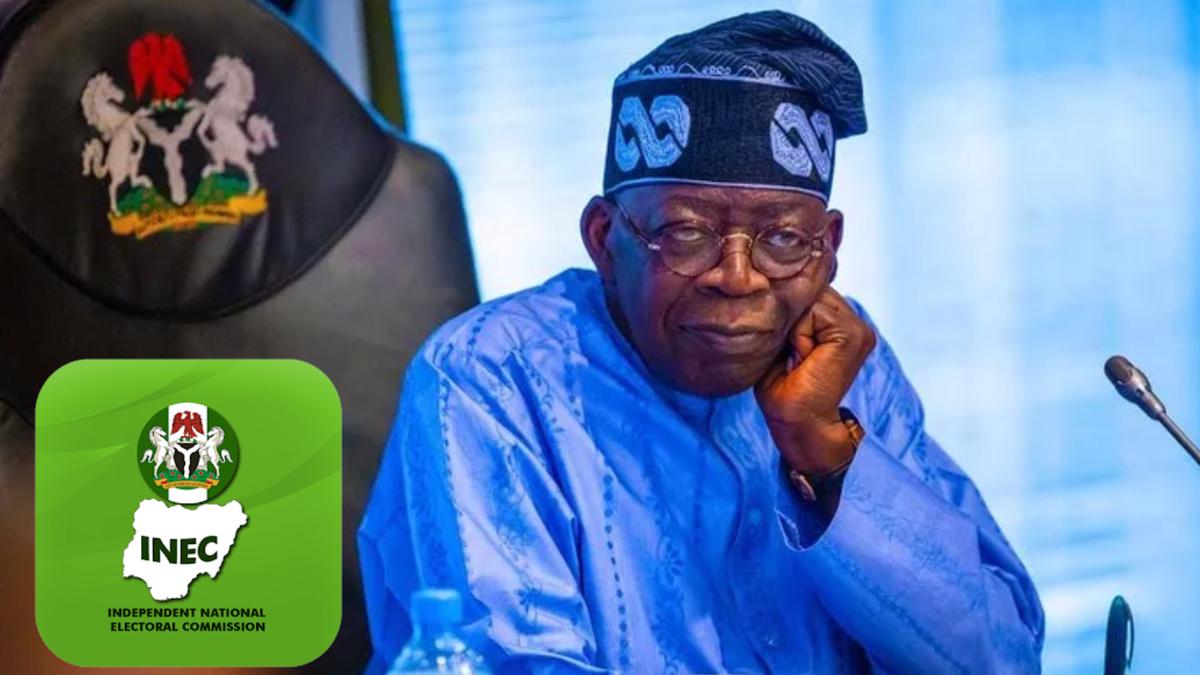
TINUBU’S 2027 CAMPAIGN COUNCIL SPARKS APC UNEASE AS WIKE, SOLUDO AND ADELEKE TAKE KEY ROLES DESPITE OPPOSITION PARTY TIES
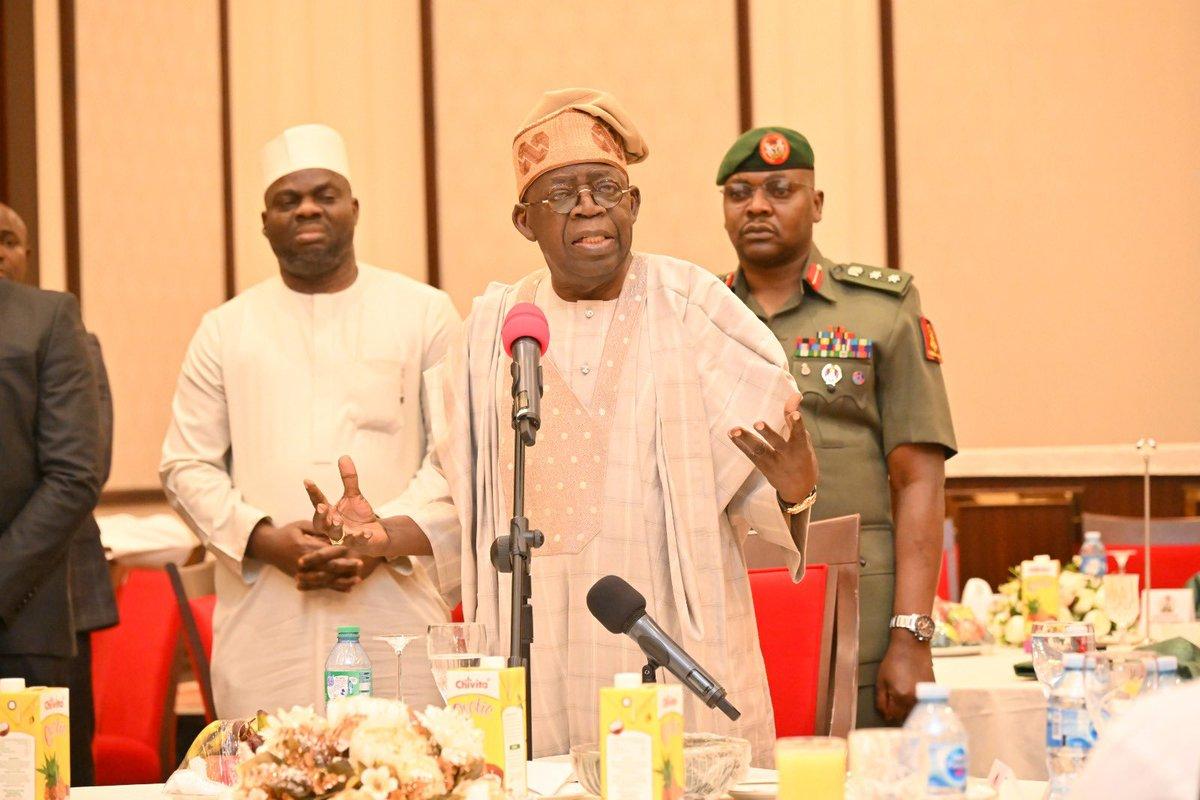
The inclusion of prominent opposition politicians in President Bola Tinubu’s 2027 Presidential Campaign Council is causing unease among sections of the APC. FCT Minister Nyesom Wike, who remains in the PDP, has been appointed coordinator for Rivers State and the FCT, while APGA’s Chukwuma Soludo will coordinate Anambra and Accord Governor Ademola Adeleke will coordinate Osun. Some APC stakeholders say loyal party figures have been sidelined, while opposition candidates fear their leaders’ support for Tinubu could confuse voters and weaken their chances against APC candidates in legislative elections. The APC leadership says it deliberately sought support beyond the ruling party as part of a broader coalition for Tinubu’s re-election.
The inclusion of prominent opposition figures in President Bola Tinubu’s expanded 2027 re-election campaign council is generating unease within sections of the ruling All Progressives Congress, with party stakeholders in Rivers, Anambra and Osun questioning why influential positions were handed to politicians who remain outside the APC. The controversy followed the appointment of Federal Capital Territory Minister Nyesom Wike as coordinator for Rivers State and the FCT, Anambra State Governor Chukwuma Soludo as coordinator for Anambra and Osun State Governor Ademola Adeleke as coordinator for Osun. Wike remains a member of the Peoples Democratic Party, Soludo leads an All Progressives Grand Alliance administration in Anambra, while Adeleke now governs Osun under the Accord Party after securing re-election on that platform in 2026. Their inclusion reflects Tinubu’s effort to build a broader political coalition ahead of the 2027 presidential election, but it has also exposed tensions between electoral expansion and the expectations of long-serving APC members who believe party loyalty should determine access to strategic campaign positions.
The expanded Presidential Campaign Council was unveiled earlier in the week as the APC intensifies preparations for Tinubu’s second-term bid. The appointments immediately attracted attention because they formally incorporated three highly visible political figures from outside the ruling party into state-level campaign structures. Their roles are not ceremonial. As campaign coordinators, they are expected to help mobilise voters, strengthen political organisation and support Tinubu’s presidential campaign in states where their own parties will continue contesting other elective positions against the APC.
That arrangement has created an unusual political situation. Wike is expected to campaign for Tinubu while remaining one of the most powerful figures associated with the PDP. Soludo is expected to promote Tinubu’s presidential candidacy while APGA presents candidates for other offices. Adeleke is expected to coordinate Tinubu’s campaign in Osun while Accord members compete against APC candidates in legislative contests. The arrangement reflects the increasingly fluid nature of Nigerian political alliances but has also created uncertainty among party members who are accustomed to campaign structures being controlled primarily by officials from the same political organisation.
Some APC stakeholders have expressed frustration that opposition figures appear to have been elevated above party members who have worked for Tinubu and the ruling party for years. Sunday PUNCH reported growing dissatisfaction among party figures in Osun, Rivers and Anambra, with some members arguing that the appointments risk weakening local party structures and reducing enthusiasm among activists who expected to play major roles in the presidential campaign.
The Osun situation has attracted particular attention because of the state’s recent political history. Former governor Gboyega Oyetola remains one of the most influential APC figures in Osun and currently serves as Minister of Marine and Blue Economy. Party sources cited by Sunday PUNCH said some members were unhappy that Adeleke had been named Tinubu’s campaign coordinator for the state despite belonging to Accord, while established APC figures were expected to work under or alongside a political rival.
Adeleke’s position is especially sensitive because he is not merely an opposition politician with limited influence. He is the sitting governor of Osun and controls significant political structures within the state. His participation in Tinubu’s campaign could therefore strengthen the President’s electoral organisation, but APC members who fought against Adeleke in state politics may find themselves being asked to cooperate with him in the presidential race.
That creates a complicated political arrangement in which the same politicians can be allies in one election and opponents in another. Tinubu’s campaign may benefit from Adeleke’s mobilisation network during the presidential contest, while APC and Accord candidates compete aggressively for Senate, House of Representatives and State Assembly seats. For local activists, explaining that distinction to voters may not always be easy.
A similar difficulty exists in Anambra. Governor Chukwuma Soludo remains one of APGA’s most prominent leaders and began his second term as governor in March 2026. APGA has historically presented itself as a distinct political force in the South East, particularly in Anambra, where it has maintained a strong state-level identity. Soludo’s appointment as Tinubu’s campaign coordinator therefore raises questions about how APGA candidates will distinguish themselves from APC candidates while their governor actively campaigns for the APC presidential nominee.
Some APGA members have expressed concern that the arrangement could blur party identity and create confusion among voters. Sunday PUNCH reported that party stakeholders in Anambra fear Soludo’s participation in Tinubu’s campaign could make it more difficult for APGA candidates contesting legislative seats against the APC to maintain a clear electoral message. One senior APGA figure compared the situation with past alliances in which smaller parties supported presidential candidates from larger parties but later suffered politically at state level.
The historical comparison most frequently raised is the 2003 election, when the Alliance for Democracy supported then-President Olusegun Obasanjo’s re-election while contesting state races separately. The party subsequently lost control of most of the South West states it had governed. Critics of the current cross-party arrangement warn that opposition parties could face a similar risk if voters interpret support for Tinubu as broader support for the APC.
That comparison does not mean the same outcome will necessarily occur in 2027 because Nigeria’s political environment has changed significantly since 2003. However, it illustrates why some opposition candidates are uneasy. If their own governors and senior political leaders ask voters to support Tinubu for president, those voters may also be more inclined to support APC candidates further down the ballot, especially where party identities are already fluid.
Wike’s role creates another set of tensions. The FCT minister remains formally a PDP member but has worked closely with Tinubu since the beginning of the administration. He serves in an APC-led Federal Government, has repeatedly defended major government policies and has openly expressed support for Tinubu’s re-election. His appointment as campaign coordinator for Rivers State and the Federal Capital Territory therefore formalises a political relationship that has been visible for several years.
Wike has defended the inclusion of opposition politicians in Tinubu’s campaign council, arguing that the President’s re-election should attract support beyond the boundaries of the APC. He has presented the arrangement as an example of political cooperation and has suggested that politicians should be able to support a presidential candidate they believe has performed well even when they belong to different parties.
His position reflects a wider argument inside Tinubu’s political camp. APC National Chairman Nentawe Yilwatda has confirmed that the party deliberately reached out to opposition figures, including Wike, Soludo and Adeleke, to secure support for Tinubu’s 2027 campaign. The strategy appears intended to broaden the President’s coalition beyond traditional APC structures and reduce the ability of opposition parties to organise a unified challenge around a single anti-Tinubu platform.
From the perspective of Tinubu’s campaign strategists, the logic is clear. Wike has substantial influence in Rivers and the FCT political environment. Soludo controls a strong state political structure in Anambra. Adeleke is an incumbent governor with a significant support base in Osun. Bringing such figures into the presidential campaign gives Tinubu access to networks that could be difficult for the APC to build independently.
The political cost is that existing APC leaders in those states may feel marginalised. State party officials, former governors, ministers, lawmakers and grassroots organisers can reasonably expect to play central roles in a campaign for their own party’s presidential candidate. When an opposition figure receives the coordinator position instead, some members may interpret the decision as evidence that loyalty is less valuable than electoral influence.
That frustration can become important during an election because national campaign plans depend heavily on local organisation. Presidential candidates need party members to identify supporters, organise rallies, manage polling units, monitor results and mobilise voters. If some local APC leaders become less enthusiastic because they feel ignored, the campaign could face internal difficulties even while gaining support from opposition elites.
This is the balance Tinubu’s campaign is attempting to manage. The strategy seeks to expand the President’s coalition without weakening the APC structures that remain responsible for much of the campaign’s grassroots work. Whether the arrangement strengthens or complicates the campaign may differ from state to state.
Rivers is likely to be one of the most closely watched examples. The state has experienced years of political conflict involving Wike, current state actors and competing party structures. Wike remains a powerful figure, but his relationship with sections of the APC has not always been straightforward. Some APC members have questioned why a PDP politician should effectively direct Tinubu’s campaign in a state where the ruling party already has its own leaders and supporters.
Earlier in October, APC state chairmen across Nigeria expressed differing opinions about working with Wike. Some said they would accept cooperation if it had the backing of national party leadership, while others insisted that political alliances should not undermine existing APC structures. Those divisions existed before the formal campaign council appointments and are likely to become more significant now that Wike has been given an official role.
For Wike, however, the appointment is consistent with his political behaviour since the 2023 election. He openly opposed the PDP presidential campaign of Atiku Abubakar after a dispute over party leadership and refused to support the party’s candidate. Since Tinubu took office, Wike has served as FCT minister and developed one of the closest working relationships between the administration and a politician who remains formally outside the APC.
His inclusion therefore comes as little surprise to many observers. The more politically significant appointments may be those of Soludo and Adeleke because both are sitting governors leading opposition administrations while actively joining the President’s campaign machinery.
Soludo has long maintained a cooperative relationship with Tinubu’s government while remaining in APGA. At his second-term inauguration in March, Vice-President Kashim Shettima publicly praised Soludo’s contributions to national policy and said the federal government had benefited from his advice despite partisan differences. Soludo himself has repeatedly spoken about cooperation between different political traditions when he believes it benefits Anambra or Nigeria.
His campaign council appointment takes that cooperation into a more explicit electoral phase. Advising a president on national policy is different from coordinating the same president’s re-election campaign. The latter involves direct political mobilisation and makes the alliance far more visible to voters.
APGA officials outside Anambra have responded cautiously. Some party chapters have said they were unaware of any formal national decision directing the party to support Tinubu. That suggests Soludo’s participation should not automatically be interpreted as an official APGA endorsement unless the party’s recognised national organs formally make such a decision.
The same distinction applies to Wike and the PDP. Wike’s support for Tinubu does not necessarily mean the PDP as a party supports Tinubu. Different PDP factions and officials continue to oppose the APC government, and the party remains capable of presenting its own presidential candidate or participating in a broader opposition alliance.
Accord faces a similar issue with Adeleke. Opposition party leaders in some states have said presidential support should normally be determined through the party’s National Executive Committee or other recognised decision-making structures. That means the political choices of individual governors or senior figures may not automatically bind every candidate and member of their parties.
This creates a fragmented opposition environment in which national leaders, governors and state chapters may pursue different strategies. For Tinubu, that fragmentation can be politically useful because it makes it harder for opposition parties to present a united presidential front. For the opposition parties themselves, it creates difficult questions about discipline, ideology and what party membership means when prominent figures openly campaign for another party’s presidential candidate.
Supporters of the cross-party appointments argue that Nigerian politics should not be treated as a rigid system in which politicians are prohibited from cooperating across party lines. Former House of Representatives member Sam Onuigbo has described the appointments as evidence of democratic collaboration and national political cooperation. Wike has made a similar argument, saying Tinubu’s campaign should welcome support wherever it comes from.
That perspective presents the campaign council as a coalition rather than an exclusively partisan institution. Under that interpretation, Tinubu is attempting to build a broader national alliance around his candidacy while allowing participating politicians to remain in their own parties.
Critics argue that the arrangement weakens ideological clarity and could undermine the credibility of multiparty politics. If senior officials belonging to one party routinely campaign for the presidential candidate of another, voters may question what meaningful differences exist between the parties beyond competition for offices.
Nigeria’s political parties have often been criticised for weak ideological distinctions, frequent defections and alliances based more on personalities than policy platforms. The Tinubu campaign council controversy has revived that debate because Wike, Soludo and Adeleke can now simultaneously occupy leadership positions in opposition political structures while supporting the APC President’s re-election.
Opposition figures outside those alliances have criticised the development sharply. African Democratic Congress chieftain Dele Momodu described Tinubu’s growing ability to draw senior opposition politicians into his political structure as evidence of increasing consolidation of power. Such comparisons are political arguments rather than established facts, but they reflect the concern among some opposition leaders that the APC is attempting to weaken competing parties by bringing influential individuals into the President’s coalition.
The APC leadership has not hidden its desire to attract opposition support. National Chairman Yilwatda has publicly acknowledged that the party has been reaching out to political figures beyond its own membership. From an electoral strategy perspective, there is nothing unusual about a presidential campaign attempting to expand its coalition. The controversy lies in giving formal campaign leadership positions to politicians who remain active members of other parties.
The arrangement may also affect how candidates conduct campaigns at state level. An APGA Senate candidate in Anambra, for example, may need voters to support Soludo’s preferred presidential candidate while rejecting the APC candidate for the Senate. An Accord candidate in Osun may face the same challenge. That kind of split-ticket voting is possible, but it requires a more complicated campaign message than simply asking voters to support one party from top to bottom.
APC candidates could take advantage of that ambiguity by presenting Tinubu’s alliance with the opposition governor as evidence that the parties are already politically aligned. Opposition candidates would then have to explain why voters should support Tinubu for president but reject Tinubu’s party in other races.
The risk works in both directions. APC candidates in those states may also find it difficult to attack governors who are simultaneously serving as Tinubu’s campaign coordinators. A strong campaign against Adeleke or Soludo could undermine the political cooperation the President is trying to maintain, while remaining silent could weaken APC candidates competing against their parties.
That is one reason some APC members are uneasy. They fear the presidential campaign’s strategic interests may override the interests of state and legislative candidates. Tinubu’s re-election team may benefit from alliances with governors, while local APC politicians could find themselves competing in an environment where those same opposition governors have stronger relationships with the national leadership.
This type of tension is common in broad political coalitions. National campaigns often prioritise presidential victory, while state politicians focus on their own races. Those priorities are not always identical.
The Osun example is especially important because the APC retains strong historical structures there despite Adeleke’s governorship. Oyetola and other party figures are likely to expect the 2027 campaign to strengthen the APC locally rather than deepen the political standing of a rival governor. If Adeleke becomes the main face of Tinubu’s presidential campaign in Osun, APC supporters may wonder whether their own leadership has been displaced.
No public statement from Oyetola confirming dissatisfaction had been issued at the time of the latest reporting, and claims about his unhappiness have come from unnamed party sources. That distinction is important because internal political reporting often relies on anonymous officials discussing disagreements that party leaders are unwilling to address publicly.
The broader evidence of unease, however, is supported by multiple comments from APC members and opposition candidates. Their concerns focus less on personal hostility towards Wike, Soludo or Adeleke and more on how the new campaign structure affects party identity, loyalty and grassroots organisation.
The controversy also shows how Tinubu is approaching the 2027 election differently from a conventional single-party campaign. Rather than relying exclusively on APC governors and party officials, his team appears willing to build formal relationships with powerful politicians whose parties may oppose the APC elsewhere.
Such alliances could become one of the defining features of the election. Nigerian politics has always involved cross-party cooperation, but placing opposition governors and senior officials inside a ruling party presidential campaign council makes those relationships unusually visible.
It may also encourage additional opposition figures to align with Tinubu without formally defecting to the APC. Politicians who want access to federal political networks but prefer to retain control of their existing parties could see the arrangement as a workable model.
That possibility could create further tension within the ruling party. If outsiders can receive significant campaign influence without joining the APC, long-standing members may question the incentive for remaining loyal through difficult political periods.
Party loyalty matters particularly to grassroots members who invest time and resources over many years without holding government appointments. Their motivation often depends on the belief that party commitment will eventually produce political recognition. A system that appears to reward influential outsiders more quickly can damage morale even if the strategy makes electoral sense at national level.
Tinubu’s advisers will therefore need to manage not just the opposition figures entering the campaign but also the APC members who must work with them. Successful coalition building requires both expansion and internal reassurance.
One approach could involve giving existing APC leaders clearly defined responsibilities that preserve their status while allowing opposition coordinators to bring additional support. Whether that happens effectively will become clearer as the campaign moves from appointments to active mobilisation.
The opposition parties face an equally difficult task. They must decide whether to discipline members who openly support Tinubu, formally endorse those alliances or allow each state to develop its own approach. The decisions could shape whether the 2027 election produces stronger party coalitions or further fragmentation.
For the PDP, Wike’s position has already been a source of internal division for years. His formal involvement in Tinubu’s campaign may deepen questions about whether he can continue playing a significant role within a party whose presidential ambitions conflict directly with the candidate he is supporting.
For APGA, Soludo’s role raises questions about the party’s national strategy beyond Anambra. APGA has maintained a distinctive identity for years but has often struggled to translate its strength in Anambra into broader national influence. Cooperation with Tinubu could provide access to federal partnerships but could also weaken the argument that APGA represents a genuinely separate national alternative.
For Accord, Adeleke’s involvement could transform the party’s profile while also exposing it to similar tensions. His governorship gives Accord far greater political visibility in Osun than the party has historically enjoyed nationally. Supporting Tinubu while contesting against the APC elsewhere will test how clearly that arrangement can be communicated.
For the APC, the central question is whether the political value of these alliances outweighs the internal discomfort they create. Wike, Soludo and Adeleke each bring real electoral influence. Their appointment was therefore almost certainly based on calculations about votes, organisation and local political networks rather than party symbolism.
Tinubu’s campaign appears to be making the argument that winning a presidential election requires the broadest possible coalition and that support should not be rejected merely because it comes from another party. That approach could strengthen his campaign in states where the APC does not control the governorship or faces significant local competition.
However, presidential campaigns are ultimately implemented by people, and people who feel sidelined do not always campaign with the same intensity. The APC leadership must therefore prevent dissatisfaction from becoming passive resistance or open conflict.
The coming months are likely to reveal whether the unease remains manageable or develops into a larger internal dispute. Campaign appointments are often adjusted, expanded or clarified as elections approach, meaning additional APC figures could still receive positions designed to balance local interests.
The opposition parties will also have time to define their official positions. Some may formally endorse cooperation with Tinubu. Others may distance themselves from individual leaders supporting him. The difference between a personal alliance and an institutional party decision will become increasingly important as candidates begin campaigning.
What is already clear is that Tinubu’s 2027 campaign is not being built solely around the formal boundaries of the APC. It is developing into a wider political network that includes figures whose party cards remain elsewhere.
That strategy may give the President access to influential political structures in Rivers, Anambra and Osun, but it also creates a contradiction the campaign will have to manage throughout the election season.
The same people being asked to deliver votes for Tinubu may also be campaigning against APC candidates further down the ballot.
The ruling party is therefore entering the 2027 race with a broader coalition, but also with a more complicated one. Whether that expansion strengthens Tinubu without weakening the APC’s own state structures will be one of the major political tests created by the new campaign council.