TINUBU MOVES TO RESHAPE INEC LEADERSHIP THREE MONTHS TO 2027 POLL, SENDS SIX NAMES TO SENATE AND DEMANDS SPEEDY CONFIRMATION
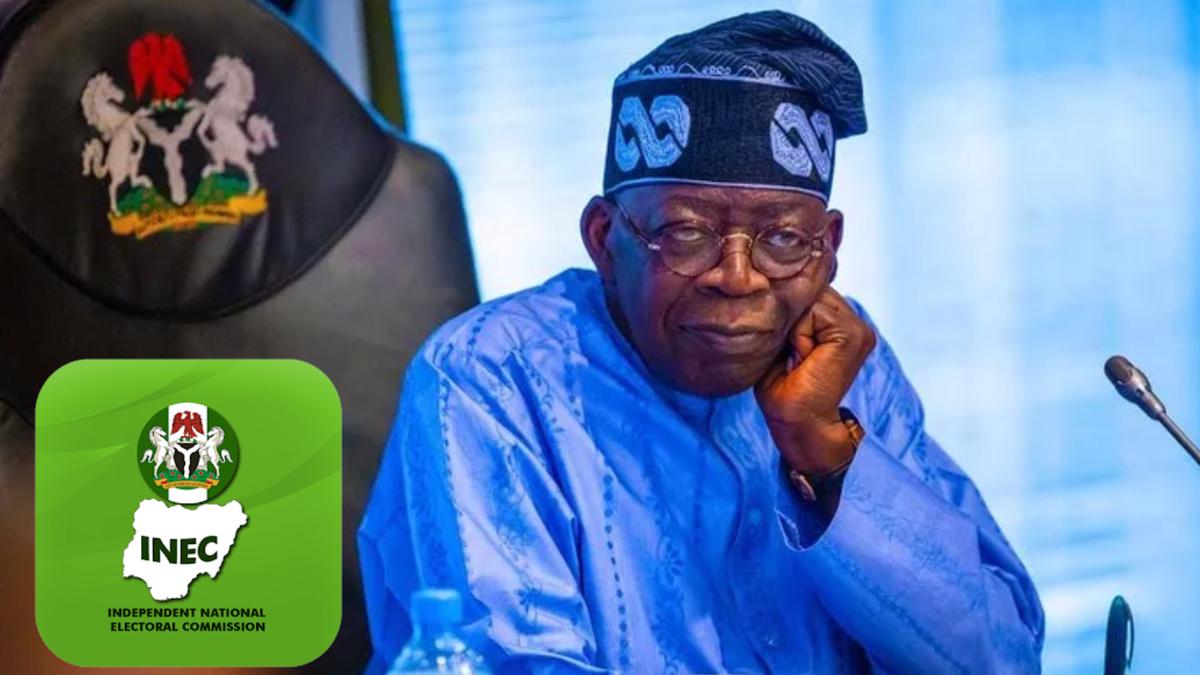
President Bola Tinubu has nominated four people for National Commissioner positions at INEC and two Resident Electoral Commissioners, asking the Senate to expedite their confirmation ahead of Nigeria’s 2027 general elections. Professor Mustapha Aliu has been nominated for the North West, Bashir Muhammed Umar for the North Central, and current Osun REC Oluwatoyin Babalola for the South West, while Dr Bala Bila has been nominated for reappointment as the North East National Commissioner. Dr Samuel Akinjide Akinleye has been nominated as an REC for Ekiti, while Zahradden Basiru Sanusi from Jigawa is expected to replace Professor Saidu Ahmed Babura. The presidential and National Assembly elections are currently scheduled for January 16, 2027.
President Bola Ahmed Tinubu has moved to fill key vacancies at Nigeria’s Independent National Electoral Commission barely three months before the country’s presidential and National Assembly elections, sending six nominations to the Senate and urging lawmakers to complete their confirmation quickly as INEC enters the most sensitive stage of preparations for the January 16, 2027 polls. The nominations cover four National Commissioner positions, including the reappointment of one serving commissioner, and two Resident Electoral Commissioner positions, with the Presidency saying the appointments have become necessary because the tenures of several existing officials are expiring. The timing immediately places the Senate confirmation process under intense public attention because the officials approved by lawmakers could be joining the electoral body just as Nigeria approaches another fiercely contested general election in which the credibility, independence and operational capacity of INEC will once again be subjected to enormous scrutiny.
According to the Presidency, Professor Mustapha Aliu has been nominated to take over as the National Commissioner representing the North West following the expiration of Professor Abdullahi Zuru’s tenure, while Bashir Muhammed Umar has been nominated to succeed Professor Muhammad Adamu as the National Commissioner representing the North Central. Tinubu has also nominated Oluwatoyin Babalola, currently serving as INEC’s Resident Electoral Commissioner in Osun State, for elevation to the position of National Commissioner representing the South West. She is expected to replace Professor Cornelius Ajayi, whose tenure expires on October 24. Dr Bala Bila, who currently represents the North East at national commissioner level, has been nominated for another term. For the two Resident Electoral Commissioner positions, Tinubu selected retired permanent secretary Dr Samuel Akinjide Akinleye to represent Ekiti State and Zahradden Basiru Sanusi from Jigawa State to replace Professor Saidu Ahmed Babura.
The Presidency said the nominees must still undergo Senate scrutiny and confirmation before their appointments become final, meaning Tinubu’s decision does not automatically place them in office. Under Nigeria’s constitutional framework, nominees to senior INEC positions are subject to legislative confirmation, giving senators an opportunity to examine their qualifications, professional backgrounds and suitability for positions in an institution whose independence is central to the legitimacy of national elections. Tinubu has nevertheless made clear that he wants the process handled quickly, asking the Senate to expedite its work because the 2027 general elections are rapidly approaching.
That urgency is understandable from an operational perspective. INEC is now deep into preparations for an election cycle that was substantially reshaped earlier this year by the enactment of the Electoral Act 2026. The commission originally fixed the presidential and National Assembly elections for February 20, 2027 and the governorship and state Houses of Assembly polls for March 6. Those dates were subsequently changed following the repeal of the Electoral Act 2022 and the introduction of a new legal framework that altered statutory timelines governing electoral activities. Under the revised timetable, Nigerians are now scheduled to vote for president and members of the National Assembly on Saturday, January 16, 2027, while governorship and state assembly elections are scheduled for February 6.
That change effectively brought Nigeria’s election timetable forward by more than a month, compressing the period available to political parties, candidates and INEC itself. The electoral commission has consequently been accelerating logistical preparations, voter services, technology testing and administrative processes across all 36 states and the Federal Capital Territory. The nomination of commissioners so close to the election therefore carries practical significance because national commissioners and RECs are deeply involved in the planning, supervision and implementation of the electoral process.
National Commissioners sit at the upper level of INEC’s leadership and participate in decisions affecting policy, logistics, voter registration, election technology, legal compliance, political party regulation and the overall conduct of elections. Resident Electoral Commissioners, by comparison, supervise the commission’s activities at state level and become particularly visible during elections, when they coordinate personnel, materials and processes across their assigned states. Decisions taken by both categories of officials can affect millions of voters.
This is why appointments to INEC are rarely treated as routine civil service decisions. The commission has repeatedly found itself at the Centre of Nigeria’s political battles, particularly after disputed elections. Political parties that lose elections frequently challenge not only the declared results but also INEC’s procedures, technology and decisions. Commissioners therefore operate in an environment where every important appointment can attract questions about independence, political connections and whether individuals joining the commission can withstand pressure from the government that nominated them.
There is currently no evidence in the Presidency’s announcement establishing that any of the six nominees has been selected to favor a particular political party. The nominations are officially presented as a response to vacancies caused by the expiration of tenures. Nevertheless, because the appointments are being made by a sitting president who is also contesting the January election, the confirmation process is likely to attract particularly close examination from opposition parties, civil society organizations and election observers.
Nigeria’s system gives the President significant influence over appointments to the electoral commission, subject to constitutional procedures and Senate confirmation. That structure has long generated debate because INEC must organize elections in which the appointing president and his political party may themselves be participants. Supporters of the existing constitutional arrangement argue that Senate confirmation and security vetting provide necessary checks, while critics have periodically called for a more insulated selection process that reduces direct executive influence.
Those wider arguments will likely resurface as senators begin considering the new nominees. The most immediate questions will Centre on the credentials of Professor Aliu, Umar, Babalola, Bila, Akinleye and Sanusi, their previous professional and political associations, and whether senators believe they can act independently during a highly competitive electoral season.
Oluwatoyin Babalola’s nomination may receive particular attention because she is already serving inside INEC as the Resident Electoral Commissioner for Osun State. Her proposed elevation means she would move from responsibility for the commission at state level to the national leadership structure as the commissioner representing the South West. That gives senators a record of her existing work within the institution to examine rather than assessing her entirely as an outsider.
The Presidency said Babalola is expected to replace Professor Cornelius Ajayi, whose tenure expires on October 24. Her nomination therefore appears designed to prevent a prolonged vacancy at national level at a point when the commission is already working under considerable electoral pressure. The same reasoning applies to the other positions affected by outgoing commissioners.
Professor Mustapha Aliu is expected to replace Professor Abdullahi Zuru in the North West position, while Bashir Muhammed Umar would take over from Professor Muhammad Adamu as the North Central representative if the Senate confirms him. The Presidency did not present the nominations as political replacements but as part of the normal constitutional process triggered by tenure expiration.
Dr Bala Bila’s situation is slightly different because Tinubu has chosen to retain him. Rather than appointing an entirely new North East National Commissioner, the President nominated Bila for another term. His record as a sitting commissioner could therefore form a substantial part of Senate deliberations over his reappointment.
At Resident Electoral Commissioner level, Dr Samuel Akinjide Akinleye brings a background in the public service, having served as a permanent secretary. He has been nominated for Ekiti State. Zahradden Basiru Sanusi, from Jigawa State, has been nominated to replace Professor Saidu Ahmed Babura. If confirmed, both would take responsibility for election administration in their respective state postings during an election cycle that is already moving rapidly toward voting day.
INEC’s preparations are currently operating on several fronts. The commission is handling Permanent Voter Card distribution, updating voter information, finalizing candidates and party information, preparing election materials, recruiting and training personnel and testing technology expected to be deployed during accreditation and results management. State offices are also intensifying their preparations because the success of a national election ultimately depends on activities occurring at local government areas and polling units across the country.
INEC’s official election calendar currently lists January 16, 2027 for the presidential and National Assembly elections and February 6 for governorship and state Houses of Assembly elections. The presidential contest will take place nationwide across all 36 states and the Federal Capital Territory, making it one of the largest single-day electoral operations on the African continent.
The commission’s voter database contains more than 90 million registered voters, while voting takes place across more than 170,000 polling units. Even relatively small administrative failures can therefore become significant when multiplied across such a large system. Election materials must be delivered to remote communities, thousands of temporary personnel must be trained and deployed, voting devices must function, security personnel must coordinate with election officials and results must move through collation processes capable of surviving public and legal scrutiny.
The 2023 general election demonstrated how technology can become a major political issue. INEC’s use of the Bimodal Voter Accreditation System and its electronic result-viewing platform became central to post-election disputes, with opposition parties challenging aspects of the commission’s performance. Courts ultimately dealt with many of those complaints, but the controversy damaged public confidence in parts of the electoral process.
The 2027 election will therefore take place under heightened expectations. Nigerians will be watching not only whether voting proceeds peacefully but whether the commission delivers the improvements it has repeatedly promised since the previous national election. New commissioners entering INEC at this stage will inherit that responsibility immediately.
The issue of electoral technology remains particularly sensitive. INEC has continued preparations involving voter accreditation devices and election-result systems, while political parties and civil society groups have demanded clearer guarantees about transparency and reliability. Any commissioner assigned responsibility for operations, information technology or election management could therefore become central to public confidence in the process.
Another challenge is logistics. Nigerian elections regularly involve the movement of enormous quantities of sensitive and non-sensitive materials across a vast country with difficult terrain and security challenges. In some communities, officials travel by boat or motorcycle to reach polling units. In other areas, insurgency, kidnapping or communal violence can complicate deployment.
The commission must also coordinate with police, military and other security agencies without allowing election security to become partisan or intimidating. RECs play important roles in these state-level arrangements because they work directly with local security authorities before election day.
Tinubu’s call for swift confirmation must therefore be viewed against this operational backdrop. Leaving senior posts vacant when national elections are only months away could weaken the commission’s leadership at precisely the period when difficult decisions and preparations are intensifying. On the other hand, rushing the confirmation process could create another problem if lawmakers do not adequately examine the nominees.
The Senate will consequently have to balance speed with scrutiny. A confirmation hearing should give lawmakers enough opportunity to examine credentials and ask questions about electoral independence without allowing the process to drift into a delay that leaves vacancies unresolved as voting approaches.
The Senate itself is controlled by a majority aligned with Tinubu’s All Progressives Congress, which could fuel criticism from opposition parties if the confirmation process appears perfunctory. That makes transparent scrutiny particularly important. The strength of the nominees’ qualifications and the seriousness of the questions posed to them may influence whether the appointments are broadly accepted.
Opposition parties are already preparing aggressively for January. INEC has published final candidate information, campaigns are underway and political parties are increasingly focusing their resources on states considered important to their electoral strategies. The APC has also released a campaign schedule for Tinubu as he seeks another term.
None of that provides evidence about how the election will ultimately be decided. Campaign deployments and appointments inside INEC should not be confused with voter preferences. What they do show is that the country has moved firmly into the active phase of the 2027 election cycle.
The timing also means the new commissioners will have little opportunity for a slow introduction if confirmed. They could be stepping into office with election deadlines already approaching and campaigns fully underway. They will need to understand existing preparations almost immediately and work with INEC Chairman Professor Joash Amupitan and other commissioners already overseeing the election.
The revised electoral timetable has already required parties to adjust. Primaries, candidate submissions and campaign periods have been moved to comply with the Electoral Act 2026. The presidential and National Assembly campaign period began in September and will intensify through the final months before voting.
For INEC, the coming weeks will include critical deadlines involving political parties, voters and operational preparations. Decisions taken during this period can influence ballot production, deployment and election-day readiness.
That is why the Presidency specifically linked its request for expedited Senate confirmation to the forthcoming general election. The official State House statement does not accuse INEC of lacking capacity or suggest that the election is at risk. It simply makes clear that the vacancies need to be addressed before the polls.
The nominations nevertheless arrive in an environment of longstanding public skepticism toward electoral institutions. Trust in INEC has fluctuated significantly across different election cycles. Supporters of winning parties often express greater confidence than opposition voters, while disputed elections tend to deepen suspicion.
Commissioners therefore face a challenge that goes beyond organizing voting correctly. They must organize it in a way that Nigerians believe is credible. Transparency, consistency and communication are crucial because rumors can spread quickly during elections, particularly through social media.
Every appointment becomes part of that credibility equation. If commissioners are seen as partisan, decisions they make may automatically be interpreted politically. If the Senate process demonstrates serious scrutiny and nominees provide convincing commitments to independence, it could help reduce some concerns.
The Constitution requires INEC to operate independently in the performance of its duties, regardless of who appoints its members. Once commissioners take office, their obligation is to Nigeria’s electoral laws rather than the political interests of the President, Senate or party system.
That principle will be especially important in 2027 because Tinubu himself will appear on the presidential ballot as the candidate of the governing APC. Every INEC commissioner will therefore be expected to maintain institutional distance from the administration despite having entered office through a presidential appointment and Senate confirmation.
The same principle applies to opposition parties. Commissioners cannot alter lawful procedures simply to reassure critics or avoid accusations of bias. They must apply the same rules to all parties, even when those decisions become controversial.
Nigeria’s election litigation history makes careful procedure essential. Presidential and governorship elections routinely generate court challenges. Lawyers scrutinize everything from candidate nominations and voter accreditation to collation and result declarations. Administrative mistakes can therefore become constitutional cases with consequences long after voting ends.
Experienced commissioners are valuable precisely because they understand these risks. Babalola’s current role inside INEC and Bila’s reappointment mean at least two of Tinubu’s national commissioner nominees already possess institutional experience. The Senate will decide whether that experience and the backgrounds of the other nominees satisfy the requirements of office.
The nominations could also influence internal portfolios after confirmation. INEC National Commissioners are often assigned oversight responsibility for committees dealing with issues such as voter education, planning, operations, legal matters and information technology. The commission determines those responsibilities internally, so nomination to a regional national commissioner seat does not necessarily reveal what operational portfolio the person will eventually receive.
That internal allocation could become particularly important this close to an election. Some portfolios carry enormous responsibilities during campaign and polling periods, especially operations and logistics.
At the state level, Akinleye and Sanusi will be expected to oversee INEC structures that interact directly with voters, political parties and security agencies. RECs are among the most publicly visible election officials outside national headquarters during governorship and presidential elections.
Their conduct can become politically contentious quickly. Allegations involving polling-unit deployment, collation centers or state-level logistics often lead opposition parties directly to the REC’s office. The nominees will therefore need the ability to manage both complicated administrative systems and intense political pressure.
Tinubu’s appointments also demonstrate how election administration continues even while campaigns dominate the headlines. Political attention tends to focus on candidates and rallies, but behind the scenes INEC must maintain the bureaucracy required to run an election involving tens of millions of voters.
Replacing outgoing commissioners is part of that institutional maintenance. The crucial question is whether the transition occurs smoothly enough that preparations are not disrupted.
The Senate now holds the next formal responsibility. Senators are expected to receive the nominees, review their credentials, conduct the required screening and vote on confirmation. Tinubu has asked them not to allow the process to linger.
If the Senate moves quickly, the appointments could be completed with several weeks remaining before the January 16 presidential and National Assembly elections. If questions arise about individual nominees, confirmation could become more contentious.
Civil society organizations and political parties will likely examine the nominees’ histories during that period. In Nigeria, confirmation hearings frequently trigger public reviews of nominees’ professional backgrounds, previous political activity and controversial statements.
That scrutiny should not automatically be interpreted as evidence that something is wrong with the appointments. It is a normal and necessary part of filling positions in an institution entrusted with elections.
The deeper issue is whether Nigeria can approach January with an electoral commission that is fully staffed, operationally prepared and broadly trusted enough to manage inevitable disputes. Filling vacancies answers only the first part of that challenge.
The rest will depend on how INEC conducts the election itself.
Tinubu has now made his choices. Professor Mustapha Aliu, Bashir Muhammed Umar, Oluwatoyin Babalola and Dr Bala Bila are before the Senate for National Commissioner positions, with Bila seeking another term. Dr Samuel Akinjide Akinleye and Zahradden Basiru Sanusi are the two nominees for Resident Electoral Commissioner positions.
The Senate must decide whether to confirm them.
And with Nigeria’s presidential election scheduled for January 16, the clock is already running.