TINUBU ORDERS SECURITY CHIEFS TO WIPE OUT BANDIT CAMPS, RESCUE ALL ABDUCTED NIGERIANS AHEAD OF 2027 ELECTIONS
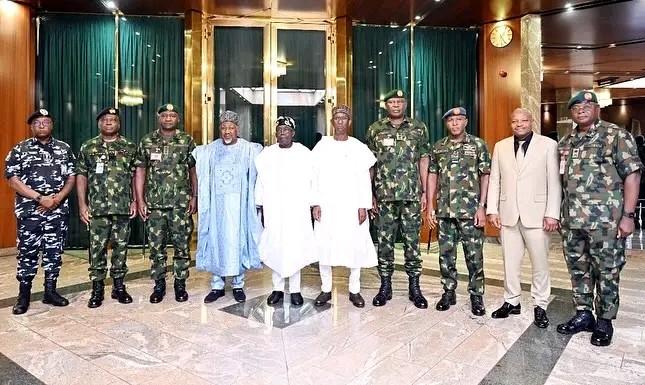
President Bola Tinubu has ordered Nigeria’s military, police and intelligence chiefs to intensify operations against terrorists and bandits, dismantle their camps nationwide and prioritize the rescue of Nigerians being held captive. Defence Minister Christopher Musa said the directive followed a security meeting at the Presidential Villa on Thursday and also included instructions to guarantee a safe, free and politically neutral environment for the 2027 general elections. The government is also preparing to commission about 10 new military aircraft and helicopters to strengthen operations.
President Bola Tinubu has ordered Nigeria’s military, police and intelligence chiefs to intensify operations against terrorists and bandits, dismantle their camps across the country and prioritize the rescue of every Nigerian being held by kidnappers as the government confronts persistent insecurity and prepares for the 2027 general elections. The directive followed a high level security meeting at the Presidential Villa in Abuja on Thursday where the President received briefings from the heads of the country’s major security and intelligence agencies and demanded stronger coordination against armed groups operating across several regions.
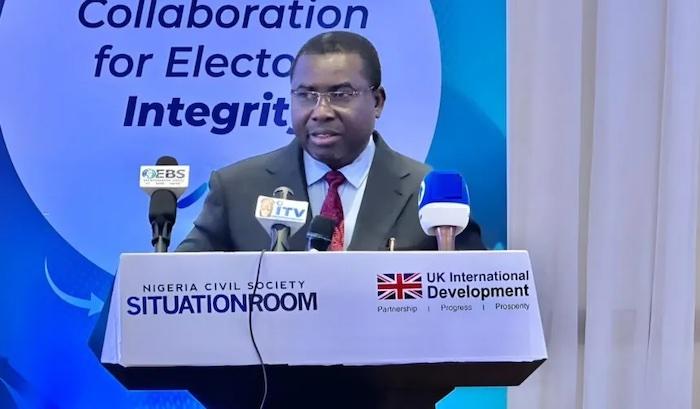
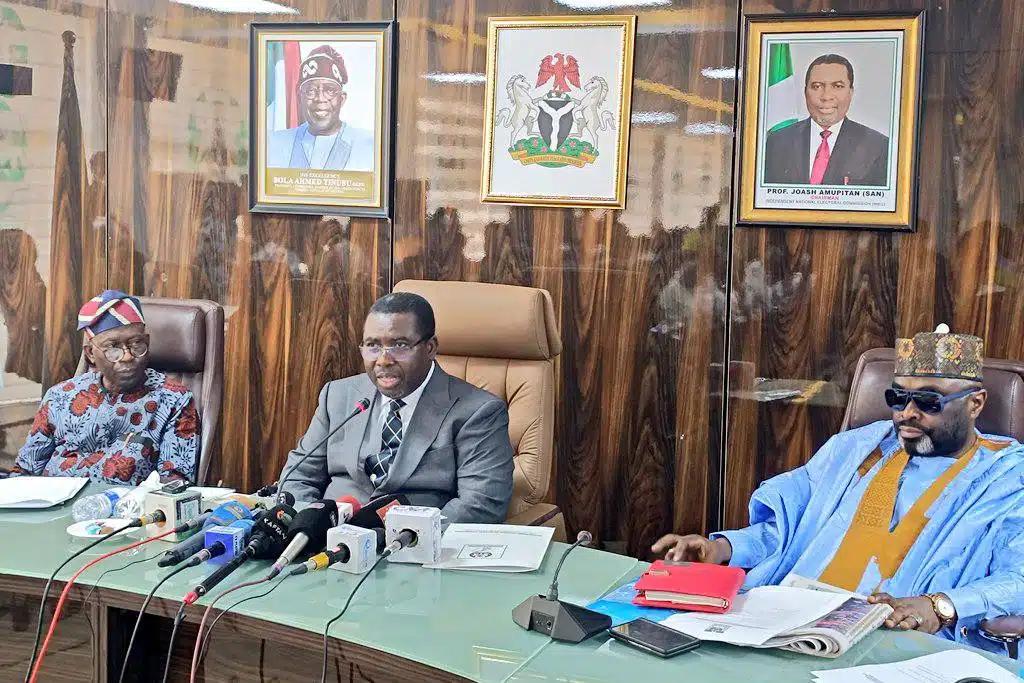
Minister of Defence Christopher Musa disclosed the directives after the meeting, saying Tinubu made clear that security forces should not allow terrorists or bandits to maintain permanent operational camps anywhere in Nigeria. Musa said the President instructed the agencies to intensify efforts to locate people being held in captivity and return them safely to their families, placing the rescue of abducted Nigerians among the government’s immediate security priorities. The directive covers people held by bandits, terrorist groups and other kidnapping networks, although the government did not provide a new consolidated figure for the number of Nigerians currently in captivity.
The President’s order comes as kidnapping remains one of Nigeria’s most persistent security problems, particularly across parts of the North West, North Central and some southern states where armed groups have targeted villages, schools, highways and farming communities. The scale and geography of the threat vary significantly, with some attacks linked to organized bandit networks seeking ransom, others associated with insurgent groups and still others carried out by smaller criminal gangs exploiting weak security presence in rural areas. The government has repeatedly announced military operations against these groups, but the continuing pattern of abductions has kept pressure on federal and state authorities to demonstrate that security gains can be sustained.
Musa said Tinubu’s latest instruction was not limited to responding after attacks but focused on eliminating the physical spaces from which armed groups organize kidnappings and other operations. Terrorist and bandit camps located in forests and remote communities have historically provided armed groups with bases for storing weapons, holding abducted victims and planning attacks. Clearing those areas has therefore become a central part of military operations, but maintaining control after troops leave has often proved difficult because some groups return once security forces redeploy elsewhere.
That concern appears to have influenced discussions around the wider security strategy. Reports following the meeting indicated that the government is considering increased deployment of forest guards and other security personnel in territories recovered from terrorists and bandits so that armed groups cannot simply reoccupy them. Such a strategy would attempt to connect military operations with longer term territorial control, although implementation would depend on recruitment, training, command arrangements and coordination with local communities.
The government has already used forest guard initiatives in some areas where criminal groups exploit large, poorly monitored forests. Earlier this year, Tinubu approved the recruitment of additional forest guards in response to attacks and abductions, including operations connected to schoolchildren and teachers taken in Oyo State. The administration has presented the program as part of a broader attempt to strengthen early warning systems and create a more permanent security presence in areas where military patrols alone may not be sufficient.
Thursday’s meeting also came against the backdrop of previous mass rescue operations. In August, the Presidency announced that 308 abducted citizens had been rescued in operations involving security agencies in Kwara and Niger states. Tinubu subsequently ordered stronger early warning mechanisms, improved community intelligence and faster response systems, arguing that successful rescues needed to be matched by measures capable of preventing future abductions. The latest directive suggests the administration continues to see intelligence led rescue operations and the dismantling of armed camps as closely connected objectives.
Nigeria’s security crisis has evolved significantly over the past decade. The Boko Haram insurgency that initially dominated national security attention in the North East has been joined by Islamic State affiliated militants, armed bandit groups, communal violence, kidnapping networks and other criminal organizations. The result is a security environment in which the military, police, intelligence agencies and local security structures often operate simultaneously across different theaters with overlapping responsibilities.
In the North West, bandit groups have built networks capable of carrying out large scale attacks on villages and highways while demanding ransom for abducted civilians. Some groups have also developed relationships with extremist organizations, although Nigerian authorities and security analysts continue to distinguish between ideologically driven terrorism and ransom motivated criminal activity. In the North East, insurgents remain capable of attacks despite losing much of the territory they once controlled. Parts of the North Central region have also experienced recurring violence involving armed groups, communal conflicts and criminal networks.
The Tinubu administration has responded with military deployments, intelligence operations, equipment procurement and changes within the security leadership. The government says improved coordination among security agencies has produced significant rescues, arrests and the destruction of armed camps, but insecurity remains a major public concern because kidnappings and deadly attacks continue to occur in several parts of the country.
Musa said the government is strengthening the capabilities of the armed forces through recruitment, training and additional equipment. He disclosed that Tinubu is expected to commission a new group of military aircraft and helicopters, estimated at about 10 platforms, as part of efforts to improve operational capacity. The Defence Ministry had previously announced the procurement of aircraft including AW109 Trekker helicopters and M 346 fighter aircraft from Italian aerospace company Leonardo, with deliveries planned in stages.
Air power has become increasingly important in Nigeria’s operations against armed groups because many terrorist and bandit camps are located in remote forests and difficult terrain. Surveillance aircraft, helicopters and fighter jets can help locate camps, support ground troops and disrupt the movement of armed groups, but air operations also require accurate intelligence because mistakes can place civilians at risk. Nigerian authorities have faced criticism after previous airstrikes accidentally killed civilians, making precision and intelligence verification important elements of any intensified campaign.
The President’s directive therefore places significant operational responsibility on the security chiefs who attended Thursday’s meeting. Participants included National Security Adviser Nuhu Ribadu, Police Affairs Minister Ibrahim Gaidam, Minister of State for Defence Bello Matawalle and senior military, police and intelligence commanders. The meeting brought together the leadership of the Army, Navy, Air Force, Defence Intelligence, Nigeria Police Force, National Intelligence Agency and Department of State Services, reflecting the administration’s emphasis on coordinated operations.
The security discussion was also closely linked to preparations for Nigeria’s 2027 general elections. Musa said Tinubu told the security leadership that he wants a free, fair and credible electoral process and expects agencies to create conditions in which citizens can vote without intimidation or violence. The presidential and National Assembly elections are scheduled for January 16, 2027, placing the country only months away from a nationwide vote that will require security personnel to protect polling stations, election materials, officials and voters across all states and the Federal Capital Territory.
Musa said the security agencies would remain neutral and professional during the election period. He specifically sought to reassure political parties, including opposition parties, that security personnel would not be used to intimidate candidates or supporters. That assurance is significant because the conduct of security agencies during Nigerian elections has historically attracted intense scrutiny, with political parties frequently accusing one another of attempting to influence police or military deployments.
The government’s challenge will be to protect the electoral process without creating the perception that security forces are interfering with political competition. Election security requires a substantial nationwide deployment, particularly in areas affected by insurgency, banditry, separatist tensions or communal violence. Security personnel may be needed to protect polling materials, escort electoral officials and respond rapidly to threats while avoiding unnecessary interference in voting.
The timing of Thursday’s meeting also places national security directly alongside the emerging political campaign. Tinubu recently inaugurated the All Progressives Congress Presidential Campaign Council for the 2027 election and is seeking another term in office. That makes the promise of politically neutral security agencies especially important because the President is simultaneously head of government, commander in chief and a candidate in the coming election.
The administration has therefore emphasized that security institutions must operate professionally regardless of political affiliation. Musa said opposition parties should have no reason to fear intimidation and that every political organization must be allowed to participate freely. Whether those assurances are maintained throughout the campaign and voting period will be closely watched by political parties, civil society organizations, election observers and Nigerians themselves.
Election preparations are unfolding while the federal government pursues wider reforms to policing and internal security. A presidential working group said this week that a proposed National Policing Bill was about 90 percent complete and could be transmitted to the National Assembly within weeks. The legislation is part of continuing discussions about restructuring policing, improving accountability and potentially expanding state level security arrangements.
The debate over state police has intensified because Nigeria’s centralized police structure places heavy responsibility on federal institutions even as governors face security crises within their states. Supporters of state policing argue that local forces could respond more quickly to community threats and understand local terrain better, while critics warn that governors could misuse state controlled police forces against political opponents. The constitutional process surrounding the proposal remains incomplete, making the current federal security architecture the main structure responsible for the immediate campaign against bandits and kidnappers.
Military welfare has also become part of the government’s security strategy. Tinubu approved significant salary increases for armed forces personnel earlier this year, with lower ranking personnel receiving some of the largest adjustments. The administration has argued that improving welfare, equipment and training is necessary to maintain morale among personnel deployed for prolonged operations across multiple conflict zones.
The Defence Minister used Thursday’s briefing to again emphasize that security is not solely the responsibility of uniformed agencies. He urged Nigerians to provide information when they observe suspicious activity and said misconduct by security personnel should also be reported. Community intelligence has become particularly important in kidnapping cases because armed groups often operate in areas where residents are more familiar with local routes, forests and unusual movement than security agencies arriving from outside.
However, cooperation depends heavily on public trust. Residents may hesitate to provide information if they fear retaliation from armed groups or believe their identities will not remain confidential. Successful community intelligence systems therefore require protection for informants, reliable local security presence and evidence that reports will produce timely action.
Tinubu’s directive to rescue abductees also raises difficult operational questions. Hostage rescue missions require security forces to balance speed against the possibility of endangering captives. Armed groups may move victims through forests or split them among different locations, making accurate intelligence essential. In some cases, families or intermediaries also engage in ransom negotiations while security agencies pursue separate operations, creating complicated and sometimes conflicting approaches.
The government has generally maintained that kidnapping should not become a profitable industry and that security agencies must pursue those responsible. At the same time, officials have occasionally acknowledged the use of both kinetic and non kinetic approaches in rescue operations, particularly where direct assaults might endanger victims. That approach suggests the latest presidential order should not automatically be interpreted as requiring military attacks on every location where hostages are believed to be held.
The phrase dismantling or wiping out bandit camps refers primarily to destroying the infrastructure and territorial presence of armed groups rather than abandoning the need for careful hostage recovery. In areas where abducted civilians are present, security commanders would still be expected to assess intelligence, terrain and the risk to captives before launching operations.
Nigeria’s size makes the directive particularly demanding. The country covers more than 900,000 square kilometers, and armed groups operate across forests, border communities and remote rural areas that can be difficult to monitor continuously. A successful campaign therefore requires more than temporary raids. Security agencies need surveillance, intelligence, rapid transport, communications and sufficient personnel to prevent militants from simply moving from one state to another.
Border security is another important factor. Some armed networks operate close to Nigeria’s frontiers with Niger, Chad, Cameroon and Benin, allowing movement across difficult terrain and complicating pursuit. Regional cooperation therefore remains essential, particularly in the Lake Chad area where insurgent groups operate across national boundaries.
The government’s decision to acquire additional aircraft is partly intended to address those mobility and surveillance challenges. Helicopters can transport troops into difficult terrain more quickly, while fixed wing aircraft can provide reconnaissance and strike capability. The effectiveness of those assets will ultimately depend on intelligence quality, maintenance, pilot training and coordination with ground forces.
Tinubu’s latest order should therefore be understood as a renewed operational directive rather than evidence that all terrorist and bandit camps can be eliminated immediately. The administration has issued similar instructions after previous attacks and abductions, and the central test will be whether security agencies can translate the latest directive into sustained reductions in kidnapping, civilian deaths and territorial freedom for armed groups.
The election dimension adds another deadline. With the 2027 polls approaching, authorities will need to ensure that communities affected by insecurity can participate without armed groups disrupting voting or preventing election officials from reaching polling locations. Areas experiencing persistent attacks may require stronger deployments, but those measures must be implemented without partisan interference if the government is to meet its stated commitment to a credible vote.
The meeting therefore combined two closely connected priorities. The first is an immediate security campaign against kidnappers, terrorists and bandits, with particular emphasis on rescuing captives and eliminating established camps. The second is the creation of a secure and politically neutral environment for the January 2027 elections, when millions of Nigerians are expected to vote in one of the country’s most consequential national exercises.
The next measure of the directive will come from operations on the ground rather than announcements in Abuja. Nigerians will be watching for the rescue of people still in captivity, reductions in highway and community kidnappings and evidence that cleared territories remain secure after troops leave. Security agencies will also face scrutiny over civilian protection and accountability as operations intensify.
As the election approaches, Tinubu’s government will have to demonstrate that intensified security operations can protect citizens without compromising the neutrality required of state institutions during a political contest in which the President himself is seeking another term. The administration has now publicly committed its security chiefs to both objectives, leaving the coming months as a test of whether stronger military capability, improved intelligence and coordinated operations can produce lasting security gains while safeguarding the credibility of the electoral process.