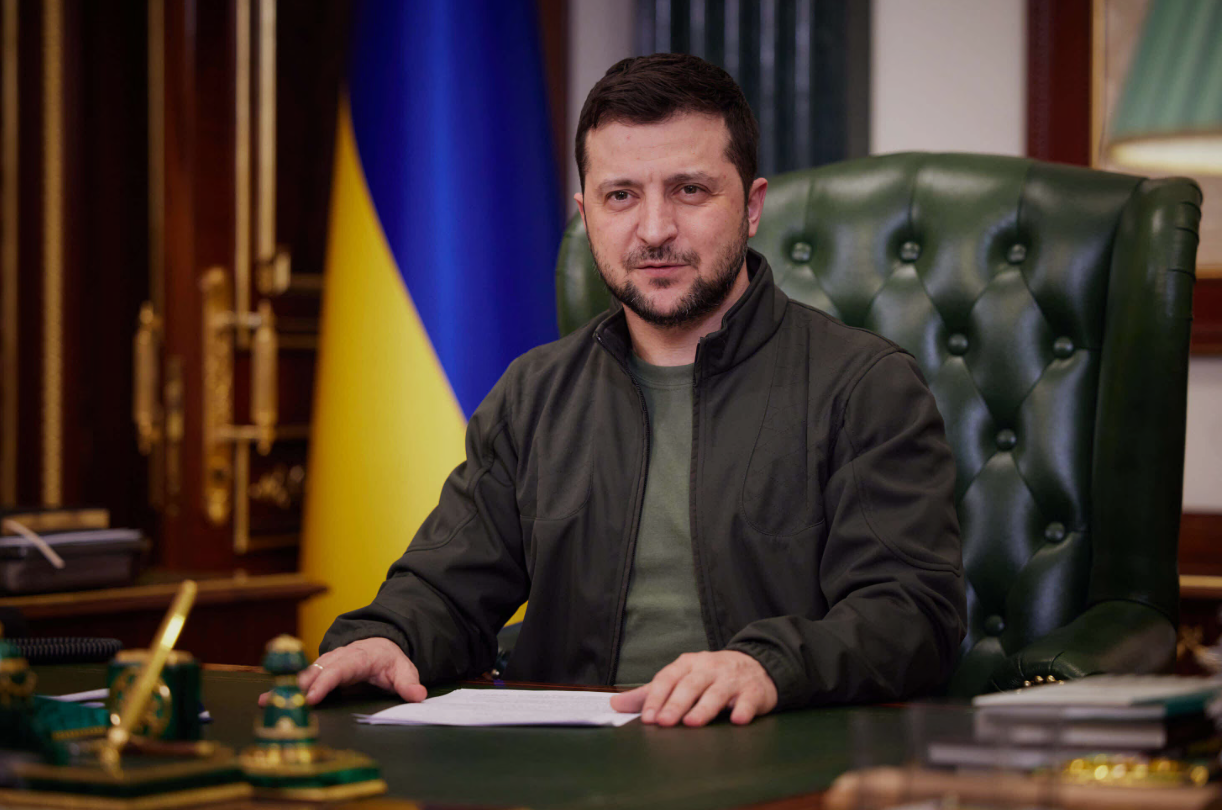
ZELENSKYY HOLDS FRESH TALKS WITH TRUMP ENVOYS AS UKRAINE AND WASHINGTON PREPARE NEXT DIPLOMATIC STEPS
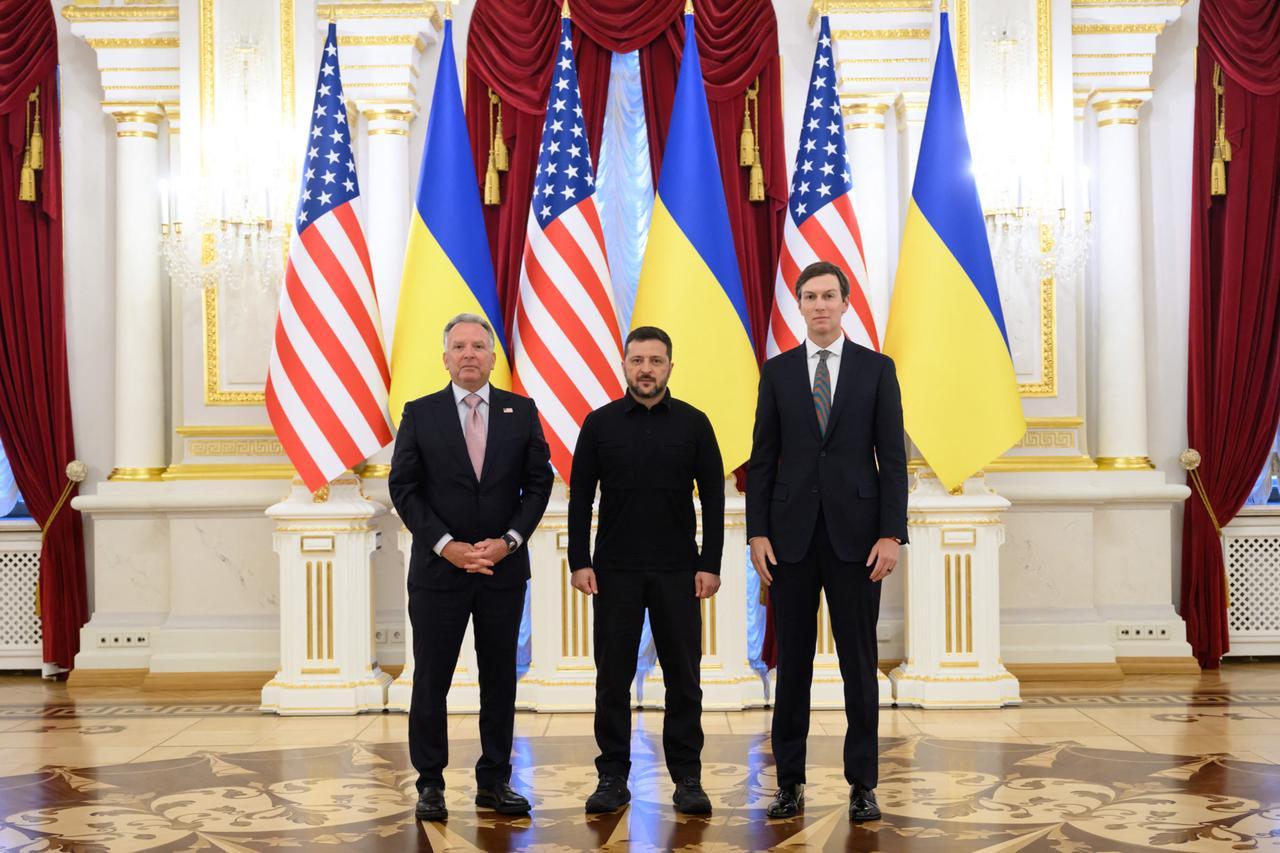
Ukrainian President Volodymyr Zelenskyy has held another round of talks with U.S. peace envoys Steve Witkoff and Jared Kushner as Kyiv and Washington prepare further diplomatic initiatives aimed at ending Russia’s war against Ukraine. Zelenskyy said the conversation reviewed the results of recent meetings between American and Ukrainian representatives in Florida and that the two sides are maintaining almost continuous communication. No new ceasefire or peace agreement was announced. The contact comes despite continuing disagreements between Kyiv and Washington over sanctions on Russia, Russian energy exports and aspects of military assistance.
Ukrainian President Volodymyr Zelenskyy has confirmed a fresh round of discussions with United States peace envoys Steve Witkoff and Jared Kushner as Kyiv and Washington maintain what the Ukrainian leader described as almost continuous communication over efforts to end Russia’s war against Ukraine. Zelenskyy said the latest conversation focused on the results of recent meetings between American and Ukrainian representatives in Florida and on preparations for further diplomatic initiatives. The contact comes at a sensitive moment in relations between Kyiv and Washington, with the two governments continuing to cooperate on possible peace negotiations even as disagreements remain over Russian energy exports, sanctions policy and aspects of American military and intelligence support.
Zelenskyy announced the conversation on Sunday, October 18, saying Ukrainian and American negotiating teams were remaining in close contact and coordinating the next stages of diplomacy. He did not announce a new ceasefire agreement, peace settlement or confirmed date for a summit following the call, meaning the latest development should be understood as a continuation of negotiations rather than a breakthrough. The significance lies in the fact that direct communication between the Ukrainian leadership and President Donald Trump’s diplomatic representatives is continuing despite a period of increasingly public disagreements between Kyiv and Washington.
The Ukrainian president said the discussion reviewed what had emerged from recent meetings in Florida between representatives of the two countries. Those contacts have formed part of a broader American effort to restart negotiations and identify possible areas of compromise between Ukraine and Russia. Witkoff and Kushner have become central figures in that effort, holding repeated discussions with Ukrainian officials while also participating in contacts connected to Moscow.
Zelenskyy said the two sides were coordinating future diplomatic steps and emphasised that Ukraine considers close cooperation with the United States essential to any serious attempt to end the war. His message also stressed the importance of negotiating from what he described as a position of strength, reflecting Kyiv’s long-standing argument that diplomacy will only produce durable results if Ukraine retains sufficient military and international support to prevent Russia from dictating the terms of a settlement.
The latest call follows several months of intensive diplomacy involving Zelenskyy, Witkoff and Kushner. The two American envoys travelled to Kyiv in September for direct talks with the Ukrainian president after earlier contacts involving Russian officials. Zelenskyy publicly welcomed their involvement in attempting to revive a negotiating process that had repeatedly stalled because of fundamental disagreements over territory, security guarantees and the conditions under which hostilities could be reduced or halted.
During those September meetings, Zelenskyy argued that negotiations were preferable to the absence of diplomacy even if Ukraine did not agree with every format being proposed. He credited Witkoff and Kushner with helping restart direct discussions and said Ukraine was prepared to engage seriously as long as any process protected the country’s sovereignty and security. That position remains central to Kyiv’s approach as the diplomatic track moves forward.
The October 18 conversation should also be separated from another important development reported earlier the same day concerning United States intelligence support for Ukraine. Zelenskyy said American intelligence-sharing, which Ukraine relies upon heavily to detect and respond to Russian missile attacks, had resumed after a temporary interruption. The latest conversation with Witkoff and Kushner concerns a different issue: diplomatic coordination and the possible next stages of negotiations aimed at ending the war.
The distinction matters because military support, intelligence cooperation and peace diplomacy are related but separate elements of the United States relationship with Ukraine. Washington can continue sharing intelligence while simultaneously negotiating with Moscow or discussing changes to sanctions policy, and disagreements in one area do not automatically mean cooperation has ended in another. The current relationship between the Trump administration and Zelenskyy’s government reflects that complexity.
Tensions have increased in recent days over American policy towards Russian energy exports. Trump has defended decisions intended to reduce pressure on global fuel prices, including measures affecting Russian diesel and sanctions, while Zelenskyy has criticised steps he believes provide Moscow with additional revenue without securing meaningful concessions towards peace. Kyiv argues that economic pressure remains one of the strongest tools available to persuade Russia to negotiate seriously.
Washington has taken a different approach in some areas, arguing that economic engagement may sometimes be useful in bringing Moscow back into negotiations. That disagreement has created visible friction between the two governments, but the latest call shows that diplomatic channels have remained open rather than collapsing under the pressure.
Witkoff and Kushner have played an unusually prominent role in Trump’s peace diplomacy. Witkoff has repeatedly served as a direct presidential envoy in high-level negotiations, while Kushner has become increasingly involved in efforts to structure agreements and communicate with multiple parties. Their participation gives the discussions direct access to Trump’s political team, making their conversations with Zelenskyy particularly important for understanding Washington’s current negotiating priorities.
The Florida meetings referenced by Zelenskyy are part of that process. American and Ukrainian officials have been discussing a combination of ceasefire possibilities, security arrangements, reconstruction financing and wider economic issues. Some of the most difficult questions, particularly those involving territory and Russia’s demands, remain unresolved.
Ukraine continues to insist that any peace arrangement must not legitimise territorial changes imposed through force. Russia, meanwhile, has maintained demands related to territories it occupies and broader security arrangements. Those competing positions remain among the main reasons negotiations have failed to produce a comprehensive settlement despite repeated attempts by international mediators.
Zelenskyy has also expressed interest in direct leader-level negotiations because he argues that some of the most consequential issues cannot be settled solely by technical teams. He has publicly discussed the possibility of a meeting involving Ukraine, the United States and Russia, including a potential encounter around the G20 summit in Miami, although neither Washington nor Moscow had confirmed such a meeting at the time of the latest reporting.
Alternative locations in Europe or the Middle East have also been mentioned in previous diplomatic discussions. The United Arab Emirates and Saudi Arabia have both been considered potential venues because they maintain communication with several of the parties involved and have previously hosted talks connected to prisoner exchanges and other aspects of the conflict.
A leader-level meeting would still require agreement on participants, agenda and conditions. Ukraine wants guarantees that negotiations will not become a mechanism for forcing Kyiv to accept Russian demands without corresponding security protections. Russia has repeatedly accused Ukraine and its Western partners of blocking peace, while Kyiv says Moscow continues attacking Ukrainian cities and infrastructure even while speaking about negotiations.
The battlefield remains an important factor in the diplomatic calculations of all sides. Russia continues to launch missile and drone attacks against Ukrainian targets, while Ukrainian forces continue striking military and energy infrastructure linked to Russia’s war effort. Each side argues that military pressure strengthens its position before negotiations, making it difficult to separate diplomacy from developments on the front.
Energy infrastructure has become particularly contentious. Ukraine has targeted Russian oil facilities as part of its effort to reduce revenue available to Moscow and disrupt fuel supplies supporting Russian military operations. The Trump administration has expressed concern that such strikes can affect international energy prices, creating another area where American domestic economic interests and Ukrainian wartime strategy do not always align.
Zelenskyy has rejected suggestions that Ukraine should simply stop targeting Russian energy assets while Russian attacks continue against Ukrainian infrastructure. His government argues that Russia cannot reasonably demand protection for its energy sector while continuing to use military force against Ukrainian cities, power systems and civilians.
That dispute has become more sensitive because of Washington’s recent dealings involving Russian diesel. Ukrainian officials have criticised the United States for pursuing arrangements they believe could financially benefit Moscow at a time when Kyiv is asking for stronger economic pressure. American officials have defended their approach by arguing that stabilising energy markets and maintaining channels to Moscow can support broader diplomatic objectives.
The wider sanctions debate is equally complicated. Trump recently waived or delayed some Russia-related penalties while the administration reviews their potential economic effects. Zelenskyy publicly criticised that decision, arguing that reducing pressure on Moscow could encourage Russia to continue the war rather than compromise.
U.S. officials have defended the review as an attempt to balance geopolitical objectives with the effect sanctions could have on international fuel markets and American consumers. That policy difference has contributed to growing tension between Washington and Kyiv, but it has not ended the negotiating process.
The October 18 conversation is therefore important precisely because it demonstrates continued engagement during disagreement. Zelenskyy did not suggest that every issue had been resolved. Instead, he emphasised communication, coordination and preparation for further initiatives.
Diplomatic continuity can be significant in a conflict where previous negotiation attempts have repeatedly broken down. Maintaining direct channels reduces the risk that disagreements are interpreted as a complete rupture and allows both sides to clarify positions before major decisions are taken.
For Ukraine, close communication with Washington remains strategically important because the United States continues to possess military, intelligence, financial and diplomatic capabilities that can significantly influence the course of the war. Kyiv has increasingly sought stronger European involvement as well, but American participation remains central to any broad international settlement.
European governments have also pushed for a larger role in the peace process, particularly when discussions involve sanctions, frozen Russian assets or security guarantees affecting the continent. Germany, France and other European states have argued that decisions involving European-controlled Russian assets or future European security arrangements cannot be made solely between Washington and Moscow.
One recent dispute concerned proposals involving frozen Russian assets held in Europe. German Chancellor Friedrich Merz said those funds should remain under European control amid reports that American officials had considered using some of them as part of efforts to restart negotiations. The episode illustrated the difficulty of building a peace framework when the United States, Ukraine, Russia and European governments each have different legal and political interests.
Zelenskyy has welcomed stronger European involvement because Ukraine fears that bilateral U.S.-Russia negotiations could produce proposals affecting Ukrainian interests without sufficient Ukrainian or European participation. His government has consistently argued that there should be no final settlement about Ukraine without Ukraine directly involved.
Washington, meanwhile, has attempted to maintain communication with both Kyiv and Moscow. That dual-track approach is intended to identify areas where each side may be prepared to make concessions, but it has also produced suspicion whenever one side believes the United States is moving too close to the other.
The challenge for Witkoff and Kushner is therefore not merely arranging meetings. They are attempting to narrow fundamental gaps between positions that remain far apart on territory, sanctions, security guarantees, reconstruction and the future relationship between Russia and Western countries.
Territory remains one of the hardest issues. Russia occupies significant areas of internationally recognised Ukrainian territory and has claimed some of those regions as part of the Russian Federation. Ukraine rejects those claims and argues that rewarding territorial conquest would create a dangerous precedent.
Security guarantees are equally important because Ukraine wants to ensure that any ceasefire cannot simply provide Russia with time to rebuild its forces before launching another attack. Kyiv has repeatedly asked for clear commitments from Western partners covering military support, air defense, intelligence and the consequences Russia would face if it violated a settlement.
Russia has objected to arrangements it believes would permanently integrate Ukraine into Western military structures. Moscow has also demanded restrictions related to Ukraine’s armed forces and international alliances, conditions Kyiv has resisted.
These issues cannot be solved by a single phone call, which is why the latest Zelenskyy-Witkoff-Kushner conversation should not be interpreted as evidence that a peace agreement is imminent. Reuters’ latest report confirms continuing diplomatic coordination but does not describe a new agreement or accepted negotiating framework.
The communication nevertheless demonstrates that the American diplomatic initiative remains active. Zelenskyy’s description of near-continuous contact suggests working-level discussions are taking place between major public meetings, allowing negotiators to prepare proposals and respond quickly to developments.
This type of constant communication is often necessary during complex peace negotiations. Public statements typically reveal only a fraction of what negotiators are discussing, while technical teams work on language, sequencing and possible compromises behind the scenes.
One particularly difficult issue is sequencing. Ukraine wants strong security guarantees and Russian concessions before taking steps that could leave it vulnerable. Russia wants changes in Ukrainian and Western policy as part of any settlement. The United States is therefore trying to identify which actions could happen first without causing either side to walk away.
Energy could become one possible area for limited agreements. Previous discussions have explored reducing attacks on energy infrastructure, although disputes remain over what constitutes an agreed ceasefire and whether both sides are complying with informal understandings.
Humanitarian measures may provide another avenue. Prisoner exchanges, return of civilians and assistance to affected populations have sometimes progressed even when broader political negotiations stalled. Such steps can build limited confidence without requiring the parties to resolve every territorial or security dispute immediately.
Ukraine’s reconstruction is also becoming part of diplomatic planning. American and Ukrainian representatives have discussed investment and reconstruction frameworks that could shape Ukraine’s post-war economy if a settlement is reached. Those discussions create economic incentives for peace but also raise questions about financing and control.
The future role of Russia in international energy markets may become another negotiating tool. Washington appears interested in using economic incentives alongside sanctions pressure, while Ukraine remains concerned that easing restrictions too early could strengthen Moscow without producing durable peace.
The disagreement reflects two different approaches to leverage. Kyiv believes Russia must face greater pressure before it will compromise. Some officials in Washington believe a combination of pressure and economic incentives may be more effective.
Neither strategy has yet produced a comprehensive end to the war.
That is why continuing diplomacy matters even when public disagreement appears severe. Negotiations often progress unevenly, with periods of confrontation followed by renewed communication. The latest Zelenskyy call shows that Washington and Kyiv are still working through those disagreements rather than abandoning the diplomatic track.
The restoration of intelligence-sharing reinforces that interpretation. Ukraine says the flow of American intelligence needed to detect Russian missile attacks is functioning again after a temporary interruption. Continued operational cooperation alongside diplomatic contact suggests the relationship remains active across multiple levels despite recent political tension.
There are still important uncertainties surrounding American support. Kyiv has expressed concern about the reliability of some military and technological assistance, including recent disruptions affecting Starlink-related services and questions surrounding future weapons supplies.
Washington has denied responsibility for some of those technical problems and has continued to present itself as a mediator rather than simply a military supporter of Ukraine. That shift in emphasis has sometimes frustrated Ukrainian officials who fear mediation could gradually replace pressure on Russia.
The Trump administration argues that ending the war requires communication with Moscow and that maintaining only a policy of isolation would not produce negotiations. Ukraine accepts the need for diplomacy but wants the United States to ensure that Russia does not interpret negotiations as an opportunity to reduce Western pressure without changing its behaviour.
The coming weeks may therefore provide a clearer indication of whether the latest discussions produce a new meeting format. Zelenskyy has already raised the possibility of further high-level contact, and American envoys continue travelling between diplomatic centres involved in the conflict.
The G20 summit in Miami could provide one possible opportunity, but no trilateral meeting involving Trump, Zelenskyy and Russian President Vladimir Putin has been confirmed. Until such confirmation occurs, reports about a summit should remain framed as diplomatic possibilities rather than scheduled events.
The same caution applies to claims about an imminent ceasefire. Neither side has announced a comprehensive ceasefire agreement following the October 18 call. Russian attacks continue, Ukrainian military operations continue and negotiations remain unresolved.
What has changed is the intensity and continuity of communication. Zelenskyy says Kyiv and Washington are speaking almost constantly, and the latest call with Witkoff and Kushner focused specifically on converting recent discussions into further diplomatic initiatives.
That continuing contact is significant because relations between the two governments have recently been tested by sanctions, Russian energy policy and military-support disputes. The fact that those disagreements have not ended communication suggests both sides still consider cooperation necessary.
For Ukraine, Washington remains too important to ignore. For the United States, Ukraine remains central to any serious attempt to negotiate an end to the largest war in Europe in decades. That mutual dependence helps explain why diplomatic discussions continue even when public rhetoric becomes sharper.
Russia will ultimately determine whether the American initiative can move beyond shuttle diplomacy. Any comprehensive peace agreement requires Moscow to accept terms that Ukraine and its international partners can also support. So far, major gaps remain.
Zelenskyy’s latest conversation with Trump’s envoys therefore represents another step in a long diplomatic process rather than a final settlement. It confirms that negotiations are active, that the Florida discussions are being followed up and that Kyiv and Washington are preparing additional diplomatic moves.
The next significant development will be whether those consultations produce a confirmed meeting, a limited ceasefire proposal, a new negotiating framework or another round of direct talks involving Russia. Until then, the most important fact from the October 18 contact is that despite serious disagreements, the diplomatic channel between Ukraine and the United States remains open and active.