SENIOR US DIPLOMATS VISIT PALESTINIAN CHRISTIAN TOWN AFTER ATTACKS ON EUROPEAN OFFICIALS AND AMERICAN JOURNALIST
Senior U.S. diplomats have visited the Palestinian Christian town of Taybeh in the occupied West Bank following attacks involving European diplomats, Palestinian civilians and American photojournalist Heidi Levine. Riley Barnes, the U.S. assistant secretary of state for democracy, human rights and labour, and Brian Burch, the American ambassador to the Holy See, visited the Latin Convent church and were expected to meet local Christian representatives. The visit follows Saturday’s attack involving Belgian, French and Polish diplomats and a French mayor, as well as Friday’s assault on Levine near Abu Falah. Reuters also witnessed a separate confrontation near Salfit on Sunday in which masked settlers threw stones towards Palestinian olive harvesters and activists. No arrests connected to the two earlier high-profile attacks had been announced at the time of publication.
Senior United States diplomats travelled to the Palestinian Christian town of Taybeh in the Israeli-occupied West Bank on Sunday following a series of violent incidents involving masked Israeli settlers, European diplomats, Palestinian civilians and an American photojournalist. The delegation included Riley Barnes, the U.S. assistant secretary of state for democracy, human rights and labour, and Brian Burch, the U.S. ambassador to the Holy See. The officials visited the Latin Convent church in Taybeh and were expected to meet members of the local Christian community, marking a new American diplomatic response after the violence drew condemnation from European governments, the United States and Israeli officials.
The visit followed Saturday’s attack near Taybeh in which Belgian, French and Polish diplomats, Catholic representatives, a French mayor and Palestinian civilians were confronted by masked Israeli settlers during the olive harvest season. Belgian Foreign Minister Maxime Prévot said his country’s consul general to the Palestinians was among those caught up in the incident, while a Belgian diplomatic vehicle was damaged. French mayor Bernard Baudoux told Reuters that he had been harvesting olives in solidarity with the local community when he was violently attacked and thrown to the ground.
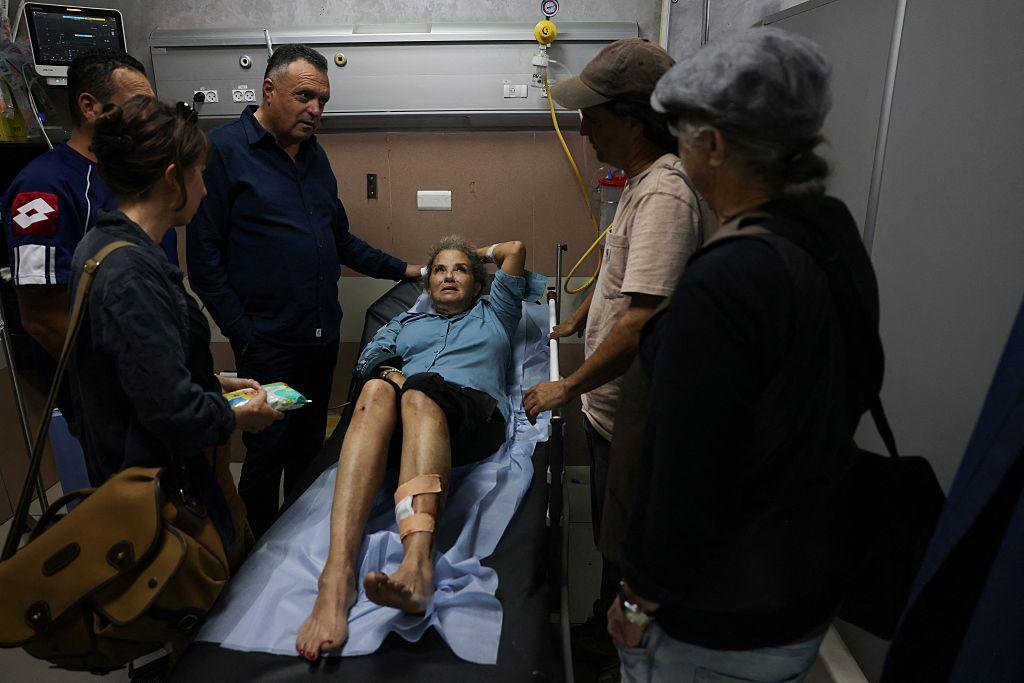
The incident came only a day after veteran American photojournalist Heidi Levine was hospitalised following a separate settler attack near the Palestinian village of Abu Falah. Levine, who was working for The Washington Post, was covering Palestinian farmers during the olive harvest when dozens of masked settlers descended on the area, burned olive trees, threw rocks and attacked people present. Reuters witnesses reported that some settlers used slings to launch stones, while at least one armed settler was seen firing a weapon.
Levine later said from hospital that she had been pushed to the ground and repeatedly kicked. The Washington Post reported that she suffered lacerations, a broken rib and a serious hand injury requiring surgery. She had been wearing protective equipment and visible journalistic identification at the time of the attack. The U.S. State Department said it was deeply concerned whenever an American citizen was harmed overseas and offered consular assistance, while The Washington Post called for a thorough investigation and accountability.
The American diplomatic visit to Taybeh therefore represents an escalation in official U.S. engagement with the issue. Rather than responding only through statements from Washington, senior officials physically travelled to one of the affected communities and met local Christian representatives. The presence of the U.S. ambassador to the Holy See is particularly notable because Taybeh is known for its long-established Christian population and because Catholic representatives were among those involved in Saturday’s incident.
Taybeh lies northeast of Ramallah and is widely known as one of the most prominent Palestinian Christian communities in the West Bank. The town has become a focal point in recent months amid reports from local churches and residents about pressure from surrounding settler activity, land disputes and attacks during the olive harvest season. Religious leaders have repeatedly warned that continuing insecurity could accelerate the departure of Christian families from areas where communities have existed for generations.
The Latin Convent church visited by the U.S. delegation is one of several religious institutions in Taybeh that have become important meeting points for local Christians and foreign church officials. By visiting the church rather than holding discussions only with Israeli government officials, the American delegation signalled that Washington wanted to hear directly from community representatives affected by recent events. Reuters said Barnes, Burch and other diplomats were expected to meet members of the Christian community following their visit to the convent.
The latest American response follows comments from U.S. Secretary of State Marco Rubio, who said Washington wanted Israel to do more to deter settler attacks. Rubio said the United States was deeply disturbed by images of the violence and had asked Israeli authorities to crack down on such incidents. He added that the State Department had made inquiries regarding the attack on Levine and expected additional reporting from the U.S. Embassy in Jerusalem.
U.S. Ambassador to Israel Mike Huckabee has also condemned the attack on Levine and called for those responsible to be investigated, arrested and prosecuted. His intervention was notable because the Trump administration has maintained close relations with the government of Israeli Prime Minister Benjamin Netanyahu while also expressing opposition to uncontrolled settler violence in the West Bank. The administration’s response to the latest incidents therefore combines continued political support for Israel with increasingly direct demands for accountability when settlers attack civilians, diplomats or journalists.
Israel’s own response has included condemnation from senior officials, but the government’s messaging has not been entirely uniform. Foreign Minister Gideon Sa’ar described the people who attacked the diplomats as Israeli rioters and condemned the violence. The Israeli military also blamed Israeli rioters for the Taybeh incident. At the same time, officials said the diplomatic delegation had entered what they described as a sensitive area without prior coordination with the Israel Defense Forces and suggested such coordination could have improved security.
Prime Minister Netanyahu has taken a more cautious public position. Reuters reported that he said the diplomats had entered an area with a history of confrontations without coordinating with the military and that the circumstances surrounding Levine’s attack remained unclear. That response contrasted with stronger statements from European governments and some Israeli officials calling for arrests and accountability.
France has urged Israeli authorities to arrest those responsible for Saturday’s attack and to take stronger action against settler violence. Belgium has similarly called on Israel, as the occupying power, to protect Palestinians, diplomats and journalists and bring attackers to justice. Poland said attacks on members of the diplomatic corps were unacceptable after confirming that Polish officials were part of the convoy targeted near Taybeh.
The European Union also issued a formal condemnation on Sunday. An EU foreign policy spokesperson said the bloc strongly condemned attacks by violent settlers, including those directed at European diplomats, and welcomed statements from Israeli officials who had denounced the incidents. The EU nevertheless said it expected full accountability and effective measures to prevent further violence against Palestinians, journalists and others during the olive harvest season.
At the time of the latest Reuters publication, Israeli authorities had not announced any arrests connected either to Saturday’s attack on the European diplomatic delegation or Friday’s assault on Levine. Israeli police had opened an investigation into the attack involving the diplomats, but no suspects had publicly been reported as detained. Reuters noted that prosecutions of settlers accused of violence against Palestinians in the West Bank remain relatively rare.
The absence of arrests has become central to international criticism because the attacks were widely documented and involved high-profile foreign victims. European officials have argued that condemnation alone will not be sufficient if perpetrators are not identified and prosecuted. The United States has increasingly used similar language, with Rubio and Huckabee both calling for stronger Israeli enforcement.
The diplomatic attention has also highlighted the experience of Palestinians who face similar violence without the visibility that accompanies attacks on foreign officials or international journalists. Palestinian representatives argue that settler attacks occur regularly across the West Bank and that international attention becomes significantly stronger only when foreigners are targeted. Palestinian Vice President Hussein al-Sheikh described Saturday’s incident as a small example of the violence Palestinians say they experience routinely.
Israeli officials reject accusations that the state broadly supports settler violence and say the perpetrators represent a minority. Netanyahu and other officials have repeatedly condemned attacks on innocent civilians and said law-enforcement agencies investigate criminal acts. Palestinian organisations and Israeli human rights groups dispute the argument that the violence can be treated as isolated, pointing instead to a growing number of incidents and what they describe as insufficient accountability.
The current olive harvest season has become particularly tense. Yesh Din, an Israeli organisation monitoring settlement-related violence, said Israeli settlers had been involved in at least 170 attacks on Palestinians since September 27, around the beginning of the annual harvest. Those incidents have included attacks on farmers, property damage, burning of olive trees and confrontations involving journalists, activists and foreign observers.
The olive harvest is economically and culturally important for Palestinian communities across the West Bank. Families often depend on olive production for income, and the annual harvest is traditionally a period when relatives and neighbours work together in groves that may have been cultivated for generations. Violence during this period can therefore affect both household incomes and community traditions.
Access to agricultural land is a recurring source of tension. Some Palestinian farmers must pass near Israeli settlements or outposts to reach their trees, while military restrictions and security arrangements can limit when they are allowed to enter certain areas. International activists, church representatives and diplomats sometimes join harvests specifically to provide a protective presence and draw attention to attacks.
Saturday’s Taybeh visit appears to have been one such solidarity activity. The European diplomats and church representatives were in the area with local Palestinians during olive harvesting when masked settlers confronted the group. Baudoux, the French mayor, said he had been participating in the harvest in solidarity with the community before he was assaulted.
Sunday brought another indication that the violence had not subsided. Reuters journalists witnessed at least 10 masked settlers dressed in black throwing rocks towards Palestinians and activists harvesting olives near the West Bank town of Salfit. The attack caused farmers to flee the area, while Israeli border police were present and fired tear gas towards nearby hills.
The Salfit confrontation is significant because it occurred while senior American diplomats were visiting Taybeh in response to similar violence elsewhere. It showed that the broader problem was continuing even as international pressure on Israel increased. The sequence of incidents over three consecutive days has therefore shifted the issue from a local security problem into a wider diplomatic concern involving the United States and several European governments.
The geographical spread of the incidents also matters. Abu Falah, Taybeh and Salfit are separate locations, which suggests the concern is not limited to a single disputed plot of land or one local confrontation. Human rights organisations say the pattern reflects a broader increase in settler violence across several parts of the West Bank during the harvest period.
The West Bank is home to roughly 500,000 Israeli settlers and at least three million Palestinians, according to Reuters. Most countries and United Nations bodies consider Israeli settlements in occupied territory illegal under international law, while Israel rejects that interpretation and considers the West Bank disputed territory. That longstanding legal dispute forms the wider political background to tensions between settlers and Palestinian communities.
Settlements have expanded over decades, alongside smaller outposts that may not have formal approval under Israeli law. The growth of those communities has intensified disputes over land, roads, security zones and access to agricultural areas. Palestinians argue that settlement expansion fragments territory they expect to form part of a future independent state, while supporters of the settlements cite historical, religious and security arguments for maintaining an Israeli presence.
The violence around Taybeh is particularly sensitive because of the town’s Christian identity. Palestinian Christians make up a small minority of the West Bank population, and church leaders have repeatedly warned about emigration caused by economic hardship, movement restrictions and insecurity. Attacks affecting Christian communities therefore attract attention from the Vatican, European churches and governments with diplomatic relationships to Christian institutions in the Holy Land.
Brian Burch’s role as U.S. ambassador to the Holy See gives Sunday’s visit an additional religious and diplomatic dimension. His involvement suggests Washington is treating the concerns of Palestinian Christians not only as a security issue but also as a matter relevant to relations with the Vatican and wider Christian communities.
Riley Barnes’s participation also carries significance because his position covers democracy, human rights and labour. His presence placed the incident within the human-rights portfolio of the U.S. State Department rather than treating it solely as a consular matter concerning an injured American citizen.
The combination of the two officials therefore created a delegation that could address both the Christian community’s concerns and wider questions about human rights and settler violence. Reuters photographs from the visit show Barnes and Burch in Taybeh, confirming that the response had moved beyond private diplomatic communication.
The attack on Levine has also intensified concern about press safety. Journalists covering the West Bank often work close to confrontations involving settlers, Palestinian civilians and Israeli security forces. Levine’s injuries attracted particular attention because video circulated widely and because she is an experienced American photojournalist working for a major international newspaper.
The Washington Post said she was clearly identifiable as a journalist when she was attacked. That detail has increased criticism because international norms recognise journalists as civilians who should be able to document events without being deliberately targeted.
The fact that her Palestinian colleagues intervened to help her also highlighted the risks faced by local media workers, who often cover similar violence without the same international profile. Palestinian journalists have repeatedly reported assaults, arrests and restrictions while documenting events in the West Bank.
The American government’s response may therefore have implications beyond Levine’s individual case. If Washington continues pressing Israel for arrests and prosecutions, it could increase scrutiny of how Israeli police and military authorities respond to attacks on journalists generally.
The diplomatic attacks create a different but equally serious concern. Foreign diplomats normally receive significant protection under international practice, and violence against them can quickly become a bilateral issue between governments. Belgium, France and Poland have all publicly responded, making the Taybeh incident a matter involving several European foreign ministries rather than only local Israeli and Palestinian authorities.
The attack also occurred against Catholic representatives, adding another religious dimension to the controversy. Catholic leaders have become increasingly vocal about the situation facing Christians in the West Bank, particularly where church property, communities or agricultural land are affected by settler activity.
Israeli officials have argued that visiting groups should coordinate with the military when entering areas where confrontation is possible. European representatives, however, have focused primarily on the responsibility of Israeli authorities to prevent attacks and prosecute those responsible rather than placing responsibility on visitors for failing to arrange military protection.
That difference in emphasis is likely to continue. From the Israeli perspective, advance coordination can reduce the risk of people entering active friction points without security. From the European perspective, diplomats and civilians should not need military escorts simply to participate in an olive harvest without being assaulted.
The U.S. delegation’s visit may help Washington assess those competing accounts directly. Officials can speak with local Christians, church representatives and potentially Israeli authorities before determining what additional response is appropriate.
Rubio’s statement suggests the administration is already dissatisfied with the level of deterrence. His use of the phrase “crack down” indicates that Washington expects more than rhetorical condemnation from Israeli officials.
At the same time, the broader U.S.-Israel relationship remains close. The latest diplomatic intervention should therefore not be interpreted as a wider rupture between Washington and Netanyahu’s government. It is more accurately understood as pressure over a specific pattern of violence that has now directly affected an American journalist and foreign diplomatic personnel.
Reuters noted that the diplomatic visit occurred as U.S. President Donald Trump continues to support Netanyahu politically, including in the context of Israel’s parliamentary election scheduled for October 27. That makes the public American concern over settler violence especially notable because it is occurring alongside continued political backing for the Israeli prime minister.
Trump has also previously expressed opposition to further settlement expansion, though his administration has been criticised by Palestinians and some rights organisations for not applying stronger pressure on the Israeli government. The events of the past several days could test how far Washington is prepared to push for enforcement against violent settlers.
Israel’s own political environment may complicate that response. The settler movement has influential supporters within right-wing politics, and some government figures strongly support expanding settlements. That political reality can make aggressive action against settlers controversial domestically even when violent incidents attract international condemnation.
The distinction between settlement policy and settler violence is important. Israeli officials who support settlements may still condemn assaults on civilians, journalists or diplomats. However, critics argue that political support for settlement expansion and insufficient enforcement can contribute to an environment in which violent activists feel emboldened.
That accusation remains contested, and Israeli officials reject claims that government policy encourages attacks. They say violence is committed by individuals or small groups who should be dealt with through law enforcement.
The key test will therefore be whether investigations produce arrests and prosecutions. At the time Reuters published its October 18 report, no arrests had been announced in either the attack on the European diplomatic delegation or the assault on Levine.
That lack of arrests is likely to remain under scrutiny because both incidents were documented by witnesses and, in Levine’s case, video evidence. Foreign governments will be watching whether Israeli police identify suspects, question them and bring charges where evidence supports prosecution.
The ongoing Salfit confrontation adds urgency because it suggests similar incidents may continue before earlier cases are resolved. Farmers who fled after stones were thrown on Sunday represent another group whose harvest was disrupted, and the presence of border police did not prevent the confrontation from occurring.
Human rights groups have long argued that prevention is as important as prosecution. They want authorities to provide protection at known hotspots during the olive harvest, restrict individuals with histories of violence and respond quickly when groups begin gathering near Palestinian farmland.
Israeli security officials face a difficult operational environment because the same areas can involve settlers, Palestinian farmers, activists and security personnel in close proximity. However, international pressure is increasingly focused on whether the state is doing enough to prevent violence before it escalates.
For Taybeh’s Christian community, the issue is also about whether daily life can continue without residents feeling forced to leave. Churches and local leaders have warned that repeated insecurity can accelerate migration, gradually weakening communities with deep historical roots in the area.
A diplomatic visit cannot resolve those pressures by itself. However, the arrival of Barnes and Burch gives local representatives an opportunity to present their concerns directly to senior American officials rather than relying entirely on statements relayed through intermediaries.
The visit may also increase international attention on the preservation of Christian communities in the West Bank. That could lead to further involvement from church organisations, European governments and the Vatican if residents continue reporting attacks or pressure on land.
The next steps will depend heavily on Israel’s law-enforcement response. If arrests follow, Washington and European governments may view that as evidence that the condemnations are being translated into action. If no suspects are detained despite documented incidents, calls for additional diplomatic or legal measures could intensify.
European governments have already discussed sanctions against individuals involved in settler violence. Belgium has said it will push for EU sanctions against people responsible for such attacks and those who support them.
The United States has not announced new sanctions in response to the October incidents, but Rubio’s public remarks and the Taybeh visit show that the administration is treating the issue seriously. The American response is now operating through both diplomatic pressure and direct engagement with affected communities.
The events also demonstrate how local violence in the West Bank can rapidly become an international diplomatic crisis. An attack on farmers became a press-freedom issue when Levine was injured. A separate attack became a European diplomatic dispute when foreign officials were targeted. Sunday’s U.S. visit then turned the matter into a direct American diplomatic response.
For VNTV, the latest development should therefore be viewed as a continuation of the earlier attacks rather than a repetition of the same story. The new element is that senior U.S. officials have now travelled to Taybeh personally, while Washington publicly presses Israel to act against settler violence.
At the same time, the broader pattern remains active. Reuters’ Sunday observation near Salfit demonstrates that Palestinians and activists continue facing attacks during the olive harvest despite the growing international attention.
No final conclusions can yet be drawn about the investigations. Israeli police say they are investigating Saturday’s incident, while the attack on Levine has also drawn official scrutiny. The identities of suspects, possible charges and any future arrests will be important developments to watch.
For now, the confirmed facts are that American diplomats visited Taybeh, European diplomats and Palestinian civilians were attacked the previous day, Heidi Levine was hospitalised after a separate settler assault on Friday, and another confrontation involving masked settlers was witnessed near Salfit on Sunday.
The sequence has created sustained diplomatic pressure on Israel from the United States and Europe. Whether that pressure produces measurable changes in policing, arrests or protection for Palestinian communities during the remainder of the olive harvest will determine whether the current intervention remains largely symbolic or becomes part of a stronger enforcement response.