UKRAINE WARNS RUSSIAN HELD OLESHKY IS BECOMING A “DEATH TRAP” AS FOOD AND MEDICINE RUN OUT, DEMANDS EMERGENCY UN AND RED CROSS ACCESS
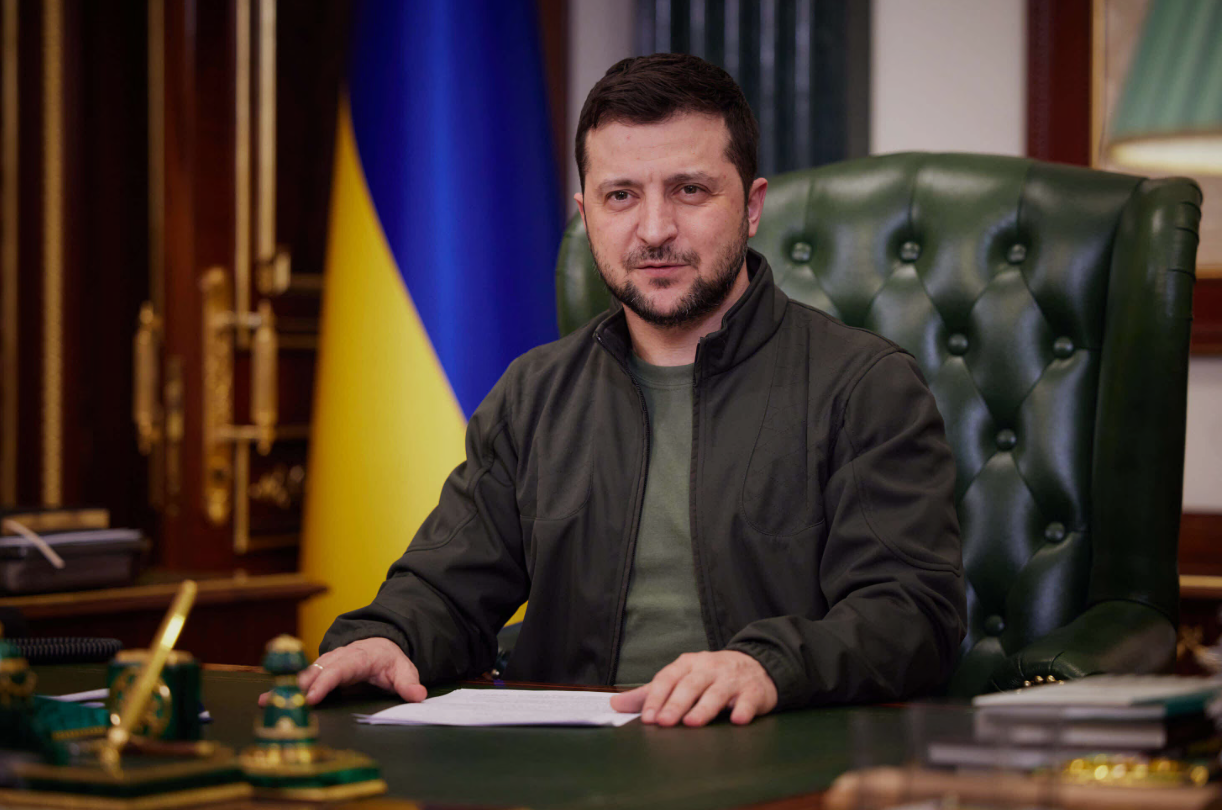
Ukraine has warned that Russian occupied Oleshky in the Kherson region is facing a worsening humanitarian emergency, with Foreign Minister Andrii Sybiha saying residents are experiencing severe shortages of food and medicine and calling for immediate intervention by the United Nations and International Committee of the Red Cross. Around 1,700 civilians, including 47 children, are believed to remain in a town that had approximately 24,000 residents before Russia’s full scale invasion. Independent UN reporting has previously documented serious food shortages, limited medical care, dangerous roads and difficulties evacuating civilians. Russia has acknowledged shortages but says its forces are working to address them and blames Ukrainian military activity for some access problems. Sybiha’s latest allegations concerning deaths and restrictions on burials have not been independently established.
Ukraine has issued an urgent international appeal for humanitarian access to the Russian occupied town of Oleshky in the Kherson region, warning that approximately 1,700 civilians remaining there are facing worsening hunger, shortages of medicine and increasingly dangerous conditions as the frontline isolates the community from reliable supplies and evacuation routes. Foreign Minister Andrii Sybiha described the town as a “death trap” on Saturday and called on the United Nations and International Committee of the Red Cross to secure humanitarian corridors, saying residents were surviving on vegetables from gardens, preserved food and even snails while medical supplies at the local hospital had reportedly been exhausted. Sybiha also alleged that Russian forces were preventing families from properly burying some people who had died, although those latest claims about deaths and burial restrictions have not been independently verified. The broader humanitarian emergency in Oleshky, however, has been documented for months by residents, Ukrainian authorities, international organizations and independent reporting, with serious shortages of food, water and medical care repeatedly confirmed.
Oleshky sits on the Russian controlled eastern side of the Dnipro River, across from the Ukrainian held city of Kherson, placing its remaining civilian population directly beside one of the most dangerous stretches of the war. Before Russia’s full scale invasion in February 2022, the town had around 24,000 residents. According to figures cited by the United Nations Human Rights Monitoring Mission in Ukraine and recent reporting, only around 1,700 people are now believed to remain, including 47 children. Years of occupation, flooding, shelling, drone attacks, mines, damaged infrastructure and repeated displacement have hollowed out a community that once functioned as a normal regional town into a place where residents now struggle simply to obtain food and essential medicine.
The latest Ukrainian warning represents a significant escalation in the language being used to describe the crisis. Sybiha said people in Oleshky were facing starvation and argued that international organizations must immediately demand access rather than simply continue monitoring the situation from outside the occupied territory. Ukraine wants humanitarian agencies to be allowed to deliver food and medicine directly, assess conditions independently and organize voluntary evacuation corridors for residents who want to leave. Kyiv says previous attempts to establish evacuation arrangements have failed because Russia has refused or obstructed proposed routes. Moscow has rejected that characterization and has blamed Ukrainian military activity around Oleshky for making civilian access dangerous.
The humanitarian conditions themselves are not new. The United Nations Human Rights Monitoring Mission warned in June that civilians trapped in Russian occupied frontline communities in the Kherson region were facing severe threats to life because food was running out, medical services had deteriorated and attacks by short range drones and landmines had made movement increasingly dangerous. UN monitors interviewed residents from Oleshky and nearby Hola Prystan who described communities effectively cut off from reliable supply lines. The mission said the last grocery store in Oleshky had stopped regular operations in January because it could no longer obtain enough food, while residents subsequently relied on preserved supplies and irregular deliveries by private traders.
By late June, according to the UN, no food delivery had reached the town for nearly a month. Medical access had also deteriorated to the point where ambulances were no longer regularly responding to homes and the local hospital was capable of treating only the most urgent cases. UN monitors documented patients who needed transfer to another town for medical treatment but could not be evacuated because routes were too dangerous. One patient reportedly died while waiting for transfer. Those earlier findings provide independent support for Ukraine’s broader claim that Oleshky has been experiencing a serious humanitarian emergency, even though some of Sybiha’s newest allegations cannot yet be independently confirmed.
The situation worsened further through the summer and early autumn. Roads around the town have become extraordinarily dangerous because of landmines and drones operated by both sides of the conflict. Residents attempting to reach food or medical care sometimes have to travel through areas where civilian vehicles can be struck or mined. Reuters reported earlier in October that people were describing some of those routes as a choice between starvation and possible death. Residents who remained in Oleshky said they were rationing whatever supplies they still possessed while trying to grow vegetables in gardens or obtain food through improvised channels.
Ukraine has responded by using heavy lift drones to deliver small quantities of food and medicine into the occupied town. Ukrainian authorities said approximately four tonnes of supplies had been dropped at around 100 locations in and around Oleshky by late September. The effort demonstrates the severity of the access problem because large drones would ordinarily never be considered a substitute for organized humanitarian convoys. Each drone can carry only a limited amount, distribution is difficult and residents may have to expose themselves to danger when collecting packages. Kyiv says drone drops are therefore an emergency measure rather than a realistic solution for sustaining hundreds or thousands of civilians.
Russia has acknowledged that serious shortages exist in Oleshky, although it disputes Ukraine’s explanation for why the situation has become so severe. The Kremlin has previously said Russian authorities and forces are working to organise deliveries and address shortages. Moscow has accused Ukraine of making supply routes unsafe through drone attacks and military operations near the Dnipro frontline. Ukraine counters that Russia, as the occupying power, has both control over the territory and an obligation under international humanitarian law to ensure that civilians have access to food, medicine and other basic necessities.
The dispute over responsibility has become one of the most politically sensitive aspects of the crisis. Oleshky lies within internationally recognized Ukrainian territory occupied by Russia since the early stages of the 2022 invasion. Under international humanitarian law, an occupying power has specific obligations toward the civilian population, including ensuring food and medical supplies and facilitating humanitarian relief when the population is inadequately supplied. Ukraine argues that this places primary responsibility on Russia regardless of battlefield conditions. Moscow maintains that Ukrainian attacks make humanitarian logistics increasingly difficult and says it has attempted to respond to civilian needs.
The Vatican has now become directly involved in efforts to break the humanitarian deadlock. Pope Leo appealed to Russian President Vladimir Putin to facilitate delivery of food and medical assistance to Oleshky and support arrangements that could allow civilians to leave voluntarily. The Kremlin said Putin agreed to cooperate with the Vatican initiative and supported efforts aimed at providing first aid, food and safe evacuation. That commitment could become important if it produces a practical mechanism accepted by both Russia and Ukraine, although no fully operational humanitarian corridor had been publicly confirmed at the time of the latest Ukrainian warning.
Sybiha’s appeal to the United Nations and Red Cross therefore comes at a moment when diplomatic attention is finally increasing but civilians remain trapped. Ukraine wants international organizations to take a direct operational role because agreements negotiated only between the two warring governments have repeatedly failed. Independent humanitarian agencies could theoretically monitor evacuation routes, verify who wants to leave and organize delivery of food and medical supplies without either side controlling the process entirely.
The International Committee of the Red Cross has extensive experience operating in conflict zones, but access to Russian occupied Ukrainian territory has been highly restricted during the war. The UN Human Rights Office has similarly struggled to obtain direct access to many occupied areas and has frequently relied on interviews with people who escaped, remote verification and other evidence. That limited access makes independent assessment of new allegations extremely difficult and explains why claims concerning specific deaths, burial restrictions or military conduct in Oleshky cannot always be immediately verified.
Ukraine’s latest allegations include particularly disturbing claims that some residents have died from deprivation and that Russian forces have prevented relatives from burying bodies. Those accusations are serious and remain unverified by independent monitors at the time of reporting. Sybiha has called on international agencies to investigate and gain physical access to the town. Russia had not independently confirmed those specific allegations in the reporting available on October 17.
The claim that people are surviving partly on snails has also drawn considerable attention because it illustrates the desperation Ukrainian officials say exists inside the town. Such descriptions should be treated as accounts attributed to Ukrainian authorities rather than independently established conditions affecting every resident. The broader shortage of food, however, is supported by earlier UN interviews with Oleshky residents who described stores closing, deliveries stopping and preserved food stocks becoming increasingly limited.
The humanitarian crisis is inseparable from the military geography of the area. Oleshky lies close to the Dnipro River, which has become a heavily contested natural barrier between Russian and Ukrainian forces. Ukrainian controlled Kherson sits on the western bank, while Russian forces occupy much of the territory on the eastern side. Artillery, drones and aerial bombs repeatedly cross the river, and communities on both sides have endured sustained attacks.
Short range first person view drones have become particularly dangerous for civilians. These weapons allow operators to see potential targets through a live camera feed and have increasingly been used against vehicles and individuals near frontline zones. The UN has documented numerous civilian deaths and injuries involving drones in the occupied Kherson region but has sometimes been unable to conclusively determine which side was responsible in individual incidents.
In one case documented earlier this year, civilians standing in line to receive food in Oleshky were struck by a drone attack that killed two people and injured others. In another incident, a local medic travelling on a scooter was injured by a drone before a second drone reportedly killed the wounded medic and another person who came to help. The UN stressed that responsibility for some attacks could not be independently established, reflecting the difficulty of monitoring frontline areas under occupation.
Landmines represent another major obstacle. In June, a civilian convoy carrying food and humanitarian assistance toward Oleshky struck a landmine at the town’s entrance, killing one person and injuring three others. Mines make even organized supply deliveries dangerous and create long term risks that could remain after active fighting ends. For residents trying to leave independently, the danger can be even greater because safe routes may change rapidly.
The destruction of the Kakhovka dam in June 2023 also had devastating consequences for Oleshky. Floodwaters inundated large sections of the town and surrounding communities, destroying homes, contaminating water supplies and forcing residents onto rooftops while rescue efforts became caught up in the wider conflict. Russia and Ukraine blamed each other for the dam’s destruction, and international investigators have faced difficulties establishing direct access to all relevant areas.
Oleshky never fully recovered from that disaster before the security situation deteriorated again. Buildings damaged by flooding and fighting remain abandoned, public infrastructure has been degraded and much of the population has fled. Images taken over the years show damaged apartment blocks, ruined houses, broken roads and vegetation reclaiming areas that once contained active neighborhoods.
For the approximately 1,700 civilians believed to remain, leaving is not necessarily straightforward. Some are elderly or disabled. Others may lack money, vehicles or relatives elsewhere. Some residents may fear crossing military lines or travelling through Russian controlled territory. Others may simply refuse to abandon homes they have lived in for decades, even as conditions deteriorate.
Children are among those still trapped. The figure of 47 remaining children makes humanitarian access particularly urgent because shortages of food, medicine, safe water and heating can affect children more severely than healthy adults. With winter approaching, the lack of reliable electricity and heating could compound an already dangerous situation.
The coming cold season is a broader concern across Ukraine. Russian strikes have repeatedly targeted energy infrastructure in Ukrainian controlled territory, while occupied frontline communities face different but equally severe challenges involving damaged grids, limited fuel and inaccessible repair services. In Oleshky, where basic infrastructure is already heavily degraded, winter conditions could make survival substantially more difficult.
The local hospital has become a central part of Ukraine’s latest warning. Sybiha says the facility has now run out of medical supplies. Independent reporting from earlier in the year had already documented severe medical shortages, restricted ambulance services and patients unable to obtain transfers. The latest claim therefore represents a further deterioration of a previously confirmed problem, although outside observers have not been able to inspect current hospital stocks directly.
A medical system without essential supplies cannot respond adequately to ordinary illnesses, injuries or chronic conditions, let alone war related trauma. Insulin, antibiotics, pain relief, bandages and basic surgical materials can become life saving commodities in a community cut off from normal supply chains. Older residents who require regular medication may face particular danger if pharmacies and hospitals cannot replenish stocks.
Ukraine’s demand for an evacuation corridor is intended to address residents who no longer want to remain under these conditions. Ukrainian human rights officials say they have repeatedly offered mechanisms for civilian evacuation but that Russia has rejected proposals. Moscow disputes accusations that it deliberately prevents civilians from leaving and has said evacuation arrangements must account for active hostilities and security concerns.
Any successful corridor would require guarantees from both sides because civilians could otherwise be exposed to attack while travelling. Humanitarian organizations generally require clearly communicated routes, agreed time windows and assurances that military activity will stop along the corridor. Achieving those conditions has been difficult throughout the war.
The Vatican initiative could potentially create a politically acceptable framework because the Holy See maintains diplomatic communication with both Moscow and Kyiv. Putin’s public willingness to cooperate gives humanitarian organizations an opening, but practical implementation will be the real test. Previous agreements in other parts of Ukraine have sometimes collapsed because the two sides accused each other of violating ceasefires or altering arrangements.
The crisis also highlights the limitations of international humanitarian institutions when access is denied. The UN and Red Cross can appeal, negotiate and monitor from outside, but they cannot simply enter occupied territory without security guarantees and cooperation from the controlling authority. Ukraine’s latest call is therefore as much political pressure as operational request, intended to force Russia to allow independent observers onto the ground.
Kyiv is also seeking international attention because conditions in occupied communities receive far less coverage than missile attacks on major Ukrainian cities. Information from Russian held areas is difficult to obtain, communications are unreliable and residents may fear speaking openly. As a result, a humanitarian emergency can worsen for months before the outside world understands its full scale.
Oleshky has become one example of that information gap. The town was widely covered during the Kakhovka flooding but subsequently disappeared from much international reporting. Recent testimony from residents and humanitarian monitors has brought attention back to the area as food shortages became increasingly severe.
Russia’s acknowledgement that the town faces shortages is significant because it means the existence of a humanitarian problem itself is not seriously disputed. The disagreement centers on causes, responsibility and access. Moscow says it is working to address the shortages and has blamed Ukrainian attacks for disrupting delivery routes. Ukraine says Russia is failing in its duties as occupying power and actively blocking the evacuation and relief mechanisms that could prevent further suffering.
Independent UN findings support elements of both sides’ accounts about the dangers surrounding access. The organization has confirmed that drones and landmines make routes extremely dangerous and that civilians have been killed while trying to obtain food or provide medical assistance. What it has not established is that Ukraine alone is responsible for those dangers or that Russia has fulfilled all its humanitarian obligations.
International humanitarian law does not allow military difficulty to erase responsibility toward civilians. If the population of an occupied territory is inadequately supplied, the occupying power must agree to and facilitate relief schemes, subject to legitimate security controls. Ukraine is using that legal principle to argue that Russia must allow the UN, Red Cross or another neutral organization to intervene immediately.
The humanitarian warning also arrives amid a broader deterioration in relations between Ukraine and Russia as diplomatic efforts to end the war remain stalled. Both sides continue military operations while accusing the other of undermining peace efforts. Ukraine says Russia is preparing another difficult winter campaign, while Moscow continues to insist that its territorial and security demands must be addressed.
Oleshky shows how those geopolitical arguments translate into daily survival for civilians who cannot simply leave the battlefield behind. Residents are not debating sanctions, peace frameworks or diplomatic recognition. They are trying to find food, medicine and safe routes through mined and drone monitored territory.
That is why Sybiha is attempting to elevate the town into an international humanitarian priority. His message is that the situation has moved beyond ordinary wartime hardship and is approaching a point where preventable civilian deaths could increase sharply unless international access is established.
Some of his strongest claims require independent confirmation. Reporting on a conflict zone, particularly one under military occupation, demands a clear distinction between verified humanitarian conditions and allegations made by the parties to the war. Ukraine’s claims about unburied bodies and specific Russian restrictions on burial have not yet been independently established. Russia’s assertions that it is adequately addressing shortages have also not been independently demonstrated through unrestricted access.
What is well documented is that Oleshky has lost the overwhelming majority of its prewar population, its food supply system has largely collapsed, medical access has deteriorated, civilian movement is extremely dangerous and people attempting to bring aid or evacuate face mines and drones.
Those facts alone explain why international organizations have repeatedly described the situation as desperate.
The next step will depend partly on whether Russia follows through on the commitment Putin reportedly gave Pope Leo. If humanitarian agencies are allowed to enter the town and organize regular deliveries, the immediate risk of starvation could be reduced and people who want to leave could potentially be evacuated. If access remains restricted, Ukraine is likely to continue using drones for limited relief while increasing diplomatic pressure on Moscow.
The humanitarian challenge will become more severe as winter approaches. Vegetables grown in gardens will become less available, stored food will continue to disappear and freezing temperatures will create additional medical risks. Elderly residents who have survived years of occupation, flooding and bombardment may be particularly vulnerable.
The international community therefore faces a narrow window in which humanitarian diplomacy could still prevent further deterioration.
The United Nations has already documented a community where people cannot reliably obtain food or medical care.
Russia itself has acknowledged critical shortages.
Ukraine says the situation has now reached the point of starvation.
And approximately 1,700 people, including dozens of children, remain inside a town where the road to food may be mined, the route out may be contested and even basic medical treatment is becoming increasingly difficult to find.
For Oleshky, the argument over responsibility continues.
For its remaining residents, the more urgent question is whether food, medicine and a safe way out will arrive before winter does.