TRUMP ADMINISTRATION BACKS DOWN IN MEXICO AVIATION FIGHT AS U.S. FINALLY CLEARS NEW FLIGHTS FROM MEXICO CITY AIRPORTS
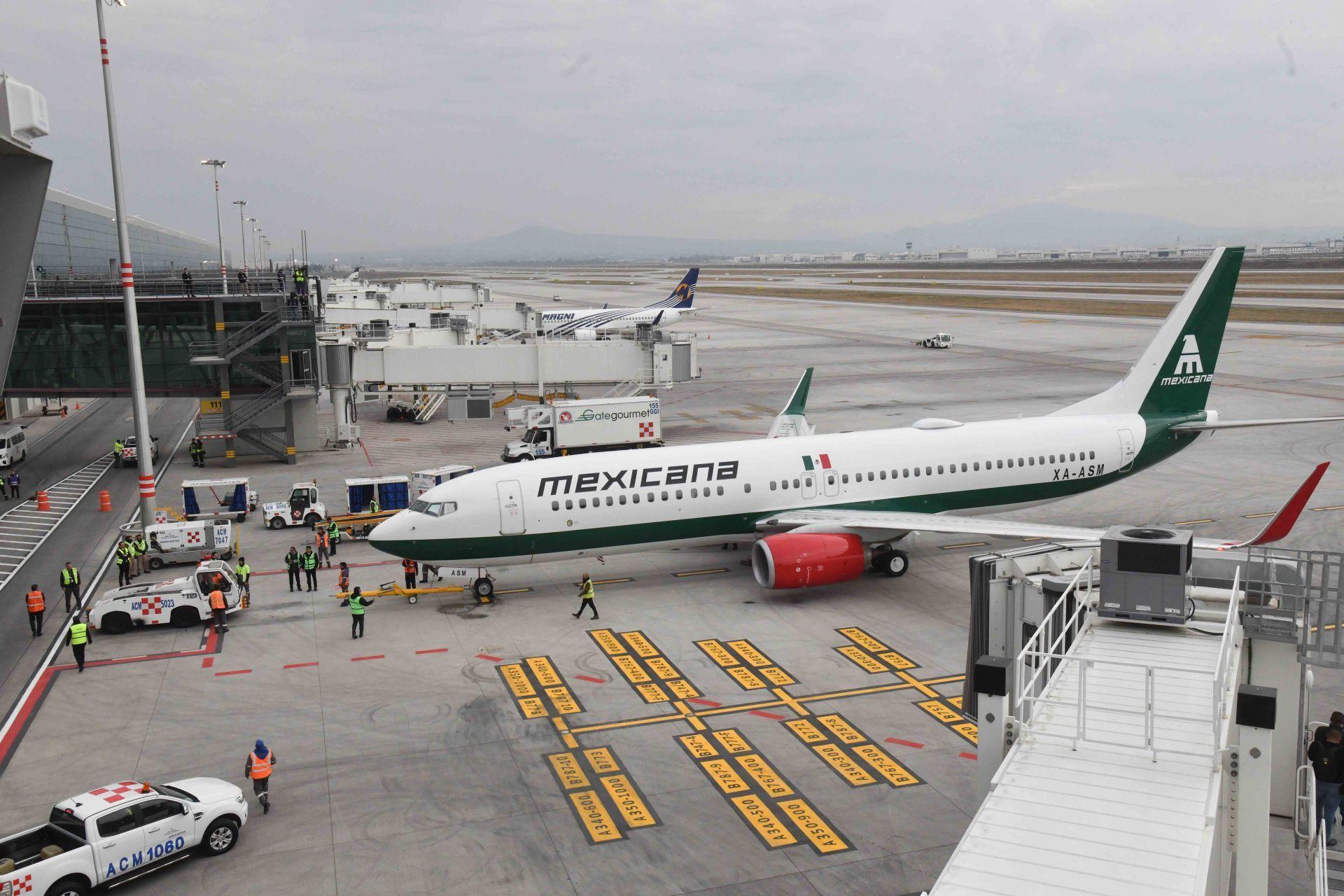
The United States has lifted restrictions that prevented Mexican airlines from launching new routes to American destinations from Benito Juárez International Airport and Felipe Ángeles International Airport in the Mexico City area. The decision follows negotiations over U.S. allegations that Mexico had failed to fully comply with the 2015 bilateral air transport agreement. Mexico has taken steps to address concerns involving airport capacity and slot allocation, allowing Washington to ease the restrictions. However, some U.S. oversight measures remain in place, including schedule-filing requirements and additional approval rules for certain operations.
The United States has lifted major restrictions that prevented Mexican airlines from launching new routes to American destinations from Mexico City’s two main international airports, easing a long-running aviation dispute between Washington and Mexico City and potentially opening the door to more flights, greater competition and additional travel options between the two countries. The decision removes one of the most significant barriers imposed by the U.S. Department of Transportation during a confrontation over whether Mexico was complying with the terms of the 2015 bilateral air transport agreement, although American officials made clear that the dispute is not entirely over and that some additional restrictions and monitoring requirements will remain in place. Mexican carriers will now be able to propose new services from Benito Juárez International Airport and Felipe Ángeles International Airport to destinations across the United States, a development welcomed by Mexico’s government and major airlines that have spent months pushing Washington to reverse limits they argued were damaging cross-border aviation.
The announcement marks a major change from the harder line adopted by the Trump administration during the earlier stage of the dispute, when U.S. transportation officials accused Mexico of giving domestic airlines an unfair advantage and undermining the open-skies principles that were supposed to govern aviation between the two countries. At the centre of the disagreement was Mexico’s handling of operations at Benito Juárez International Airport, commonly known as AICM, and the rapid development of Felipe Ángeles International Airport, or AIFA, the newer airport built north of Mexico City. American officials had argued that policy changes implemented by Mexican authorities disrupted competitive conditions for U.S. airlines, particularly after cargo operations were moved away from Benito Juárez and certain capacity restrictions were imposed at the older airport.
The United States responded by placing limits on Mexican airlines’ ability to introduce new routes to American destinations from the Mexico City market. The restrictions effectively meant that even if a Mexican carrier identified a profitable new route to a U.S. city, it could not simply proceed under the normal bilateral framework. The policy created frustration among Mexican airlines, which argued that passengers and competition were being punished over a government-to-government regulatory dispute. Mexico’s administration also objected to what it saw as excessive U.S. pressure over domestic decisions involving airport congestion and the country’s aviation infrastructure.
Friday’s announcement indicates that months of bilateral negotiations have produced enough progress for Washington to relax one of the most visible restrictions. The U.S. Department of Transportation said Mexico had taken steps toward addressing the concerns raised by American officials over compliance with the 2015 air transport agreement. Mexico’s government confirmed that its airlines would once again be permitted to establish new routes to the United States from both Benito Juárez and Felipe Ángeles, representing an important commercial victory for carriers seeking to expand in the lucrative transborder market.
The significance of the decision extends well beyond the airline industry. Air travel between Mexico and the United States is among the busiest international aviation markets in the world, driven by tourism, business, migration, family ties and cross-border trade. Millions of people travel between the two countries every year, with major flows connecting Mexico City, Cancún, Guadalajara, Monterrey and other Mexican cities to U.S. destinations including Los Angeles, Dallas, Houston, Miami, New York, Chicago, Las Vegas and Atlanta. Restricting the ability of airlines to add new routes can affect fares, passenger choice and the speed with which carriers respond to shifting travel demand.
Mexican airlines such as Aeroméxico, Viva and Volaris have increasingly competed with U.S. carriers in this market, while Mexico’s revived state-backed airline Mexicana has also sought opportunities to establish international services. The lifting of the restriction creates new possibilities for those carriers, although each proposed route will still require the necessary regulatory approvals and airport capacity. There is no guarantee that airlines will immediately announce a large number of new services, but the policy obstacle preventing them from doing so has now been removed.
Aeroméxico and Viva were among the airlines welcoming the development, viewing it as a step toward normalising aviation relations between the two countries. For Aeroméxico in particular, the decision comes after a difficult period in its relationship with U.S. regulators. Washington had previously challenged the airline’s close commercial partnership with Delta Air Lines, arguing that conditions in the Mexican market created competitive concerns. The U.S. Department of Transportation ordered Delta and Aeroméxico to unwind their long-standing joint venture after concluding that Mexico’s aviation policies prevented the partnership from operating in a sufficiently fair competitive environment. The latest easing of route restrictions does not automatically reverse every separate decision involving that alliance, but it signals an improvement in the broader regulatory climate.
The original dispute intensified because American authorities believed Mexico had departed from commitments made under the 2015 air transport agreement. That agreement was designed to liberalise aviation between the two countries, allowing airlines greater freedom to establish routes and compete for passengers. Such agreements generally work on the principle that airlines from both countries should receive comparable opportunities rather than facing government measures that disproportionately favour one side.
U.S. officials complained that Mexico’s decisions concerning airport access violated that spirit. One of the most controversial steps was the forced relocation of dedicated cargo operations from Benito Juárez International Airport to Felipe Ángeles International Airport. Mexico justified the move as necessary to reduce congestion at Benito Juárez, one of Latin America’s busiest airports. American cargo operators, however, argued that being forced to relocate added costs and disrupted established logistics networks because AIFA is located significantly farther from central Mexico City.
The conflict became even more complicated because the Mexican government was simultaneously trying to increase traffic at Felipe Ángeles. The airport was developed as a major infrastructure project after the government cancelled a different airport project at Texcoco. Mexican authorities presented AIFA as a modern alternative that could reduce pressure on Benito Juárez, but airlines and passengers initially showed limited enthusiasm because of its location and transportation challenges.
Over time, traffic at AIFA increased, particularly after the government shifted cargo operations there and encouraged airlines to launch passenger services. By 2026, the airport had handled millions of passengers and substantial cargo volumes, becoming a much more significant part of Mexico City’s aviation system. Yet Washington continued to argue that the process used to redirect flights and restrict capacity at Benito Juárez had disadvantaged U.S. airlines.
The Trump administration responded in 2025 with measures that increased federal oversight of Mexican airline operations. Transportation Secretary Sean Duffy argued at the time that Mexico had failed to honour its commitments and said the United States would protect American carriers from what the administration viewed as unfair treatment. Mexican airlines were required to submit additional flight information to U.S. authorities, and new route approvals from the Mexico City airports were restricted.
The move demonstrated how quickly aviation regulation can become part of a larger trade dispute. Air transport agreements are highly technical, but the economic stakes are enormous. A restriction affecting airport access can influence billions of dollars in tourism revenue, airline ticket sales, freight movements and business activity. It can also become politically sensitive because airlines employ thousands of workers and passengers feel the consequences through ticket prices and available routes.
Mexico pushed back strongly against the U.S. position, insisting that its airport policies were based on operational needs rather than an attempt to discriminate against American airlines. Mexican authorities pointed to the severe congestion at Benito Juárez and argued that the older airport could not continue expanding indefinitely. The government also defended the importance of using AIFA, which had been built with significant public investment and was intended to become a major part of the capital region’s aviation infrastructure.
The negotiations that followed focused on how Mexico would manage airport slots, capacity declarations and access rules going forward. Washington wanted greater transparency and internationally recognised practices in allocating scarce takeoff and landing slots at Benito Juárez. Mexico agreed to make changes and adopt measures designed to address those concerns, leading American officials to conclude that enough progress had been made to lift the prohibition on new Mexican routes.
The latest decision does not mean Washington is abandoning oversight altogether. Mexican airlines must still file certain flight schedules with the U.S. government, and operations involving large aircraft remain subject to additional approval requirements. Two other related U.S. aviation orders remain in force, meaning American regulators are continuing to monitor whether Mexico follows through on the commitments that led to the easing.
That detail is important because Friday’s announcement could otherwise be interpreted as a complete resolution of the dispute. It is more accurate to describe it as a major de-escalation rather than an unconditional return to the situation that existed before the conflict. Washington has removed the most commercially restrictive measure by allowing new routes again, but it has preserved tools that could be used if American officials believe Mexico falls back into non-compliance.
Mexico’s government has presented the decision as evidence that dialogue produced results. Officials emphasised that airlines will once again be able to consider new services from both of the capital’s airports, potentially strengthening connectivity with the United States. For the Mexican aviation industry, the practical value of that change will depend on how quickly carriers respond.
Aeroméxico remains the country’s leading full-service international airline and already operates an extensive U.S. network. Additional routes from Benito Juárez could strengthen its Mexico City hub, which connects passengers from across Mexico and Latin America to American destinations. A hub airline benefits substantially from the ability to add new routes because each additional city can feed passengers into the wider network.
Low-cost carriers Viva and Volaris have a different business model but could also benefit. Both airlines have aggressively expanded across Mexico and the United States, targeting travellers who prioritise lower fares. New route authority could allow them to connect Mexico City with additional U.S. destinations that currently have limited or no nonstop service.
The potential impact at Felipe Ángeles could be particularly important for Mexico’s government. One of the administration’s long-term goals has been increasing passenger traffic at AIFA and demonstrating that the airport can serve as a credible international gateway rather than simply a secondary airport used because airlines were pressured to operate there. New U.S. routes would give the airport additional international relevance.
Mexicana de Aviación could also eventually benefit. The revived airline, which operates from AIFA, has been expanding its fleet and domestic network and has indicated interest in international operations. Regulatory access to the U.S. market is crucial for any Mexican airline hoping to build significant international traffic because the United States remains Mexico’s largest air travel market.
Passengers are likely to benefit if the decision produces more competition. When multiple airlines operate the same route, fares can fall and schedules become more convenient. New nonstop services can also eliminate the need for passengers to connect through another city, saving time and reducing travel costs. The greatest benefits could appear on routes currently dominated by one or two airlines.
The tourism industry will also watch developments closely. Americans represent one of the largest groups of international visitors to Mexico, while Mexican travellers are an important part of the tourism and retail economy in many U.S. cities. Additional air capacity can stimulate demand by making travel cheaper and easier.
Business travel is another major factor. The U.S. and Mexico have one of the world’s largest bilateral trading relationships, supported by deeply integrated manufacturing and supply chains. Companies routinely move executives, engineers and technical staff between facilities on both sides of the border. More direct flights can improve those commercial connections, particularly as manufacturers continue expanding nearshoring operations in Mexico.
The cargo dispute that helped trigger the confrontation remains particularly relevant to those supply chains. Mexico is a major manufacturing centre for automobiles, electronics, aerospace equipment, medical devices and other goods destined for the U.S. market. Air freight plays an important role for high-value products and time-sensitive shipments. Any disruption affecting cargo operations can therefore have consequences well beyond airlines themselves.
American airlines will now assess what the policy change means for competition. Carriers including American Airlines, United and Delta have large networks into Mexico and have benefited from strong demand. New Mexican services could challenge some existing routes, particularly where U.S. carriers currently have limited competition.
At the same time, improved aviation relations could eventually create opportunities for American airlines too. A bilateral dispute creates uncertainty for all companies operating between the two countries. Restoring a more predictable regulatory environment can make it easier for airlines on both sides to plan aircraft deployments and schedules years in advance.
The decision also comes after Mexico regained the U.S. Federal Aviation Administration’s Category 1 safety rating in September 2023. Mexico had been downgraded to Category 2 in 2021 after the FAA concluded that the country’s aviation oversight system did not fully meet international standards. During that downgrade, Mexican airlines were prohibited from adding new U.S. services even though existing flights were allowed to continue.
The Category 1 restoration was therefore initially expected to unleash a new wave of Mexican airline growth into the United States. The later bilateral dispute complicated that recovery by introducing a different set of restrictions. Friday’s announcement removes another obstacle from the path of expansion.
The history illustrates how airlines can be caught between multiple layers of regulation. Safety oversight is handled through one process, bilateral market-access rules through another and competition questions through still another. An airline may be considered safe to operate but still face restrictions because of disputes between governments over market fairness.
For passengers, those distinctions are largely invisible. Travellers simply see whether a flight exists, what it costs and how convenient the schedule is. Yet behind every international route are agreements involving aviation authorities, airports, customs agencies and sometimes competition regulators.
The U.S. decision may therefore appear technical, but its eventual effect could be visible on airport departure boards throughout North America. A Mexican airline that previously could not introduce a Mexico City to U.S. route can now seek approval and begin commercial planning. Whether that becomes ten new routes or only a handful will depend on passenger demand, aircraft availability, airport slots and airline strategy.
Benito Juárez remains constrained by congestion. The airport operates within an urban area and has limited ability to physically expand. Even with U.S. restrictions removed, airlines cannot add unlimited new services because they still need scarce slots. That is one reason Mexico continues pushing airlines toward Felipe Ángeles.
AIFA has more physical room for expansion but faces different challenges, particularly ground transportation and passenger preference. Its success will depend partly on improving connections between the airport and metropolitan Mexico City. If those links become easier and international service expands, the airport could become increasingly competitive.
The bilateral aviation dispute therefore reflects a larger question Mexico has been trying to answer for years: how to accommodate growing air travel demand in one of the world’s largest metropolitan areas without a single new airport replacing Benito Juárez entirely. The government’s solution has been a multi-airport system involving AICM, AIFA and Toluca. Airlines, however, prefer concentration because major hubs work best when passengers can connect between flights in the same location.
The United States was not primarily objecting to Mexico building or promoting AIFA. Its concern was whether policies designed to support the newer airport unfairly changed the competitive environment promised under the bilateral agreement. The latest negotiations appear to have narrowed that disagreement enough for route restrictions to be relaxed.
Washington’s decision sends a broader message about how the Trump administration handles economic disputes with close trading partners. The government has frequently used tariffs, market access restrictions and regulatory pressure as negotiating tools. In this case, the threat to Mexican airlines remained in place until U.S. officials concluded that Mexico had taken corrective steps.
Mexico, meanwhile, avoided allowing the dispute to spiral into a broader confrontation. Aviation is only one part of a much larger relationship involving immigration, trade, border security and organised crime. Both governments have incentives to resolve sector-specific disagreements without allowing them to destabilise cooperation elsewhere.
The remaining U.S. restrictions mean that trust has not been fully restored. American authorities will continue watching how Mexico allocates airport capacity and whether U.S. airlines receive treatment consistent with the bilateral agreement. If future problems emerge, Washington retains the ability to reintroduce tougher measures.
For now, however, the immediate winner is cross-border aviation. Mexican airlines can once again plan new U.S. routes from both Benito Juárez and Felipe Ángeles. Passengers could ultimately gain more destinations and lower fares, and Mexico City’s two-airport system has been given greater access to the enormous American travel market.
What began as a regulatory fight over airport access has therefore moved into a more cooperative phase. The United States has not withdrawn every demand, and Mexican aviation remains under additional scrutiny, but the prohibition that most directly prevented airlines from expanding has been lifted.
The next step belongs to the carriers themselves. If Aeroméxico, Viva, Volaris, Mexicana or other operators respond with new route announcements, passengers will begin to see the practical consequences of Friday’s decision.
Until then, the significance is largely regulatory but unmistakable: after months of pressure, accusations of unfair treatment and restrictions on airline expansion, Washington has reopened the door for new Mexican flights to the United States from Mexico City.