RUSSIAN STRIKES KILL AT LEAST EIGHT ACROSS UKRAINE AS MORE THAN ONE MILLION LOSE POWER, HITTING MALLS, MARKETS AND ENERGY FACILITIES AHEAD OF WINTER
Russian attacks across Ukraine on October 16 killed at least eight people and injured around 60 others while strikes on energy infrastructure temporarily cut electricity to more than one million people. Kharkiv, Kramatorsk, Dnipropetrovsk, Volyn, Sumy and Rivne were among the areas hit. Shopping centres, businesses, transport facilities and power infrastructure were damaged, while repair crews later restored electricity to many affected communities. The attacks come as Ukraine seeks additional European financial and military support ahead of winter amid uncertainty surrounding future U.S. assistance.
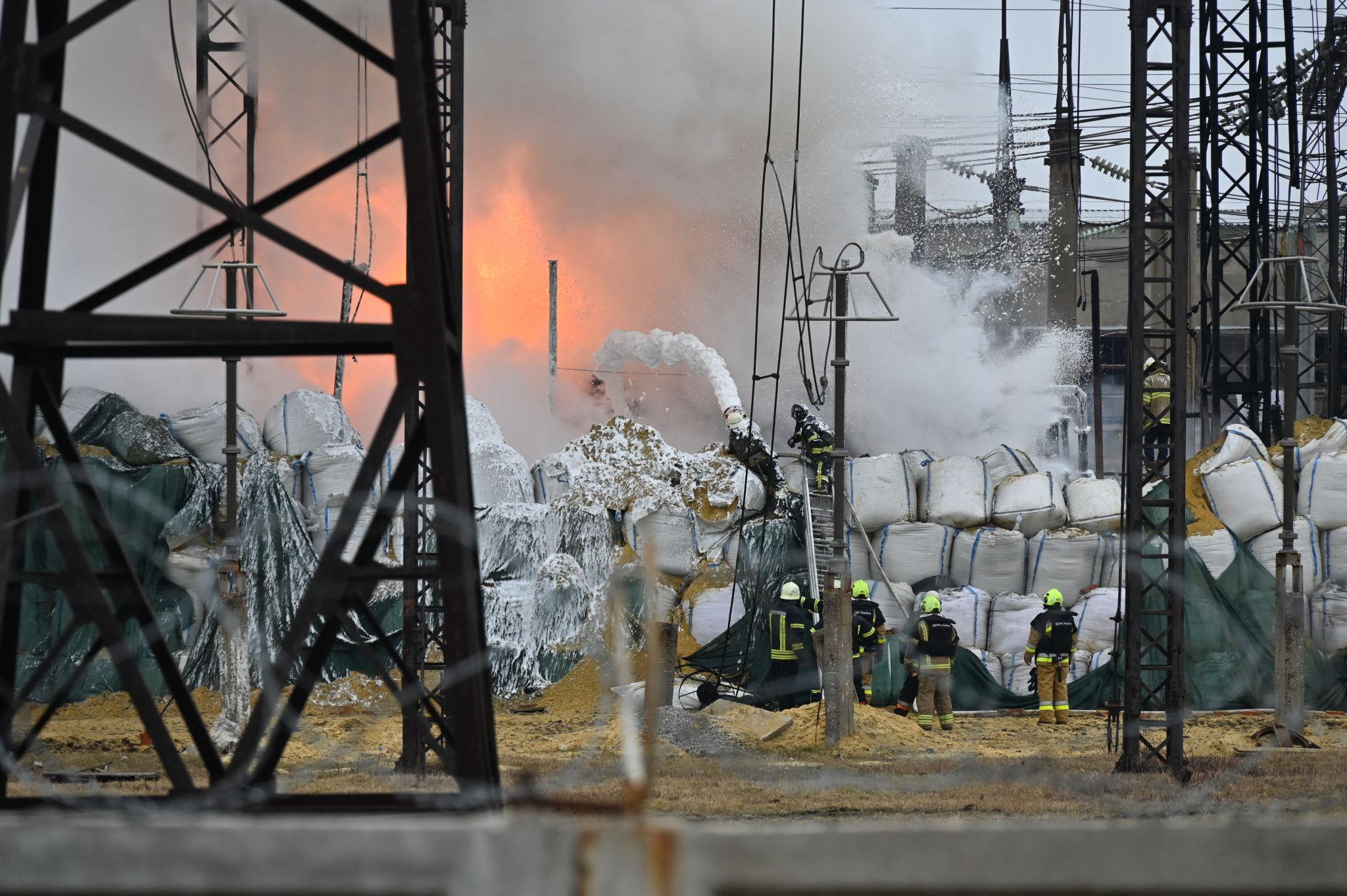
Russian attacks across Ukraine have killed at least eight people, injured around 60 others and temporarily cut electricity to more than one million residents after a wave of drone and missile strikes hit cities, shopping centres, transport routes and critical energy infrastructure in several regions, deepening fears that Moscow is intensifying its campaign against the Ukrainian power grid as winter approaches. The attacks on Friday, October 16, struck locations including Kharkiv, Kramatorsk, Dnipropetrovsk, Volyn, Sumy and Rivne, with authorities reporting civilian deaths, fires, damaged businesses and widespread power disruption as emergency crews worked through the day to restore electricity and clear debris. The latest barrage came at a particularly sensitive moment for Ukraine, as President Volodymyr Zelensky continued appeals to European leaders for additional military and financial support amid growing uncertainty over the future of American assistance and renewed tensions between Kyiv and Washington over the conduct of the war.
In Kharkiv, Ukraine’s second largest city and one of the areas most frequently targeted since Russia launched its full scale invasion in February 2022, strikes hit three districts and killed a 71 year old woman and a 58 year old man, according to regional authorities. At least 12 other people were wounded in the initial attacks, with further strikes through the evening injuring several more. Images from the city showed the aftermath of attacks on civilian areas, including damaged market spaces and injured people being treated close to the scene. Kharkiv has endured repeated bombardment throughout the war because of its proximity to the Russian border, and local officials have warned that repeated strikes against power infrastructure, residential districts and public spaces are placing increasing pressure on emergency services and the city’s ability to maintain normal civilian life.
The scale of Friday’s attack extended far beyond Kharkiv. In Kramatorsk, a frontline city in the Donetsk region that has remained a major Ukrainian military and civilian hub, authorities reported that two people were killed in Russian strikes. Two additional deaths were reported in the southeastern Dnipropetrovsk region. In the northwestern Volyn region, far from the main front line and close to Ukraine’s border with Poland, a Russian drone strike hit a food processing facility, killing one person and injuring eight others. The attack demonstrated once again that distance from the battlefield does not necessarily provide security for Ukrainian cities, as long range drones and missiles allow Russia to target infrastructure hundreds of kilometres from active fighting.
Volyn was also one of the regions hardest hit by the electricity disruption. Regional officials said approximately 370,000 people were temporarily without power during the morning following strikes on the energy system. Electricity was later restored to around 100,000 people, but officials warned that some areas could remain without supply for an extended period. The mayor of Lutsk, the regional capital, warned that the blackout there could last at least 24 hours as engineers worked to repair damage to the grid. Russian drone activity reportedly continued through the day, with strikes also hitting a customs terminal and setting around 10 trucks on fire in Kovel, a strategically important transport town located on a major route linking Kyiv with Poland.
The attacks on western Ukraine are significant because the region has become an important logistical corridor for humanitarian aid, military equipment and commercial trade entering the country from neighbouring European states. Cities such as Lutsk and Kovel are located relatively close to Poland, a NATO and European Union member that has become one of Ukraine’s most important logistical partners. Strikes in those areas therefore carry both civilian and strategic consequences, disrupting domestic infrastructure while threatening transport routes used to move goods and supplies deeper into Ukraine.
Russian attacks also struck at least two shopping centres during the latest wave of violence. One was hit in Sumy, a northern Ukrainian city close to the Russian border and the front line, while another major shopping centre was attacked in Rivne. Emergency service photographs from Sumy showed serious damage at the entrance to the building and blood on the floor following the strike. In Rivne, authorities said one person was killed and seven others were wounded when drones hit a shopping centre and other sites. Large parts of Rivne and the surrounding area also lost electricity after energy facilities were damaged.
The attacks on shopping centres and markets add to mounting concerns over civilian casualties during a period in which Russian bombardment has increasingly affected locations used by ordinary residents. Ukrainian authorities have repeatedly accused Moscow of deliberately targeting civilian infrastructure. Russia, meanwhile, has said its military attacks are aimed at military, industrial, logistical and energy targets supporting Ukraine’s war effort and denies intentionally targeting civilians. The distinction remains heavily contested, particularly when missiles and drones strike urban areas where military and civilian infrastructure often exist close together.
Friday’s death toll came only days after another major Russian missile and drone barrage damaged dozens of energy facilities and left hundreds of thousands of Ukrainians without electricity. On October 14, strikes on Kyiv, Kharkiv and other areas damaged about 30 energy facilities and reportedly left at least 600,000 people without power. The repeated attacks have reinforced Ukrainian fears that Russia is once again preparing a sustained winter campaign designed to weaken the country’s electricity and heating systems during the coldest months of the year.
Ukraine’s Energy Ministry said repair crews had managed to restore power to more than one million people who had lost electricity because of Friday’s attacks, though officials did not immediately say how many households remained without supply. The rapid restoration demonstrates the experience Ukrainian utility workers have gained after years of repeated attacks, but each new strike can make repairs more difficult because transformers, substations and transmission equipment are expensive and increasingly difficult to replace.
Energy workers have become some of the most important civilian responders of the war. While firefighters and rescue teams clear destroyed buildings and search for survivors after attacks, engineers must often enter damaged power facilities under the threat of further strikes to reconnect communities to the grid. Ukraine has spent years reinforcing substations, building protective barriers around critical equipment and importing replacement transformers from international partners, yet the sheer scale of Russian attacks means the network remains vulnerable.
Russia’s campaign against Ukraine’s power infrastructure is not new. Large scale attacks on electricity generation and transmission systems began during the first winter following the 2022 invasion and have returned repeatedly. Ukrainian and Western officials have argued that the goal is to make civilian life increasingly difficult by depriving residents of heat, electricity and water while attempting to weaken public morale. Moscow describes the energy system as part of Ukraine’s military infrastructure because electricity is also required by factories, railways, command systems and defence industries.
As temperatures begin falling, the humanitarian consequences become increasingly serious. A power outage during summer can disrupt businesses and communications, but during winter it can threaten lives. Many Ukrainian apartment buildings rely on electricity to operate heating pumps, water systems and lifts. Extended blackouts can therefore leave elderly residents trapped in high rise buildings, interrupt medical equipment and prevent families from heating homes.
The latest attacks are also unfolding against a rapidly changing political backdrop. Ukraine’s relationship with the United States has deteriorated in recent days as President Donald Trump has publicly criticised Zelensky and questioned aspects of Washington’s support for Kyiv. The two governments have also clashed over Ukraine’s attacks against Russian oil refineries, which Trump argues contribute to elevated global energy prices.
Ukraine says it resumed attacks on Russian refinery infrastructure because Moscow continued striking Ukrainian energy facilities despite an attempted pause in attacks on energy targets. Zelensky has argued that Kyiv cannot be expected to stop striking the Russian oil industry while Russian missiles and drones continue destroying Ukrainian power plants and substations. Moscow has said Ukrainian attacks on its refineries undermine diplomatic efforts and has promised responses.
The disagreement has become increasingly public. Trump recently criticised Ukrainian strikes on Russian oil refineries and argued that they were damaging global energy markets. Zelensky, meanwhile, has expressed frustration over what he describes as insufficient pressure on Moscow and has criticised a separate U.S. arrangement involving Russian diesel exports. European officials have increasingly found themselves trying to reassure Kyiv that support will continue even as tensions with Washington grow.
At a European Union summit in Brussels on Friday, Zelensky appealed directly to European leaders for greater involvement in Ukraine’s defence and financing. He said the war could cost Ukraine around €155 billion next year and argued that Kyiv would need at least €70 billion in additional support from Europe. The Ukrainian president also said additional funding would allow his country to significantly expand domestic weapons production, including manufacturing two or three times more drones.
The timing of that appeal could hardly have been more dramatic. While Zelensky was meeting European leaders in Brussels, Ukrainian cities were dealing with another major wave of Russian attacks at home. The contrast highlighted the central challenge facing Kyiv after more than four years of full scale war. Ukraine increasingly needs European governments to provide money, weapons, air defence systems and financial support at the same time that many European states are dealing with their own economic pressures and political divisions.
Air defence remains one of Ukraine’s most urgent requirements. Zelensky has repeatedly asked Western governments for additional Patriot missile systems and interceptor missiles to protect cities and infrastructure from Russian ballistic missiles. Ukrainian officials say existing stocks are insufficient to defend every major population centre and energy facility simultaneously. The problem becomes even more difficult when Russia launches mixed attacks involving ballistic missiles, cruise missiles and large numbers of relatively inexpensive drones designed to overwhelm air defences.
Ukraine has developed its own drone interception systems and has expanded domestic production of weapons, but it remains heavily dependent on Western technology for the most advanced air defence capabilities. Shortages of interceptors can force commanders to prioritise which incoming targets they attempt to destroy, increasing the risk that missiles reach civilian areas or important infrastructure.
The importance of drones to both sides has transformed the conflict. Russia has dramatically expanded its use of long range attack drones, including Iranian designed Shahed models and Russian variants produced domestically. Ukraine has responded by developing interceptor drones and long range strike systems capable of attacking targets hundreds of kilometres inside Russia. This technological race has turned the skies above Ukrainian cities into a nightly battlefield involving electronic warfare, air defence missiles, machine guns and interceptor aircraft.
Recent problems involving Ukraine’s access to the Starshield military satellite network have added to concerns over its ability to operate drone systems effectively. Ukrainian officials said unexpected restrictions reduced the performance of some military communications and drone operations. Zelensky told European leaders that service was improving but had not fully returned to previous capabilities. American officials have denied that Trump personally ordered restrictions, while questions remain about exactly how and why the changes were imposed.
The uncertainty surrounding U.S. assistance matters because Ukraine’s defence architecture has been built around American military support since the invasion began. Washington has supplied air defence equipment, artillery ammunition, intelligence, communications technology and long range weapons. Europe has also provided enormous assistance, but replacing American capabilities completely would be extremely difficult in the short term.
That reality has made recent tensions between Trump and Zelensky particularly worrying for European governments. EU foreign policy chief Kaja Kallas said Europe is trying to persuade Washington that ending the war requires continued pressure on Russia. European leaders have publicly reaffirmed support for Ukraine, but questions remain over how much additional financial and military assistance they can provide if the United States scales back.
The human consequences of the war are becoming increasingly severe regardless of the diplomatic debate. A recent United Nations human rights assessment found a sharp increase in civilian casualties, with at least 328 civilians killed and 2,105 wounded in September alone. The figure represented an 85 percent increase compared with September the previous year. The UN said the first two weeks of October had already become some of the deadliest periods for Ukrainian civilians in years.
Those statistics provide important context for Friday’s eight deaths. Each major attack adds to a cumulative civilian toll that has continued to rise even as global attention shifts between diplomatic negotiations, political disputes and developments on the battlefield. Markets, shopping centres and apartment buildings remain part of everyday life for Ukrainians even when air raid sirens sound regularly.
The attack on Kharkiv illustrated that reality particularly clearly. Residents were going about ordinary daily activities when strikes hit multiple districts. The victims included older civilians, while injured people were treated amid damaged stalls and debris. For Kharkiv residents, such scenes have become tragically familiar. The city has repeatedly endured attacks against residential neighbourhoods, businesses and energy facilities because of its location only a short distance from Russia.
In Kramatorsk, the danger is even more immediate because the city lies near one of the most active areas of fighting in eastern Ukraine. It has served as an administrative and logistical centre for Ukrainian forces in Donetsk while also remaining home to a substantial civilian population. Repeated Russian attacks have damaged residential buildings, transport infrastructure and public facilities.
Dnipropetrovsk region has similarly become an important target because it lies behind the eastern front and contains major industrial and logistical centres. Two people were reported killed there during Friday’s strikes. The region has absorbed many displaced Ukrainians from areas closer to Russian forces and has become central to military supply routes and medical evacuation networks.
The widening geographical spread of the attacks means Ukrainian authorities must maintain emergency capabilities across the entire country. Friday’s strikes stretched from Kharkiv and Donetsk in the east to Volyn and Rivne in the west, demonstrating the reach of Russia’s long range weapons. Even communities hundreds of kilometres from the front cannot assume they are safe.
Moscow has meanwhile indicated that attacks on Ukrainian energy infrastructure will continue. Russian military leadership told President Vladimir Putin that forces had the resources required to maintain operations against Ukraine’s power system. Russian officials have also said attacks will continue against transport infrastructure and other facilities they regard as supporting Ukrainian military operations.
Putin has separately announced plans to establish what he calls a security zone inside Ukrainian territory along Russia’s border. The Russian president said the zone would not be subject to future negotiations, a position rejected by Ukraine, which regards the territory as sovereign Ukrainian land. The declaration highlights how far apart the two sides remain despite repeated international efforts to begin meaningful peace negotiations.
Russia currently controls significant areas of eastern and southern Ukraine, while Ukraine continues defending territory and launching counterattacks. Diplomatic discussions have repeatedly stalled over territorial control, security guarantees and the conditions required for a ceasefire. Russia demands recognition of territorial gains and restrictions on Ukraine’s military alignment, while Kyiv insists it cannot formally surrender sovereign territory seized by force.
Against that backdrop, attacks on energy systems have become part of the broader struggle over leverage. Russia can pressure Ukraine by damaging infrastructure and forcing Kyiv to divert resources toward repairs and air defence. Ukraine can retaliate by striking Russian refineries and other facilities that generate revenue or supply fuel to the military. Both sides argue that the opponent’s infrastructure contributes directly to the war effort.
The result is a dangerous cycle in which energy facilities increasingly become targets while civilians on both sides experience the consequences. International attempts to establish a limited ceasefire covering energy sites have so far failed to produce a durable arrangement. Ukraine says Moscow continued attacks despite discussions of a pause, while Russia accuses Kyiv of undermining negotiations through refinery strikes.
Friday’s barrage therefore cannot be viewed as an isolated attack. It forms part of an expanding campaign occurring alongside deteriorating diplomacy, pressure on Ukraine’s Western support network and preparations for another winter of war. Every damaged substation and power plant increases the burden on Ukraine’s electricity system, while every civilian casualty raises the human cost.
For Ukraine’s government, the immediate priorities are restoring power, caring for the wounded and strengthening air defence. Repair teams were able to reconnect electricity to many of the more than one million people affected by Friday’s attacks, but uncertainty remains over how quickly all damaged systems can be repaired.
For residents in places such as Lutsk, Rivne and Kharkiv, the larger geopolitical argument may feel distant compared with the practical question of whether electricity, heating and water will remain available through the coming winter. Ukrainian officials have spent months preparing generators, emergency heating centres and alternative power supplies in anticipation of further attacks.
The fear is that Russia will attempt to overwhelm those preparations through repeated strikes rather than one decisive assault. A power station repaired today can be attacked again next week. Replacement transformers can take months to manufacture. Air defence missiles are costly and limited, while attack drones can be produced in large numbers.
Ukraine’s ability to endure such pressure will depend heavily on international support. European leaders have pledged continued backing, but Zelensky’s request for at least €70 billion next year demonstrates the enormous financial scale of maintaining the war effort. The figure covers defence, weapons and broader national resilience at a time when large parts of Ukraine’s economy remain disrupted.
Friday’s attack offered a stark reminder of what that money is intended to defend against. At least eight civilians were killed, dozens were wounded, shopping centres and businesses were damaged and more than one million people lost power at some point during the day. Repair crews restored supply to many communities, but the strikes reinforced fears that Ukraine is entering another winter in which electricity itself will remain a battlefield.
As Russia continues its aerial campaign and Ukraine appeals for more European support, the conflict is moving deeper into a phase in which civilian infrastructure, energy security and political endurance may prove almost as important as control of territory on the front line. For Ukrainians already living through more than four years of full scale war, Friday brought another day of funerals, damaged homes, darkened streets and uncertainty over what the next barrage will bring.