INDIA RELEASES YOUTH PROTEST LEADER ABHIJEET DIPKE AFTER DETENTION FUELS BACKLASH AS VOTER ROLL CRISIS DEEPENS
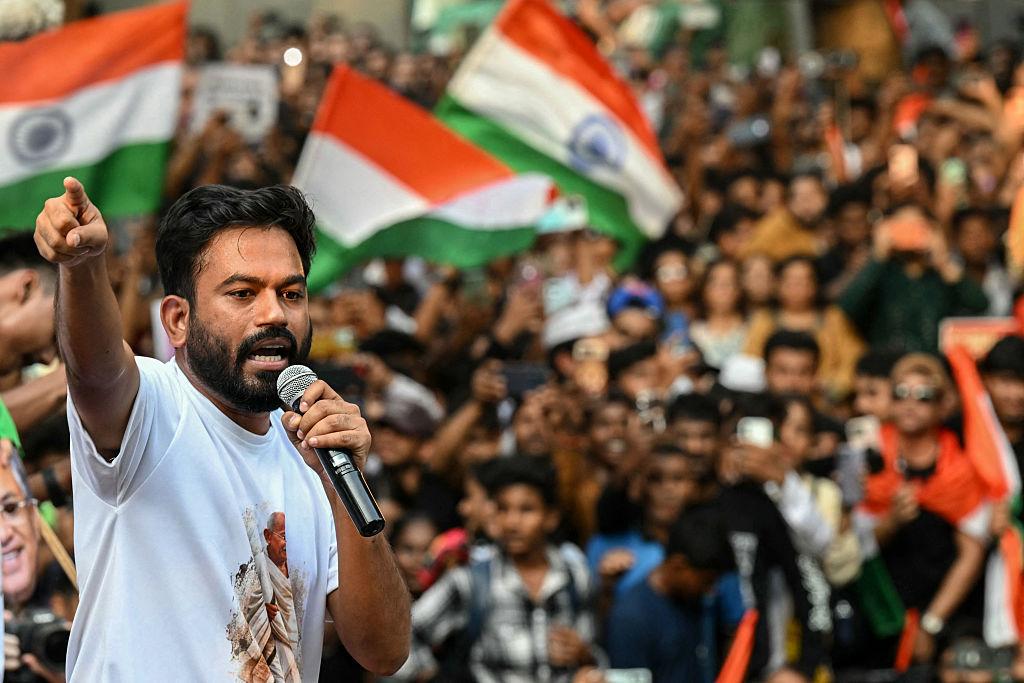
Cockroach Janta Party founder Abhijeet Dipke has been released after a New Delhi court ordered him freed following his detention during another attempt to lead protests demanding the resignation of Chief Election Commissioner Gyanesh Kumar. Student activist Neha Bora, who was also detained on Friday, has also been released. Their movement, alongside student organisations and opposition parties, is challenging India’s Special Intensive Revision of electoral rolls after more than 130 million registrations were removed. The Election Commission denies political bias and says eligible voters wrongly excluded can register again, while Delhi Police says Friday’s planned Connaught Place demonstration did not have permission and violated restrictions governing public gatherings.
Indian youth protest leader Abhijeet Dipke has been released after a New Delhi court ordered him freed a day after police detained him while he was attempting to lead another demonstration demanding the resignation of Chief Election Commissioner Gyanesh Kumar. Dipke, founder of the youth-led Cockroach Janta Party, was released on Saturday after agreeing to conditions that his legal team initially declined to disclose publicly, bringing an end to another brief detention that had triggered criticism from student organizations, opposition politicians and civil society figures. Student activist Neha Bora, who was detained separately while attempting to reach the protest area with supporters, has also been released. Their detention came amid growing national demonstrations over India’s Special Intensive Revision of electoral rolls, a controversial exercise that has resulted in more than 130 million names being removed from voter lists and has become one of the most politically sensitive disputes confronting India’s electoral system.
Dipke was detained on Friday as he stepped out of a house in central Delhi, where police officers stopped him before he could reach the planned demonstration. Reuters reported that officers placed him into a police vehicle following a brief confrontation, while Delhi Police had earlier warned him against proceeding with the protest because the gathering had not received the required permission. The Cockroach Janta Party had called the demonstration under the banner “Lehra Do Tiranga,” or “Let the Tricolour Fly,” with supporters planning to gather around Connaught Place and Central Park to demand the resignation of the Chief Election Commissioner and an end to the Special Intensive Revision process. Police said the area was subject to prohibitory orders and was not an authorised protest location, creating the legal basis for the crackdown.
More than 100 people were detained around Connaught Place and Palika Bazaar on Friday as police moved to stop the march from taking place. Delhi Police later registered multiple First Information Reports over alleged violations of prohibitory orders and obstruction of public servants, although officials did not disclose the exact number of cases or every legal provision being used. Police argued that Connaught Place is one of the capital’s busiest commercial areas and that an unauthorized demonstration there could obstruct traffic, emergency vehicles and pedestrian movement. They also cited previous protest incidents in which authorities alleged that conditions imposed on organizers had been ignored and demonstrators attempted to move toward restricted locations.
The legal confrontation surrounding Dipke did not end with his detention. He was taken before a Special Executive Magistrate on Saturday and later released. His movement’s legal affairs head, Ratna Singh, confirmed that he had accepted certain conditions in exchange for release but initially declined to provide details. Separate Indian reporting said he was required to sign a peace bond committing him to maintain public order for a year. The release allowed Dipke to leave custody without the extended imprisonment some supporters had feared, but it did little to calm the wider political confrontation surrounding the protests.
Bora’s detention also drew significant attention because she has become one of the most visible student figures involved in demonstrations against the electoral revision. Reuters reported that she was detained while attempting to reach central Delhi with dozens of supporters before being released on Saturday. After leaving custody, she called for action against Chief Election Commissioner Gyanesh Kumar and demanded that the Special Intensive Revision be halted, arguing that citizens’ voting rights were at risk. Her comments reflect the central demand shared by the Cockroach Janta Party, student organizations and several opposition parties, although India’s Election Commission strongly rejects allegations that the revision is designed to benefit the governing Bharatiya Janata Party.
The protests centre on the Special Intensive Revision, commonly referred to as SIR, which the Election Commission says is intended to improve the accuracy of India’s electoral registers by removing people who have died, relocated or appear more than once while ensuring that eligible citizens are properly included. Critics say the scale and implementation of the exercise have resulted in legitimate voters disappearing from the rolls and have demanded independent scrutiny of how names were deleted. More than 130 million names were removed during the recent revision, turning what might ordinarily have been an administrative election exercise into a nationwide political crisis.
Reuters reported that the deletions include tens of millions of people identified as deceased, relocated or untraceable. Opposition parties and activists dispute whether every deletion was justified and argue that the burden placed on affected citizens to prove eligibility risks disenfranchising people who have previously voted. They have also alleged that minority communities could be disproportionately affected. Those allegations remain contested. The Election Commission says it is not favoring any political party and insists that eligible voters who were wrongly excluded have mechanisms to register again.
The Commission has already ordered additional measures aimed at voters who were left out. The Indian Express reported earlier this month that the ECI instructed states and union territories where the SIR process had been completed to conduct a special enrolment drive for people excluded from the revised lists. Affected voters can use Form 6 to seek registration, and the Election Commission’s official voter portal continues to provide facilities for registration and correction. The Delhi High Court has also recently told individuals omitted from the draft electoral roll that they may use Form 6 to apply again, with the Commission clarifying that doing so does not falsely imply that a previously registered voter has never voted before.
That corrective process has not satisfied opposition groups, which argue that forcing citizens who believe they were improperly removed to register again places the burden on the voter rather than on the institution responsible for maintaining the lists. Opposition leaders have taken the dispute to the courts and organized large demonstrations demanding an audit of the deleted names, stronger safeguards against wrongful exclusion and, in some cases, suspension of the revision exercise until those concerns are addressed. The Supreme Court has become one of the arenas in which the broader dispute is being contested, adding a judicial dimension to what was already an intense political confrontation.
The BJP has rejected accusations that the electoral revision is being manipulated for political advantage. Party leaders have accused opposition groups of attempting to undermine confidence in legitimate election procedures and say the Election Commission must be allowed to remove duplicate, deceased and otherwise invalid registrations if India’s voter lists are to remain credible. The Commission itself has repeatedly said that it operates independently and that eligible citizens have procedures through which errors can be corrected.
The debate therefore turns on two principles that both sides claim to defend. Election authorities argue that accurate electoral rolls are essential because outdated or duplicated registrations can weaken confidence in the voting process. Protesters argue that accuracy cannot come at the expense of eligible citizens being removed without sufficient transparency or practical opportunities to challenge mistakes. The scale of the revision has ensured that the disagreement is no longer an administrative dispute understood mainly by election specialists but a national argument about citizenship, representation and political trust.
Dipke has emerged as one of the most recognizable faces of that argument. The Cockroach Janta Party began as an unconventional youth protest movement and developed a following among students and younger Indians frustrated with unemployment, examinations, public institutions and political accountability. Dipke gained national prominence earlier this year after a prolonged protest campaign contributed to the resignation of India’s education minister, giving the movement an unexpected level of credibility among young activists. Reuters describes the CJP as having grown into one of the more significant political challenges confronted by Prime Minister Narendra Modi and the BJP during his long tenure, although the movement is not comparable in organizational scale to India’s established political parties.
The name Cockroach Janta Party is itself deliberately provocative. The movement adopted the cockroach as a symbol of survival and resilience after younger protesters embraced language they believed reflected how political elites regarded them. Rather than rejecting the insult, activists transformed it into an identity, presenting themselves as a generation that could survive political pressure and continue mobilizing despite repeated detention or police restrictions.
That branding has made the movement especially effective on social media, where protest clips, slogans, flags and speeches spread rapidly among younger audiences. Demonstrations demanding Gyanesh Kumar’s resignation have taken place repeatedly during October, including rallies involving student groups and opposition supporters. Protesters have carried placards accusing the Election Commission of mishandling the voter revision and have used slogans focused on protecting the right to vote.
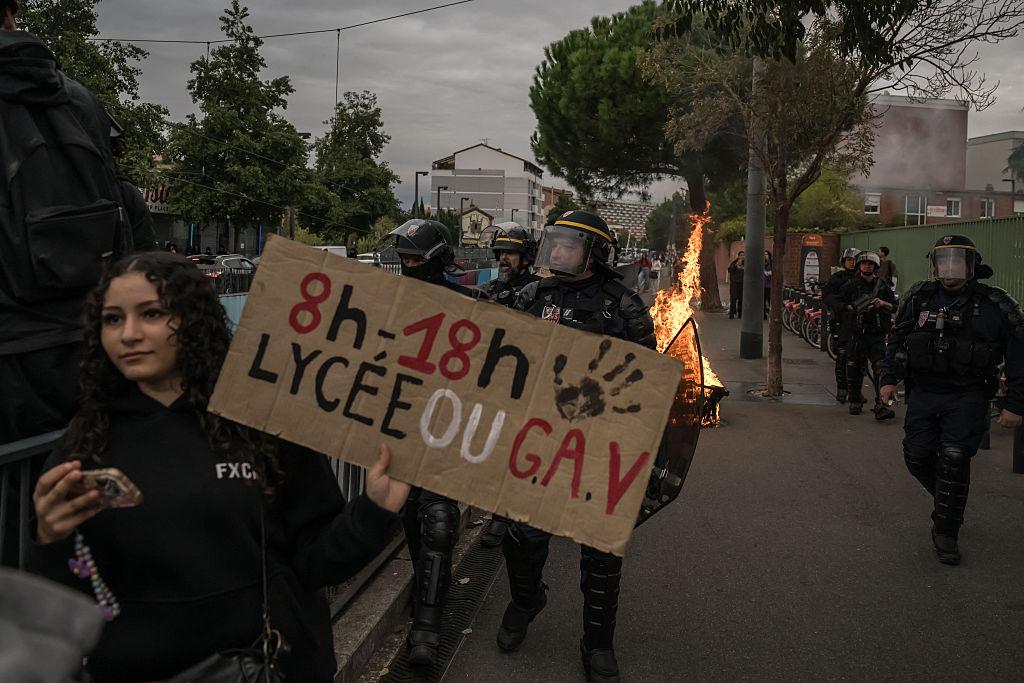
The movement has also become more confrontational with authorities. Earlier demonstrations in New Delhi resulted in thousands of temporary detentions, transportation restrictions and heavy police deployments. Some CJP leaders have been arrested or temporarily jailed after allegedly violating protest restrictions. Police say their actions are necessary to maintain public order and enforce rules governing where demonstrations can take place. Activists argue that those measures are being used too aggressively and are restricting constitutionally protected political expression.
Friday’s confrontation at Connaught Place reflected that unresolved dispute. Police served Dipke with a notice before the planned march, warning him not to proceed without permission. Authorities said the central business district was not a designated protest venue and cited an existing prohibitory order under Section 163 of the Bharatiya Nagarik Suraksha Sanhita. Dipke and his supporters nevertheless continued preparations for the demonstration, setting up another collision between the movement’s political demands and the authorities’ public-order restrictions.
The protest was also organized partly in response to the detention of two other CJP figures who had been sent to jail for several days after demonstrating at a restricted protest location. That meant Friday’s march was no longer solely about electoral rolls. It had also become a protest against how police were treating the movement itself. Each detention has therefore risked expanding the movement’s list of grievances, with activists moving between election reform demands and complaints about the right to protest.
The political significance of the confrontation has been amplified by support from opposition parties. Several opposition leaders have joined or backed protests against the SIR process, alleging that the mass deletion of voter names could reshape the electorate in ways favorable to the BJP. There is no established evidence that the Election Commission deliberately removed eligible voters to help the governing party, and the Commission denies the allegation. The dispute remains politically charged precisely because the scale of the deletions is so large that even a relatively small error rate could affect millions of people.
The figure of more than 130 million deleted registrations has become the central statistic driving public concern. India is the world’s largest democracy, with an electorate so vast that large numbers can emerge from ordinary database cleaning, deaths and migration. The sheer size of the country therefore requires careful interpretation of any national total. Election officials say many removals involve people who have died, moved elsewhere or no longer qualify at the location in which they were registered. Critics say those explanations do not answer concerns from people who remain alive, eligible and resident but nevertheless discovered that their names were missing.
This is why the Commission’s special drive for left-out voters has become important. It implicitly acknowledges the practical need to make re-entry into the rolls easier even while election officials defend the revision itself. The Indian Express reported that the ECI specifically directed local authorities to identify and enrol voters left out after the SIR process. That creates a potential route for correcting mistakes but also raises the question of how many voters know they have been removed in the first place.
A voter who does not check the register until shortly before an election could discover the problem too late to navigate a registration process comfortably. Opposition organizations have therefore demanded greater transparency, searchable data and machine-readable voter lists that allow political parties and civil society groups to analyze changes systematically. The Election Commission has taken some steps toward broader access to electoral data, but arguments continue over whether its procedures provide enough independent verification.
The controversy is also testing public trust in Chief Election Commissioner Gyanesh Kumar personally. Dipke’s movement is demanding his resignation, while Bora has called for his impeachment. Those are political demands made by protesters and do not establish misconduct by the commissioner. Kumar and the Election Commission continue to defend the revision and deny political bias. The strength of the campaign against him nevertheless shows how quickly an administrative dispute has become personalized around the official leading India’s election management body.
India has experienced repeated arguments over voter lists in the past, particularly involving people who move between cities or states, citizens lacking consistent documentation and communities where address records are difficult to verify. What makes the current dispute different is the combination of nationwide scale, political polarization and a highly organized youth protest movement capable of moving the issue from election offices into the streets.
The courts may eventually determine some of the legal questions. Opposition challenges have sought greater scrutiny of the revision, while individual voters have challenged procedures affecting their own registration. Judicial decisions will matter because they can establish how much authority the Election Commission has to conduct large scale revisions and what procedural safeguards it must provide to people at risk of deletion.
The protests, however, are about more than legal procedure. They reflect a broader concern among younger Indians about whether political institutions respond to them. The Cockroach Janta Party’s rise has been driven partly by issues such as unemployment and education before turning heavily toward electoral rights. That progression has allowed the movement to connect economic frustration with demands for political accountability.
Prime Minister Narendra Modi and the BJP remain dominant national political forces, and the government has rejected portrayals of the protests as evidence that democratic institutions are failing. BJP figures say their opponents are attempting to discredit institutions when political outcomes do not favour them. Protesters counter that democracy depends on the ability to question those institutions, particularly when decisions affect who can vote.
The release of Dipke and Bora therefore does not resolve the confrontation. Student organizations have already called for further protest action, while the Cockroach Janta Party has indicated that the campaign against the SIR process and the Chief Election Commissioner will continue. The movement’s ability to sustain near-daily demonstrations suggests the dispute may remain politically important even after individual leaders leave police custody.
Authorities face their own dilemma. Allowing large demonstrations in sensitive central areas can disrupt businesses and transport, particularly in New Delhi during crowded periods. Restricting protests too aggressively can create new political grievances and give activists additional momentum. The dispute over designated protest sites and police powers is therefore becoming almost as important as the original voter-roll issue.
Delhi Police maintain that organizers must follow rules governing public gatherings and that their restrictions are based on safety and crowd management rather than political content. Their notice to Dipke cited emergency access, heavy pedestrian traffic and previous incidents. Activists dispute whether those concerns justify detaining leaders before protests can even begin.
The national political stakes are likely to increase as India approaches future elections. Every political party understands that voter registration can affect turnout and electoral competition. Opposition leaders therefore have strong incentives to scrutinize deletions, while the Election Commission has an equally strong institutional incentive to demonstrate that the lists are accurate and politically neutral.
The best way to resolve that conflict may ultimately depend on transparency rather than rhetoric. If authorities can show clearly why names were deleted, provide accessible avenues for correction and publish data that can be independently examined, some public suspicion could diminish. If large numbers of eligible citizens continue reporting exclusion, pressure for a deeper review will intensify.
For Dipke and his movement, the immediate result is a return to freedom after another confrontation with police. His release removes the most urgent rallying point created by Friday’s detention but leaves the original protest demands untouched. Bora is also free, and both activists remain able to continue campaigning unless future legal restrictions prevent them from doing so.
For the Election Commission, the challenge is considerably larger. More than 130 million deletions have transformed a voter-list exercise into one of the most intensely debated electoral issues in the country. The Commission insists that wrongful exclusions can be corrected and that the process is politically neutral, but protesters are demanding something more fundamental: proof that eligible voters have not been systematically disadvantaged.
For India’s political system, the dispute is becoming a test of whether electoral administration, public protest and judicial review can manage a disagreement involving millions of voter records without allowing distrust to overwhelm the institutions involved.
Dipke’s release may have ended his latest detention.
It has not ended the movement that put him there.