UNICEF WARNS GAZA CHILDREN COULD SLIDE BACK INTO DEEPER MALNUTRITION AS COMMERCIAL SUPPLIES STOP AND 800,000 REMAIN DISPLACED
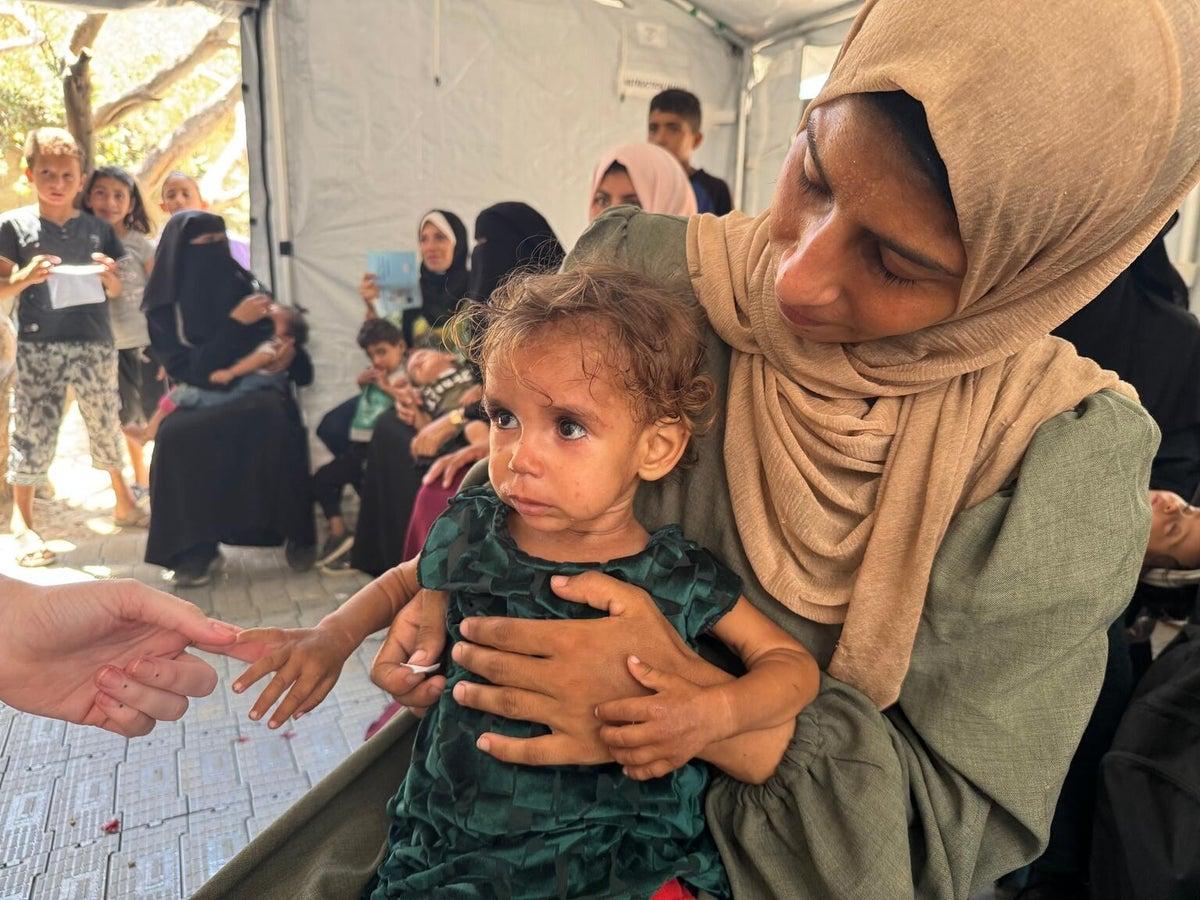
UNICEF is warning that recent improvements in child nutrition in Gaza could quickly be reversed following interruptions to commercial goods entering the territory. A new assessment found that only one in three children under two is receiving the minimum recommended diversity of foods, while one in eight children under five is chronically malnourished. Approximately 800,000 children remain displaced, many of them living in tents or damaged buildings. Israel says the commercial interruption followed a dispute involving fees and cash-payment conditions imposed by Hamas on local merchants, while Hamas disputes that account. UNICEF says both humanitarian and commercial supplies must remain consistent to prevent conditions from deteriorating again.
UNICEF has warned that recent improvements in child nutrition across the Gaza Strip remain extremely fragile and could quickly be reversed if commercial supplies continue to be interrupted, raising fresh concern for hundreds of thousands of children already living through displacement, food insecurity and damaged public services. The United Nations children’s agency said a newly released humanitarian assessment shows that only one in three children under the age of two is currently receiving the minimum recommended diversity of foods, while approximately 800,000 children remain displaced from their homes and many are still living in tents, makeshift shelters or damaged buildings. The warning comes after commercial goods stopped entering Gaza through key routes this week amid a dispute that Israel says involves taxes and cash-payment conditions imposed on local merchants by Hamas, allegations that Hamas has disputed.
The latest UNICEF assessment does not declare a new famine in Gaza, and that distinction is important. The agency’s warning is focused on the risk that nutritional gains achieved after improved humanitarian and commercial access could be lost if food, medicine and other essential supplies become less predictable again. UNICEF says the situation remains precarious because children who have already experienced months or years of deprivation can deteriorate quickly when diets become less varied, household purchasing power falls or humanitarian deliveries are disrupted.
According to UNICEF, the nutritional situation has improved compared with some of the worst periods of the conflict, but those improvements should not be interpreted as evidence that the crisis has been resolved. The agency found that only around one-third of children younger than two are receiving the minimum level of dietary diversity recommended for healthy growth and development. This means most young children are still not regularly consuming the range of food groups needed to support their immune systems, brain development and physical growth.
The report also said one in eight children under five is suffering from chronic malnutrition, a condition associated with prolonged deficiencies in food quality and quantity. Chronic malnutrition can have lasting consequences, particularly for very young children, because inadequate nutrition during early development can affect growth, learning ability and resistance to disease. UNICEF has therefore stressed that sustained access to food is not enough on its own if families are unable to obtain sufficiently varied and nutritious diets.
The new warning emerged after commercial supplies stopped entering Gaza through Israeli-controlled crossings following a dispute involving local merchants and Hamas. Israel’s Coordinator of Government Activities in the Territories, known as COGAT, said merchants had stopped coordinating commercial shipments after Hamas imposed a fee of 10,000 shekels, approximately $3,220, on each truck entering Gaza and required 30 per cent of sales to be conducted in cash. Hamas rejected that account, saying the payment was part of what it described as a voluntary community initiative to support vulnerable families and that cash requirements were intended to address a severe shortage of physical currency in the local economy.
That disagreement matters because commercial deliveries have become an important part of Gaza’s food supply alongside humanitarian assistance. Private-sector goods help stock markets and shops with food and household products that aid agencies cannot always provide in sufficient quantity or variety. When those commercial flows stop, pressure increases on humanitarian organisations that are already operating under difficult logistical and financial conditions.
Reuters reported that no commercial goods from Israel entered Gaza on Thursday, although humanitarian aid continued and some commercial goods from Egypt were able to enter through an Israeli-controlled crossing. Nahed Shhaibar, head of Gaza’s private transport union, said the interruption had effectively halted one of the main channels supplying local markets. The dispute has therefore reduced the total number of trucks entering the territory at a time when aid agencies say consistent supply levels are essential for maintaining recent nutritional improvements.
Before the latest disruption, humanitarian organisations had already warned that Gaza’s food system remained vulnerable. Much of the population still depends on aid after years of war, repeated displacement, infrastructure destruction and restrictions on movement and supply. Even when food is available in markets, many families lack enough cash or income to buy it regularly, particularly after losing homes, jobs and businesses.
UNICEF’s concern is therefore not simply about whether trucks physically enter Gaza. The agency is focused on whether families can consistently access enough nutritious food over time. A market may contain flour, canned goods or other basic products while still failing to provide the fresh vegetables, fruit, dairy products, proteins and other foods needed for healthy childhood development. That is one reason the dietary diversity figure is so significant.
Children under two are particularly vulnerable because their nutritional needs are unusually high relative to their body size. This is a critical period for brain growth and physical development, and repeated periods of inadequate nutrition can have consequences that continue long after an emergency ends. Infants also depend heavily on the health and nutritional status of mothers and caregivers, meaning household food insecurity can affect both children and adults simultaneously.
The disruption to commercial imports also comes as Gaza approaches another winter. UNICEF has warned that many displaced families remain in tents or unsafe structures that provide limited protection from cold weather, rain and flooding. Approximately 800,000 children are still displaced, according to the agency, meaning a large proportion of Gaza’s younger population is living without stable housing.
Winter conditions can make malnutrition more dangerous because cold and wet environments increase the risk of respiratory illness and other infections. Malnourished children are generally less able to fight disease, while illness can further worsen nutrition by reducing appetite or causing dehydration. This creates a cycle in which poor nutrition makes sickness more severe and repeated sickness makes nutritional recovery more difficult.
Families living in tents face additional challenges in storing and preparing food safely. Without reliable electricity, clean water or proper cooking facilities, even households that receive food may struggle to prepare it in a way that is safe for young children. Perishable foods are also harder to store, reducing the variety of diets available to families.
The destruction of homes and neighbourhood infrastructure has therefore made the food crisis more complicated than simply supplying calories. Nutrition depends on water, sanitation, healthcare, shelter and income as well as the availability of food itself. UNICEF’s latest assessment reflects that broader reality by linking nutritional risk to the living conditions of displaced children.
The agency has called for humanitarian and commercial supplies to move into Gaza consistently and predictably. It has also urged that all available crossings remain open so families can receive essential goods and services without repeated disruptions. UNICEF says stop-start access makes it difficult for humanitarian agencies and markets to build reliable supply chains, leaving families exposed whenever political or administrative disputes interrupt deliveries.
The issue of truck numbers remains politically contentious. Under the U.S.-mediated ceasefire arrangements, Israel is expected to allow a minimum of 600 humanitarian trucks to enter Gaza each day. Diplomats and aid officials have said actual numbers frequently fall below that level, while Gaza transport representatives say the combined flow of commercial and humanitarian trucks has at times been closer to 300 per day.
COGAT has said the latest merchant dispute could reduce total truck entries by roughly half, depending on how long the commercial stoppage continues. That would place further pressure on humanitarian supply chains and local markets. Hamas and Gaza officials reject Israel’s account of responsibility and argue that Israeli restrictions are the main reason goods are not entering at the required scale.
The competing claims illustrate why humanitarian agencies are increasingly calling for civilian supplies to be insulated from political disputes. Nickolay Mladenov, the high representative of the Board of Peace overseeing Gaza’s recovery process under the U.S. peace framework, said civilian supplies, humanitarian assistance and commercial activity should be protected from coercion, exploitation and interference.
For families inside Gaza, the practical impact is visible through prices and availability. When fewer commercial trucks enter, market prices can rise because supplies become scarce. Families that still have some income may suddenly find that food they could afford the previous week is no longer within reach. Those already dependent on aid face greater competition for limited distributions.
The situation can become particularly dangerous for children with specialised nutritional needs. Infants, toddlers and children recovering from severe acute malnutrition often require therapeutic foods, fortified products or specialised medical support. If supply disruptions affect those items, treatment programmes can become less effective even when basic food aid continues.
UNICEF and other agencies have spent months operating screening and treatment programmes for malnourished children. These programmes identify children whose weight, height or arm circumference indicates nutritional danger and provide specialised support where possible. Improvements in recent months suggest that better access has had a measurable effect, but the agency says those gains could disappear quickly if supply routes become unreliable again.
The term “fragile gains” is therefore important. UNICEF is not saying that malnutrition has been solved. It is saying that some indicators have improved enough to show that better access can make a difference, but the situation remains unstable and vulnerable to reversal.
That warning is particularly significant because Gaza has already experienced periods when famine risk reached extreme levels. Humanitarian organisations have repeatedly warned that conditions can deteriorate rapidly when food availability falls, markets collapse and families are displaced repeatedly. The current assessment should therefore be understood as an early warning intended to prevent a renewed downward spiral rather than a declaration that a new famine has already begun.
This distinction matters for accurate reporting. Famine is a technical classification that depends on several indicators, including food consumption, acute malnutrition and mortality. UNICEF’s latest report warns of renewed malnutrition risk but does not itself announce that famine conditions have returned across Gaza.
The broader humanitarian picture nevertheless remains severe. Gaza’s population has endured prolonged conflict, extensive destruction of housing and infrastructure and repeated forced movement. Many families have relocated several times, losing possessions each time they move and becoming increasingly dependent on external assistance.
Displacement has also disrupted education for children. Schools have been destroyed, damaged or used as shelters, while many children have spent extended periods outside normal classrooms. Malnutrition can make this educational disruption even more harmful because inadequate nutrition affects concentration, memory and development.
Healthcare remains under pressure as well. Hospitals and clinics have struggled with damaged infrastructure, shortages of medicine and high numbers of patients. Treating malnutrition requires functioning health services because severe cases can involve dehydration, infection and other complications requiring medical supervision.
Clean water remains another major concern. Children who consume contaminated water can develop diarrhoeal diseases that rapidly worsen malnutrition by preventing the body from absorbing nutrients. This is one reason humanitarian agencies stress that food deliveries must be accompanied by water, sanitation and healthcare support.
The commercial supply interruption can affect these wider needs because trucks carry more than food. Clothing, household goods and other basic items are also needed by displaced families, particularly as temperatures fall. The latest stoppage has reportedly affected shipments including fruit and winter clothing.
Winter clothing may appear less urgent than food, but for children sleeping in tents or damaged buildings it can become an important health issue. Cold exposure increases vulnerability to illness, while wet bedding and inadequate shelter can make respiratory infections more common.
UNICEF’s estimate that around 800,000 children remain displaced illustrates the enormous scale of the challenge. This is not a small group confined to a few camps. It represents hundreds of thousands of children whose normal family homes, neighbourhoods and routines have been disrupted.
Some displaced families have moved into tents established by humanitarian organisations, while others are living in damaged buildings or improvised structures. Images from Gaza throughout 2026 have shown children living among rubble, in coastal camps and in overcrowded shelters where access to sanitation and clean water can be limited.
Humanitarian agencies have repeatedly said that durable nutritional recovery will be difficult while people continue living in unstable conditions. Food assistance can prevent immediate hunger, but long-term improvement requires families to have safe housing, access to markets, functioning healthcare and enough income to make their own choices about what to eat.
The role of commercial markets is therefore becoming increasingly important in humanitarian discussions. Aid agencies can distribute emergency food, but they cannot efficiently replace an entire private economy indefinitely. Markets allow families to choose products, support local merchants and create supply chains that can eventually reduce dependence on humanitarian relief.
When commercial shipments stop, those markets become weaker. Shops may run out of products or raise prices, traders lose income and families become even more dependent on aid organisations. This can make Gaza more vulnerable to future disruptions because fewer private businesses remain capable of functioning normally.
The dispute over fees and cash payments also reflects Gaza’s severe liquidity crisis. Physical cash has become scarce after years of conflict and banking disruption, making ordinary transactions increasingly difficult. Hamas officials say requiring some sales to be conducted in cash is intended to improve liquidity, while Israel describes the requirement as part of a system of economic control imposed on merchants.
Because those claims are contested, it is important to attribute them clearly. Israel says Hamas imposed a mandatory truck fee and cash-sales requirement. Hamas says the payment is voluntary and aimed at supporting vulnerable people while cash rules address market shortages. Independent humanitarian agencies are focused less on the political argument than on the practical consequence that fewer goods are reaching civilians.
That is the central issue behind UNICEF’s warning. Every interruption increases the risk that prices rise, diets become less varied and treatment programmes lose access to essential supplies.
The current assessment also demonstrates how quickly the humanitarian situation in Gaza can change. Improved access following the ceasefire allowed some nutritional indicators to stabilise, but a dispute lasting only a few days is already causing concern because families have so little reserve capacity.
Many households have exhausted savings and lost regular employment. That means they cannot simply stockpile food when they expect shortages. They depend on frequent access to markets or aid distributions, leaving them highly exposed when either system is interrupted.
The children most at risk are often those in families facing several vulnerabilities at once. A displaced household with no regular income, a sick parent and several young children may struggle to provide even basic food diversity when prices increase.
Humanitarian organisations therefore prioritise pregnant women, breastfeeding mothers, infants and young children because poor nutrition during these stages can have especially serious consequences. Support for mothers is also essential because infant nutrition can depend on maternal health and access to safe breastfeeding support.
UNICEF has repeatedly emphasised that preventing malnutrition is more effective than treating severe cases after they develop. Once a child becomes severely malnourished, recovery requires specialised treatment and medical monitoring. Maintaining reliable food supplies and household nutrition can prevent many children from reaching that point.
The latest report should therefore be viewed as a prevention warning. The agency is telling governments, donors and parties controlling access that recent improvements could disappear unless the flow of goods remains stable.
That message also applies to humanitarian funding. Aid agencies require money to purchase supplies, pay staff and maintain treatment centres. Global humanitarian budgets are under pressure, and Gaza is competing with crises in Sudan, Yemen, Ukraine and other regions for donor support.
Commercial markets can reduce some of that pressure by allowing families who have purchasing power to obtain goods independently rather than relying entirely on aid. This is another reason agencies want humanitarian and commercial flows to operate simultaneously rather than treating them as substitutes for each other.
Israel has argued that humanitarian aid continues to enter despite the commercial dispute. That is an important distinction because the current stoppage does not mean every supply route into Gaza has completely closed. However, UNICEF’s position is that aid alone is insufficient to protect nutritional progress if commercial markets are simultaneously weakened.
Gaza officials and humanitarian groups have also called for greater access through multiple crossings rather than relying heavily on a limited number of routes. More crossing points can reduce bottlenecks and make the supply system more resilient if one route becomes unavailable.
The political future of Gaza remains uncertain, adding another layer of instability. Plans for a technocratic administration and international stabilisation mechanisms have progressed slowly, while disputes over Hamas’s role and disarmament continue. The current commercial crisis is therefore unfolding inside a wider political process that remains unresolved.
For children, however, the political questions are secondary to daily needs. They require nutritious food, clean water, safe shelter and medical care regardless of which authority controls a crossing or collects a fee.
That is the principle underlying UNICEF’s latest warning. The agency is urging all parties to keep essential supplies moving consistently enough that children are not repeatedly pushed from improvement back into emergency conditions.
The number of displaced children remains one of the clearest indicators of how far Gaza is from normality. Approximately 800,000 children living away from stable homes means recovery will require far more than additional truckloads of food. It will require reconstruction, functioning schools, restored healthcare and an economy in which families can support themselves again.
Until that happens, humanitarian and commercial access remains one of the most immediate tools available to protect children.
The latest interruption is therefore significant not because UNICEF has declared another famine, but because the agency is warning that the foundations of recent nutritional improvement remain weak.
Only one in three children under two is receiving the minimum recommended variety of foods, one in eight children under five is chronically malnourished, and hundreds of thousands remain displaced in conditions that become increasingly dangerous as winter approaches.
Those figures explain why UNICEF is resisting any suggestion that the humanitarian crisis has passed. The organisation says consistent access must continue long enough for families to rebuild their health and livelihoods rather than moving repeatedly between temporary improvement and renewed deprivation.
For Gaza’s children, the danger is not only the absence of food but the instability of the entire system meant to provide it. When commercial goods stop, humanitarian aid becomes more important. When humanitarian deliveries fluctuate, markets become more important. If both become unreliable at the same time, children who are already nutritionally vulnerable can deteriorate quickly.
That is why UNICEF’s October assessment is best understood as an urgent warning to prevent another collapse in living conditions. The agency is not declaring a new famine. It is warning that the progress made against malnutrition remains fragile and that keeping food, medicine and commercial goods moving consistently into Gaza could determine whether that progress continues or begins to disappear.