US Treasury Gives Nvidia 10 Days to Explain Alleged China AI Chip Diversion
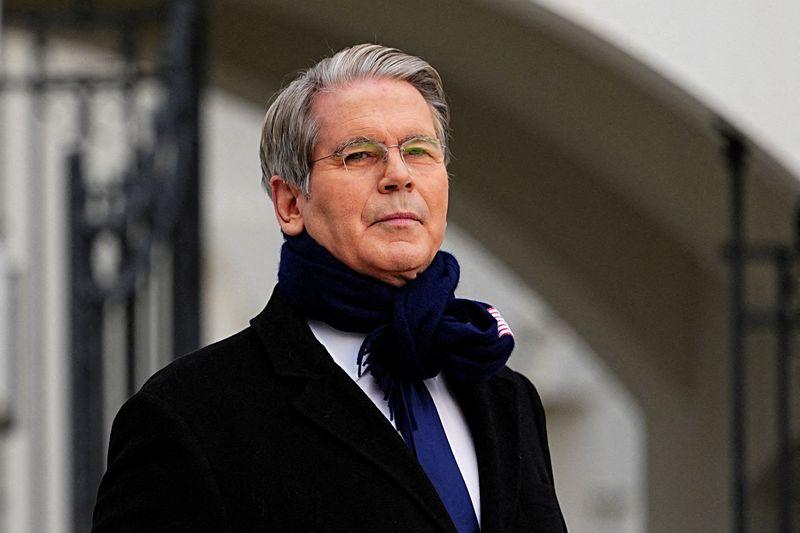
U.S. Treasury Secretary Scott Bessent has demanded answers from Nvidia within 10 days over allegations that restricted advanced AI chips may have reached China through intermediary companies and shell entities, including firms connected to Singapore-based Megaspeed. Bessent said determining whether Nvidia maintained a culture of compliance with American export controls is more important than controversies surrounding former CEO Jensen Huang’s personal conduct, while also calling for the company to appoint an outside executive as its next permanent leader. U.S. authorities and congressional committees are examining whether Nvidia technology was diverted to Chinese customers and what company executives knew about the transactions.
U.S. Treasury Secretary Scott Bessent has given Nvidia’s board and its outside legal advisers 10 days to provide answers over allegations that the American semiconductor giant may have knowingly allowed some of its most advanced artificial intelligence chips to reach China through intermediary companies, escalating Washington’s scrutiny of one of the world’s most important technology companies.
Bessent said the central question facing Nvidia is no longer simply the personal controversy surrounding its former chief executive Jensen Huang, but whether the company maintained an effective culture of compliance with U.S. export restrictions designed to prevent China from acquiring cutting-edge American artificial intelligence technology. Appearing Sunday on Fox News’ “Sunday Morning Futures,” Bessent questioned whether Nvidia knew that companies purchasing its processors were acting as intermediaries for Chinese customers and whether senior executives ignored warning signs surrounding those transactions.
The United States has imposed increasingly strict controls on the export of advanced semiconductor technology to China as Washington seeks to prevent Beijing from obtaining computing systems that could accelerate military development, intelligence capabilities and increasingly sophisticated artificial intelligence models. Bessent said processors more advanced than Nvidia’s H200 remain restricted from sale to China, raising questions about how high-performance Nvidia hardware may nevertheless have reached Chinese companies through data centers and corporate entities operating elsewhere in Asia.
Bessent specifically raised concerns about shell companies and intermediary firms that may have been used to disguise the ultimate destination of Nvidia chips. He questioned whether the chipmaker simply failed to identify suspicious customers or whether parts of the company knowingly tolerated arrangements that effectively allowed restricted processors to reach China. The Treasury secretary said investigators must determine whether any compliance failure occurred at a junior level, within middle management or higher inside Nvidia’s corporate leadership.
“What was the culture at Nvidia and were they pressing these seemingly illicit sales to goose their revenues and their earnings?” Bessent said during the Fox News appearance, adding that the company’s board and outside counsel needed to provide answers within the next 10 days. His comments place Nvidia under unusually direct pressure from one of the most senior economic officials in President Donald Trump’s administration and could intensify scrutiny from regulators, investors and congressional committees already examining the company’s dealings in Asia.
Much of the investigation is focused on Megaspeed, a Singapore-based data center operator suspected by U.S. authorities of helping Chinese companies obtain restricted Nvidia processors by purchasing equipment for facilities in Southeast Asia and potentially redirecting access to China. The Justice Department is conducting a criminal investigation into allegations surrounding the company and the movement of Nvidia technology, while Nvidia has previously said it investigated allegations concerning the transactions and rejected claims that it knowingly participated in improper exports.
The allegations have also widened into a dispute inside the Trump administration over whether U.S. export restrictions were being enforced aggressively enough. Bessent has publicly indicated that several government departments favored stronger action against Megaspeed while suggesting that responsibility for formally restricting the company ultimately rested with the Commerce Department, headed by Secretary Howard Lutnick. The dispute has drawn additional attention to Washington’s broader strategy for controlling the global movement of advanced AI processors at a time when American technology companies are increasingly dependent on international customers and data center operators.
Bessent’s intervention comes only days after Huang stepped down as Nvidia’s chief executive amid a separate controversy involving reports about his personal relationships, including allegations concerning a woman suspected of links to Chinese intelligence. Bessent made clear, however, that he considered the potential export-control violations far more important than Huang’s private conduct, arguing that the key issue for the U.S. government is whether Nvidia’s corporate systems allowed sensitive American technology to be transferred to entities that should not have received it.
The Treasury secretary has also called for Nvidia to select its next permanent chief executive from outside the company, arguing that the circumstances surrounding Huang’s departure and the mounting questions over export compliance require what he described as a “dramatic shakeup.” Nvidia Chief Financial Officer Colette Kress has assumed leadership responsibilities on an interim basis while the board considers its options, and reports indicate that Arm Holdings chief executive Rene Haas has been among the executives approached as Nvidia searches for a possible permanent successor.
The controversy is especially significant because Nvidia occupies a uniquely powerful position in the global artificial intelligence industry. Its graphics processors and AI accelerators have become essential infrastructure for companies developing large language models, cloud computing systems and advanced data centers, giving the company extraordinary influence over the rapidly expanding AI economy. Any finding that Nvidia deliberately circumvented American export restrictions could therefore carry consequences extending well beyond the company itself, potentially reshaping how Washington regulates semiconductor manufacturers and monitors international chip transactions.
Congress is also preparing to investigate the matter. Huang and other Nvidia officials have agreed to appear before House committees examining foreign affairs, intelligence issues and China’s access to strategically sensitive American technology, although a final date for the session has not yet been announced. Lawmakers are expected to examine whether restricted processors reached Chinese entities, what Nvidia executives knew about intermediary companies involved in the transactions and whether U.S. agencies responded quickly enough when concerns were raised.
For Nvidia, the timing adds another layer of uncertainty to a company already dealing with a leadership crisis and heightened investor scrutiny. Bessent’s demand places a clear deadline on the company to explain its internal compliance procedures, its relationship with intermediaries operating in Singapore and elsewhere in Southeast Asia, and what senior executives knew about customers potentially linked to China.
The next several days could therefore prove critical for both Nvidia and the wider technology industry. If investigators conclude that restricted chips reached China without Nvidia’s knowledge, the controversy may center on weaknesses in export enforcement and supply-chain monitoring. But if evidence emerges that company officials knowingly ignored or facilitated arrangements designed to circumvent U.S. restrictions, Nvidia could face a far more serious regulatory and political confrontation over whether commercial interests were placed ahead of American national-security rules.