
CYBERATTACKS HIT SUPERMARKET FREEZERS ACROSS EUROPE, EXPOSING NEW THREAT TO FOOD SUPPLY INFRASTRUCTURE
Cyberattacks targeting internet-connected refrigeration systems have affected supermarkets and other food businesses across multiple European countries, with operators reporting freezers being pushed into defrost mode or abnormal temperature settings and large quantities of food having to be destroyed. Retailers affected include Delhaize, Carrefour, Intermarché, Colruyt, ICA, Coop and SuperValu, among others.
BRUSSELS — Supermarkets across Europe are racing to secure internet-connected refrigeration systems after a wave of cyberattacks remotely manipulated fridges and freezers in stores across multiple countries, forcing retailers to destroy large quantities of chilled and frozen food and prompting coordinated investigations by European cybersecurity and law-enforcement authorities. The attacks have exposed an unusual but potentially serious vulnerability in the continent’s food supply infrastructure: refrigeration equipment that was connected to the internet for legitimate remote monitoring and maintenance could also be reached by unauthorized actors capable of changing temperature settings, placing equipment into prolonged defrost mode and causing products to become unsafe for sale. Although the incidents have affected only a fraction of Europe’s supermarket network, their geographical spread and ability to turn ordinary commercial technology into a tool for physical economic disruption have generated concern well beyond the retail sector.
The most extensive recent wave struck during the night of November 1 into November 2, when refrigeration problems were reported at supermarkets and food businesses across a broad section of Europe. Retailers in Belgium, Luxembourg, Sweden, Ireland, Estonia, Finland, the Netherlands, Portugal and other countries reported unexplained temperature changes, with some stores discovering in the morning that freezers had been heated far beyond normal operating levels. At one ICA supermarket in Stockholm, staff told Reuters that freezers had reached temperatures of approximately 50 degrees Celsius, destroying their contents and forcing employees to remove large quantities of food. Similar failures were recorded at stores operated by Delhaize, Carrefour, Intermarché, Colruyt, Coop, ICA and SuperValu, while at least one IKEA location in Belgium was also affected.
The incidents were not conventional attacks against supermarket websites, payment systems or customer databases. Instead, hackers targeted the operational technology responsible for keeping food cold, manipulating controllers that allow refrigeration contractors or store managers to monitor and adjust equipment remotely. In several cases, investigators believe the intruders used legitimate functions already built into the devices rather than installing destructive malware. By accessing those systems and instructing them to remain in defrost mode or accept abnormally high temperature settings, attackers could cause physical consequences inside a shop without ever entering the building. Cybersecurity specialists say the case demonstrates how devices originally connected to the internet for convenience and efficiency can become serious vulnerabilities when remote access is insufficiently protected.
The attacks followed an even larger operation in France in October, when approximately 700 commercial sites, including supermarkets, butcher shops and food-processing facilities, were targeted through refrigeration systems. French investigators later attributed that campaign to an Iranian Revolutionary Guards-linked cyber unit, saying technical evidence connected the activity to infrastructure and techniques associated with Iranian operations. French authorities described the attack as one of the most disruptive cyber incidents of its type the country had experienced, with refrigeration equipment remotely manipulated and significant quantities of food destroyed. At least 15 fires were also reported in connection with equipment failures or overheating during the wider campaign, although investigators have not said every technical malfunction was directly caused by the same intrusion. Iran has rejected France’s accusation, describing the attribution as baseless and hostile.
France’s attribution has inevitably raised questions about whether the subsequent November incidents across Europe were also Iranian operations, but investigators have not established that publicly. The European Commission has deliberately avoided assigning responsibility for the broader wave while national authorities examine the evidence, and independent cybersecurity assessments have warned against assuming that similar methods automatically mean the same attacker was responsible. Vulnerable refrigeration controllers are accessible through the public internet in numerous countries, meaning separate criminal groups, state-linked hackers or copycat actors could potentially exploit the same weaknesses once information about the attack method becomes known.
The European Commission, the European Union Agency for Cybersecurity, Europol’s European Cybercrime Centre, national computer-security response teams and the EU’s cyber-crisis network have begun coordinating information about the incidents. In a joint statement issued after the November attacks, the Commission said commercial refrigeration systems and related devices had been affected in several member states since October and described the scale of the incidents as requiring rapid cross-border information-sharing and coordinated mitigation. National authorities have been instructed to identify exposed devices, restrict unnecessary remote access and apply technical updates where available.
The EU response reflects concern that refrigeration attacks can cause wider economic disruption even when no customer information is stolen and supermarket cash registers continue working. Retail cold chains operate continuously, and temperatures must remain within strict ranges to guarantee food safety. If freezers warm beyond safe limits for sufficient periods, retailers may have no choice but to destroy meat, dairy products, frozen meals, seafood and other temperature-sensitive stock, even if the food appears normal. A single compromised controller can therefore cause tens of thousands of euros in losses within hours.
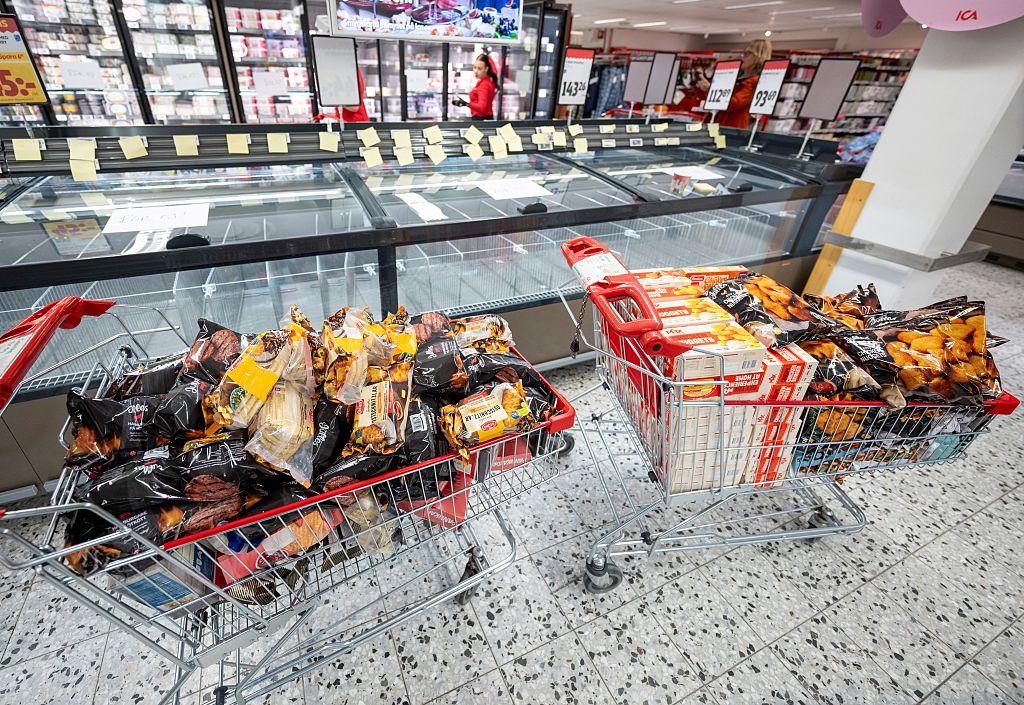
At stores affected in Belgium and Sweden, employees were photographed loading carts with products removed from refrigerated sections while customers encountered empty display cases and notices explaining that food had been withdrawn because of a cyber incident. In Belgium alone, roughly 75 retail locations were reported to have experienced refrigeration disruptions during the November wave. Carrefour Belgium said about 15 of its approximately 700 stores were affected, while Delhaize, Colruyt, Intermarché and other operators also reported incidents. Belgium’s federal authorities opened an investigation as cybersecurity specialists began examining whether attackers had exploited the same exposed technology used in other countries.
Sweden experienced similar disruption. Coop said several stores were affected but later restored their refrigeration systems, while ICA reported incidents at a limited number of independently operated stores. ICA said at least some affected locations used refrigeration-management technology supplied by Danish industrial-control manufacturer Danfoss. One report said 23 ICA stores experienced some level of disruption and that eight were forced to dispose of chilled and frozen products, although the scale varied considerably between individual outlets.
Irish retailer Musgrave, which operates SuperValu, said 13 stores experienced a cyber incident affecting refrigeration, while incidents were also recorded at stores in Estonia, Finland, the Netherlands and Portugal. Portuguese retailer Mosqueteiros said seven Intermarché locations were affected and that the attack appeared to target an external service responsible for managing refrigeration systems remotely. Those reports have strengthened concern that the attackers were exploiting common weaknesses in third-party refrigeration infrastructure rather than breaking separately into the central corporate networks of every supermarket brand.
That distinction is critical because many modern supermarkets outsource refrigeration monitoring and maintenance. Equipment may be connected to specialist service companies through mobile or internet links so engineers can diagnose faults remotely and reduce costly site visits. The arrangement makes operations more efficient but also creates a shared technological dependency: if the remote-access architecture is insecure, compromising a single category of equipment can potentially affect multiple retailers that otherwise have completely separate corporate IT systems.
German cybersecurity authorities have now warned that some industrial refrigeration systems remain vulnerable even after the latest attacks. Germany’s Federal Office for Information Security said operators using affected Danfoss cooling equipment should disconnect systems from direct internet access where possible, use secure virtual private networks when remote access is essential and install available updates. The agency warned that some equipment may remain exposed because sufficient patches are not yet available for every vulnerability and emphasized that industrial control systems should never be directly accessible from the public internet.
Danfoss equipment has appeared repeatedly in public reporting about the incidents, but there is no evidence that every attacked supermarket used the same product or that the manufacturer itself was centrally hacked. The more serious concern is that refrigeration controllers deployed in stores may have been exposed through insecure configurations, outdated firmware or weak remote-access controls. Cybersecurity researchers say industrial equipment often remains in use far longer than ordinary consumer technology, sometimes operating for a decade or more without the regular software-update cycles expected on modern computers and smartphones.
That aging infrastructure creates an attractive target because many industrial controllers were originally designed primarily for reliability rather than for an era in which virtually every device might become internet-connected. Systems that once operated entirely within a building can later be connected to 4G modems, cloud dashboards or remote maintenance networks without necessarily receiving the security protections required for public internet exposure.
The supermarket incidents illustrate the real-world consequences of that transition. The hackers apparently did not need to develop sophisticated software capable of physically destroying a refrigerator. Once they obtained remote control, they could use commands that the equipment was designed to accept, such as changing a set point or activating a defrost cycle. The device itself then performed the action exactly as instructed.
Cybersecurity researchers describe this as a major challenge for operational technology because conventional security systems are often designed to determine whether a user is authorized, not whether an authorized-looking command will produce a dangerous physical outcome. A command telling a supermarket freezer to raise its temperature may look technically valid even though maintaining that temperature for hours will destroy thousands of euros worth of food.
The attacks therefore resemble a broader category of cyber operations targeting industrial control systems, where digital access is used to produce physical consequences. Energy networks, water-treatment facilities, factories, hospitals, transport infrastructure and building-management systems increasingly rely on connected controllers. Successful intrusions into such equipment can interfere with pumps, generators, heating systems, production lines or other machinery without necessarily targeting traditional corporate servers.
Food retail presents a particularly attractive target because the disruption becomes visible almost immediately. A retailer can continue operating for some time if an internal email system fails, but a freezer full of meat or dairy products begins losing commercial value as soon as safe temperatures cannot be maintained. By the time staff notice the problem, substantial stock may already need to be removed.
European retail organizations have emphasized that consumer safety takes priority over attempts to save affected products. EuroCommerce, which represents retailers and wholesalers across the continent, said companies must remove goods whenever the integrity of the cold chain cannot be guaranteed. The organization said the incidents showed how dependent modern retail has become on digital systems supporting everything from refrigeration and checkout terminals to warehousing and deliveries.
Food-safety rules mean retailers generally cannot simply cool products again and return them to shelves after uncontrolled warming. The length of exposure, peak temperature and type of food all affect whether products remain safe, and supermarket operators frequently choose disposal where accurate temperature histories cannot be guaranteed. That explains why relatively short cyber intrusions produced visually dramatic scenes of employees filling trolleys with food destined for destruction.
The financial impact has not yet been calculated comprehensively. Individual retailers have reported losses running from thousands to potentially hundreds of thousands of euros per location, while the larger October French operation may have caused losses reaching tens of millions of euros when food destruction, equipment damage and operational disruption are considered together. Broader costs include emergency refrigeration repairs, cybersecurity consultants, system upgrades and temporary store closures.
Despite those losses, authorities have not reported widespread food shortages across Europe. The attacks affected only a small fraction of the continent’s supermarket infrastructure, and retailers were generally able to redirect supplies or reopen affected refrigeration equipment after technical intervention. The phrase “supply-chain attack” should therefore be understood carefully: the incidents targeted technology used within the food supply chain and disrupted particular stores, but they did not shut down Europe’s overall food distribution network.
The possibility of larger-scale disruption nevertheless worries European officials. If attackers were able to compromise thousands of refrigeration controllers simultaneously, particularly at distribution warehouses or food-processing facilities rather than individual stores, the consequences could become considerably more serious. Large cold-storage warehouses often hold products intended for hundreds of supermarkets, meaning disruption at a single strategic facility could produce shortages across an entire region.
The attacks also come at a sensitive period before the end-of-year holiday shopping season, when supermarkets normally build larger inventories. Cybersecurity researchers from Palo Alto Networks’ Unit 42 said hundreds of locations had been affected since the first wave in October and warned that holiday demand makes the timing particularly concerning. The researchers said the incidents demonstrate the need for companies to discover which operational devices are exposed to the internet and close unnecessary access before attackers find them.
Retailers have responded by accelerating security upgrades. Swedish Coop said affected refrigeration systems were disconnected from the internet after the attack and that it was moving stores away from older 4G connectivity toward more modern network arrangements. Other operators are reviewing remote-maintenance access, changing credentials and working with refrigeration contractors to install patches.
The situation has also exposed a complicated cybersecurity responsibility problem. A supermarket may own the refrigeration unit, another company may manufacture the controller, a separate contractor may maintain it and a telecommunications provider may supply the mobile connection. Determining who is responsible for ensuring that the system is securely configured can become difficult when those relationships span multiple countries and companies.
The European Union is attempting to address that problem through new cybersecurity legislation. The Cyber Resilience Act increasingly places obligations on manufacturers of hardware and software products to report exploited vulnerabilities and ultimately design products with stronger security protections throughout their life cycle. The NIS2 Directive separately requires organizations in important sectors to manage cyber risks and report major incidents to national authorities.
The Commission specifically referred to both frameworks in its response to the refrigeration attacks, indicating that the incidents are already being treated as an example of why connected products must be designed and maintained with security in mind. Requirements under the Cyber Resilience Act are being phased in, with some incident-reporting obligations already applying and broader product-security requirements due later.
The policy challenge is that many refrigeration controllers currently installed across Europe were manufactured long before the new rules existed. Replacing every vulnerable device immediately would be expensive and disruptive, meaning companies may instead rely on network isolation, secure gateways and other compensating controls to reduce the risk.
The attacks are also attracting attention because of the possible state-sponsored dimension. France’s decision to blame an Iranian Revolutionary Guards-linked cyber unit transformed what initially appeared to be vandalism or financially motivated hacking into a geopolitical issue. French Foreign Minister Jean-Noël Barrot summoned Iran’s ambassador and warned that Paris could support additional European sanctions or other measures in response.
The European Union has said it stands in solidarity with France and is prepared to discuss possible action under its cyber-diplomacy framework, including sanctions, if member states agree on attribution and response. The Commission has nevertheless stopped short of publicly stating that Iran was responsible for the November attacks across other countries.
That caution is important because cyber attribution is difficult and can take weeks or months. Attackers can disguise their origin, reuse tools developed by other groups and route operations through infrastructure located in unrelated countries. Governments generally require a combination of technical intelligence, infrastructure analysis, operational patterns and sometimes classified information before formally blaming another state.
France says it has reached that threshold for its October attack. The November incidents remain more uncertain. Security analysts say the similarities could mean the same actors continued their campaign, but they could also represent copycats exploiting the same exposed systems after the French attack publicly demonstrated how vulnerable those devices were.
No group has publicly claimed responsibility for the continent-wide November wave. There has also been no widely reported ransom demand, making the motive less obvious than in conventional ransomware incidents. That has increased speculation about disruption, espionage or political signaling, but such motives remain unproven unless investigators identify the perpetrators.
The absence of ransom is significant because financially motivated cybercriminals usually attempt to monetize access by encrypting computers, stealing data or threatening to publish sensitive information. Remotely heating supermarket freezers produces economic damage but does not obviously generate money for the attacker, which is one reason officials are examining whether geopolitical or ideological motivations could be involved.
At the same time, opportunistic hackers sometimes attack vulnerable devices simply because they can, particularly after technical weaknesses become widely known. Investigators must therefore avoid assuming sophisticated state involvement solely because an attack has cross-border consequences.
European officials are treating the events seriously regardless of motive because they expose a category of infrastructure that has historically received less cybersecurity attention than banks, governments or energy companies. Supermarkets are essential to daily life, and their increasingly digital supply chains include warehouses, automated ordering systems, payment networks, refrigeration, logistics tracking and energy management.
An attack affecting any one of those systems can create cascading problems. If inventory software fails, stores may not know what to reorder. If warehouse management becomes unavailable, trucks can be delayed. If payment terminals stop functioning, stores may have to close. The refrigeration incidents demonstrate that even equipment considered primarily mechanical can now become part of that digital risk environment.
The wider lesson extends beyond food retail. Hospitals use network-connected systems to monitor medicines and blood products that must remain refrigerated. Pharmaceutical supply chains depend on precise temperatures for vaccines and other treatments, while laboratories and industrial facilities operate similar remote-control technology.
French authorities have already disclosed that the wider refrigeration campaign affected systems used in medical environments, although there has been no indication that blood products were lost as a result. That discovery has raised the stakes because manipulating temperature controls in healthcare could create direct risks to patient safety rather than primarily financial loss.
The attacks therefore sit at the intersection of cybersecurity and physical infrastructure protection. Governments traditionally treated computer attacks as information-security problems, focusing on stolen files or unavailable websites. Increasing connectivity means cyber incidents can now alter physical environments, damage equipment and potentially endanger health.
That reality explains why European agencies are coordinating through mechanisms normally associated with major cross-border cyber crises. ENISA, Europol, national response teams and EU-CyCLONe are exchanging technical information about the incidents so vulnerable organizations can respond more quickly.
National cybersecurity agencies are also urging companies to inventory internet-facing equipment, because organizations sometimes do not even realize how many industrial controllers can be reached remotely. Equipment may have been installed years earlier by external contractors and then forgotten while remaining connected to public networks.
Security specialists recommend removing direct internet access wherever possible, requiring VPN connections for remote maintenance, using strong authentication, segmenting operational technology from ordinary corporate networks and applying software updates. Organizations should also monitor temperature settings for abnormal changes and establish alarms that cannot easily be disabled by the same system being attacked.
Physical safeguards can provide another layer of protection. If local staff can override remote controls manually, stores may be able to restore safe settings quickly enough to prevent food loss. But that requires employees to receive alerts before temperatures remain unsafe for extended periods.
The human response was a major factor in the November incidents. In several stores, attacks occurred overnight when few employees were present, meaning refrigeration systems remained at abnormal temperatures for hours before staff arrived. By then, retailers had little choice but to remove stock.
Those circumstances make automated anomaly detection particularly important. A freezer suddenly being instructed to heat to 50 degrees Celsius should be an obvious operational warning, yet older controllers may simply execute the command unless another system identifies it as abnormal.
Manufacturers are therefore likely to face pressure to build stronger safety restrictions directly into equipment, preventing remote users from commanding temperatures outside plausible operating ranges without additional verification. Such safeguards are common in other industrial sectors where incorrect commands could damage machinery.
The incidents may ultimately produce substantial regulatory changes even if their immediate commercial impact remains limited. A major cyber event often reveals vulnerabilities that existed for years but were tolerated because no one had exploited them publicly. Once attackers demonstrate a workable technique, companies and governments face pressure to fix those weaknesses before more destructive actors repeat the operation.
Europe has experienced that pattern before with ransomware attacks affecting hospitals, logistics companies and public administrations. Each wave forced organizations to recognize that systems they considered ordinary administrative tools had become critical infrastructure.
The supermarket refrigeration attacks add food storage to that list.
Retailers now face the challenge of securing thousands of locations while continuing ordinary business. Many large supermarket groups operate through franchises or independent owners, which can create uneven technology standards. A central corporate network may be highly secure while individual stores still use older refrigeration equipment connected through inexpensive mobile modems.
ICA’s experience illustrates that problem. The company said its central systems were not affected and that the refrigeration incidents appeared concentrated in locations outside the centrally managed technology environment. That suggests a large retailer can have excellent corporate cybersecurity while remaining vulnerable through equipment installed and maintained at individual stores.
Supply-chain cybersecurity therefore increasingly means examining not only suppliers of digital software but also manufacturers and contractors whose physical equipment contains internet-connected components. A supermarket can be compromised through a refrigeration service provider even if the retailer’s own servers are never breached.
European governments are expected to study whether existing regulations adequately cover those third-party relationships. NIS2 requires covered organizations to consider supply-chain risk, but implementation differs among member states and small retailers may lack the cybersecurity expertise available to large multinational groups.
The economic incentives can also work against rapid upgrades. Industrial refrigeration systems are expensive, and replacing a functioning controller solely because its cybersecurity architecture is outdated can be difficult for small businesses to justify until an attack occurs. Governments and insurers may increasingly demand stronger standards as the financial consequences become clearer.
Cyber insurance companies are also likely to examine whether businesses have followed security guidance before paying claims. If a device remained openly connected to the internet despite repeated warnings, insurers could argue that the operator failed to take reasonable precautions.
For consumers, the most immediate effect has been empty chilled shelves rather than shortages across the broader market. Retailers have generally been able to restore operations quickly, and food-safety procedures prevented compromised products from reaching customers. There has been no evidence of deliberate poisoning or alteration of the food itself.
That distinction matters because cyberattacks on food infrastructure can easily create public fear beyond the actual risk. The principal confirmed consequence so far has been spoilage caused by temperature manipulation, not contamination of products by hackers.
European officials nevertheless worry about the psychological dimension of attacks against everyday infrastructure. Disrupting supermarkets can make cyber conflict visible to ordinary citizens in a way that attacks on obscure government databases cannot. Empty shelves and destroyed food create immediate visual evidence that digital attacks can affect daily life.
EU Agriculture Commissioner Christophe Hansen described the incidents as a deliberate attempt to disrupt the food supply chain and undermine consumer confidence. That statement reflects the seriousness with which Brussels views the campaign but should not be interpreted as a formal conclusion about who carried it out.
Determining the attacker will remain one of the most important investigative questions. Belgian federal prosecutors are examining incidents in their country, while other national cybersecurity authorities are collecting technical evidence. Europol can assist by comparing indicators across borders to determine whether the same infrastructure, methods or digital fingerprints appear repeatedly.
Investigators will also examine whether credentials were stolen from service providers, whether known vulnerabilities were exploited or whether devices had default or weak passwords that could be guessed. The answer will determine what companies need to change to prevent recurrence.
If a single vendor vulnerability proves responsible for most incidents, a coordinated patching programme could significantly reduce risk. If attackers instead used several access methods against different products, the problem would be much broader and harder to solve.
The German warning that some refrigeration systems remain exposed suggests the threat has not completely passed. Authorities continue to advise operators to restrict connectivity even as retailers restore normal service.
That means the attacks should be viewed as an ongoing cybersecurity campaign rather than a single event that ended on November 2. Researchers are actively scanning for additional exposed devices, and businesses have been warned that attackers may return as long as vulnerable equipment remains reachable.
The incident also demonstrates how quickly cyber threats can cross borders. A vulnerability in the same type of equipment may exist in Sweden, Belgium, Portugal and Ireland simultaneously, allowing attackers to target many countries without needing access to one centralized European supermarket network.
That is one reason the description of a “coordinated attack on supermarket chains” needs precision. The attacks occurred across many retailers and countries in a similar time window and used comparable techniques, but there is no public evidence that Delhaize, ICA, Coop, SuperValu and other chains shared a single compromised corporate network.
Instead, the common denominator appears to be exposed refrigeration and remote-control infrastructure.
Likewise, there is currently no indication that attackers gained broad access to supermarket supply-chain software controlling ordering, warehouses or transport fleets. The food supply chain was affected because refrigeration failures destroyed products and disrupted stores, not because the entire digital logistics network was taken over.
That technical distinction does not make the threat insignificant. In some ways it makes it more concerning, because it shows attackers can create substantial physical disruption by compromising relatively obscure infrastructure that companies may not consider a primary cybersecurity target.
The attacks are likely to accelerate a shift already underway across Europe toward treating connected physical devices as part of national cyber resilience. Governments increasingly recognize that cyber defence cannot focus only on laptops, servers and cloud systems when internet-connected controllers operate everything from supermarket freezers to traffic systems and hospital equipment.
For retailers, the practical response will involve significant investment. Older systems will need to be isolated or replaced, remote-access practices tightened and third-party contractors subjected to stronger security requirements.
For equipment manufacturers, expectations are also changing. Products designed to remain in service for 10 or 15 years will increasingly need guaranteed security updates throughout that period, rather than being treated as finished products once they leave the factory.
For governments, the challenge is to create regulations strong enough to protect essential infrastructure without imposing costs that small businesses cannot realistically meet.
Those discussions will continue long after the immediate refrigeration failures have been repaired.
What remains unresolved is whether Europe is dealing primarily with a sophisticated geopolitical cyber campaign, a vulnerability that multiple attackers have discovered independently, or some combination of both. France believes it has sufficient evidence to blame Iran for the October operation, while Tehran strongly denies involvement. The November cross-border incidents remain under active investigation, and European authorities have not publicly attributed them to a specific state or organization.
Until that investigation is complete, any claim that one government or hacker group coordinated every attack should be treated cautiously.
What is established is already significant enough: hackers were able to reach connected refrigeration systems across numerous European businesses, remotely alter their operation, destroy food and force retailers to change the way they secure equipment that had previously attracted relatively little public attention.
That is why cybersecurity agencies are treating the incidents as more than an inconvenience for supermarkets. They are a warning about the vulnerability of the increasingly connected physical systems on which modern economies depend.
The immediate crisis has not produced a continent-wide food shortage, and most affected retailers restored operations relatively quickly. But the larger lesson is difficult to ignore. Europe's supermarkets discovered that a freezer can now be part of the cyber battlefield, and that a command sent from somewhere on the internet can translate within hours into empty shelves, destroyed inventory and significant economic losses thousands of kilometres away.
The next phase will be defined by two questions: whether European investigators can identify with confidence who carried out the November attacks, and whether retailers and equipment manufacturers can secure the remaining vulnerable systems before someone tries again. Until those questions are answered, the continent’s refrigeration infrastructure will remain a striking example of how the boundary between cyber disruption and physical disruption is rapidly disappearing.