MARTINE MOÏSE ENTERS HAITI PRESIDENTIAL RACE FIVE YEARS AFTER HUSBAND’S ASSASSINATION
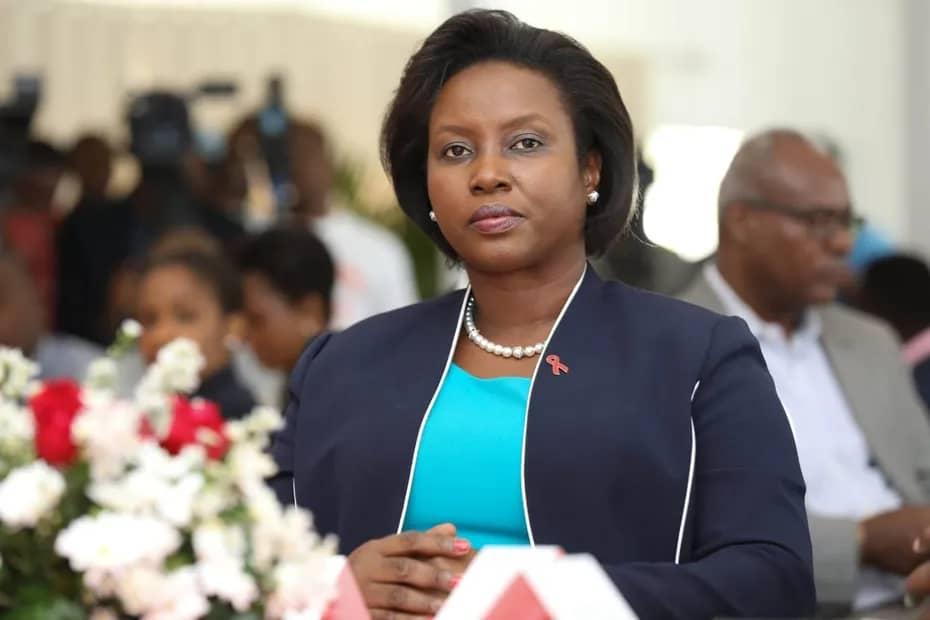
Martine Moïse, widow of assassinated Haitian President Jovenel Moïse, has registered to contest Haiti’s presidential election scheduled for July 18, 2027, joining a crowded field of 33 hopefuls as the country attempts to restore elected government after more than a decade without national elections. Her entry carries extraordinary political and legal significance because she survived the July 2021 attack that killed her husband, remains a key witness in related U.S. prosecutions and was also charged in a disputed Haitian investigation into the assassination, allegations she has denied and which have not resulted in a conviction. Her registration is not yet final approval to appear on the ballot, while Haiti’s election timetable remains threatened by widespread gang violence, mass displacement, low voter enrollment and continuing uncertainty over whether authorities can create safe conditions for a credible nationwide vote.
PORT-AU-PRINCE, HAITI — Martine Moïse, the widow of assassinated Haitian President Jovenel Moïse, has formally registered to contest Haiti’s next presidential election, placing one of the most recognizable figures connected to the country’s prolonged political crisis into a crowded race that could eventually produce Haiti’s first elected president since her husband’s killing in 2021. Her name appeared among candidates registered with the Provisional Electoral Council after online enrollment closed, confirming that she is seeking the presidency in elections whose first round is scheduled for July 18, 2027. The development immediately gives the race a powerful historical dimension because Martine survived the armed attack that killed her husband at their private residence in Port-au-Prince, was seriously wounded during the assassination and has since remained one of the most prominent public voices demanding accountability for the plot. She has not yet delivered a major public address explaining her candidacy, leaving unanswered questions about her political platform, party structure, security agenda and how she intends to position herself in a country that has experienced years of institutional breakdown, gang expansion and delayed elections.
Martine Moïse is one of 33 people who registered to seek the presidency, according to the electoral authorities, and her candidacy will not become final until the Provisional Electoral Council completes the formal review process and publishes the official list of approved contenders. The current field includes several prominent political figures, among them former president Michel Martelly, former interim president Jocelerme Privert and former prime minister Claude Joseph, while economist Etzer Emile and prosecutor Jean Ernest Muscadin are also among the registered hopefuls. The number of prospective candidates reflects both the political fragmentation of Haiti and the enormous significance of the election, which is intended to restore elected national institutions after more than a decade without a completed presidential vote. The first round has been scheduled for July 18, 2027, with a possible second round on October 4, but the timetable remains vulnerable to the same security and administrative pressures that have repeatedly derailed previous electoral plans.
The election had initially been expected earlier, but Haiti’s electoral authorities postponed the process again as armed gangs continued to control large areas and undermine the government’s ability to organize voting safely. The country has not held national elections since 2016, and its presidency has remained vacant since Jovenel Moïse was assassinated in July 2021. Transitional authorities have repeatedly promised a return to constitutional government, but those commitments have collided with worsening violence, mass displacement, weak institutions and the collapse of public services in neighborhoods where the state has little meaningful authority. The latest calendar therefore represents far more than an ordinary election schedule; it is an attempt to restore democratic legitimacy in a country where no elected president, parliament or fully functioning national political system has been able to operate normally for years.
Martine Moïse enters that process carrying both extraordinary name recognition and extraordinary political baggage. On the night of July 7, 2021, armed assailants entered the Moïse residence in Port-au-Prince and shot the president dead. Martine was wounded during the attack and later transferred to the United States for treatment. The assassination shocked Haiti and created a political vacuum that deepened existing divisions over presidential authority, constitutional succession and the legitimacy of the governments that followed. More than five years later, the killing remains one of the central unresolved events in modern Haitian politics, with investigations and prosecutions spread across Haiti and the United States and continuing disagreement over who ultimately organized, financed and benefited from the plot.
The American prosecution has advanced further than Haiti’s own judicial process in several respects. U.S. authorities have charged dozens of people in connection with the assassination, including former Colombian soldiers and Haitian-American suspects, and several defendants have either pleaded guilty or been convicted. In October 2026, Haiti extradited 18 suspects to the United States for prosecution, including 17 former Colombian soldiers and Joseph Badio, a former Haitian Justice Ministry employee regarded by investigators as a key suspect. U.S. prosecutors have said they intend to pursue those who financed, facilitated or carried out the plot, while the defendants have offered differing accounts of what occurred and some have challenged the allegations against them. The Miami proceedings remain one of the most important sources of evidence about the assassination, and Martine Moïse has been considered a significant witness because she was inside the residence when the attack occurred.
Her own legal position, however, is complicated. In 2024, a Haitian investigating judge included Martine Moïse among dozens of people charged in connection with the assassination, alleging that she had participated in a conspiracy connected to her husband’s killing. The judicial order also named former prime minister Claude Joseph and several other political and security figures. Those allegations have never resulted in a final conviction against Martine, and she has publicly rejected suggestions that she was involved in the assassination while continuing to demand justice for her husband. The case has remained caught in Haiti’s severely weakened judicial system, where gang violence, threats against judges, prison insecurity and the collapse of court operations have repeatedly slowed or disrupted proceedings. Any reporting on her presidential bid therefore has to distinguish clearly between the existence of criminal allegations in the Haitian investigation and proof of guilt, which has not been established.
That unresolved legal controversy could become one of the defining issues of her campaign if the electoral council approves her candidacy. Opponents may question whether a person who remains connected to an unresolved judicial investigation should seek the presidency, while supporters are likely to present her as a survivor of the attack and a victim of a deeply politicized system. The wider assassination case has itself become entangled in years of political accusation, with rival Haitian factions repeatedly claiming that judicial institutions have been manipulated against opponents. That atmosphere makes it difficult to separate legal questions from political confrontation, particularly as several people connected to the investigation now occupy or seek influential political roles.
Martine’s candidacy also carries unusual symbolic power because she would be attempting to enter the office once held by the husband whose killing helped plunge Haiti further into instability. Jovenel Moïse had governed during a period of intense controversy over the length of his presidential mandate, the absence of functioning parliament, protests over corruption and fuel prices, and growing insecurity. His supporters argued that he was attempting to confront entrenched political and economic interests, while critics accused him of governing increasingly by decree and weakening democratic accountability. His assassination prevented those political disputes from being resolved through an ordinary transfer of power and instead opened a succession crisis from which Haiti has never fully recovered.
Since then, armed gangs have expanded dramatically. United Nations reporting says criminal groups control or influence large sections of Port-au-Prince and have spread into additional departments, using killings, kidnappings, extortion, sexual violence and attacks on public infrastructure to challenge state authority. Around 1.5 million Haitians have been displaced since the crisis intensified, and more than 22,000 people have been killed since 2022 according to figures cited in current international reporting. Schools, hospitals, roads, ports and neighborhoods have repeatedly been forced to close or operate under severe restrictions, leaving ordinary Haitians exposed to a level of insecurity that will make organizing a credible nationwide election exceptionally difficult.
That security reality is one reason the 2027 election date is still treated cautiously by international observers. The Provisional Electoral Council has now established July 18 for the first round and October 4 for a runoff and local elections, but the ability to conduct voting depends on whether authorities can regain enough control for voters, candidates and election workers to move safely. Nearly one million people have registered to vote so far, well below the government’s target of between three million and six million, and the electoral council must dramatically expand enrollment before the registration deadline if it wants broad national participation. Violence and displacement make that task especially difficult because large numbers of Haitians no longer live in the communities where they were previously registered.
The low registration figure is one of several reasons election experts remain skeptical about whether the vote can proceed on schedule. Haiti’s electorate is estimated at several million people, but many potential voters lack easy access to registration centers, identification documents or secure transportation. Entire neighborhoods remain controlled by armed groups, and residents may be unable to cross gang territories simply to register or vote. If those areas are effectively excluded, the resulting election could face questions about whether it genuinely represents the country even if ballots are successfully cast elsewhere.
International security forces are attempting to improve those conditions. Haiti’s police and armed forces are operating with support from the United Nations-authorized Gang Suppression Force, which replaced earlier international arrangements and has been extended through March 2027. El Salvador has also deployed thousands of personnel in connection with anti-gang operations and the search for Salvadoran aviation technicians who disappeared after an attack. These operations have increased pressure on some gang strongholds, but the United Nations continues to warn that armed groups are adapting their tactics, retaliating against civilians and extending violence into rural areas.
The security response itself has generated controversy because large-scale operations have produced civilian casualties alongside the deaths of suspected gang members. Human-rights organizations and international agencies have repeatedly said restoring state authority is essential but must be accompanied by protections for civilians, functioning courts, schools, healthcare and economic opportunities. Suppressing gangs militarily without rebuilding public institutions could produce temporary territorial gains without creating the conditions necessary for stable elections or long-term governance.
That challenge will confront every presidential candidate, including Martine Moïse. Haiti’s next president will inherit not only an armed security crisis but also severe economic decline, weak state revenue, damaged public services, food insecurity and widespread distrust of political institutions. The economy has contracted repeatedly, while many businesses operate under extortion or cannot move goods through gang-controlled areas. Large numbers of skilled Haitians have left the country, and humanitarian agencies are struggling to meet growing needs with limited funding.
The next election therefore cannot be judged only by whether a president is selected. Its legitimacy will depend on whether candidates can campaign freely, voters can register and participate safely, ballots can reach areas outside government control and losing candidates accept the result. Haiti’s history of disputed elections means even a technically successful vote could become destabilizing if large sections of the population believe the process excluded them or was manipulated.
The size and composition of the candidate field will add to that complexity. Thirty-three presidential hopefuls have registered, including three women, while more than 100 political parties have entered the broader electoral process. The presence of former presidents, former prime ministers, business figures, prosecutors and political newcomers suggests the campaign will be highly fragmented, with alliances and withdrawals likely before the final ballot. The electoral council’s January publication of approved candidates will therefore be an important first test, particularly if applications are rejected on legal or eligibility grounds.
Martine Moïse’s registration is likely to attract particular scrutiny during that review because of the unresolved Haitian judicial case connected to her husband’s assassination. Electoral authorities will have to determine whether any outstanding legal proceedings affect her eligibility under Haitian law, and any decision in either direction could become politically contentious. At present, her registration means she has entered the process, not that she has been finally cleared to appear on the July ballot.
Her silence since registering also leaves her political strategy unclear. She has previously spoken publicly about justice for Jovenel Moïse and criticized the direction of Haiti’s transition, but she has not yet presented a full presidential program explaining how she would address gang violence, constitutional reform, economic recovery, international intervention or the rebuilding of state institutions. Those questions will become unavoidable if her candidacy is approved because personal history alone will not answer the policy problems confronting the country.
Her relationship with the legacy of her husband will also require careful navigation. Jovenel Moïse retains supporters who believe his government was targeted by powerful political and economic interests, but his presidency was also deeply divisive. Martine could attempt to inherit the political loyalty associated with his name, but she may also inherit public criticism of the conditions that existed during his administration. Whether she campaigns as a continuation of his political project, as an independent figure shaped by the assassination or as a broader national-reconciliation candidate could significantly affect how voters interpret her entry into the race.
The presence of former president Michel Martelly further complicates that landscape. Martelly remains an influential and controversial figure in Haitian politics and has faced international sanctions over alleged links to gangs and corruption, allegations he has denied. His return to presidential politics means the election could bring several major figures from Haiti’s recent political history back into direct competition at a time when many citizens blame the established political class for the country’s collapse.
Former interim president Jocelerme Privert and former prime minister Claude Joseph add further experience and controversy to the field. Joseph, like Martine Moïse, was named in the Haitian judicial investigation into Jovenel Moïse’s killing and has denied wrongdoing. The possibility that multiple figures connected in different ways to the assassination investigation could appear in the same presidential race underscores how deeply that unresolved case remains intertwined with Haitian politics.
At the same time, important political movements remain uncertain about participation. Fanmi Lavalas, the party founded by former president Jean-Bertrand Aristide, has said it will not nominate a presidential candidate while conditions remain too insecure for credible elections. That decision reflects a wider concern that holding a vote under current conditions could produce formal democratic institutions without genuine national participation.
The United Nations has issued similar warnings about rushing the timetable. In October, UN officials cautioned against announcing election dates without a realistic assessment of whether security conditions and voter registration made them achievable. The July 2027 calendar was subsequently adopted, but the underlying concern remains unchanged: repeated postponements damage public trust, yet an election conducted without sufficient security could damage trust even more.
Haiti therefore faces a narrow and difficult path. The country needs elections because transitional governments cannot provide permanent democratic legitimacy, but the institutions needed to hold those elections have been weakened by years of violence and political breakdown. International partners can provide security support, funding and technical assistance, but they cannot manufacture domestic legitimacy if Haitians do not believe the process is fair.
Martine Moïse’s registration makes that broader dilemma more politically visible. Her personal story connects directly to the moment when Haiti lost its last elected president and entered the prolonged vacuum that followed. If she ultimately appears on the ballot, voters will be asked to evaluate not only her policies but also what her candidacy represents about that history.
For some Haitians, she may represent continuity with a murdered president whose death remains unresolved. For others, she may symbolize a political establishment they believe failed to prevent the country’s descent into crisis. Still others may focus less on her family history than on whether she can present a credible plan for restoring security, rebuilding institutions and ending the cycle of temporary governments.
Those competing interpretations will become clearer only after she begins campaigning publicly.
The assassination itself will remain unavoidable throughout that campaign. Every new development in the U.S. or Haitian prosecutions could affect public debate, and any testimony involving Martine could become politically significant. Because the legal process is unresolved, responsible reporting will need to maintain a clear distinction between allegations, charges, witness evidence and proven criminal responsibility.
The U.S. prosecutions have already demonstrated how complex the case is. Investigators have described a plot involving foreign mercenaries, Haitian political figures, business interests and plans that may initially have involved kidnapping rather than assassination. Defendants have given conflicting accounts, and prosecutors have argued that the conspiracy evolved before culminating in the president’s death. The continuing extradition of suspects suggests the investigation remains active and may produce additional evidence before Haitians vote in 2027.
That means Martine Moïse could enter the campaign while simultaneously remaining connected to one of the largest international criminal investigations involving a Haitian head of state. The political consequences of that situation are difficult to predict, but they are certain to make her candidacy unlike that of an ordinary former first lady.
The election itself is scheduled to take place only months after the current mandate of the international Gang Suppression Force is due for review. Security conditions during the first half of 2027 will therefore be decisive. If Haitian police and international forces regain significant territory and restore access to registration centers, schools and public institutions, confidence in the election may improve. If gangs continue expanding or retaliating against civilians, electoral preparations could once again become impossible in parts of the country.
The Provisional Electoral Council now carries enormous responsibility. It must review candidate applications, expand voter registration, establish polling centers, recruit and protect election workers, distribute materials and create a dispute-resolution process capable of surviving intense political pressure. Each step will be closely watched because weaknesses at any stage could become the basis for rejecting the final result.
For Martine Moïse, registration is therefore only the beginning. She still needs electoral clearance, an organized campaign, a policy platform and enough security to reach voters. She will also have to answer difficult questions about her husband’s presidency, the assassination investigation and what distinguishes her candidacy from an attempt to inherit a political legacy.
For Haiti, however, the stakes are larger than any single candidate. The country is trying to restore elected government after years in which assassination, gang control and transitional rule have hollowed out democratic institutions. A credible presidential election could mark a turning point, but only if millions of Haitians are able to participate safely and believe the outcome reflects their choices.
Martine Moïse’s entry into the race adds one of the most emotionally charged figures possible to that process. She survived the attack that killed Haiti’s last elected president, spent years demanding justice for him, became entangled in the disputed investigation surrounding his death and is now seeking the office he once held.
Whether Haitian voters ultimately see that story as a qualification, a liability or simply one part of a much larger political choice will depend on the campaign that follows.
What is already clear is that Haiti’s 2027 presidential election will not merely decide who occupies the National Palace. It will test whether a country that has endured assassination, gang rule, institutional collapse and repeated electoral delays can reconstruct enough political legitimacy to return power to elected civilian government. Martine Moïse’s candidacy places the unfinished history of the last presidency directly inside that test.