RUSSIA DEMANDS NATO ROLLBACK AND NEW EUROPEAN SECURITY ORDER AS UKRAINE PEACE TALKS WIDEN BEYOND CEASEFIRE
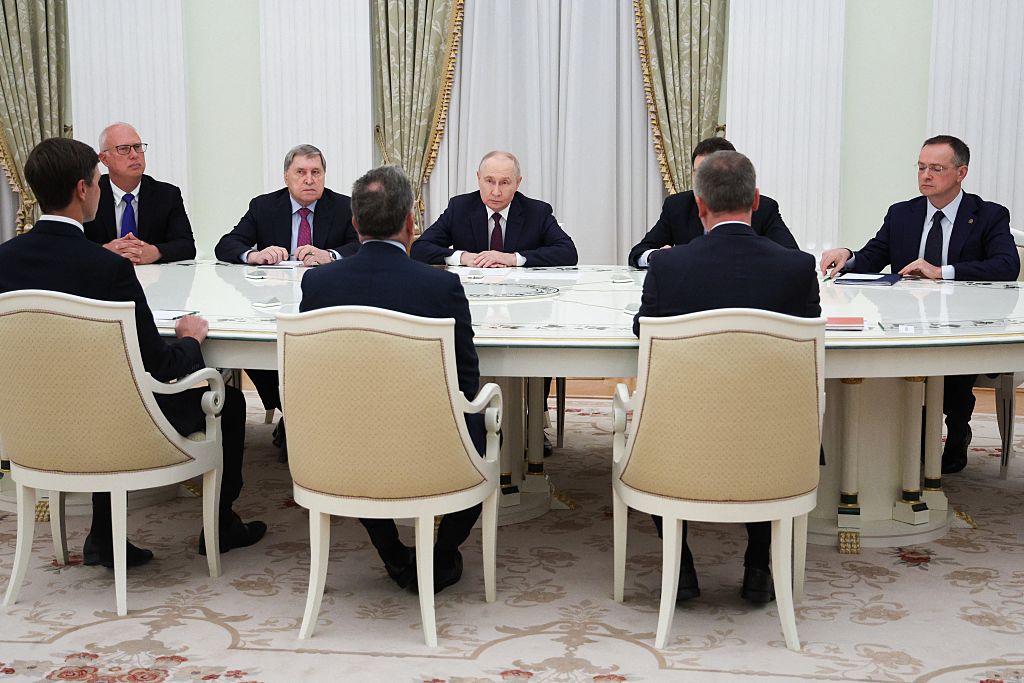
Russia has used the renewed U.S.-mediated Ukraine peace talks to revive sweeping demands for a broader restructuring of European security, including a rollback of NATO forces and military infrastructure toward the alliance’s 1997 posture, a halt to further enlargement, restrictions on Western military support and deployments in Ukraine and limits on European nuclear arrangements. Moscow has also publicly proposed bilateral non-aggression pacts with individual NATO states as part of a new security framework, raising concern among European officials that separate agreements could weaken collective defense if they conflicted with alliance obligations. The proposals remain Russia’s opening negotiating position rather than agreed peace terms, while EU governments say the immediate priority should be securing a ceasefire in Ukraine and insist that Russia cannot determine the security choices of sovereign European states.
ABU DHABI/MOSCOW — Russia has used the latest U.S.-mediated negotiations over ending the war in Ukraine to press demands that go far beyond a battlefield ceasefire, territorial compromise or humanitarian agreement, instead placing the future of NATO’s military posture in Central and Eastern Europe at the center of a much wider struggle over the continent’s security order. Moscow is seeking major reductions in allied troops and military infrastructure across countries that joined NATO after the late 1990s, an end to further enlargement, permanent exclusion of Ukraine from the alliance, restrictions on Western military support and foreign deployments on Ukrainian territory, and broader changes affecting European nuclear and defense arrangements. Russian officials have also proposed bilateral non-aggression agreements with individual European states, presenting them as possible tools for reducing long-term confrontation, while critics in Europe warn that such deals could weaken NATO’s collective-defense system if they encourage member states to pursue separate security understandings with Moscow rather than maintaining a unified alliance position.
The scope of Russia’s demands shows that President Vladimir Putin continues to define the Ukraine war as part of a larger confrontation over NATO expansion and the balance of military power in Europe, not simply as a dispute over territory in eastern and southern Ukraine. Many of the positions being revived now resemble proposals Moscow issued before the full-scale invasion in February 2022, when Russia demanded legally binding guarantees preventing further NATO enlargement and called for alliance military infrastructure to be removed from countries that joined after 1997. The United States and NATO rejected those demands at the time, arguing that independent states have the sovereign right to choose their security relationships and that Russia cannot dictate whether another country joins an alliance or hosts allied forces. The return of those same issues to the negotiating table suggests that, despite years of war, enormous military losses and major changes to Europe’s security environment, Moscow has not abandoned some of its central strategic objectives.
One of the most consequential Russian demands is for NATO to reduce its military posture toward something resembling the alliance’s 1997 configuration, before later rounds of enlargement brought Poland, Hungary, the Czech Republic, the Baltic states and several other Central and Eastern European countries into the organization. Such a rollback would have far-reaching consequences for countries that now host allied troops, air defenses, military exercises, logistics hubs and other infrastructure designed to deter possible Russian aggression. Poland, Estonia, Latvia and Lithuania have all argued that stronger NATO deployments are necessary precisely because Russia’s annexation of Crimea in 2014 and full-scale invasion of Ukraine in 2022 demonstrated the risks of leaving Eastern Europe militarily exposed. NATO itself has moved firmly in the opposite direction since the war began, expanding multinational battlegroups, strengthening air and missile defense, improving reinforcement plans and integrating Finland and Sweden into the alliance after both countries abandoned longstanding traditions of military nonalignment in response to Russia’s actions.
Ukraine’s future relationship with NATO remains one of the deepest points of disagreement. Moscow wants Kyiv permanently excluded from membership and has repeatedly described the possibility of Ukraine joining the alliance as an unacceptable strategic threat. Ukraine takes the opposite view and argues that only credible long-term security guarantees can prevent another Russian attack after any ceasefire or peace agreement. President Volodymyr Zelensky has warned repeatedly that a settlement leaving Ukraine weak, poorly armed or dependent on vague diplomatic promises could merely create a pause during which Russia rebuilds its forces and prepares for another offensive. Moscow says a heavily armed Ukraine backed by Western weapons and integrated into NATO structures would reproduce the conditions it claims helped cause the war, while Kyiv and its European partners argue that Russia’s invasion itself is the clearest evidence that Ukraine requires stronger rather than weaker military protection.
The disagreement over NATO membership is therefore closely connected to Russia’s wider demands concerning the size and capabilities of Ukraine’s armed forces, foreign military assistance and the presence of Western personnel or installations on Ukrainian soil. Moscow wants restrictions that would prevent Ukraine from becoming a heavily fortified Western-aligned military state after the war, while Kyiv insists that any viable settlement must leave it capable of defending itself. This difference is compounded by the territorial conflict, because Russia continues to occupy substantial areas of Ukrainian territory and claims Crimea, Donetsk, Luhansk, Zaporizhzhia and Kherson as part of the Russian Federation, even though it does not control all of the territory it claims. Ukraine rejects those annexations and maintains that internationally recognized borders cannot be permanently changed through military force, leaving negotiators with unresolved disputes over both the map of Ukraine and the security system intended to protect whatever settlement eventually emerges.
What makes the current diplomatic process especially significant is that Moscow is trying to connect those Ukrainian questions to the security arrangements of Europe as a whole. Russian officials argue that the war cannot be resolved permanently by discussing Ukraine alone because the deeper causes, in Moscow’s view, include NATO enlargement, Western military deployments and a broader breakdown in Russia’s relationship with the West. European governments reject that framing and argue that Russia should not be allowed to use its invasion of Ukraine as leverage to reopen the sovereign security decisions of countries that joined NATO voluntarily. Poland and the Baltic states have been especially resistant to any suggestion that larger powers should negotiate away their defense arrangements, warning that such an approach would revive the logic of spheres of influence in which smaller European countries are forced to accept security rules determined by more powerful neighbors.
The Russian proposal for bilateral non-aggression pacts has added another layer to that concern. Senior Russian officials have discussed the possibility of separate agreements with individual European states, potentially including commitments not to attack one another and other forms of bilateral security cooperation. A non-aggression pact by itself would not automatically conflict with NATO membership, but the problem would arise if such an agreement required a member state to remain neutral or refuse assistance to another NATO ally during a conflict involving Russia. NATO’s Article 5 system is built on the principle that an attack against one member is treated as an attack against all, so any bilateral arrangement that weakened that expectation could create serious political and military tensions within the alliance. Russia has not publicly produced final treaty language showing that this would be required, which means the concern is about the potential effect of such agreements rather than a confirmed legal contradiction already contained in a signed document.
Moscow rejects accusations that it is trying to dismantle NATO and argues that its objective is to create legally binding guarantees preventing what it sees as hostile military infrastructure from being placed close to Russian territory. Russian officials frequently invoke the idea of “indivisible security,” arguing that no country should strengthen its own position in a way that leaves another feeling strategically threatened. Western governments accept that mutual security concerns can be discussed, but they reject Russia’s interpretation that this gives Moscow a veto over the alliance choices of independent states. For countries in Central and Eastern Europe, particularly those with historical memories of Soviet domination, that distinction is fundamental because they see NATO membership as an exercise of sovereignty rather than an act of encirclement directed against Russia.
The dispute also extends into nuclear policy and long-term arms control. Moscow has expressed concern about discussions involving a broader role for British and French nuclear deterrence in European security, while European governments argue that Russia’s own nuclear rhetoric during the war has made stronger deterrence more necessary. Any serious future security agreement would therefore have to address both conventional and nuclear forces in a reciprocal way, because NATO members are unlikely to accept major restrictions on their deployments, missiles or deterrence systems without corresponding Russian commitments. Europe has historical experience with arms-control arrangements involving military exercises, inspections, missile limits and communication channels, and some analysts believe those mechanisms could eventually offer a more realistic path toward stability than simply attempting to restore the continent’s military map to what it looked like three decades ago.
The United States is now attempting to mediate between positions that remain fundamentally opposed. Washington has pursued renewed diplomacy with Moscow and Kyiv in an effort to identify a settlement capable of ending the war while also reducing the risk of another Russia-West confrontation, but European governments have insisted that no agreement affecting NATO deployments, European nuclear policy or national defense arrangements can be negotiated solely between Washington and Moscow. The reason is straightforward: the United States cannot determine whether Poland hosts NATO troops, whether France changes its nuclear doctrine, whether Finland remains in the alliance or whether the European Union deepens its own defense structures. Ukraine has made the same argument about its own sovereignty, insisting that countries expected to provide postwar weapons, security guarantees or reconstruction financing must participate directly in shaping any final agreement.
The diplomacy is further complicated by the fact that fighting continues while these wider strategic questions are being discussed. Russia continues military operations and long-range attacks against Ukrainian targets, while Ukraine continues to strike Russian military and infrastructure targets in occupied areas and inside Russia. European governments argue that the first priority should be stopping the fighting before negotiating a sweeping new continental security architecture, while Moscow says a ceasefire without agreement on the deeper political and military issues could simply allow Ukraine to rearm and resume fighting later. This dispute over sequencing may become one of the most important questions facing negotiators, because it determines whether peace talks begin with an immediate cessation of hostilities or with a much broader attempt to resolve the underlying strategic conflict between Russia and NATO at the same time.
There are nevertheless some areas where compromise may be more realistic than the headline demands suggest. Restrictions on certain missile deployments, advance notification of major military exercises, improved communication between military commands and rules designed to prevent dangerous encounters in international airspace or waters could all reduce the risk of escalation without requiring NATO to abandon its eastern members or Russia to accept every Western security position. Such confidence-building measures would not resolve the larger dispute over NATO enlargement or Ukraine’s future, but they could provide a foundation for a wider arms-control process if both sides were willing to negotiate reciprocal and verifiable restrictions.
The biggest unanswered question is whether Moscow’s current demands are firm minimum conditions or opening positions from which Russia expects to compromise. If they are bargaining positions, there may still be room for a broader settlement that reduces military risks without dismantling NATO’s eastern posture. If Russia insists that NATO must substantially withdraw from Central and Eastern Europe, that Ukraine must permanently abandon any alliance ambitions and that European security arrangements must be fundamentally rewritten on Moscow’s terms, the negotiations are likely to remain deadlocked. European governments face their own choices about which elements of the current security system they are willing to discuss and which they consider non-negotiable, while Ukraine must determine what kind of guarantees would be strong enough to justify any compromise on territory or military alignment.
For now, the most important fact is that Russia’s demands are proposals, not agreed peace terms. NATO has not accepted a withdrawal from Central and Eastern Europe, Ukraine has not agreed to permanent exclusion from the alliance, and European governments have not embraced separate bilateral security arrangements that could weaken collective defense. What has changed is that these issues are now formally part of the diplomatic process surrounding the Ukraine war, meaning negotiations are no longer focused only on where Russian and Ukrainian forces might stop fighting but increasingly on what Europe’s military map and alliance system should look like after the conflict ends.
That makes the talks potentially more consequential than any previous ceasefire effort since the invasion began. A settlement dealing only with Ukraine would already represent one of the most important diplomatic agreements in Europe in decades, but a settlement affecting NATO deployments, enlargement, nuclear policy and the security relationships of dozens of European states would reshape the strategic order established after the Cold War. For Moscow, that broader transformation appears to be part of the objective. For Ukraine and many European governments, the challenge is to pursue peace without allowing the war itself to become the mechanism through which Russia gains authority over the sovereign security choices of neighboring states.
The outcome will therefore determine far more than the future of one battlefield. It could decide whether Europe returns to a stronger system of arms control, whether NATO’s eastern defenses remain intact, whether Ukraine emerges from the war with credible protection and whether Russia and the West can build a new security relationship without recreating the spheres of influence that divided the continent in earlier eras. Until those competing visions move closer together, the peace process will remain both an opportunity to end the war and a high-stakes struggle over the political and military architecture that will shape Europe for years to come.