
UAE SAYS FLYDUBAI CO-PILOT PLANNED 9/11-STYLE SUICIDE ATTACK ON BEN GURION AIRPORT
UAE prosecutors say the Omani co-pilot accused of attacking the captain of flydubai flight FZ1073 on September 30 had planned a 9/11-inspired suicide attack on Israel’s Ben Gurion Airport. Authorities allege he had developed extremist views, studied the route on two earlier flights and attempted to seize the aircraft after attacking the captain with an emergency axe. Crew, passengers and reserve pilots prevented the alleged plot and landed safely in Saudi Arabia. Investigations into his background and possible connections continue.
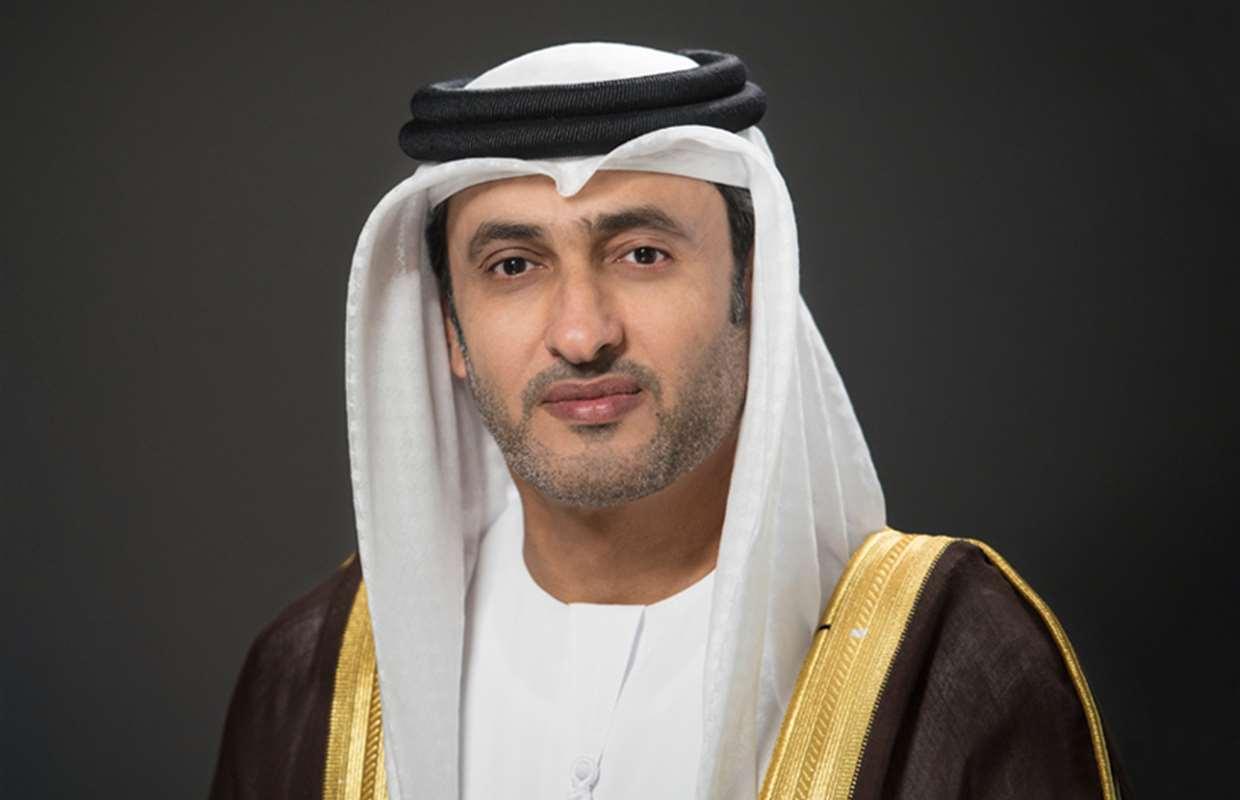
The United Arab Emirates says an Omani flydubai co-pilot accused of attacking the captain of a Dubai-to-Tel Aviv flight on September 30 had developed extremist views and deliberately planned to seize control of the aircraft and crash it into the passenger terminal at Israel’s Ben Gurion Airport in a suicide attack inspired by the September 11, 2001 attacks in the United States. The extraordinary allegation, announced on Friday by UAE Attorney-General Hamad Saif Al Shamsi, represents the most detailed official account yet of what prosecutors believe happened aboard flydubai flight FZ1073 and transforms an incident initially described as a violent cockpit altercation into a suspected premeditated terrorist plot involving one of the most sensitive commercial air routes in the Middle East.
According to the UAE Public Prosecution, the 29-year-old Omani co-pilot began carrying out the plan while the Boeing 737 MAX 8 was flying from Dubai to Tel Aviv, attacking the captain inside the flight deck with an emergency crash axe and attempting to take control of the aircraft. The confrontation caused the jet to plunge by about 16,000 feet in roughly 30 seconds before control was recovered, according to investigators and flight data reported after the incident. The captain, despite suffering serious injuries, resisted the attack long enough for other crew members and passengers to intervene, while two reserve pilots travelling on the aircraft later took control and diverted the flight safely to Tabuk in Saudi Arabia.
The Attorney-General said investigators now believe the co-pilot had not acted impulsively but had prepared the attack in advance, with the specific objective of using the aircraft as a weapon against the passenger terminal at Ben Gurion Airport and causing the highest possible number of casualties. UAE investigators say the suspect had flown the Dubai-Tel Aviv route twice before the September 30 incident in order to familiarize himself with the flight path, the airport and operational conditions, a detail that prosecutors view as evidence of planning rather than a spontaneous act of violence. The Public Prosecution further said the suspect had drawn inspiration from the September 11 attacks, in which hijacked commercial airliners were deliberately crashed into the World Trade Center in New York and the Pentagon near Washington.
The suspect has been widely identified in reporting as Hamam or Hammam al-Hammami, an Omani national who joined flydubai in January 2026 after previously working or training with several airlines and aviation organizations. The UAE said its investigation into his background found signs of ideological radicalization dating back to 2017 while he was studying in Australia, where he allegedly began consuming extremist material and content glorifying terrorist organizations and suicide attacks. Prosecutors say those views deepened over time and became part of a longer process of ideological preparation that eventually culminated in the September 30 incident.
The Attorney-General’s office said investigators examined the suspect’s professional history, digital activity, ideological development and preparations before reaching their current assessment. The UAE account says he had worked for Oman Air and had trained with Royal Air Maroc before joining flydubai, while other reporting has also linked parts of his aviation education to Australia and New Zealand. Authorities say he passed the professional and security checks required before working for flydubai, raising serious questions about whether existing aviation-vetting systems were capable of detecting extremist beliefs that had not resulted in a public criminal record or obvious professional misconduct.
The UAE has emphasized that flydubai itself has not been accused of wrongdoing. The airline initially said only that a cockpit altercation had occurred and that crew members travelling on board intervened to secure the aircraft before it was diverted safely to Saudi Arabia. Friday’s announcement came from prosecutors rather than the airline and significantly expands the official understanding of the incident by alleging terrorist intent, extensive prior preparation and a specific target at Ben Gurion Airport. Flydubai was not immediately reported to have issued a detailed new response to the Attorney-General’s latest findings.
The criminal investigation began formally on October 1, one day after the aircraft made its emergency landing in Saudi Arabia. At that stage, UAE authorities said investigators would examine whether the incident had any terrorist purpose, whether it had been planned in advance and whether other people were involved. The Attorney-General cautioned against speculation while the inquiry was underway and said technical, physical and digital evidence would be examined before conclusions were announced. Friday’s statement represents the first major update from that process and indicates that prosecutors now believe the evidence supports a theory of deliberate terrorism rather than an isolated cockpit assault.
The September 30 incident had already alarmed aviation authorities because of the speed and severity of the aircraft’s descent. Flight FZ1073 was travelling toward Israel when the confrontation erupted over Saudi airspace. The jet reportedly dropped thousands of feet within seconds, creating extreme forces inside the cabin and raising concerns that the aircraft could have suffered structural damage or entered an unrecoverable dive. Aviation experts later described the descent as comparable to a vertical roller coaster because of the enormous rate of altitude loss and the limited time available for pilots to regain control.
That the aircraft ultimately landed safely has been attributed to the actions of the captain, other pilots travelling on the flight, crew members and passengers who helped restrain the co-pilot. The injured captain reportedly succeeded in opening the cockpit despite the assault, allowing others to intervene. Reserve pilots then took control and diverted the aircraft to Tabuk, where Saudi authorities received the flight and medical teams treated those involved. No mass casualties were reported despite the severity of the incident.
The number of people aboard has varied slightly in different reports, but the flight was carrying more than 170 passengers and crew, many of them Israeli nationals. Had the UAE prosecutors’ reconstruction of the plot succeeded, the potential consequences would have extended far beyond those aboard the aircraft because the intended target was a passenger terminal at Israel’s busiest international airport. Ben Gurion Airport handles large concentrations of travelers, staff and aircraft, and an intentional crash into a terminal could have caused extensive casualties and infrastructure damage.
The comparison with the September 11 attacks is therefore central to the UAE’s current theory. Prosecutors say the suspect intended to transform a commercial airliner into a weapon against a civilian airport, echoing the method used by the hijackers in 2001. The alleged target differed, but the underlying concept was similar: gain control of a passenger aircraft already carrying significant fuel, redirect it toward a heavily populated civilian location and maximize casualties.
Investigators say the suspect’s previous two trips to Tel Aviv form an important part of that theory because they may have allowed him to study both the route and the physical layout of Ben Gurion Airport before attempting the attack. Prosecutors have not publicly released every detail of what investigators recovered from his devices, communications or travel records, but the Attorney-General said the investigation had established sufficient evidence to describe the conduct as a premeditated terrorist plan.
The UAE also says the suspect prepared himself psychologically and physically for the attack. Reporting based on the prosecutor’s findings says he viewed extremist propaganda and took steps to improve his physical readiness, including boxing training. Those details are being used by investigators to support the argument that the attack was not the result of a sudden emotional breakdown or dispute with the captain but the culmination of a broader plan.
At the same time, authorities are still investigating whether the suspect had any accomplices, handlers or organizational connections. The current UAE position is that available evidence indicates he acted alone, but the Public Prosecution has not closed that question. Investigators are continuing to examine digital communications, contacts and possible ideological links in order to determine whether anyone helped plan, encourage or finance the attack.
That uncertainty is significant because lone-actor terrorism can be difficult to distinguish from externally directed operations during the early stages of an investigation. A person may act alone operationally while still being inspired, encouraged or ideologically influenced by online extremist networks. Conversely, consuming propaganda does not automatically prove direct contact with a terrorist organization. The UAE investigation will therefore need to establish whether the suspect’s radicalization remained personal or involved communication with others.
The suspect’s background is now under scrutiny in several countries. Australian authorities are examining his period of study there because UAE investigators say his drift toward extremism began while he was in Australia in 2017. New Zealand authorities have also reviewed aspects of his aviation training, while questions have been raised about his previous employment and training relationships in Oman and Morocco. The international scope reflects the reality that commercial pilots often study, train and work across multiple jurisdictions, making background information dependent on cooperation between different regulators and security agencies.
That issue has already become one of the most important consequences of the case. Aviation safety systems traditionally focus heavily on technical competence, medical fitness, criminal history and operational discipline. Detecting ideological radicalization is much more difficult, particularly when an individual has no relevant conviction and keeps extremist views private. If the UAE’s allegations are ultimately proven, the case may prompt airlines and regulators to review how pilot background checks are conducted and how security concerns are shared across national borders.
Reports that the suspect had passed flydubai’s vetting process have increased scrutiny of those systems, but passing security checks does not in itself prove negligence by the airline. Background screening depends on the information available to employers and state authorities at the time, and there is no public evidence that flydubai knowingly hired a pilot identified as a terrorist threat. The UAE’s own Attorney-General has not accused the airline of complicity and has focused instead on the suspect’s concealed ideological development and individual planning.
Saudi Arabia has opened a separate aviation-safety investigation because the incident occurred while the aircraft was in Saudi airspace and the emergency landing took place at Tabuk. That inquiry is distinct from the UAE criminal investigation and is expected to examine the aircraft’s rapid descent, cockpit-security procedures, crew response, possible structural stresses and other safety lessons. Deliberate criminal acts are normally handled primarily by law-enforcement agencies, but aviation authorities can still study the event to identify procedural or engineering changes capable of reducing future risk.
The involvement of several jurisdictions illustrates how complicated the legal aftermath may become. The aircraft was registered in the UAE and operated by a UAE airline, giving Emirati authorities jurisdiction over crimes committed aboard it even though the incident occurred outside UAE territory. Saudi Arabia has jurisdictional interests because the aircraft was above Saudi territory and landed there, while Israel has a direct security interest because prosecutors say Ben Gurion Airport was the intended target. Oman also has an interest because the suspect is an Omani national.
Israel responded to the original incident by ordering a broader review of security surrounding foreign commercial flights entering the country. Israeli officials have questioned how the co-pilot was able to operate on a route to Tel Aviv without his alleged extremist history being identified and have called for stronger vetting of foreign flight crews. The case is particularly sensitive because most passengers were reportedly Israeli and because the alleged plan targeted the country’s main international airport rather than merely the aircraft itself.
The issue also carries diplomatic implications. The UAE and Israel established formal diplomatic relations under the Abraham Accords in 2020, and direct commercial flights between the countries became one of the most visible symbols of that normalization. Flydubai’s Dubai-Tel Aviv service has therefore carried political significance beyond ordinary aviation. A terrorist plot involving a crew member on that route is likely to intensify scrutiny of security cooperation between the two governments even though UAE authorities themselves uncovered and publicly described the alleged plot.
The suspect’s Omani nationality introduces another layer of regional sensitivity because Oman does not maintain full diplomatic relations with Israel. However, nationality alone does not establish state involvement, and UAE investigators have not suggested that the Omani government had any role in the alleged attack. Reporting should therefore avoid implying that the case represents an Omani state action or official policy.
The Attorney-General’s statement also makes clear that investigators are still working through physical and digital evidence. The public account released Friday is an interim prosecutorial assessment rather than a final court judgment. The suspect has not been convicted, and the factual allegations will ultimately need to be tested through whatever judicial process follows under UAE law. The use of terrorism terminology reflects the prosecution’s current findings, not a completed criminal trial.
That distinction is particularly important in a case of this magnitude. The UAE’s findings are detailed and come from the country’s highest prosecutorial authority, but they remain allegations within an active investigation. The safest and most accurate formulation is therefore that UAE prosecutors say the co-pilot planned and began executing a suicide attack, rather than presenting every detail as independently established fact.
The attack has nevertheless already exposed significant questions about cockpit security. Commercial aviation security changed dramatically after September 11, with reinforced cockpit doors, stricter access controls and new procedures designed to prevent passengers from seizing aircraft. This case presents a different threat because the alleged attacker was himself an authorized pilot with legitimate cockpit access. Measures designed to stop unauthorized intruders are far less effective when the threat originates from a trusted crew member.
Aviation authorities have long recognized the concept of insider threats, including employees who misuse access or pilots experiencing serious psychological problems. The deliberate ideological targeting alleged by UAE prosecutors adds a terrorism dimension that could force airlines to reconsider how they assess trusted insiders without undermining workforce privacy or creating discriminatory screening practices.
The heroic actions attributed to the captain and others aboard FZ1073 may also influence future training. Crew members and passengers were reportedly able to restrain the co-pilot after the injured captain created an opportunity for intervention, while reserve pilots assumed control of the aircraft. Airlines may examine whether having additional qualified pilots travelling as crew contributed decisively to the safe outcome and whether emergency procedures need to be revised for deliberate pilot attacks.
Ben Gurion itself is among the world’s most heavily protected airports, with extensive passenger screening and security systems. However, the alleged plot highlights a vulnerability that conventional airport screening cannot fully address: a pilot already cleared to operate a commercial flight can bring the aircraft itself toward the target without carrying a prohibited weapon through passenger security. The crash axe used in the cockpit is standard emergency equipment, meaning the alleged attacker did not need to smuggle an external weapon aboard.
That feature makes the case especially troubling for aviation security specialists. Many aircraft contain equipment necessary for emergencies that can become dangerous if misused. Eliminating such equipment entirely could create different safety risks, meaning regulators must instead focus on access, crew coordination, vetting and procedures capable of preventing one pilot from overpowering another and controlling the aircraft.
The investigation may eventually produce recommendations affecting international aviation rules. If authorities conclude that fragmented information-sharing allowed a known security concern to move between airlines or countries without detection, pressure could increase for stronger cross-border reporting mechanisms. Such systems would need safeguards because allegations about extremist views can be unreliable or politically sensitive, but the consequences of ignoring credible warnings in aviation can be catastrophic.
For flydubai, the priority will be protecting confidence in the airline while cooperating fully with investigators. The carrier operates an extensive network linking Dubai with destinations across Europe, Asia, Africa and the Middle East and is a major component of the UAE’s aviation sector. There is currently no official allegation that the airline knowingly failed to act on a specific warning, but the company may face questions about recruitment, background checks and crew-monitoring procedures as investigations continue.
For the UAE government, the case is also a test of transparency. Authorities initially urged the public not to speculate and promised to publish findings as evidence developed. Friday’s detailed disclosure demonstrates a willingness to characterize the incident publicly as terrorism, but further information will be required to explain how investigators reached conclusions about radicalization, prior route reconnaissance and inspiration from September 11.
The criminal process will also determine what charges the suspect faces. Attempted murder, terrorism offenses, attempting to seize control of an aircraft and endangering aviation are among the categories potentially relevant under UAE law, but prosecutors have not yet announced a final indictment publicly. The fact that the aircraft was safely landed and the intended airport attack did not occur does not eliminate potential liability because authorities say the co-pilot had already begun executing the plan.
The scale of what was allegedly prevented remains difficult to overstate. A commercial jet carrying more than 170 people, descending rapidly after a cockpit assault, could have crashed before reaching any intended target. If prosecutors are correct that Ben Gurion’s passenger terminal was the ultimate objective, casualties could have included not only everyone aboard but large numbers of people on the ground.
That possibility explains why the case is likely to have consequences well beyond the individual suspect. Airlines, regulators and intelligence agencies will now examine whether existing safeguards are designed primarily around yesterday’s threat model while leaving dangerous gaps involving trusted insiders. The September 11 attacks led aviation authorities to prevent passengers from taking cockpits; this case raises the different question of what happens when someone already inside the cockpit becomes the threat.
The UAE investigation is not yet complete, and authorities say further forensic work is underway to determine whether there were outside links or additional participants. Saudi Arabia’s separate safety inquiry also remains active, while Israel has begun its own security review of incoming foreign flights. Those parallel investigations may eventually produce a fuller picture of how the suspect was hired, how the alleged plot developed and which safeguards failed to identify the risk before the aircraft departed Dubai.
For now, the most significant new development is the UAE Attorney-General’s conclusion that the September 30 incident was not merely an assault between pilots. Prosecutors say the co-pilot had spent years moving toward extremist ideology, studied the Tel Aviv route on previous flights, prepared himself physically and psychologically and then tried to seize control of FZ1073 with the intention of crashing it into Ben Gurion Airport.
The aircraft never reached that target. The captain resisted, other people on board intervened and reserve pilots got the jet safely onto the ground in Saudi Arabia. What remains is a multinational criminal and aviation investigation into how a trusted airline professional allegedly came so close to turning a scheduled passenger flight into a mass-casualty weapon and what must change to prevent another attempt.