
ZELENSKYY EXPECTS EUROPEAN ALLIES TO JOIN NEW U.S. TALKS, CONFIRMS RETALIATORY DATA-CENTER STRATEGY
President Volodymyr Zelenskyy says Ukraine expects European partners to join upcoming talks with the United States after previously announcing that Ukrainian negotiators would hold meetings in America on Friday and Saturday. Kyiv says strengthening air defenses will be a priority after Russian strikes killed more than 70 people over two days. Zelenskyy also acknowledged Ukraine’s retaliatory strategy against Russian data centers after a drone strike damaged Yandex’s major Sasovo facility in the Ryazan region, saying Ukraine responds when Russia attacks similar Ukrainian infrastructure. Reuters confirmed the Yandex facility was forced to suspend operations and that the extent of damage to some equipment remains unclear.
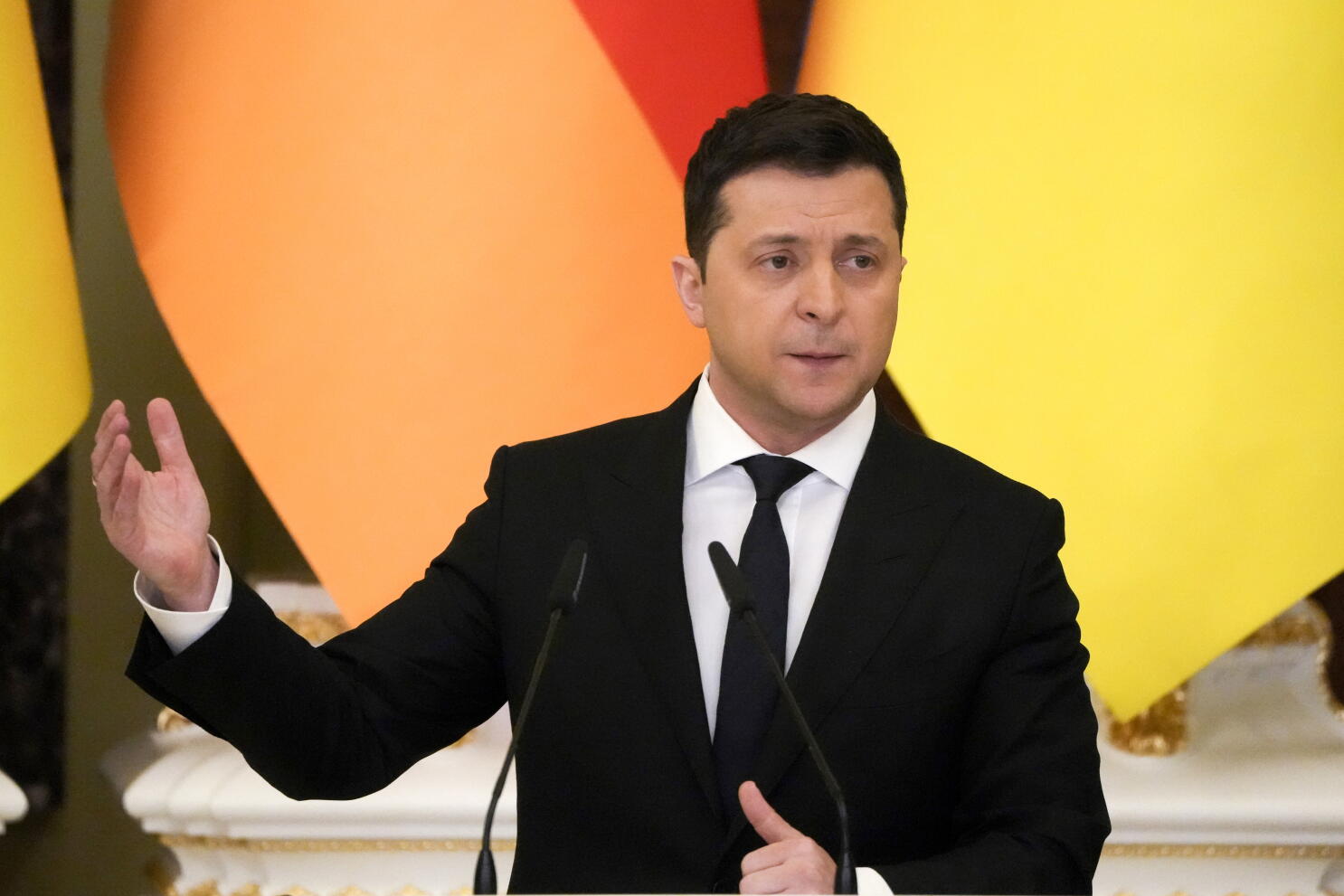
Ukrainian President Volodymyr Zelenskyy said Thursday that Kyiv expects European partners to join a new round of talks with the United States in the coming days, while confirming that Ukraine has adopted a retaliatory strategy against Russian data infrastructure after Moscow intensified attacks on Ukrainian data centers and communications networks.
The remarks add important detail to Zelenskyy’s earlier announcement that Ukrainian negotiators are traveling to the United States for meetings on Friday and Saturday. He said the talks would focus heavily on strengthening Ukraine’s air defenses following a renewed wave of Russian strikes that Ukrainian authorities say killed more than 70 people over two days, including dozens in Pryluky and Kramatorsk.
Zelenskyy said Kyiv also expects European partners to participate in discussions with Washington, reinforcing Ukraine’s longstanding position that European governments should have a direct role in negotiations affecting the future of the war and the continent’s security architecture. The Ukrainian president did not publicly identify every European government expected to take part in the upcoming U.S. discussions, and the exact format of the meetings had not been fully disclosed by Thursday evening.
The new diplomatic push comes at one of the deadliest moments for Ukrainian civilians in recent months. Zelenskyy’s office said Russian attacks on Pryluky, Kramatorsk, Kyiv and other cities had killed 78 people and wounded 215 over recent days, while Reuters reported more than 70 deaths over two days as casualty figures continued to rise.
One of the worst strikes hit Kramatorsk on Thursday, where Ukrainian authorities said a Russian guided bomb struck public buses and killed at least 30 people. The previous day, a Russian missile destroyed a residential building in Pryluky in northern Ukraine, killing 22 people, including five children, according to Ukrainian officials.
Russia has said its attacks are directed at military-industrial and supporting infrastructure rather than civilians. Ukraine says repeated strikes have hit homes, transport networks, energy systems and communications infrastructure in populated areas. Independent reporting has confirmed extensive civilian casualties and damage during the latest attacks, although the military purpose of individual targets can be difficult to establish immediately in an active war zone.
The casualty toll has intensified Zelenskyy’s pressure on Washington for additional air-defense assistance. Ukraine has repeatedly requested more Patriot missile systems and interceptors, advanced aircraft munitions and other defensive technologies capable of countering ballistic missiles and faster Russian attack drones.
Zelenskyy has argued that Russian missile attacks remain one of the most serious threats to Ukrainian cities because ballistic weapons are much more difficult to intercept than slower drones. Ukraine possesses Patriot systems capable of engaging those threats, but the number of launchers and available interceptors remains limited.
Those shortages have become more acute as demand for advanced air-defense systems increases globally. Ukraine is competing for missile supplies with other U.S. allies and partners at a time when conflicts elsewhere have also placed pressure on existing inventories.
The president said strengthening air defense would therefore be one of the central priorities for the Ukrainian delegation traveling to the United States. The trip follows months of increasingly complicated diplomacy involving Washington, Kyiv, Moscow and European governments as the United States continues to seek a negotiated end to the war.
Earlier Thursday, Zelenskyy criticized what he described as insufficient American pressure on Russia and questioned the logic of discussing future economic projects with Moscow while Russian attacks on Ukraine were intensifying. His remarks came as Reuters reported that U.S. and Russian officials had explored possible commercial arrangements involving energy assets and future European gas supplies.
The Ukrainian leader rejected suggestions that the conflict had reached an unavoidable diplomatic stalemate and argued that stronger pressure on Russia could still change Moscow’s calculations. Kyiv has consistently maintained that negotiations without military and economic pressure would allow Russia to improve its position while continuing attacks.
European participation in the upcoming discussions is therefore politically important for Ukraine. Zelenskyy has repeatedly said Europe must be represented in negotiations over a settlement because European countries will ultimately bear much of the long-term responsibility for Ukraine’s security, reconstruction and deterrence against renewed Russian aggression.
The European Union has become one of Ukraine’s largest financial and military supporters since Russia’s full-scale invasion in February 2022. Earlier this week, Ukraine received a new €1.2 billion European Union tranche intended partly for defense, while European governments continue discussing winter energy support and additional military assistance.
Zelenskyy spoke Thursday with European Council President António Costa, briefing him on scheduled contacts with the American side and discussing financial support, Ukraine’s European Union accession process and the protection of energy infrastructure ahead of winter. Zelenskyy’s office said the Ukrainian negotiating team was already traveling for the upcoming U.S. meetings.
The president has also been in contact with senior European leaders including German Chancellor Friedrich Merz, French President Emmanuel Macron and Polish Prime Minister Donald Tusk as Kyiv attempts to strengthen air-defense capabilities and coordinate diplomatic strategy.
The United Kingdom, France and Germany have previously been discussed as possible European participants in formats involving Ukraine and the United States. Zelenskyy has said that Europe must be represented in any negotiations with Russia, although the exact countries or officials joining the latest U.S. discussions have not yet been publicly confirmed.
The diplomatic development comes alongside another important shift in the war: increasingly direct attacks on digital infrastructure.
Zelenskyy acknowledged Thursday that Ukraine has been striking Russian data infrastructure in response to Russian attacks on Ukrainian data centers. His comments followed a Ukrainian drone attack on a major data center operated by Russian technology company Yandex in the Ryazan region.
The Yandex facility, located in Sasovo, was struck overnight, triggering a fire and forcing the company to suspend operations at the site. Yandex said Thursday that it could not yet determine whether some of the damaged equipment could be restored.
The Sasovo complex is one of Yandex’s major data centers and hosts tens of thousands of servers. Reuters reported that the site also houses two of the company’s three major supercomputers used in the development and training of YandexGPT, the company’s artificial-intelligence system.
The attack appears to represent the first major confirmed strike against a Russian data center since the beginning of the full-scale war.
Yandex said no one was injured, but the fire caused infrastructure damage and contributed to technical disruptions affecting some services. The company said it was working to restore operations while assessing the scale of the damage.
The strike marks an expansion of Ukraine’s deep-strike campaign beyond the oil refineries, fuel depots, weapons factories, transport infrastructure and military facilities it has targeted repeatedly inside Russia.
Digital infrastructure has increasingly become part of the battlefield because modern economies, transportation systems, financial networks, communications providers and government services depend on large data centers.
Russia has accelerated attacks on Ukrainian data infrastructure over recent weeks. Ukrainian officials and technology operators have reported damage to facilities supporting internet, television and communications services, particularly in and around Kyiv.
One Russian strike in September hit a building containing data-center and communications infrastructure in the Ukrainian capital, disrupting some internet and media services. Ukrainian authorities subsequently placed greater emphasis on protecting data centers and moving critical digital infrastructure into more secure or underground facilities.
Zelenskyy made clear Thursday that Ukraine views those Russian attacks as establishing a basis for reciprocal action.
He said Ukraine is capable of striking Russian data centers and described the strategy as responding “in kind” to Moscow’s attacks on similar Ukrainian facilities.
The statement is significant because Ukrainian leaders have sometimes avoided explicitly claiming responsibility for individual deep strikes inside Russia, especially during the earlier years of the war. Kyiv now speaks much more openly about attacks on Russian energy and industrial infrastructure, arguing that facilities supporting Russia’s war economy are legitimate military targets.
The Yandex strike nevertheless raises a more complicated set of questions because commercial data centers can serve civilian businesses, consumers and public services alongside any military or state-linked functions.
Ukraine has not publicly provided detailed evidence establishing that the Sasovo facility directly supported Russian military operations. Zelenskyy’s comments instead framed the attack primarily as reciprocal action after repeated Russian attacks on Ukrainian digital infrastructure.
Russia is likely to characterize the strike differently. Moscow has repeatedly accused Ukraine of attacking civilian infrastructure inside Russia, while Kyiv says its long-range operations are intended to weaken Russia’s ability to wage war and impose costs on infrastructure supporting the Russian economy and military.
Both countries deny deliberately targeting civilians, although civilian infrastructure and residential areas have repeatedly been damaged during their respective long-range attacks.
The expansion of strikes into data infrastructure illustrates how the war has evolved beyond traditional military targets. Energy systems, ports, refineries, communications networks, railway infrastructure, warehouses and digital systems are increasingly being targeted because of their importance to national economic resilience.
That strategy is especially significant ahead of winter. Russia has repeatedly attacked Ukraine’s electricity grid and energy infrastructure in an effort to disrupt power supplies and increase pressure on the civilian population, according to Ukrainian and Western officials.
Ukraine, in response, has increasingly targeted Russian refineries and fuel infrastructure, arguing that energy revenue and petroleum supplies are central to Moscow’s ability to finance and sustain the war.
The Yandex strike suggests digital infrastructure may now become another area of reciprocal pressure.
The potential economic consequences could be considerable if such attacks become systematic. Modern data centers host banking services, logistics platforms, telecommunications systems, artificial-intelligence infrastructure, government databases and major commercial services.
Even temporary outages can affect thousands or millions of users.
Russia has been investing heavily in domestic digital platforms since Western companies reduced their presence after the 2022 invasion, making firms such as Yandex increasingly important to the country’s technology ecosystem.
Yandex provides search, maps, transportation, e-commerce, cloud services and artificial-intelligence products across Russia. Damage to a major facility therefore has consequences beyond one corporate property.
Thursday’s attack reportedly contributed to disruptions affecting several online systems, although Yandex said its core consumer services continued operating.
The company’s shares fell following news of the strike, reflecting investor concern about the vulnerability of large Russian technology assets to Ukrainian long-range drones.
Ukraine’s drone capabilities have expanded significantly. Kyiv has developed increasingly long-range systems capable of traveling hundreds of miles into Russian territory and has used them against refineries, weapons facilities and logistics sites far from the front.
Russia, meanwhile, has increased its use of ballistic missiles, cruise missiles and increasingly fast attack drones against Ukrainian cities.
The result is a widening infrastructure war in which each side is attempting to impose economic and strategic costs far behind the battlefield.
That escalation provides the immediate backdrop to the U.S. talks.
Ukraine enters the meetings seeking more air-defense capacity at the same time that it is demonstrating an increased ability to retaliate against Russian infrastructure. Zelenskyy appears to be using both strategies simultaneously: requesting stronger Western protection for Ukrainian cities while warning that Russia will face comparable consequences when it attacks critical Ukrainian systems.
The United States remains indispensable to Ukraine’s air-defense effort because some of the most important interception systems and ammunition are American-made.
Zelenskyy has also called for expanded Ukrainian access to Starlink satellite capabilities, arguing that additional technical support could improve Kyiv’s ability to locate and strike Russian missile-launching systems.
Washington has not publicly agreed to every Ukrainian request, and the Trump administration has continued pursuing direct contacts with Moscow as part of its effort to reach a negotiated settlement.
That creates tension with Kyiv. Ukrainian officials fear that economic engagement between Washington and Moscow could reduce pressure on the Kremlin without securing sufficient guarantees for Ukraine.
Zelenskyy’s insistence that European allies join the discussions appears partly designed to ensure that Kyiv is not negotiating alone with Washington while U.S. officials maintain separate contacts with Russia.
European governments have similar concerns because any settlement could have major consequences for sanctions, defense spending, NATO deployments and future security arrangements across the continent.
The latest Russian attacks have reinforced those concerns.
The official Ukrainian casualty figures of 78 dead and 215 wounded in recent strikes are based on information released by Zelenskyy’s office and regional authorities and could change as rescue operations and investigations continue.
Reuters independently reported that more than 70 people had been killed over two days, while AP confirmed the mass-casualty strikes in Pryluky and Kramatorsk.
The scale of those losses has strengthened Kyiv’s argument that diplomatic discussions cannot be separated from the immediate need for stronger air defenses.
Ukraine is therefore expected to use the Friday and Saturday meetings to press for weapons, sanctions pressure and a negotiating framework that includes Europe.
The talks may also address broader diplomatic questions surrounding possible U.S.-Russia contacts, economic negotiations and the conditions under which direct peace discussions could resume.
Kyiv has said it is willing to participate in diplomatic formats but continues to insist that Russia must demonstrate genuine willingness to stop attacks and negotiate seriously.
Moscow argues that Ukraine and its Western supporters have rejected proposals that could lead to a settlement and says its military campaign will continue until its objectives are achieved.
Those positions remain far apart.
The emerging data-center conflict adds another layer of uncertainty because it creates a new category of infrastructure that could be subjected to sustained attacks.
For Ukraine, digital resilience has become essential not only to civilian communications but also to government services, wartime banking, military coordination and economic activity.
For Russia, large technology platforms such as Yandex are similarly important to the functioning of the domestic economy.
If both countries increasingly treat data centers as legitimate targets, companies could be forced to distribute servers across smaller facilities, build greater physical protection and move sensitive infrastructure underground.
Ukraine has already begun taking some of those steps.
The immediate diplomatic and military developments are therefore increasingly interconnected. Kyiv is asking Washington and European allies for greater protection against Russian missile and drone attacks while simultaneously expanding its own ability to strike infrastructure deep inside Russia.
Zelenskyy’s latest remarks confirm that Ukraine regards the Yandex attack as part of a deliberate retaliatory strategy rather than an isolated incident.
At the same time, the Ukrainian president is seeking a broader Western negotiating front.
His expectation that European partners will participate in upcoming U.S. discussions reflects Kyiv’s concern that decisions about sanctions, security guarantees and the future of the war should not be made through bilateral Washington-Moscow channels that exclude Ukraine’s principal European supporters.
The next two days will therefore be important on both the diplomatic and military fronts. Ukrainian representatives are expected to meet U.S. officials while European participation is being arranged, with air defense at the top of Kyiv’s agenda following the latest mass-casualty Russian strikes.
What remains unclear is whether those talks will produce immediate new military assistance or meaningful movement toward negotiations with Moscow. It is also uncertain whether the strike on Yandex’s Sasovo facility marks the beginning of a sustained Ukrainian campaign against Russian digital infrastructure or a limited response to recent attacks on Ukraine’s own data centers.
For now, Zelenskyy’s message is clear: Ukraine wants stronger American and European involvement in protecting its cities and shaping any diplomatic process, while Kyiv is also prepared to impose reciprocal costs on Russian infrastructure when Moscow targets critical systems inside Ukraine. That combination of diplomacy, air-defense demands and expanded long-range retaliation is increasingly defining the next phase of the war.