RUSSELL BRAND SENTENCED TO 10½ YEARS IN PRISON FOR RAPE AND SEXUAL ASSAULTS
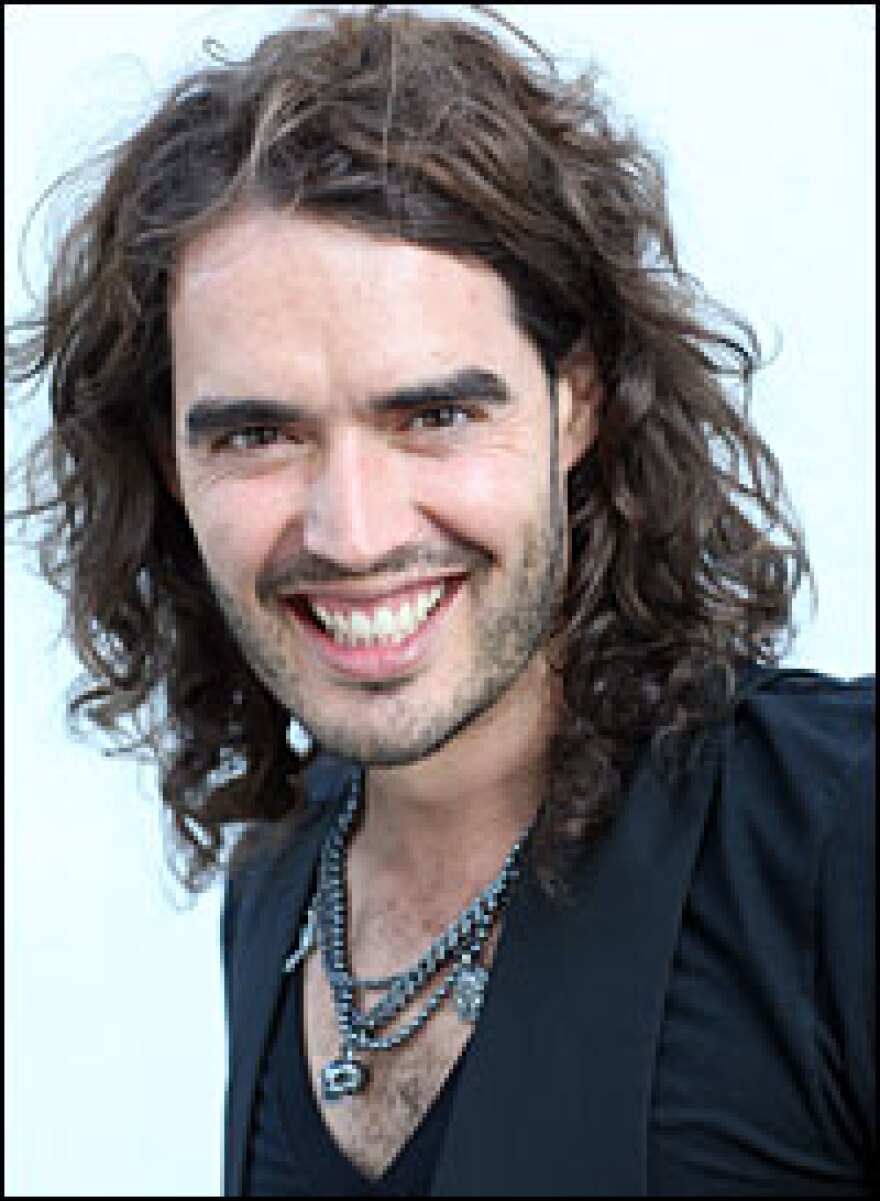
British actor and comedian Russell Brand has been sentenced to 10 years and six months in prison after being convicted of raping one woman and sexually assaulting three others between 2004 and 2009. A jury at Southwark Crown Court found Brand guilty of one rape charge and three sexual-assault counts but acquitted him of two other rape charges and one attempted indecent assault allegation. Judge Joel Bennathan ordered Brand to serve two-thirds of the sentence in custody before release on licence.
British actor, comedian and former television presenter Russell Brand has been sentenced to 10 years and six months in prison after being convicted of raping one woman and sexually assaulting three others, bringing a dramatic fall from celebrity to imprisonment for a performer who was once one of the most recognizable figures in British entertainment. Brand, 51, was sentenced at Southwark Crown Court in London on Monday after a jury last week found him guilty of four sexual offenses committed against four women between 2004 and 2009, while acquitting him of two additional rape charges and one count of attempted indecent assault. Judge Joel Bennathan ordered that Brand serve two-thirds of his sentence in custody before being released on licence, describing the crimes as serious abuses committed by a man who had used fame, status and access to women as part of a pattern of predatory behavior.
The sentencing followed a four-week trial in which prosecutors presented evidence from women who described being assaulted at different stages of Brand’s rise through British comedy, radio and television. The most serious conviction related to the rape of a woman in 2009 after Brand met her backstage following one of his comedy shows at the Hammersmith Apollo. The woman later went to Brand’s home, where consensual sexual activity began, but she told the court that he then went further without her consent and refused to stop when she asked him. The jury accepted her account and convicted Brand of rape, making that offense the central element of the sentence imposed on Monday.
The three sexual-assault convictions involved separate women and incidents spanning several years. In one case, Brand was convicted of sexually assaulting a woman at a colleague’s birthday celebration in a central London bar in 2004. In another, he was found guilty of kissing and groping a woman at a London radio station around 2004 or 2005. The third conviction involved a woman working on a television-related project in 2009 who said Brand demanded a massage and then pressed his face into her groin without consent during a recording session. The jury found those allegations proved beyond reasonable doubt, while rejecting some of the other charges brought against him.
Brand had pleaded not guilty to all seven counts and repeatedly maintained that he had never engaged in non-consensual sexual activity. During the trial, he acknowledged that his earlier life had been characterized by promiscuity, drug and alcohol abuse and what he described as irresponsible behavior, but insisted that he had never crossed the line into rape or sexual assault. The jury nevertheless returned unanimous guilty verdicts on four counts after deliberating for more than eight hours, finding that his conduct toward four women amounted to criminal sexual offenses.
The Crown Prosecution Service described Brand as predatory and said he exploited the fame and power he had accumulated during his career. Senior Crown Prosecutor David Roberts said Brand’s status gave him repeated opportunities to target women around him and argued that the cases demonstrated an abuse of power combined with a disregard for consent. Prosecutors emphasized that the four women came forward independently and that there is no single correct way for victims of sexual violence to respond or any fixed period within which they must report what happened to them.
The age of the allegations became a central issue throughout the investigation and trial because the offenses occurred between 2004 and 2009, many years before Brand was charged. British law allows serious sexual offenses to be prosecuted even decades after they occur, and prosecutors repeatedly stressed that delayed reporting should not automatically be interpreted as evidence that an allegation is unreliable. Trauma, fear, uncertainty, shame, concerns about being believed and power imbalances can all affect when victims decide to report sexual violence.
The Metropolitan Police investigation began after public allegations against Brand emerged in 2023 following a joint investigation by The Sunday Times, The Times and Channel 4’s Dispatches. The broadcast and newspaper reporting prompted women to contact police separately, eventually leading detectives to open a major criminal investigation. Police said the inquiry involved more than 100 witnesses, hundreds of statements and the review of more than 1,400 documents, reflecting the challenge of reconstructing allegations dating back more than two decades.
Detective Superintendent Andy Furphy, who helped lead the Metropolitan Police investigation, praised the women who came forward for their courage and resilience. Police said the convictions demonstrated that fame does not place anyone beyond the reach of criminal law and encouraged other potential victims of sexual offenses to contact authorities regardless of how much time has passed. Investigators have also said separate allegations remain under examination, though Brand has not been convicted in relation to those matters and they must therefore be treated as allegations unless criminal charges are brought and proved.
The court heard that Brand’s career gave him extraordinary access to audiences, production staff, performers and fans during the period covered by the charges. By the mid-2000s he had become a major figure in British entertainment, moving from stand-up comedy into radio and television before later building a Hollywood film career. His public persona was deliberately provocative, sexualized and chaotic, and he openly discussed drug use, promiscuity and relationships in interviews and performances.
That persona has become the subject of renewed scrutiny following the convictions. The issue is not whether Brand’s comedy or public image itself constituted criminal conduct, but whether media organizations and colleagues overlooked warning signs because provocative behavior was considered part of his commercial appeal. Separate institutional reviews by broadcasters have examined how concerns about Brand were handled during his years working in television and radio, raising wider questions about workplace culture and the ability of junior staff to challenge powerful celebrities.
The BBC apologized after an internal review concluded that there had been what it described as a culture of silence during Brand’s time with the corporation, when concerns were not always formally raised or properly addressed. The broadcaster found that staff could feel unable to complain because of Brand’s status and influence. Channel 4 has also apologized over failures to investigate a serious complaint during the period in which Brand worked for the broadcaster. Those institutional findings are separate from the criminal convictions, but they have become part of the wider examination of how Brand was able to operate for years without the allegations resulting in formal criminal proceedings.
The prosecution’s case was built around the testimony of individual women rather than a claim that every allegation made publicly about Brand had been proved. That distinction is essential because the jury acquitted him on three of the seven charges. He was found not guilty of two rape allegations and one attempted indecent assault charge, demonstrating that jurors assessed each allegation separately rather than treating Brand’s public reputation as proof of guilt across all counts.
One of the acquittals concerned an allegation that Brand raped a woman in a hotel room during the Labour Party conference in Bournemouth in 1999. Another involved an allegation of oral rape in connection with the woman whom Brand was convicted of sexually assaulting at a London bar. He was also acquitted of attempting to indecently assault another woman by dragging her toward bathrooms in the offices of MTV. Those verdicts remain legally important because Brand is innocent of those charges following the jury’s decisions and should not be described as having committed offenses for which he was acquitted.
At sentencing, the court had to consider the seriousness of the rape conviction alongside the three sexual assaults, the effect on the women involved and the historical context of the crimes. British sentencing practice requires judges to evaluate harm, culpability, aggravating and mitigating circumstances and the totality of multiple offenses before imposing an overall sentence. Brand’s defense lawyers argued that he had changed significantly since the period covered by the convictions, pointing to his recovery from drug addiction, family life and more recent Christian faith.
Those arguments did not prevent the court from imposing a double-digit prison term. Judge Bennathan had already warned Brand after the guilty verdicts that imprisonment was inevitable because of the seriousness of the offenses. Brand was immediately taken into custody following the verdict and returned to court for formal sentencing on Monday. He mouthed words of affection toward his wife before being taken away following the sentencing hearing.
Under the sentence imposed, Brand is expected to spend approximately seven years in prison before serving the remainder of the 10-and-a-half-year term on licence, assuming the standard release provisions described by the judge apply. Release on licence does not mean the sentence ends at that point. It means an offender serves the remainder of the sentence in the community subject to conditions and supervision, with the possibility of recall to custody if those conditions are breached.
The victims’ experiences formed an important part of the sentencing process. One woman said the psychological effects of the rape had remained with her for years and continued to affect her daily life. Victim-impact statements allow courts to understand the consequences of crimes beyond the physical events themselves, including trauma, anxiety, relationship difficulties, fear and changes in how victims view themselves and others.
The sentence represents an extraordinary reversal for a man who built a career on charisma, controversy and celebrity. Brand became nationally known in Britain through stand-up, MTV, radio and television before moving into Hollywood films including Forgetting Sarah Marshall, Get Him to the Greek and Arthur. At the height of his mainstream career, he appeared on major American television programs, hosted awards shows and became a fixture in celebrity media.
His public profile later shifted significantly. After reducing his work in mainstream entertainment, Brand developed an online following focused on politics, spirituality, wellness and criticism of established institutions. That audience expanded considerably during the COVID-19 pandemic and later became central to his business and public identity. Supporters continued to defend him after allegations emerged in 2023, while Brand described himself as the target of coordinated attacks and continued to deny any non-consensual sexual conduct.
The criminal trial, however, required the jury to evaluate evidence under the legal standard of proof rather than public debate surrounding Brand’s media persona. Prosecutors had to prove each charge beyond reasonable doubt, and the mixed verdicts show that jurors distinguished between allegations they considered sufficiently proved and those they did not. Four convictions resulted, including rape, while three charges ended in acquittal.
That legal distinction is important because the case has generated strong reactions across social media and political communities. Some of Brand’s supporters previously argued that allegations against him were part of an effort to silence his political commentary, while critics said his celebrity had protected him from accountability for years. The criminal convictions establish only what the jury found proved in relation to the four offenses before it, not every allegation or broader claim made about Brand.
The timing of the investigation also illustrates how public reporting and criminal inquiries can intersect without being the same process. Investigative journalism in 2023 brought allegations into public view and encouraged some women to contact police, but journalists do not determine criminal guilt. Police then conducted their own investigation, prosecutors decided whether charges met the evidentiary and public-interest tests, and a jury eventually determined guilt or innocence at trial.
The CPS said the case sends a message that celebrity status does not change the legal meaning of consent. That principle became a recurring theme throughout the prosecution because Brand’s defense acknowledged consensual sexual encounters with women during a period when he was famously promiscuous. The central legal question was not whether sexual activity occurred but whether the women consented to the specific acts alleged.
Consent under English criminal law requires agreement by choice and the freedom and capacity to make that choice. A person agreeing to one form of sexual activity does not automatically consent to another, and consent can be withdrawn. Those principles were directly relevant to the rape conviction because the woman’s account described consensual sexual contact that later crossed into an act she said she did not consent to and asked Brand to stop.
The verdict therefore rejects a common misconception surrounding sexual offenses: that previous attraction, consensual intimacy or willingness to visit someone’s home removes the possibility of rape. The jury concluded that the specific act at issue was non-consensual, regardless of consensual activity that may have occurred beforehand.
The three sexual-assault convictions similarly concerned conduct prosecutors said occurred without consent despite Brand interacting socially or professionally with the women involved. The legal significance lies in the individual act rather than the broader relationship between the parties. A colleague, fan, acquaintance or person voluntarily spending time with someone retains the right to decide whether any sexual contact occurs.
Brand’s sentence also adds to a broader reckoning in the entertainment industry over the conduct of powerful men and the institutions surrounding them. In Britain and elsewhere, allegations against high-profile actors, broadcasters and music figures have forced media companies to examine how complaints were handled and whether commercial considerations discouraged scrutiny of valuable stars.
The questions raised by the Brand case extend beyond whether executives had direct knowledge of criminal offenses. They include whether workplace cultures tolerated inappropriate conduct, whether junior employees had safe mechanisms to report concerns, whether complaints were properly recorded and investigated, and whether a celebrity’s commercial importance influenced the willingness of organizations to challenge behavior.
Institutional investigations into Brand’s years in broadcasting have already produced findings that some concerns were mishandled. Those reviews are not evidence that media companies knew about or facilitated the specific crimes for which Brand was convicted, and they should not be described that way. They do, however, show that organizations have themselves acknowledged shortcomings in workplace culture and complaint handling.
The Metropolitan Police have said their work involving Brand has not necessarily ended. Investigators continue examining separate allegations, and police have encouraged anyone with information to come forward. Any future allegations would have to undergo the same evidentiary process as the current case, and Brand would retain the presumption of innocence in relation to any new charge unless convicted.
The possibility of additional investigation means Monday’s sentence may not represent the final legal development involving Brand, although no assumption should be made that further allegations will necessarily result in charges. Police and prosecutors must independently assess evidence, and historic sexual-offense investigations can be especially complex because witnesses, records and physical evidence may be difficult to locate after many years.
For the four women whose allegations resulted in convictions, the sentence marks the conclusion of a long criminal process that began years after the offenses themselves. Prosecutors and police have emphasized the significance of delayed reporting in the case, arguing that victims should not believe they have lost the opportunity to seek justice simply because they were unable or unwilling to report an assault immediately.
The sentence also places Brand’s celebrity career in a radically different context. His earlier public persona and media work will remain part of British cultural history, but he is now a convicted rapist and sexual offender serving a lengthy prison term. That is not a label based on allegation or media reporting; it follows convictions reached unanimously by a jury after a criminal trial.
At the same time, accuracy requires preserving the limits of those convictions. Brand was convicted of one rape and three sexual assaults against four women between 2004 and 2009. He was acquitted of two rape charges and one attempted indecent assault charge. Other allegations remain under investigation and should not be treated as established crimes unless further legal proceedings produce convictions.
For prosecutors, the case demonstrates that historical sexual offenses can still be brought before a jury when sufficient evidence exists, even where many years have passed. For media organizations, it renews scrutiny of how complaints against powerful individuals are handled. For victims of sexual violence, authorities hope the convictions will reinforce the message that delayed reporting does not automatically prevent a case from being investigated or prosecuted.
Brand now begins a prison sentence of 10 years and six months, with the court stating that two-thirds is to be served in custody before the remainder is served under licence. The criminal case has therefore moved from disputed allegations and investigation to conviction and punishment, while questions surrounding his years in entertainment and the institutions that employed him are likely to continue.
The legal position after Monday’s sentencing is clear even as those wider debates continue. A jury found Russell Brand guilty beyond reasonable doubt of raping one woman and sexually assaulting three others, the judge imposed a lengthy custodial sentence, and the victims retain lifelong anonymity under British law. Future attention will now turn to any appeal Brand may seek, the remaining police investigations and the continuing institutional examination of how warning signs and complaints surrounding one of Britain’s former entertainment stars were handled during the years in which his influence was at its height.