AT LEAST 25 SEAFARERS KILLED AS IRAN WAR TURNS STRAIT OF HORMUZ INTO DEADLY FRONT LINE FOR CIVILIAN SHIPPING
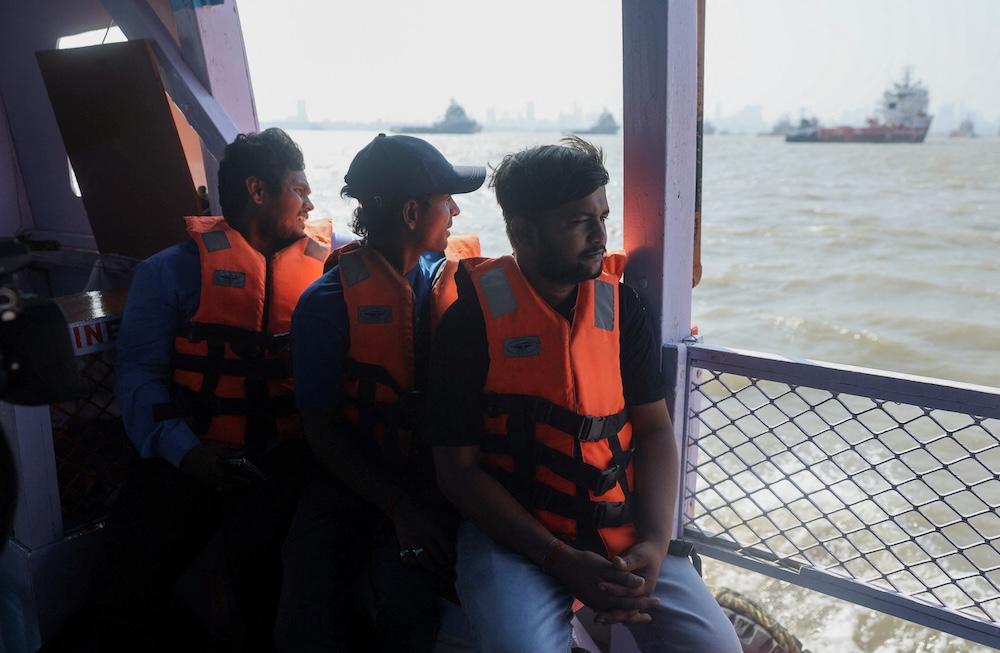
At least 25 merchant seafarers have been killed since the Strait of Hormuz conflict began on February 28, according to the International Maritime Organization, which has verified at least 130 attacks on commercial vessels. Thousands of civilian sailors have also been injured, stranded or exposed to months of danger in the Persian Gulf. Indian seafarers have suffered a particularly heavy toll, although figures vary by classification: Indian shipping officials reported at least 11 Indian sailors killed in the Hormuz theater by October, with additional Indian deaths recorded in other conflict zones. The 25th confirmed seafarer death followed the November attack on the tanker VELOS SAPPHIRE. International Maritime Organization
At least 25 civilian seafarers have been killed and many more wounded since the Middle East conflict that began with U.S. and Israeli strikes on Iran on February 28 spilled directly into one of the world’s most important shipping corridors, turning the Strait of Hormuz and surrounding Persian Gulf waters into a dangerous front line for merchant crews whose jobs require them to carry oil, gas, food, fertilizer and other essential cargo through an active conflict zone. The International Maritime Organization says it has verified at least 130 attacks on commercial vessels in the region since the conflict began, with thousands of seafarers exposed to missile strikes, drones, explosions, fires, prolonged confinement and severe psychological pressure even though they are civilians with no role in the political or military confrontation. The latest confirmed fatality followed an attack on the tanker VELOS SAPPHIRE in early November, bringing the verified seafarer death toll to 25 and renewing international calls for governments involved in the conflict to stop treating civilian shipping as an extension of the battlefield.
The deaths have highlighted a largely overlooked human cost of the war. International attention has focused heavily on military operations, energy prices, nuclear negotiations and the strategic importance of the Strait of Hormuz, but the merchant sailors physically moving cargo through those waters have been absorbing some of the most immediate risks. Crews aboard oil tankers, bulk carriers, container vessels and other commercial ships have had to navigate waters where missiles and other projectiles have repeatedly struck vessels, while hundreds of ships have at various points been unable to leave the Persian Gulf safely. For those crews, the conflict is not an abstract geopolitical dispute but a daily calculation involving whether their ship will be attacked, whether they will have enough supplies if movement remains restricted and whether they will be able to return home when their contracts end.
The International Maritime Organization has repeatedly condemned attacks on merchant shipping and warned governments that seafarers must not become targets because of disputes over which they have no control. IMO Secretary-General Arsenio Dominguez said in November that sailors continued to lose their lives, suffer serious injuries, face abandonment and be deprived of basic needs such as food, water and medical care as a consequence of geopolitical conflicts. The organization’s latest verified incident list showed 130 confirmed attacks by November 6, a dramatic increase from 21 confirmed incidents in early April and 80 by mid-September, demonstrating how the maritime dimension of the conflict has intensified rather than disappeared.
The most recent death involved the Marshall Islands-flagged oil-products tanker VELOS SAPPHIRE, which was struck while sailing toward Bahrain. The vessel’s Greek manager said an explosion believed to have resulted from a missile attack caused a fire aboard the tanker. One crew member, initially reported missing, was later found fatally injured. The remaining crew extinguished the fire, and the ship was taken to port in Bahrain for inspection. No pollution was reported, but the attack became another entry in a growing list of commercial ships damaged in a conflict that has repeatedly crossed into international shipping lanes.
The victim aboard VELOS SAPPHIRE was identified by the IMO as Filipino, making him the 25th confirmed seafarer killed since the Strait of Hormuz conflict began. His death was particularly significant because it came months after repeated international warnings that commercial crews were being exposed to unacceptable danger. By then, shipping companies, unions and maritime authorities had already spent months demanding safer transit arrangements, humanitarian corridors and stronger guarantees from governments involved in the fighting.
Earlier attacks had already demonstrated the scale of the danger. In June, the Palau-flagged tanker SETTEBELLO was struck near the Strait of Hormuz, causing a fire and killing three seafarers. The IMO said at the time that the attack brought the confirmed death toll to 14. By September, the number had risen to at least 22 as attacks continued on merchant vessels throughout the Gulf and surrounding waters. The latest total of 25 shows that the danger has persisted despite repeated ceasefire attempts and diplomatic efforts to reduce hostilities.
Indian sailors have suffered a particularly heavy share of the casualties because India supplies one of the world’s largest seafaring workforces. Indian government and shipping officials have reported that at least 11 Indian seafarers were killed in attacks connected directly to the Strait of Hormuz conflict by October, while additional Indian sailors have died in other conflict zones, including the Black Sea. Indian authorities have also reported injuries, missing crew members and sailors stranded aboard vessels unable to leave the region safely.
The size of India’s maritime workforce helps explain why its citizens have been so heavily exposed. India is one of the largest suppliers of professional seafarers globally, with hundreds of thousands of Indian nationals working on commercial ships. Most serve on foreign-flagged vessels rather than Indian-flagged ships, meaning they can be assigned to routes and vessels operated by companies based elsewhere even when geopolitical risks increase sharply. Indian officials have acknowledged that on many international ships, Indian crew members are among the officers, engineers and ratings responsible for keeping the vessel operating.
That international structure makes protecting them complicated. A sailor may be an Indian citizen, employed through an Indian agency, working for a company based in Europe or Asia, aboard a vessel registered in Panama, Liberia, the Marshall Islands or another flag state, carrying cargo owned by a separate company and traveling through waters controlled or contested by several governments. When an attack occurs, responsibility for evacuation, medical treatment, compensation and repatriation can therefore involve multiple countries, insurers, employers and maritime authorities.
India has responded by increasing monitoring of its nationals at sea and urging shipping companies to avoid sending Indian crews into the most dangerous areas where possible. The Directorate General of Shipping directed shipowners, managers and recruitment agencies to exercise heightened caution over deployments to vessels operating in the Persian Gulf and Strait of Hormuz. Indian authorities have also established systems to track sailors aboard affected vessels and assign liaison officers to families when crew members are killed or injured.
The policy reflects the growing tension between economic necessity and personal safety. Merchant shipping cannot simply stop without consequences because the Persian Gulf remains one of the world’s most important centers of oil and gas production. Before the conflict, more than 100 tankers could transit the Strait of Hormuz in a typical day, moving energy supplies toward Asia, Europe and other markets. When traffic through the strait slows or stops, energy prices can rise rapidly and countries dependent on Gulf oil and gas begin looking for alternative supplies.
Seafarers are the people who make that trade physically possible. Every tanker passing through the strait requires crews to operate engines, navigation systems, cargo equipment, communications, safety systems and maintenance operations around the clock. Even when shipping companies receive security warnings, vessels may still have commercial obligations to deliver cargo, leaving crews caught between contractual responsibilities and a deteriorating security environment.
Some sailors accept assignments in dangerous waters because the pay is considerably higher. Indian officials have acknowledged that wages for high-risk routes can be two or three times those available elsewhere, providing a powerful financial incentive for seafarers supporting families at home. But higher pay does not eliminate the risk that a civilian ship could suddenly be struck by a missile, drone or other weapon while its crew has little ability to defend itself.
The human consequences extend beyond deaths and physical injuries. Thousands of sailors have spent prolonged periods trapped aboard ships unable to leave the Persian Gulf because of insecurity around the Strait of Hormuz. In April, the IMO estimated that around 20,000 civilian seafarers remained aboard vessels in the region under conditions of intense uncertainty. By August, the number still unable to depart safely was estimated at roughly 6,000 sailors aboard as many as 400 vessels, even after some ships and crews had managed to escape the region.
For stranded crews, the experience can involve months aboard the same vessel with limited opportunities to go ashore or be replaced. Maritime contracts normally provide for crew rotations so sailors can return home after extended periods at sea, but those schedules become difficult or impossible when ports close, flights are disrupted or vessels cannot safely move. Some seafarers have remained far beyond their planned contracts while families wait thousands of miles away without certainty about when they will return.
Food, water, medicine and fuel can also become concerns when vessels remain anchored or trapped for prolonged periods. Ships are designed to operate independently for extended voyages, but not indefinitely. Resupply requires access to ports, service vessels or safe transfer arrangements, all of which become harder in a conflict zone. The IMO has warned that some sailors affected by the crisis have experienced shortages of basic necessities and delays in medical care.
Mental health has emerged as another major issue. Living aboard a merchant vessel is already physically and psychologically demanding during normal operations, with crews separated from their families for months at a time. When the ship is sitting within range of missiles or drones, crew members may spend nights listening to explosions and monitoring alerts without knowing whether their own vessel will be struck. That prolonged uncertainty can produce anxiety, sleep problems, exhaustion and trauma even among sailors who are never physically injured.
Accounts from Indian seafarers who eventually returned home have described hearing explosions night after night, facing dwindling food supplies and struggling to communicate with their families. Some have had to leave vessels and travel overland through multiple countries because traditional maritime routes were too dangerous. These experiences demonstrate why the effects of the conflict on seafarers cannot be measured only by the number killed or wounded.
The conflict has also exposed the vulnerability of the global shipping system to regional warfare. The Strait of Hormuz is one of a small number of maritime chokepoints through which an enormous share of global energy trade passes. At its narrowest point, commercial vessels move through tightly defined shipping lanes between Iran and Oman. Disruption there can immediately affect tanker availability, insurance costs, freight rates and the price of oil and liquefied natural gas.
Shipping companies operating in such environments face increasingly expensive insurance and security requirements. War-risk premiums can rise rapidly when attacks occur, and insurers may demand additional payments before vessels enter certain areas. Those costs eventually feed through supply chains, increasing the price of transporting energy and other goods even for consumers thousands of miles away from the conflict.
The risks also create difficult decisions for shipowners. Refusing to enter the region may protect crews but leave cargo undelivered, breach commercial contracts and remove essential transport capacity from global markets. Continuing to operate may maintain trade but expose civilian crews to potentially lethal attacks. Maritime unions have argued that commercial pressure should never be allowed to override the right of seafarers to refuse work that places them in unreasonable danger.
That concern has helped fuel protests by maritime workers internationally. Dockworkers and seafarers in Europe and elsewhere have staged actions against the use of commercial shipping routes connected to war zones, demanding stronger protection for crews and greater accountability for governments whose military operations put merchant sailors at risk. Some unions have also called for medical personnel aboard vessels operating in high-risk zones and stronger compensation arrangements for injured seafarers and the families of those killed.
The IMO has consistently emphasized that international law requires protection of civilian shipping and freedom of navigation. Its governing council has repeatedly called on states not to take measures that endanger seafarers and has stressed that the right of transit passage through internationally used straits should not be threatened or suspended. Those statements have become increasingly forceful as the casualty count has risen.
In March, when seven seafarers had already died, the IMO convened an extraordinary session over the worsening maritime crisis. By April, confirmed attacks had reached 21 and 10 seafarers were dead. The organization said fragmented responses were no longer sufficient and called for coordinated diplomatic action to evacuate stranded crews. By June, the confirmed fatality count had reached 14, and by August it had climbed to 19. September brought at least 22 confirmed deaths before November’s attack on VELOS SAPPHIRE pushed the total to 25.
That progression demonstrates how civilian shipping has become increasingly entangled in a conflict that began on land and in the air. Merchant vessels are not merely passing near a battlefield; some have effectively become casualties of the fighting themselves. Even when a ship is not intentionally targeted because of its cargo or ownership, weapons operating in a crowded maritime environment can still strike or damage civilian vessels, creating risks of fire, sinking and environmental disaster.
Oil and chemical tankers pose a particularly serious danger because damage to cargo tanks can release large quantities of fuel or hazardous material into the sea. So far, some recent attacks have damaged ships without causing major pollution, but maritime authorities have repeatedly warned that a serious spill in the confined waters of the Persian Gulf could have enormous environmental and economic consequences. Ports, fisheries, desalination plants and coastal communities throughout the region depend on clean water and functioning maritime infrastructure.
A major tanker casualty could also transform a humanitarian crisis into an environmental one. Fire aboard a loaded tanker can threaten dozens of crew members while making rescue operations extremely dangerous. If the vessel loses propulsion or steering, it can drift into shipping lanes or coastal areas before assistance arrives. These risks make protection of merchant shipping not only an issue of trade but one of public safety and environmental security.
The prolonged crisis has also shown the limitations of ceasefires and political agreements that fail to produce lasting maritime security. In June, the IMO announced preparations for a large-scale evacuation of thousands of stranded seafarers following an agreement intended to ease the conflict. The organization said it had secured safety guarantees and expected more than 11,000 sailors to be evacuated. Subsequent attacks, however, demonstrated that the maritime environment remained unstable.
By July, the IMO was again warning that several ships had been attacked and urging operators to avoid exposing seafarers unnecessarily to the Strait of Hormuz. Roughly 6,000 seafarers were still stranded in the Gulf at that stage. By late August, the organization said hundreds of ships and thousands of sailors still faced difficulties leaving the region safely.
The latest November incidents confirm that commercial shipping has yet to return to anything resembling normal security conditions. The IMO’s list includes ships damaged repeatedly through late October and early November, including tankers and other commercial vessels operating near Iran, Oman, Qatar, Saudi Arabia and the Strait itself. Each new incident reinforces uncertainty among crews and insurers about whether a vessel can complete a voyage safely.
The danger is particularly troubling because most merchant seafarers have no involvement in the political decisions behind the war. Crews are multinational, often including sailors from India, the Philippines, Eastern Europe and other major maritime labor markets. Their primary responsibility is moving goods between countries, yet they can find themselves exposed to weapons because of the nationality of a shipowner, the flag of the vessel, its cargo, its destination or simply the waters through which it happens to travel.
The IMO has therefore increasingly described the issue in humanitarian terms. Dominguez has argued that seafarers should not lose their lives simply because they are doing their jobs and has repeatedly called on governments to de-escalate. The organization says its primary concern is not only maintaining trade but protecting the people aboard the ships that make international commerce possible.
That distinction is important because public discussion of the Strait of Hormuz often focuses on barrels of oil, tanker movements and energy prices rather than human beings. When shipping traffic declines, markets calculate how much crude is delayed and economists estimate the effect on inflation. For a crew aboard a damaged vessel, however, the consequences are immediate: fire, injury, missing colleagues and the possibility that rescue services may be operating in the same dangerous environment.
The death of the 25th seafarer has therefore become another warning that the human cost of the conflict is continuing even as diplomatic negotiations attempt to reduce tensions. The number is not an estimate from activists or shipping unions; it is the confirmed toll maintained by the International Maritime Organization using reports from flag states, coastal governments and other verified sources. The real impact is broader because it does not include only those killed but also injured sailors, missing crew, people suffering trauma and thousands whose contracts and lives have been disrupted by prolonged confinement aboard ships.
Indian seafarers remain among those most exposed because of their enormous presence in the global merchant fleet. Official counts have varied depending on whether authorities are referring only to the Strait of Hormuz, the wider West Asia conflict or deaths in multiple maritime war zones, but Indian government figures consistently show a severe toll. At least 11 Indian sailors were reported killed in the Hormuz theater by October, while broader counts of Indian seafarer deaths in conflict-related shipping incidents have been higher.
The nationality figures should therefore be reported carefully rather than combined into a single misleading total. Five Indian seafarers reported among a total of 16 maritime deaths cited by Indian shipping officials were killed in the Black Sea rather than the Strait of Hormuz, meaning they should not be counted among the 25 deaths confirmed by the IMO in the Hormuz conflict. More recent Indian government figures also use slightly different classifications for West Asia casualties, further demonstrating why nationality totals need attribution.
What is not disputed is that India has paid one of the heaviest human costs among international maritime labor suppliers. Its sailors work aboard vessels belonging to companies around the world, and the majority of Indian seafarers killed during the crisis have reportedly been serving on foreign-flagged ships. That reality has made New Delhi increasingly vocal in calling for protection of commercial shipping and has prompted stronger monitoring of Indian crews in dangerous waters.
The conflict has also raised difficult questions about how much choice seafarers genuinely have when assigned to high-risk routes. International maritime labor rules provide protections for sailors operating in designated war zones, including rights involving compensation, repatriation and in some circumstances refusal of dangerous assignments. In practice, however, workers may fear losing employment if they decline contracts, particularly when high-risk voyages offer substantially higher wages.
That economic pressure makes government and industry regulation especially important. The decision about whether a particular route is safe should not fall entirely on an individual sailor who may be supporting an extended family and competing for work in an international labor market. Flag states, shipowners, insurers, unions and coastal governments all carry responsibilities for ensuring crews are not sent into situations where the risks are unmanageable.
For now, those risks remain considerable. The Strait of Hormuz continues to operate under conditions shaped by military activity, political confrontation and uncertain diplomatic agreements. Commercial vessels are still moving through the region, but every transit takes place against the background of more than 100 verified attacks since February and a death toll that has risen repeatedly despite international appeals for restraint.
The next phase of the crisis will depend heavily on whether diplomatic negotiations produce arrangements that protect freedom of navigation and give merchant vessels reliable security guarantees. Without that, shipping companies will continue making voyage-by-voyage decisions while crews remain exposed to a conflict they did not create and cannot control. Governments may argue over sanctions, nuclear programs, blockades and military objectives, but the sailors aboard civilian ships face the consequences in the most immediate way.
The confirmed deaths of 25 seafarers have now given that humanitarian cost a number, but the wider burden cannot be reduced to fatalities alone. Thousands have lived for months under conditions of fear and uncertainty, families have waited for relatives who could not return home, and commercial crews have continued moving essential goods through waters where an ordinary shift on deck can suddenly become a life-or-death emergency. As long as attacks on merchant shipping continue, the Strait of Hormuz will remain not only a strategic chokepoint for the global economy but one of the most dangerous workplaces in international shipping.
For the IMO and maritime unions, the central demand remains unchanged: civilian seafarers must not be treated as expendable participants in a geopolitical conflict. The organization is continuing to monitor attacks, support stranded crews and press governments for safe navigation, while each new incident adds urgency to those efforts. The latest confirmed death aboard VELOS SAPPHIRE shows that months after the war began, that protection is still far from guaranteed, leaving sailors who sustain global trade exposed to risks that international law and basic humanitarian principles are supposed to prevent.