KING CHARLES LEADS BRITAIN IN TWO-MINUTE SILENCE AS NATION REMEMBERS ITS WAR DEAD
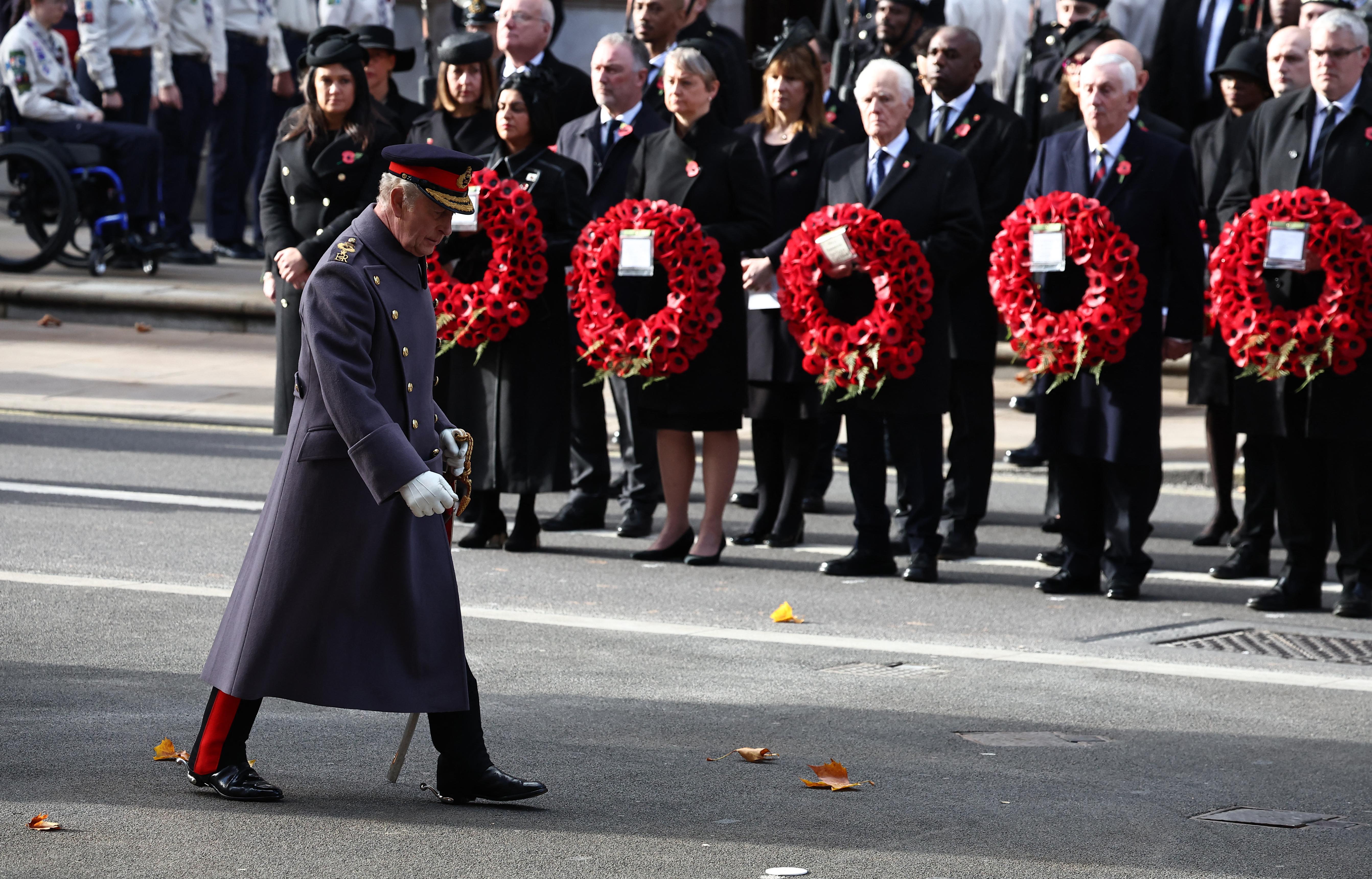
King Charles III led Britain in a two-minute silence at the Cenotaph in London on Remembrance Sunday before laying a wreath in honour of servicemen and women who died in the world wars and later conflicts. Prince William, Princess Anne, the Duke of Edinburgh, Prime Minister Andy Burnham and other political leaders also participated, while Queen Camilla and the Princess of Wales watched from the Foreign Office balcony. Around 10,000 veterans representing more than 300 organisations took part in the traditional Royal British Legion march-past.
King Charles III has led Britain in a solemn two-minute silence at the Cenotaph in central London as the country paused to remember servicemen and women who lost their lives in the First and Second World Wars and in conflicts that followed. Standing before the national war memorial on Whitehall on Sunday, November 8, the King joined senior members of the Royal Family, Prime Minister Andy Burnham, political leaders, military chiefs, veterans and thousands of members of the public for one of the most significant ceremonies in the British national calendar. At exactly 11 a.m., the first stroke of Big Ben marked the beginning of two minutes of silence observed not only at the Cenotaph but at remembrance ceremonies across the United Kingdom and beyond, bringing the country to a symbolic standstill in honour of those who served and died.
The silence was followed by the sounding of the Last Post before King Charles stepped forward to lay a wreath at the Cenotaph on behalf of the nation. The ceremony followed a tradition deeply connected to the British monarchy and military remembrance, with the sovereign leading tributes to those who made what the official order of service describes as the “great sacrifice” during the world wars and those who subsequently died serving their country in other conflicts. The King stood in military uniform before the memorial as wreaths of red poppies gradually surrounded its base, turning the stark white monument into the visual centre of Britain’s annual remembrance of military sacrifice.
Prince William, the Prince of Wales, also laid a wreath during the ceremony, continuing a royal tradition that places the monarch and heir at the heart of the national commemoration. Princess Anne, the Princess Royal, and the Duke of Edinburgh were among other senior royals participating in the service, while Queen Camilla and Catherine, Princess of Wales, watched proceedings from a balcony overlooking the Cenotaph. The gathering brought together several generations of the Royal Family in a ceremony designed not around celebration but silence, memory and acknowledgement of the human cost of war.
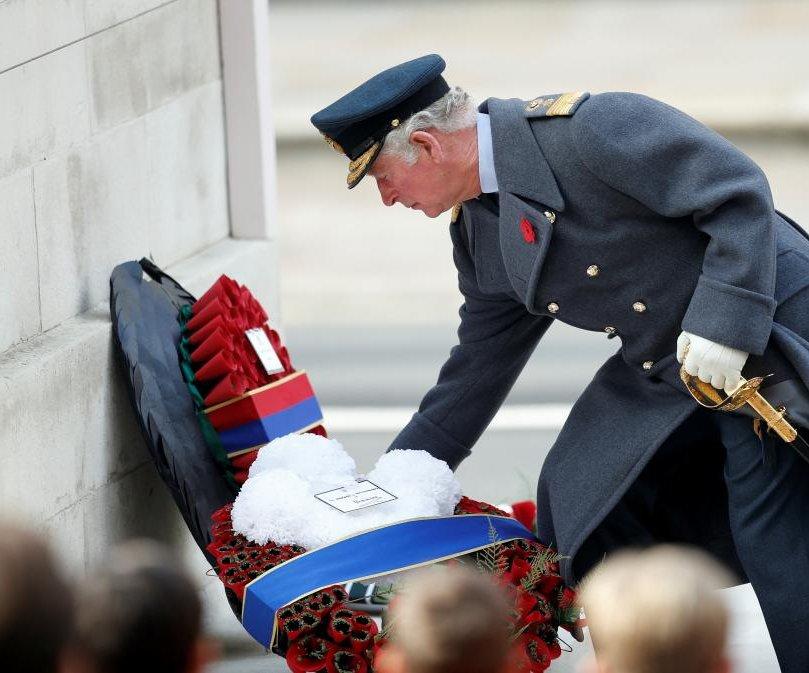
Prime Minister Andy Burnham joined political leaders in laying a wreath, marking his first Remembrance Sunday at the Cenotaph since becoming prime minister in July. Burnham described the occasion as an opportunity not only to recognise those who sacrificed their lives but also to reflect on the courage and selflessness of people who commit themselves to protecting others. He also offered his thanks to those currently serving in Britain’s Armed Forces and to military communities whose experiences continue long after active service ends.
Burnham’s presence carried additional significance because it was his first national Remembrance Sunday ceremony as head of government. The former Greater Manchester mayor returned to the House of Commons in June 2026 and was elected leader of the Labour Party on July 16 before becoming prime minister four days later. His attendance at the Cenotaph therefore placed him alongside the King and other national leaders in one of the ceremonial responsibilities traditionally associated with Britain’s highest political office.
Other political leaders also attended and laid wreaths as part of the established order of remembrance, reinforcing the non-partisan character of the ceremony. On Remembrance Sunday, political differences are traditionally set aside as government and opposition figures stand together to honour those who died in military service. Former prime ministers, senior Cabinet members and representatives of the major political parties were also present, forming part of a ceremony in which the emphasis falls on collective national remembrance rather than contemporary political rivalry.
The service began against the backdrop of an unusually large gathering of veterans and military organisations. Approximately 10,000 veterans were expected to participate in the Royal British Legion’s traditional march past the Cenotaph, representing more than 300 Armed Forces and civilian organisations. Participants ranged dramatically in age, from bereaved children and young military cadets to some of the last surviving veterans of the Second World War, with the oldest marchers more than 100 years old. Veterans also travelled from countries including Canada and Australia to participate in the event.
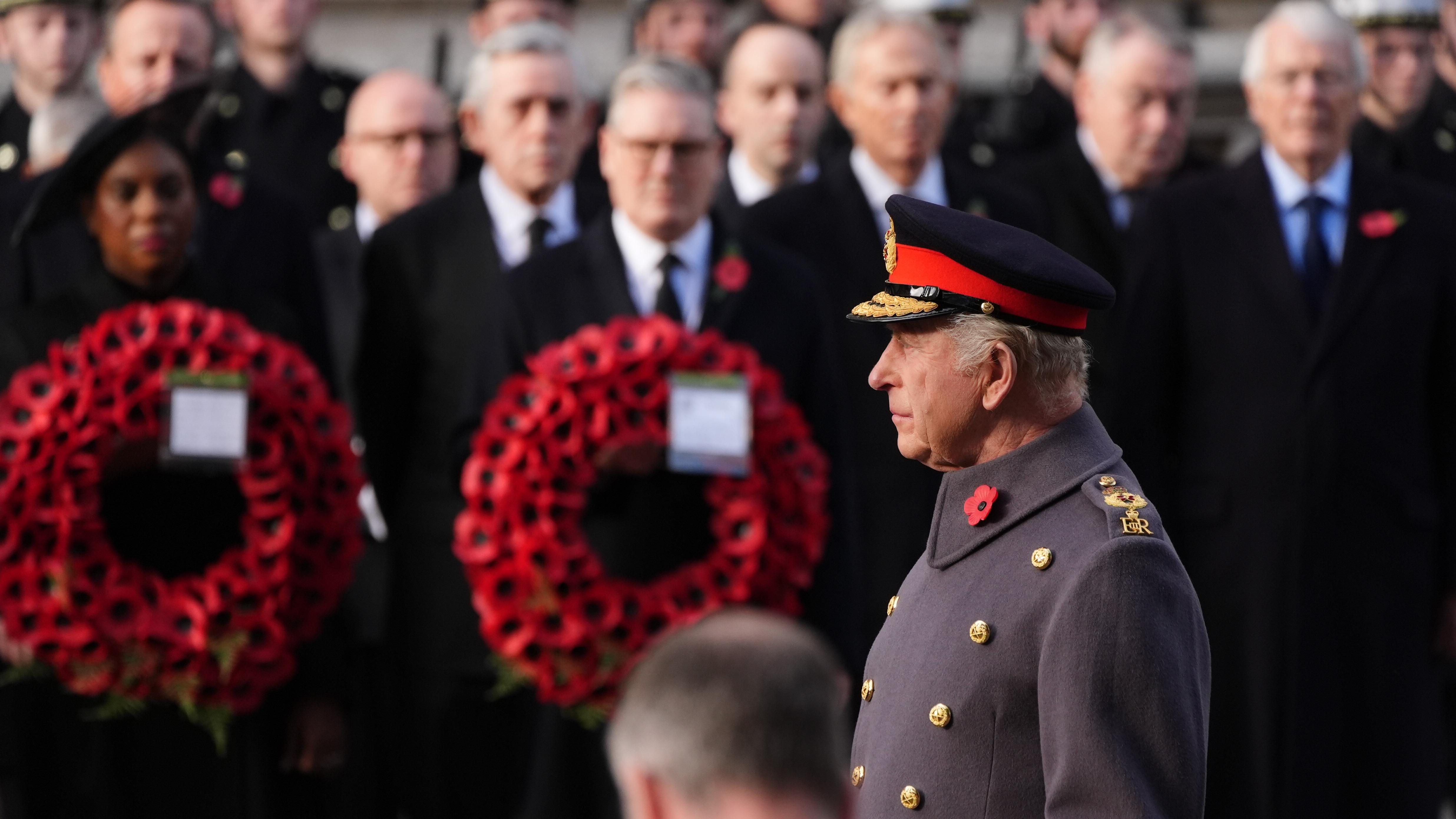
The presence of veterans gives Remembrance Sunday a significance that extends beyond official ceremony. The service is not solely about those who died but also about generations of servicemen and women who returned from war carrying physical injuries, psychological trauma and memories of people who did not come home. For some participants, the march past the Cenotaph is an annual reunion with former comrades; for others, it is a personal act of remembrance for friends lost decades earlier. The continued participation of veterans from the Second World War gives the ceremony particular urgency as Britain approaches a time when living witnesses to that conflict will no longer be present.
The age range represented in the march also reflects an effort to pass the tradition of remembrance to younger generations. Children who have lost parents in military service, serving cadets and young members of military families participate alongside veterans whose service dates back more than half a century. That connection between generations is central to the purpose of Remembrance Sunday, ensuring that military sacrifice does not become merely a chapter in history textbooks but remains connected to families and communities living today.
The Cenotaph itself has served as the focal point of Britain’s national remembrance since the years following the First World War. Designed by Sir Edwin Lutyens, the monument became the symbolic tomb for those who died far from home and whose families were unable to visit their graves. Over time, its meaning expanded to encompass the dead of the Second World War and later conflicts involving British and Commonwealth forces. Each November, the simplicity of the stone monument provides the setting for a ceremony deliberately stripped of political speeches and elaborate celebration.
The order of service reinforces that restraint. At 11 a.m., Big Ben begins the silence, and those present are encouraged to remember people who died in service, those suffering in current conflicts, families who have been bereaved and the broader hope for peace. When the silence ends, the Last Post sounds before wreath-laying begins, followed by prayers and further ceremonial acts. The format is designed to concentrate attention on memory rather than spectacle.
The red poppy remains the most visible symbol of the day. Inspired by flowers that grew on battlefields in Western Europe during and after the First World War, the poppy became associated with remembrance through the experiences of soldiers and the poem “In Flanders Fields.” More than a century later, red poppies are still worn across Britain and the Commonwealth during the remembrance period, while wreaths composed of them are placed at memorials throughout the country. The Royal British Legion uses poppy fundraising to support current and former members of the Armed Forces and their families.
King Charles has maintained the monarchy’s central role in the ceremony since succeeding Queen Elizabeth II. He first led the Cenotaph service as monarch in 2022 and has continued the tradition established by previous sovereigns. The wreath laid by the King symbolically represents the nation’s collective tribute, while wreaths from other members of the Royal Family reflect their own military connections and patronages.
For Prince William, participation also carries a personal connection to military service. The Prince of Wales trained at the Royal Military Academy Sandhurst and served in the Armed Forces before later working as an air-ambulance pilot. His position as heir to the throne means his role at Remembrance Sunday has grown increasingly prominent, and his wreath is laid immediately after the monarch’s in the ceremonial order.
Princess Anne has likewise maintained a longstanding association with Britain’s Armed Forces through numerous honorary military appointments and patronages. Her presence alongside the King and Prince of Wales reinforced the Royal Family’s continuing institutional connection to military service and remembrance. The Duke of Edinburgh also participated, while other royals observed from overlooking balconies.
Queen Camilla and the Princess of Wales watched from the Foreign Office balcony as wreaths were laid below. Catherine wore traditional mourning colours and red poppies, continuing her record of attending Remembrance Sunday every year since joining the Royal Family. Her appearance alongside Queen Camilla formed part of the ceremony’s familiar visual tradition, with senior royal women observing the wreath-laying while the monarch and other royal representatives participate at ground level.
The event followed the Royal British Legion’s Festival of Remembrance at the Royal Albert Hall the previous evening, where the King, Queen, Prince and Princess of Wales and other senior royals joined veterans, serving military personnel and bereaved families. That annual festival combines music, testimony and military ceremony before the more restrained Cenotaph service the following morning.
Remembrance Sunday is traditionally held on the Sunday closest to November 11, the anniversary of the armistice that ended fighting in the First World War in 1918. The armistice came into effect at the eleventh hour of the eleventh day of the eleventh month, which is why two minutes of silence continue to be observed at 11 a.m. more than a century later. While the commemoration began with the dead of the First World War, it now honours all British and Commonwealth personnel who died in conflict.
Ceremonies were held simultaneously in towns and cities throughout Britain, where local authorities, veterans’ organisations, military units, churches and residents gathered at war memorials. Similar services took place across Commonwealth countries, demonstrating how remembrance traditions developed during Britain’s imperial and military history continue to be observed internationally.
The London ceremony remains the largest and most prominent. Whitehall was closed to normal traffic as spectators gathered along the route, with extensive security measures in place around the Cenotaph. Government guidance warned visitors that police would conduct security checks and that unauthorised drones were prohibited throughout the surrounding area.
The approximately 10,000 members of the public expected along Whitehall stood behind barriers while veterans marched past the Cenotaph following the formal service. For many, the applause that accompanies the veterans’ march creates a striking contrast with the silence that comes earlier, transforming private remembrance into public recognition of service.
The service also reflects the changing nature of Britain’s military history. Participants include people connected not only to the two world wars but to conflicts in Korea, the Falklands, Northern Ireland, the Gulf, Bosnia, Iraq and Afghanistan, among others. Some veterans marching today served in wars that are still within recent public memory, while others represent conflicts that younger generations know primarily through family stories and history.
That continuity is central to the message of Remembrance Sunday. The ceremony recognises that the consequences of war do not end when fighting stops. Families continue to live with bereavement, veterans may carry wounds for the remainder of their lives and communities maintain memorials bearing names of people who never returned.
Prime Minister Burnham reflected that broader meaning in his official message, describing remembrance as an opportunity to express gratitude while also considering the courage required to dedicate a life to protecting others. His remarks emphasised both past sacrifice and the continuing service of today’s Armed Forces community.
Culture Secretary Lisa Nandy similarly said the country has a responsibility to ensure future generations understand the significance of those who served. With the number of surviving Second World War veterans rapidly declining, the challenge of preserving first-hand memory is becoming increasingly important.
For King Charles, leading the ceremony remains one of the most solemn constitutional and ceremonial responsibilities of the monarchy. Unlike many royal events, Remembrance Sunday contains little pageantry for its own sake. Military uniforms, medals, wreaths and music are all directed toward the same purpose: remembering the dead and recognising those who served.
The silence at 11 a.m. remains the emotional centre of the ceremony precisely because nothing is said. For two minutes, the King, prime minister, political leaders, soldiers, veterans and ordinary citizens stand together without speeches, arguments or applause. The absence of sound becomes the tribute.
When the Last Post finally breaks the silence and wreaths begin to be laid, the ceremony moves from collective reflection to individual acts of remembrance. Each wreath represents an institution or community, but together they gradually cover the base of the Cenotaph in red poppies.
Sunday’s service followed that tradition once again. King Charles led the silence, laid his wreath and stepped back before other royals and political leaders followed. Prince William and Princess Anne took their places in the ceremony, Andy Burnham represented the government at his first Remembrance Sunday as prime minister and thousands of veterans prepared to march through Whitehall.
For Britain, the ceremony remains an annual reminder that remembrance is not intended to glorify war. Its purpose is to acknowledge its cost.
More than a century after the end of the First World War, the names, uniforms and conflicts have changed, but the central ritual has endured: at the eleventh hour, the country falls silent, and those who never returned are remembered.