TINUBU HAS TRIED HIS BEST, BUT HIS BEST MAY NOT BE GOOD ENOUGH FOR NIGERIA PASTOR TUNDE BAKARE
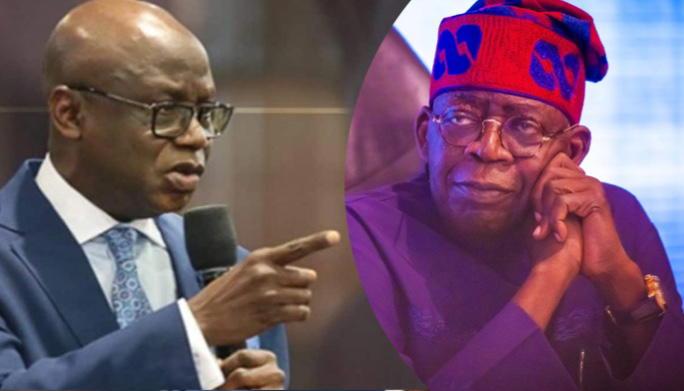
Pastor Tunde Bakare says President Bola Tinubu has tried his best to govern Nigeria but warned that his best may still not be sufficient for the country’s challenges. Speaking at Envoy Nation in Leicester, Bakare defended some of Tinubu’s controversial economic reforms, including petrol subsidy removal and what he described as the devaluation of the naira, while urging the president to surround himself with advisers willing to tell him the truth. The former APC presidential aspirant said Nigerians alone should decide whether Tinubu deserves another term in 2027 and confirmed that he remains a member of the ruling party.
Pastor Tunde Bakare, founder of Citadel Global Community Church and a former presidential aspirant of the All Progressives Congress, has delivered a measured but pointed assessment of President Bola Tinubu’s administration, saying the president has tried his best to govern Nigeria but warning that his best may still not be good enough for a country struggling with deep economic hardship, public frustration and persistent questions about political leadership. Speaking at Envoy Nation in Leicester, United Kingdom, on Sunday, Bakare said Nigerians must ultimately decide whether Tinubu deserves another term in office, arguing that citizens have both the democratic right to retain their leaders and the equally important right to replace them when they believe a different direction is necessary.
Bakare’s intervention was notable because it combined criticism of the administration with a defense of some of the most controversial economic decisions Tinubu has taken since assuming office in May 2023. Rather than dismissing the government entirely, the cleric argued that policies such as the removal of petrol subsidy and the changes that led to a sharp devaluation of the naira should not simply be described as failures without acknowledging the difficult economic problems they were intended to confront. At the same time, he made clear that intention and effort alone are not enough to determine whether a government deserves another mandate, particularly when ordinary Nigerians continue to judge leadership through the cost of food, transportation, housing, electricity, healthcare and the overall quality of their lives.
“For me, Tinubu has tried his best,” Bakare said, before adding the qualification that has become the central message of his remarks: “His best may not be good enough for Nigeria.” He argued that Nigerians should not simply “rubbish” every reform implemented by the administration, saying some of the president’s decisions were necessary and that certain measures had been handled correctly even if their consequences had proved difficult for citizens. Bakare said he hoped Tinubu would learn from the areas where the reforms had fallen short, while leaving the question of the president’s political future to the electorate rather than presenting his own judgment as a direction Nigerians must follow.
The cleric told his audience that Nigerians remain the final authority in deciding who governs them. He said citizens have the right to change their leaders just as they have the right to reaffirm them, emphasizing that the consequences of those choices ultimately belong to the electorate. Bakare used the familiar expression that people must live with the bed they make and also observed that, in politics, voters sometimes face the difficult choice between a leader whose strengths and weaknesses they already know and an alternative who has not yet been tested in national office. His remarks placed responsibility squarely on voters ahead of the 2027 election without explicitly calling for Tinubu’s reelection or removal.
That distinction is important because Bakare remains politically connected to the APC even while openly criticizing aspects of its government. He contested the party’s presidential primary in June 2022 against Tinubu and other aspirants and refused to step down despite pressure on some candidates to withdraw. Tinubu eventually won the primary with 1,271 votes, while Bakare received no delegate votes. Tinubu went on to win the 2023 presidential election and became president, while Bakare returned largely to religious work, public commentary and governance advocacy.
Bakare used the Leicester appearance to revisit the question of political experience, arguing that Nigeria’s difficulties should force the country to reconsider the assumption that long years in politics automatically produce effective leadership. He described Tinubu as a politician who had been “tried and tested” and acknowledged the president’s extensive experience, but said Nigeria’s problems required more than familiarity with political systems and power structures. In his view, experienced politicians had participated in creating many of the conditions now confronting the country, and Nigeria therefore needed leaders capable of producing original solutions rather than merely relying on conventional political experience.
He framed that argument through his long-standing distinction between experience and what he described as genius. Bakare said the country needed leaders capable of identifying the right course of action early and implementing it effectively rather than repeatedly managing crises created by old political habits. His criticism was broader than Tinubu alone and appeared directed at Nigeria’s political class generally, which has repeatedly recycled governors, ministers, legislators, party leaders and other senior politicians across successive administrations.
Bakare nevertheless resisted the temptation to claim that Nigeria would necessarily have performed better had he become president. He said it was easy for people outside government to assume they would have made better decisions, but governing often reveals problems that are not fully visible until a leader assumes office. That qualification added complexity to his criticism because he did not present himself as possessing an effortless alternative to every decision taken by Tinubu. Instead, he argued that a leader’s willingness to listen, learn and surround himself with people capable of delivering honest advice can be as important as the leader’s own experience.
One of Bakare’s strongest recommendations was that Tinubu should avoid surrounding himself with advisers who simply tell him what he wants to hear. He prayed that the president would have people around him willing to speak the truth “and damn the consequences,” arguing that Nigeria’s current challenges require honest counsel rather than political flattery. The warning reflects a recurring criticism of presidential systems in Nigeria, where access to the head of state can become tightly controlled and political appointees may be reluctant to challenge decisions that could threaten their positions.
Bakare’s comments on Tinubu’s economic reforms were equally significant because they touched on policies that have defined the president’s tenure. Tinubu announced the effective end of the petrol subsidy regime during his inauguration on May 29, 2023, arguing that the government could no longer sustain the enormous financial cost of keeping petrol prices artificially low. His administration also moved toward unifying Nigeria’s multiple foreign-exchange windows, a change that allowed the naira to fall sharply as the Central Bank reduced direct control over the official exchange rate.
The government’s argument was that both systems had become economically unsustainable. Tinubu said petrol subsidy consumed trillions of naira that could have been redirected toward infrastructure, education, healthcare and employment, while the multiple exchange-rate system encouraged arbitrage and created distortions that benefited those with privileged access to foreign currency. In principle, those arguments were shared by many Nigerian economists, international financial institutions and previous administrations, all of which had warned that the subsidy and exchange-rate structure imposed substantial fiscal costs.
The difficulty came in the speed and severity of the consequences. Petrol prices rose dramatically after subsidy removal, immediately increasing transportation and distribution costs across the economy. The naira’s depreciation made imported goods, machinery, fuel components and other foreign-currency-dependent products more expensive. Food inflation and general living costs rose sharply, wages struggled to keep pace and many households found that their purchasing power had deteriorated even when the reforms were producing fiscal or macroeconomic improvements in other areas.
It is within that tension that Bakare’s statement that Tinubu “tried his best” should be understood. He did not argue that the hardship was imaginary or that the reforms had already succeeded. Instead, he suggested that a policy can be economically defensible in principle while still being badly sequenced, insufficiently cushioned or inadequate in its impact on ordinary citizens. His position was effectively that Nigerians could recognize the difficult choices facing the administration without surrendering their right to judge whether the outcomes justify another term.
That is likely to become one of the central political arguments ahead of 2027. Tinubu and his supporters are expected to argue that the administration inherited structural problems that required painful reforms and that some benefits could take years to become visible. Critics will point to the immediate experience of households and businesses, arguing that economic reform cannot be considered successful if citizens remain overwhelmed by the cost of living or if gains in government revenue do not translate quickly enough into improved public services, jobs and purchasing power.
Bakare’s intervention places him somewhere between those competing positions. He has not joined opposition figures who describe the entire administration as a failure, but neither has he endorsed the claim that difficult reforms should automatically earn Tinubu another term. His insistence that Nigerians themselves must decide gives the remarks a deliberately open political character, even though he remains personally connected to the APC.
That connection became even clearer when Bakare said during the Leicester appearance that he remains a card-carrying member of the ruling party and intends to participate politically without moving between parties. He said he does not see himself as an opposition politician and instead described his approach as “propositional,” meaning that when he identifies a problem he prefers to propose a solution rather than simply condemn the government. That self-description reflects the political role Bakare has tried to maintain for years: close enough to power to engage directly with political leaders but independent enough to criticize them publicly.
Bakare also disclosed that Tinubu had previously offered him a ministerial position, which he declined because he considered himself too old to take on the responsibilities of cabinet office. He said he told the president that he was willing to contribute privately and offer ideas that could benefit the country without becoming a minister. That revelation provides important context for his comments because it shows that his relationship with Tinubu is not merely that of a former primary opponent commenting from outside the president’s political circle.
He also recalled his involvement in political consultations that eventually helped shape the forces behind the APC. Bakare said he facilitated discussions involving Tinubu and other prominent southwestern political and traditional figures before the party became the coalition that defeated the Peoples Democratic Party at the federal level in 2015. His history with the APC therefore predates the current administration and complicates any attempt to portray his latest criticism as simply an opposition attack.
At the same time, Bakare has never been an unquestioning defender of Tinubu. He has repeatedly spoken about governance, accountability and the moral responsibilities of political leadership, sometimes criticizing administrations he was otherwise politically close to. His Leicester comments follow that pattern by acknowledging what he considers legitimate reform while warning that political experience, effort and party loyalty cannot become substitutes for measurable national progress.
The question of whether Tinubu’s “best” is enough will ultimately be decided against conditions Nigerians experience over the remaining period before the 2027 presidential election. Economic indicators will matter, but so will whether those indicators translate into improvements people can feel. Inflation, exchange-rate stability, employment, food prices, electricity, transportation costs, security and access to public services are likely to shape voter judgment more directly than technical arguments over fiscal reform.
Tinubu’s administration has consistently argued that the painful measures introduced since 2023 were necessary to prevent deeper economic damage and create a more sustainable foundation for growth. The president has acknowledged that the reforms imposed hardship but has maintained that returning to the old subsidy and foreign-exchange systems would reproduce the same structural weaknesses that contributed to Nigeria’s fiscal problems. His government has introduced various interventions intended to cushion the effects, but public debate continues over their reach, effectiveness and whether the reforms were implemented with sufficient protection for vulnerable households.
Bakare’s position is that Nigerians should be capable of holding two ideas at the same time: that some of the reforms may have been necessary and that the government can still be judged inadequate if the results do not meet the needs of the country. That is a more nuanced argument than either unqualified praise or wholesale rejection, and it also places greater responsibility on the president to demonstrate that difficult policies can eventually produce tangible benefits.
His warning about advisers is especially relevant in that context. Governments implementing unpopular reforms often become vulnerable to internal information problems because officials may emphasize positive indicators while failing to communicate the severity of hardship experienced outside government circles. Bakare’s call for advisers willing to challenge the president suggests that leadership should include constant reassessment of whether policies are working as intended and whether adjustments are necessary when their social consequences become too severe.
There is also a broader democratic message in his insistence that Nigerians have the right to change or retain their leaders. Nigeria has now experienced successive civilian transitions since 1999, and elections remain the constitutional mechanism through which citizens determine whether an administration continues. Bakare’s comments reject the idea that incumbency itself should guarantee continuity, but they also reject the assumption that frustration automatically requires replacement without evaluating available alternatives.
His observation that “the devil you know is better than the angel that is not tested yet” reflects that dilemma rather than a straightforward endorsement of Tinubu. Voters often have to evaluate an incumbent with an established record against challengers whose promises have not been tested at the presidential level. The incumbent carries the burden of actual performance, while challengers carry the uncertainty of whether their proposed alternatives would work better in practice.
Bakare’s own political experience gives that observation additional weight. He was Muhammadu Buhari’s running mate under the Congress for Progressive Change in the 2011 presidential election and later sought the APC presidential nomination in 2022. He has therefore experienced electoral politics both as a national candidate and as an aspirant within a major governing party, even though he has never held elected executive office.
His zero-vote finish at the 2022 APC convention also became part of his political identity. Bakare later argued that the result reflected his refusal to participate in certain forms of transactional politics and maintained that he had chosen not to step down despite knowing that the contest strongly favored Tinubu. Whether supporters agree with that interpretation or not, the episode demonstrated the gap between his political ambitions and the delegate-driven machinery of Nigeria’s major parties.
Four years later, his relationship with Tinubu remains complex. He recognizes the president as a highly experienced political operator, admits that some difficult reforms were necessary, remains inside the APC and says he is prepared to advise the administration privately. Yet he also says Nigeria’s problems demonstrate the limits of political experience, believes the president needs people capable of challenging him and refuses to say that Tinubu’s effort alone should earn him another mandate.
That combination makes the Leicester remarks politically significant without turning them into a formal declaration against the president. Bakare has not announced support for another candidate, has not left the APC and has not called on Nigerians to vote Tinubu out. Equally, he has not offered an unconditional endorsement of a second term. His position is that the president’s record must be weighed by the electorate and that the existence of reforms does not remove Nigerians’ right to demand better outcomes.
As the 2027 election approaches, that distinction is likely to become increasingly important. The administration will seek to persuade voters that reforms introduced during Tinubu’s first term are beginning to stabilize the economy and require continuity, while opposition parties will argue that the cost paid by Nigerians has been too high or that the reforms were poorly executed. Bakare’s intervention does not resolve that argument; it captures the central question around which much of it will revolve.
For Tinubu, the political challenge is therefore larger than proving that difficult decisions were necessary. The administration must demonstrate that those decisions are producing benefits sufficient to justify the hardship they created and that government is capable of correcting mistakes rather than defending every policy on ideological grounds. Bakare’s call for truthful advisers speaks directly to that requirement, because the credibility of reform depends not only on what government intended to achieve but on its willingness to confront evidence when implementation falls short.
For Nigerians, Bakare’s message ultimately returns the question to the ballot box. He has acknowledged Tinubu’s experience, credited him with taking difficult decisions and declined to dismiss the administration as a complete failure, but he has also warned that effort cannot become the final standard for governing a country of more than 200 million people. Whether Tinubu’s best is sufficient will depend on the record Nigerians see by the time they vote, the alternatives presented to them and their judgment about which leadership offers the strongest path forward.
The Leicester remarks therefore amount neither to a campaign endorsement nor a declaration of opposition. They are better understood as a conditional assessment from a long-time political actor who remains inside Tinubu’s party while arguing that loyalty does not remove the responsibility to question performance. As Nigeria moves toward another presidential election, Bakare’s central proposition is likely to remain part of the national debate: a president may have tried his best, but the democratic question is whether that best has delivered enough for the country he was elected to govern.