TRUMP SAYS DEPORTATION DRIVE WAS ‘TOO TOUGH’ AFTER GOP MIDTERM LOSSES, FLOATS IMMIGRATION DEAL WITH DEMOCRATS
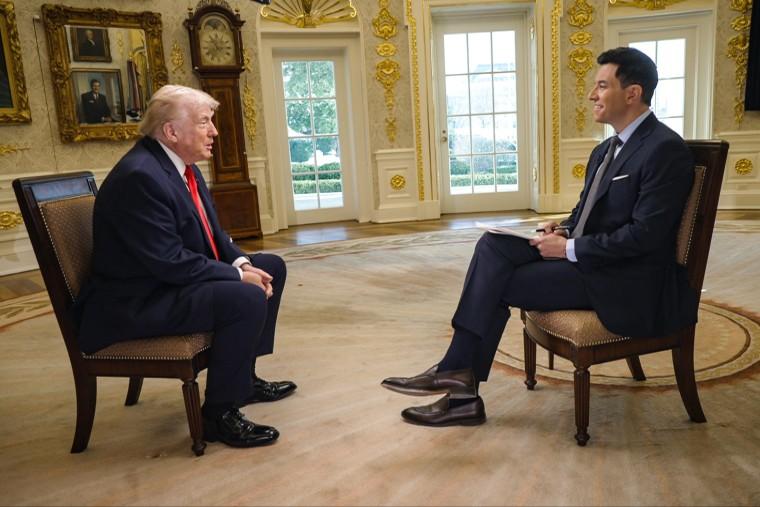
Donald Trump has acknowledged that his administration’s deportation campaign may have been “too tough” and contributed to Republican losses in the 2026 midterms. In a CBS “60 Minutes” interview, he said the administration had strong support for removing criminals but lost support when long-term undocumented workers with jobs were also deported. Trump said he believes he can work with the new Democratic-controlled Congress on an immigration agreement that could allow some undocumented immigrants who work and pay taxes to remain in the United States.
President Donald Trump has acknowledged that his administration’s aggressive deportation campaign may have gone too far and damaged Republican support in the 2026 midterm elections, marking one of his clearest public admissions yet that the political consequences of his immigration crackdown may have exceeded what many voters were willing to accept. Speaking in his first major television interview since Republicans lost control of both chambers of Congress, Trump said his administration had received strong public support for removing criminals and securing the southern border but admitted that deporting long-term undocumented migrants who were working, paying taxes and otherwise living stable lives had alienated a significant share of the electorate. The remarks suggest that Trump may be willing to consider a narrower and more politically flexible immigration settlement with Democrats, even as he continues defending the core enforcement policies that defined the first two years of his second term.
Trump made the comments during an interview with CBS’s “60 Minutes” that aired Sunday night, three days after Republicans suffered major defeats in the midterm elections. Asked whether the administration’s deportation policy had become too harsh, Trump said he believed it had, adding that the issue had hurt Republicans politically. He drew a distinction between migrants with criminal records, whom he said should continue to be removed, and undocumented immigrants who entered the country illegally but later established stable lives through employment, tax payments and long-term residence. That distinction represents a significant rhetorical shift from the sweeping deportation language that dominated much of Trump’s 2024 campaign and the early stages of his second administration.
The president said some voters appreciated the removal of people convicted of serious crimes but reacted negatively when immigration enforcement also targeted people who had spent years in the United States working in hotels, landscaping businesses and other industries without committing additional offences. Trump acknowledged that illegal entry itself is a violation of immigration law, but he also recognised that many Americans do not view all undocumented migrants in the same way. He said there is a large section of the country that wants such people deported and another large section that believes they should be allowed to stay if they are working, paying taxes and contributing to their communities.
That is the context in which Trump raised the possibility of working with Democrats on an immigration agreement. He did not announce a detailed legislative proposal, nor did he explicitly call for blanket amnesty. Instead, he suggested there could be room for some form of legal status or protection for certain undocumented immigrants who meet conditions involving work, taxes and good conduct. The distinction matters because “amnesty” can imply unconditional legalisation, while Trump’s comments pointed toward a more selective arrangement that would preserve deportation for criminals while potentially creating a pathway for some long-term residents to remain.
The shift comes after a bruising midterm election in which Democrats regained control of both the House of Representatives and the Senate, dramatically changing the balance of power in Washington for the remaining two years of Trump’s presidency. The losses were significant enough to force Republicans into a broad debate over what went wrong, and Trump has now publicly acknowledged that immigration may have been one of the factors. He said the issue both helped and hurt him, arguing that voters continued to support stronger border security while becoming more uneasy about the way interior deportation operations were carried out.
CBS reported that exit polling showed 58% of voters believed the administration’s immigration actions had gone too far. The political damage was especially visible in areas with large Latino populations, including parts of Texas that had moved toward Republicans during the 2024 presidential election but swung back toward Democrats in 2026. That reversal has become one of the clearest warning signs for Republicans that the same immigration issue that helped energise voters behind Trump two years earlier may have become politically costly when enforcement shifted from border security to large-scale interior removals.
Trump’s comments also expose a tension inside his own administration. While the president is now signalling a willingness to consider compromise, he has simultaneously elevated Stephen Miller, one of the principal architects of his immigration agenda, to a more powerful White House role. Miller has long advocated strict enforcement, aggressive deportations, expanded detention and narrow limits on legal migration. His increased influence raises questions about how far Trump is actually prepared to move toward Democrats if negotiations begin.
Democratic leaders have already made clear that immigration oversight will become a major priority once the new Congress is seated. Following their midterm victories, Democrats are preparing investigations into Immigration and Customs Enforcement, the Department of Homeland Security and several controversial enforcement operations carried out during Trump’s second term. Some of those operations drew national attention after confrontations involving federal agents and civilian deaths, intensifying criticism of the administration’s tactics and helping transform immigration from a border-security issue into a broader debate about civil liberties, enforcement methods and proportionality.
Trump’s acknowledgment that the policy may have been too tough therefore reflects more than a change in political tone. It comes at a moment when Democrats will soon have greater institutional power to investigate the administration, summon officials to testify, demand internal documents and use congressional hearings to examine how deportation decisions were made. The president now faces the choice of defending the existing approach unchanged or attempting to negotiate a narrower policy that could reduce political pressure while preserving his broader commitment to immigration enforcement.
The remarks are especially striking because Trump spent much of his political career arguing that compromise on illegal immigration encouraged further violations. During his first presidency and throughout the 2024 campaign, he repeatedly criticised earlier bipartisan efforts that combined border enforcement with legal protections for undocumented migrants. His second administration went even further, expanding detention capacity, increasing removal operations, strengthening cooperation with state and local law enforcement and tightening restrictions across both illegal and legal immigration channels.
According to the White House’s own October 2026 summary of immigration policy, the administration says it has deported or removed nearly 1.2 million undocumented migrants, overseen roughly 1.3 million immigration arrests and reduced illegal crossings at the southern border by 95% from levels recorded during the Biden administration. The administration has presented those figures as evidence that Trump delivered on his central campaign promise of restoring border control and reducing the undocumented population. Critics, however, have argued that the scale and methods of enforcement created fear in immigrant communities and swept up people with deep family, employment and community ties to the United States.
Trump’s new comments appear to acknowledge at least part of that criticism without abandoning the enforcement framework entirely. He continues to argue that people involved in serious crime, drug trafficking and other dangerous activity should be removed quickly, but he now appears more willing to distinguish them from undocumented workers whose primary violation is entering or remaining in the country without legal status.
That distinction could eventually form the basis of a bipartisan immigration deal, but any agreement would face major political obstacles. Democrats are likely to demand stronger protections for long-term undocumented residents, safeguards against aggressive enforcement and clearer pathways to legal status. Many Republicans, particularly those aligned with the party’s immigration hardliners, may oppose any arrangement that allows people who entered illegally to remain in the United States.
Trump’s own political base could therefore become one of the biggest constraints on any compromise. His immigration platform has long been built around the idea that immigration law should be enforced consistently and that allowing undocumented migrants to remain rewards unlawful entry. A deal granting legal status to large numbers of undocumented workers could be viewed by some supporters as a reversal of one of his signature promises.
The president nevertheless suggested that Democrats had already expressed interest in finding common ground. He said he believed an agreement could be reached and portrayed the issue as one where both sides might benefit from distinguishing between dangerous offenders and otherwise productive long-term residents. He did not identify the Democratic lawmakers he had spoken with or describe the exact structure of any potential agreement.
That lack of detail means it is too early to describe Trump’s remarks as a formal immigration-policy reversal. Presidents frequently use television interviews to test political ideas before deciding whether to turn them into legislation, and Trump has previously floated bipartisan immigration arrangements that later collapsed. During his first term, he at times expressed support for legal protections for some undocumented immigrants before negotiations broke down amid disagreements within his own administration and Congress.
The political environment in 2026 is different because Democrats will soon control both chambers of Congress. That gives them leverage they did not previously possess, but it also means Trump would need Democratic votes to pass significant legislation while retaining enough Republican support to avoid a revolt within his own party. Immigration could become one of the few areas where divided government produces negotiation, or it could become another issue consumed by partisan conflict.
The midterm results have clearly changed the political calculation. Trump entered the election defending a broad record of border enforcement and deportation, but the loss of both the House and Senate has forced Republicans to confront whether some voters supported tighter borders while rejecting the way the administration conducted interior enforcement. That distinction appears to be central to Trump’s new position.
The president emphasised that he still believes he deserves high marks for closing the border and removing dangerous offenders. His criticism was directed more narrowly at cases involving people with jobs and long-term ties who were deported solely because they lacked legal immigration status. By separating those groups, Trump is attempting to preserve the political appeal of border enforcement while acknowledging voter discomfort with indiscriminate removals.
The question now is whether that rhetorical adjustment becomes policy. Immigration agencies are still operating under enforcement structures created during the first two years of Trump’s second term, and the White House has not announced any immediate suspension or rewriting of deportation priorities. Without new executive guidance or legislation, the current system remains in place.
The administration’s earlier policies were among the most sweeping immigration restrictions implemented in modern U.S. history. The White House says it expanded immigration detention, increased the number of ICE agents, revived agreements with state and local law enforcement, restricted asylum, terminated several Temporary Protected Status programmes and tightened legal immigration pathways including student and employment visas. Those policies went well beyond the border itself and reshaped the broader immigration system.
Any genuine moderation would therefore require more than a change in language. It could involve new prosecutorial priorities, instructions to immigration officers to focus primarily on serious offenders, legal protection for certain categories of workers or a negotiated congressional bill providing temporary or permanent status to people meeting specific criteria.
Such a shift would also affect millions of employers and communities that depend on immigrant labour. Industries including agriculture, hospitality, construction, food processing and landscaping employ large numbers of foreign-born workers, some without permanent legal status. Mass deportations can create labour shortages in those sectors, while legalisation programmes can raise wages, tax compliance and worker protections but may also face political resistance.
Trump’s own examples focused on landscaping and hotel workers, reflecting the reality that many undocumented migrants are embedded in industries that rely heavily on immigrant labour. His comments suggest that economic considerations may now be influencing the administration’s political thinking as much as electoral pressure.
The president’s remarks also reflect an important distinction in public opinion. Voters can support stronger border enforcement while opposing large-scale removal of people already living and working in the United States. Those positions are not necessarily contradictory, and the 2026 election results appear to have reinforced that divide.
For Democrats, the opportunity will be to convert that distinction into legislation without appearing weak on border security. Party leaders learned during the 2024 election that voters remained deeply concerned about illegal crossings, but the 2026 results suggest they may have more political room to challenge aggressive deportation tactics. A bipartisan agreement could therefore combine continued border enforcement with legal protections for selected undocumented residents.
For Republicans, the challenge is more difficult because immigration has been one of the party’s strongest political issues. A sharp retreat could anger core supporters, while refusing to adjust could risk further alienating suburban, Latino and moderate voters who supported stronger borders but rejected the administration’s enforcement methods.
Trump appears to be trying to navigate that divide by maintaining his hard line against criminals while opening the door to compromise for workers and long-term residents. Whether that balance is politically sustainable remains unclear.
The appointment of Stephen Miller complicates the picture further. Miller’s career has been closely associated with efforts to reduce both illegal and legal immigration, and his elevation suggests that Trump has not abandoned the ideological foundations of his second-term immigration strategy. Democrats are already pointing to that decision as evidence that the president’s conciliatory comments may not translate into meaningful policy change.
That contradiction will likely become central to negotiations. If Trump genuinely wants a bipartisan agreement, Democrats may demand assurances that any legal protections cannot be easily reversed through executive action or undermined by aggressive enforcement. Republicans may demand stronger border-security provisions and continued detention and deportation of serious offenders in exchange.
The result could resemble earlier comprehensive immigration proposals that paired enforcement with legal status, though Trump has not yet endorsed any specific model. Terms such as “amnesty,” “legalisation” and “pathway to citizenship” are politically loaded, and the president carefully avoided committing himself to any of them in detail.
What he did acknowledge is politically significant enough: some of the people his administration deported were not the dangerous criminals he had originally highlighted during the campaign, and voters reacted negatively to that reality.
That admission marks a notable shift in tone from a president who has rarely expressed regret about the severity of his immigration agenda. Trump is not abandoning deportation, and he is not renouncing the border crackdown. He is instead arguing that enforcement may need to become more selective.
The distinction could define the next phase of immigration politics in Washington.
With Democrats controlling Congress, Trump will no longer be able to rely entirely on Republican majorities to advance his domestic agenda. Any major immigration legislation will require negotiation, and the president now appears willing to test whether an agreement can be reached.
The midterm election has therefore created an unusual political moment. Democrats gained power partly by attacking the severity of Trump’s immigration enforcement, while Trump himself has now acknowledged that the same issue hurt Republicans at the polls.
That does not guarantee compromise, but it creates an opening that did not exist before the election.
For millions of undocumented migrants living in the United States, the stakes are enormous. A shift toward selective legalisation or protected status could dramatically change their future, while failure to reach a deal could leave the current deportation system largely intact.
For Trump, the political challenge is equally significant. Immigration helped define his rise to power, but the 2026 midterms suggest that the most aggressive version of that agenda may carry electoral costs even among voters who support strong border security.
His response is now becoming clearer: keep removing criminals, keep the border tight, but consider allowing some undocumented workers who have built lives in the United States to stay.
Whether that becomes a genuine policy change or remains a post-election reflection will depend on what happens when the White House and the incoming Democratic Congress sit down to negotiate.