GHANA POLICE TO INSTALL SPEED CAMERA WARNING SIGNS ON MAJOR ROADS AS TRAFFITECH ENFORCEMENT EXPANDS
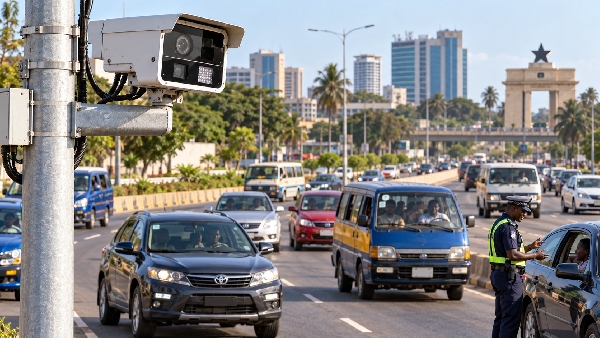
The Ghana Police Service will begin installing standardized speed-camera warning signs on major roads as it expands the TraffiTech-GH automated traffic enforcement system. ACP Alexander Kwaku Obeng says production of the signs and surveys of appropriate locations are underway, with the signs expected to begin appearing during the week of November 9. The system, which became fully operational on November 1, currently focuses on speeding and uses fixed, tripod-mounted and vehicle-mounted cameras to record violations and send electronic notices to registered vehicle owners. MyJoyOnline
The Ghana Police Service is preparing to install standardized speed-camera warning signs along major roads across the country as authorities expand the implementation of TraffiTech-GH, the new automated traffic-enforcement system designed to detect speeding and other road traffic violations using cameras and electronic evidence. Assistant Commissioner of Police Alexander Kwaku Obeng, Director of Education, Research and Training at the Motor Traffic and Transport Department, said production of the signs is already underway and surveys are being conducted to determine where they should be installed, with motorists expected to begin seeing them on major roads during the week beginning November 9. The move follows growing public concern about whether drivers are being given sufficient notice that speed cameras are operating on particular routes and represents an attempt by police and road authorities to make the increasingly technology-driven enforcement system more visible and easier for motorists to understand.
ACP Obeng said the new signs will identify locations where speed cameras and video-monitoring systems are operating and will form part of a wider effort to bring Ghana’s traffic enforcement practices closer to international standards. Speaking on Joy FM’s Super Morning Show on Monday, he explained that Ghana’s existing road traffic regulations did not originally include a specific standardized symbol for speed-camera enforcement. The MTTD therefore worked with road engineers, under the direction of the Inspector-General of Police, to develop a recognizable sign that can be deployed at locations where cameras are being used. The proposed design carries messages including “24-hour video monitoring” and “Speed kills, kill it now,” combining notification of surveillance with a broader road-safety warning against excessive speed.
The decision is particularly significant because TraffiTech-GH has already moved from public education into active enforcement. The Ghana Police Service launched full implementation of the automated system on November 1 after previously delaying the rollout to allow for additional education and public awareness. The initial enforcement phase focuses on speeding, with cameras mounted on tripods, installed in police vehicles or otherwise positioned to capture vehicles exceeding prescribed limits. Once an alleged violation is recorded, the system processes the evidence and sends an electronic notice to the registered vehicle owner, providing details of the alleged offense and access to video or photographic evidence.
Police have emphasized that the new warning signs are intended to improve transparency rather than suggest that enforcement is only valid when a camera sign is physically present. ACP Obeng has repeatedly argued that motorists are already required to obey posted speed limits and other traffic rules regardless of whether they can see police officers or enforcement cameras. The new signs are therefore being introduced as an additional public-information measure, not as permission for drivers to ignore speed limits on roads where a camera symbol has not yet been erected.
That distinction is likely to remain important as the system expands. Some cameras are mobile and can be mounted inside police vehicles, meaning enforcement locations may change. ACP Obeng has cautioned drivers against slowing down only when they see a visible camera, arguing that the objective of TraffiTech is to change driving behavior permanently rather than encourage motorists to obey the law only at known enforcement points. Police vehicles approaching from the opposite direction or traveling along the same road can carry monitoring equipment capable of detecting speeding, making traditional assumptions about fixed roadside cameras increasingly outdated.
The warning-sign initiative follows criticism from motorists who questioned the fairness of automated enforcement in locations where road signage was unclear or where drivers were uncertain about the presence of cameras. The National Road Safety Authority acknowledged those concerns earlier in November and said it would work with road infrastructure agencies to ensure motorists receive adequate notification where appropriate. NRSA Director-General Abraham Amaliba said authorities did not want the system to create the impression that motorists were being deliberately trapped into committing offenses simply so fines could be issued.
ACP Obeng said the MTTD had listened to those concerns and was working with road agencies to address locations that required improved signage or calibration. The police have also been consulting road engineers on incorporating camera symbols into conventional traffic signs, including overhead gantry and information signs that motorists already use to identify routes and road conditions. That means the warning system may ultimately go beyond standalone signs and become integrated into Ghana’s wider road-signage network.
Several roads in Accra have already emerged as major areas of concern for police because of the speeds being recorded under camera monitoring. ACP Obeng said motorists on the School Junction-to-Borteyman stretch and Boundary Road had been recorded traveling at average speeds of about 120 kilometers per hour despite speed limits of 50 kilometers per hour. On the route around Mahama Roundabout toward Giffard Road, including the Airport bypass behind Burma Camp, some drivers were reportedly traveling at average speeds of around 110 kilometers per hour against the same 50-kilometer-per-hour restriction.
Police have also cited Bortianor, sections of the Accra-Kasoa road, the Accra-Nsawam corridor and areas around Burma Camp among routes where speeding is a significant concern and where existing speed-limit signs are already present. In previous interviews, ACP Obeng said some vehicles had been captured traveling at 130 or even 140 kilometers per hour on roads carrying substantially lower limits. Such figures are being used by the MTTD to justify more systematic camera enforcement, particularly on urban roads where pedestrians, motorcycles, public transport vehicles and private cars frequently share limited road space.
The underlying argument from police is that speed remains one of the most significant contributors to serious road crashes in Ghana. Excessive speed reduces the time available to react to hazards and increases the force of impact when a collision occurs. On urban roads, where pedestrians may cross unexpectedly and vehicles frequently enter or leave side streets, the difference between traveling at 50 kilometers per hour and more than twice that speed can dramatically alter both the likelihood of a crash and the severity of injuries.
Early police data is being presented as evidence that increased monitoring and public education may already be changing driver behavior. MTTD figures showed that road crashes in September 2026 fell by about 9.48 percent compared with September 2025, while the number of vehicles involved declined by 12.19 percent. Injuries fell by roughly 15 percent and fatalities by 7.82 percent over the same comparison period. ACP Obeng attributed part of that improvement to intensified education and the use of electronic caution notices ahead of the formal November rollout of TraffiTech-GH.
Those figures, however, cover an early period of sensitization and should not by themselves be treated as proof that the automated enforcement program has already permanently transformed road safety. Crash numbers can fluctuate because of multiple factors, including traffic volumes, weather, road construction and enforcement activity. A longer period of data will be needed to determine whether the reductions continue after the system becomes fully established and whether enforcement produces lasting behavioral change rather than temporary caution among motorists aware of the new technology.
TraffiTech-GH is designed to change the traditional relationship between police officers and traffic enforcement by allowing evidence to be gathered electronically rather than relying solely on roadside stops. A camera can record a vehicle’s registration number, location, time and speed, creating digital evidence that can later be reviewed. Police argue that this makes enforcement more objective because the alleged violation can be shown directly to the registered owner rather than depending entirely on an officer’s observation.
The electronic notices are sent using identifying information linked to the registered owner of the vehicle. Police have said motorists receiving a notice will be able to access the evidence associated with the offense, including the recorded location and footage where available. They can then follow the process for paying the applicable penalty or contest the notice if they believe the evidence is incorrect or there were exceptional circumstances.
The ability to challenge a notice is particularly important because automated systems can raise questions about who was actually driving a vehicle, whether a camera was correctly calibrated and whether emergency circumstances justified a traffic violation. The MTTD has already addressed one such scenario involving drivers transporting seriously ill people to hospital. ACP Obeng said motorists who exceeded a speed limit in a genuine medical emergency could contest the notice and provide certified evidence showing the circumstances, with a panel expected to consider legitimate cases.
That approach indicates that the police intend TraffiTech to operate as an evidence-based enforcement system rather than an automatic penalty mechanism without review. The credibility of that system will depend heavily on how disputes are handled, how quickly errors are corrected and whether camera equipment is consistently calibrated and maintained. If motorists believe incorrect notices are difficult to challenge, public confidence could deteriorate even if the wider road-safety objective is supported.
The introduction of camera-warning signs is therefore as much about trust as it is about traffic regulation. Automated enforcement changes how motorists interact with the police because the officer who records an offense may never personally stop the vehicle. Clear signage, accessible evidence and understandable procedures become more important when enforcement takes place electronically, particularly during the early stages of a new system.
Public acceptance will also depend on whether speed limits themselves appear reasonable and clearly communicated. Drivers often complain that limits change unexpectedly or that road design appears capable of supporting higher speeds than the posted limit. Police and road authorities, however, base restrictions on considerations that extend beyond the physical width or condition of a road, including pedestrian activity, intersections, residential development and crash history.
ACP Obeng’s comments suggest that authorities are now reviewing some of those issues alongside the rollout of TraffiTech. He said surveys were underway to identify appropriate locations for the new warning signs and that areas requiring calibration or adjustment would be addressed. The involvement of road engineers is intended to ensure that camera enforcement is aligned with recognized road-safety standards rather than based solely on the convenience of enforcement teams.
The warning signs themselves are expected to become increasingly familiar to Ghanaian motorists as the program expands. The use of an identifiable camera symbol can help drivers understand immediately that electronic monitoring is active, while accompanying wording about 24-hour monitoring emphasizes that enforcement may continue beyond normal police patrol periods. The road-safety slogan accompanying the design is intended to reinforce the idea that the objective is reducing crashes rather than simply collecting fines.
Authorities have repeatedly stressed that TraffiTech is not intended primarily as a revenue-generation program. The police position is that the ideal outcome is for motorists to reduce their speed and avoid receiving any notice at all. If enforcement succeeds in changing behavior, fewer violations would eventually be recorded even though more cameras are available. Whether the public accepts that explanation will depend partly on how transparent authorities are about fines, camera locations and the use of enforcement data.
The program also has the potential to reduce confrontations associated with traditional roadside enforcement. Traffic stops can create disputes between officers and motorists over what happened, while automated footage can provide a more objective record. Digital systems could also reduce opportunities for informal payments if penalties are processed electronically rather than negotiated at the roadside, although effective safeguards would still be needed to prevent manipulation or misuse of data.
At the same time, automated surveillance raises legitimate questions about privacy, data storage and access. Cameras capable of continuously monitoring traffic may collect large amounts of information about vehicles and movements, making it important for authorities to maintain clear rules governing who can access recordings, how long they are retained and what purposes they can be used for. These issues are likely to become increasingly important as traffic monitoring expands beyond speeding to other violations.
Police have indicated that speeding is only the initial focus of TraffiTech-GH. Automated technology can potentially be used to detect red-light violations, illegal turns, lane offenses and other forms of dangerous driving. Expanding into those areas would make the system substantially more powerful but would also increase the need for clear technical standards, public education and transparent enforcement procedures.
For now, the immediate emphasis remains on excessive speed because of its direct relationship with crash severity. Ghana continues to record significant numbers of road deaths and injuries each year, creating pressure on police, the NRSA and road agencies to move beyond periodic enforcement operations toward more consistent systems capable of monitoring driver behavior throughout the year.
The introduction of camera enforcement also reflects a broader international trend. Many countries use fixed and mobile speed cameras as part of road-safety strategies, often pairing enforcement equipment with warning signs and publicly identified speed limits. Supporters argue that the certainty of detection can change behavior more effectively than occasional roadside police operations because motorists know violations can be recorded even when officers are not visibly present.
The effectiveness of such systems depends heavily on credibility. If cameras are poorly calibrated, signs are inconsistent or penalties appear arbitrary, public resistance can grow. If enforcement is predictable, transparent and linked to clearly marked limits, drivers are more likely to see it as a legitimate road-safety measure. Ghana’s decision to introduce standardized camera-warning signs appears intended to strengthen that credibility while addressing complaints raised during the early rollout.
For motorists, the practical message from the MTTD is straightforward: the arrival of warning signs does not mean drivers should wait until they see one before observing a speed limit. TraffiTech cameras can be mobile, including equipment installed in police vehicles, and enforcement can occur wherever legally prescribed speed restrictions apply. The warning signs are intended to provide additional notice and reinforce awareness, not define the only places where speeding laws are enforceable.
The coming weeks will therefore provide an important test of how the public responds to the system after the signs begin appearing on major routes. Drivers will have greater visual warning that their speed may be monitored, while police will have an opportunity to demonstrate whether enforcement can be conducted consistently and transparently. Data from the months following the rollout should eventually show whether the early reduction in crashes and injuries continues.
Authorities will also need to evaluate whether motorists simply slow down at known camera locations before accelerating again immediately afterward. That behavior is common in countries with fixed cameras and is one reason mobile enforcement remains part of the Ghanaian model. The broader objective is not to reduce speed at a single point but to encourage drivers to remain within safe limits throughout a journey.
The success of TraffiTech will ultimately be measured less by the number of electronic violation notices issued than by what happens to crash, injury and fatality statistics. If those numbers fall consistently while public confidence in enforcement remains strong, the system will have a compelling case for further expansion. If disputes over signage, calibration and penalties dominate the rollout, authorities may need to adjust implementation before extending automated enforcement to additional offenses.
ACP Obeng’s announcement marks an important adjustment in that process because it responds directly to one of the public’s main concerns. The police initially argued that speed-camera warning signs were not required under the existing regulations, but they have nevertheless chosen to develop and install them as part of what they describe as international best practice. That willingness to modify the system in response to public feedback could prove important as other concerns emerge.
Production of the standardized signs is continuing, and surveys will determine precisely where they are installed. The routes already identified by police include several of Greater Accra’s busiest corridors, where recorded speeds have substantially exceeded posted limits and where enforcement is considered necessary. As the system develops, additional locations across Ghana are expected to receive similar monitoring.
The immediate change motorists should expect is therefore highly visible: signs identifying speed-camera and video-monitoring zones will begin appearing on major roads while TraffiTech enforcement continues in the background. The larger change is more fundamental, with Ghana moving toward a traffic-management system in which technology rather than the physical presence of an officer increasingly provides the evidence needed to enforce road laws.
Whether that transition improves road safety will depend on more than cameras alone. Road design, lighting, pedestrian facilities, vehicle condition, driver education, emergency response and consistent enforcement all influence crash outcomes. Automated monitoring can address dangerous driver behavior, but it cannot replace investment in safe road infrastructure or broader efforts to reduce risks faced by pedestrians, motorcyclists and passengers.
For the police, the next stage will involve completing installation of the new signs, continuing public education and demonstrating that the enforcement process is fair, technically reliable and open to legitimate challenges. For motorists, the responsibility remains to comply with posted limits regardless of whether a camera is visible. As TraffiTech-GH moves beyond its launch period, those two sides of the system — credible enforcement and responsible driving — will determine whether the technology becomes a lasting road-safety tool or another initiative whose early promise fades after public attention moves elsewhere.