NIGERIA CAN ACHIEVE STABLE ELECTRICITY WITHIN THREE TO FIVE YEARS POWER MINISTER JOSEPH TEGBE
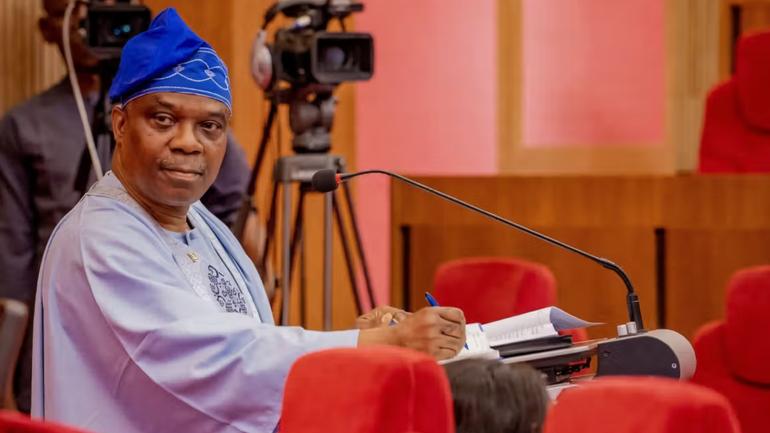
Nigeria’s Minister of Power, Joseph Tegbe, says the country could achieve stable electricity supply within three to five years as the government works to strengthen the national grid and expand transmission capacity. Tegbe said recent outages linked to maintenance at Egbin Power Station, gas shortages and transmission problems had been addressed, with supply restored to several parts of Lagos. He also announced a proposed $2 billion east-west super grid that the government says could eventually raise transmission capacity from about 4,000MW toward 19,000MW, with procurement underway and completion targeted within two years.
Nigeria’s Minister of Power, Joseph Tegbe, says the country can achieve substantially stable electricity supply within the next three to five years if ongoing efforts to strengthen the national grid, expand transmission capacity, improve gas supply to generating plants and attract new investment are completed as planned, offering one of the government’s clearest timelines yet for addressing a power crisis that has constrained Nigerian households and businesses for decades. Tegbe made the projection on Monday during an interview on TVC, days after widespread outages affected Lagos, the Federal Capital Territory and other parts of the country, and said the immediate disruptions had largely been resolved following the completion of maintenance at Egbin Power Station and efforts to address gas constraints and transmission problems. He appealed to Nigerians for patience, arguing that the government’s challenge is no longer simply restoring electricity after individual outages but building enough generation and transmission capacity to support an economy whose demand for power is rising rapidly.
Tegbe said recent supply problems had been caused by a combination of planned maintenance at the Egbin Power Station, inadequate gas supply to some thermal plants and what the government described as sabotage of transmission infrastructure. The combined effect reduced the electricity available to the grid and contributed to disruptions in several parts of the country, including Lagos and Abuja. By Monday, however, the minister said the immediate situation had improved and that maintenance work had been completed, allowing supply to return to areas that had experienced prolonged outages. He said he personally made calls to confirm that electricity had been restored in parts of Lagos including Ajah, Lekki, Ikoyi, Magodo and Ikeja, while residents had also contacted him to report improvements in supply.
The minister presented the restoration as an immediate success but acknowledged that Nigeria’s deeper electricity problem cannot be solved through short-term interventions alone. His three-to-five-year projection is based on the assumption that the country will be able to complete major transmission projects, increase generation availability, improve the reliability of gas supplies and strengthen a grid that currently operates far below the country’s installed generation capacity. Nigeria has more than 14,000 megawatts of installed grid-connected generation capacity, according to the Nigerian Electricity Regulatory Commission, but the amount actually available and dispatched remains far lower because of plant outages, gas constraints, transmission bottlenecks and other technical and commercial problems.
Recent regulatory data illustrates the scale of that gap. NERC reported that average available generation capacity in September stood at about 5,038 megawatts, while average hourly generation was approximately 4,089 megawatts. In August, average available capacity was about 4,758 megawatts and average utilization was roughly 4,102 megawatts. Earlier in the year, April figures showed that only about 4,286 megawatts was available for dispatch from more than 13,600 megawatts of installed capacity. Those figures demonstrate that Nigeria’s power challenge is not simply a lack of power stations; much of the generating capacity already built is unavailable at any given time because the system cannot consistently supply fuel, evacuate power or maintain all plants at full readiness.
Tegbe said his immediate priority is therefore grid stability, arguing that Nigerians cannot experience reliable electricity if the transmission system remains vulnerable to collapses, damaged lines and bottlenecks between generation plants and distribution networks. He said the government is working to optimize existing infrastructure while simultaneously developing new transmission capacity that would allow substantially larger volumes of power to move across the country. The minister acknowledged that such infrastructure cannot be built overnight and said the public should judge the government’s plans over a longer horizon because substations, transmission lines and generation projects require years of procurement, construction and commissioning before they can change the daily experience of electricity consumers.
Central to that strategy is a proposed $2 billion east-west super grid that Tegbe says could dramatically increase Nigeria’s ability to transmit electricity. According to the minister, the new network is expected to connect key locations including Funtua, Gwagwalada, Ikot Ekpene, Benin, Epe and Ilorin, creating a stronger transmission backbone across the country. He said procurement has already begun and that the project could be completed within two years if implementation proceeds according to plan. Tegbe projected that the investment, together with related upgrades, could increase transmission capability from roughly 4,000 megawatts today to as much as 19,000 megawatts.
That 19,000-megawatt figure should be understood as a government target rather than existing capacity. Nigeria’s present grid still transmits and distributes only a fraction of that amount, and achieving the proposed expansion would require not only construction of the super grid but corresponding increases in generation, gas availability, distribution capacity and payment performance throughout the electricity market. A transmission network capable of moving 19,000 megawatts would not automatically mean Nigerians are receiving 19,000 megawatts of electricity unless generating companies can produce the power and distribution companies can safely deliver and collect revenue for it.
Tegbe said the government is planning for that broader increase in demand rather than treating electricity reform as a static problem. He pointed to the rapid growth of artificial intelligence, data centers, remote working and digitally driven businesses as evidence that Nigeria’s future electricity requirements will be substantially greater than those of the past. Young Nigerians increasingly depend on stable electricity for computers, internet equipment, creative work, technology companies and home-based employment, while industrial growth will require even larger quantities of reliable power. His argument is that the government must build a grid capable not merely of meeting today’s inadequate consumption levels but of supporting the economy Nigeria expects to have several years from now.
The scale of the challenge remains significant. Nigeria, despite being Africa’s most populous country, has historically generated only around 4,000 to 5,000 megawatts for the national grid at any given time, leaving millions of households and businesses dependent on petrol and diesel generators, solar systems and other forms of self-generation. Large manufacturers often maintain their own power facilities because they cannot rely entirely on public electricity, while small businesses spend substantial portions of their operating costs on fuel. The economic consequences include higher production costs, reduced competitiveness and greater difficulty attracting industries that require reliable round-the-clock electricity.
Successive Nigerian governments have promised to solve the electricity crisis, and that history means new timelines are likely to be scrutinized closely. The power sector was partially privatized in 2013, when generation and distribution assets were transferred to private investors while transmission remained under federal control. The reform was intended to attract investment, improve efficiency and eventually create a financially sustainable electricity market, but the sector continued to struggle with insufficient investment, poor metering, high commercial losses, liquidity shortages, debts and weak transmission infrastructure.
The current administration has attempted to address some of those financial problems by clearing long-standing debts owed within the electricity value chain. President Bola Tinubu approved a ₦3.3 trillion settlement plan in April to resolve legacy debts accumulated between February 2015 and March 2025, after verification of outstanding obligations. The government said 15 power plants had signed settlement agreements totaling about ₦2.3 trillion, while hundreds of billions of naira had already been raised and initial payments made. Officials argue that reducing those debts will strengthen the balance sheets of generation companies, improve their ability to maintain plants and encourage further investment in the sector.
Liquidity has historically been one of the electricity market’s most serious weaknesses. Distribution companies frequently fail to collect the full value of electricity supplied to customers, while technical and commercial losses reduce the revenue available to pay generating companies and gas suppliers. NERC’s second-quarter 2026 report showed that distribution companies recorded average aggregate technical, commercial and collection losses of around 36 percent, more than double the regulatory target. Although remittance performance had improved, those losses continue to demonstrate how much revenue disappears between electricity generation and final payment.
Metering remains another major challenge. Millions of customers historically received estimated bills because they lacked functioning prepaid or postpaid meters, creating disputes over charges and weakening public confidence in distribution companies. The government has expanded metering initiatives, including the Presidential Metering Initiative, which targets the deployment of five million smart meters by 2027. NERC said the national metering rate reached about 62 percent by the middle of 2026, reflecting improvement but also showing that a substantial portion of customers remain without individual meters.
Tegbe, who became power minister in June after the resignation of Adebayo Adelabu, inherited these long-standing structural problems. President Tinubu nominated him in April following Adelabu’s departure to pursue elective office, and the Senate subsequently confirmed him before he was sworn in at the Presidential Villa. Tegbe previously worked as a senior partner and head of advisory services at KPMG Africa and served as director-general and global liaison for the Nigeria-China Strategic Partnership. The presidency said his background in fiscal reform, institutional transformation and power-sector advisory work was expected to support the administration’s efforts to improve electricity reliability and attract investment.
When he assumed office, Tegbe emphasized coordination between the different institutions responsible for Nigeria’s electricity supply. The power sector involves generating companies, the Transmission Company of Nigeria, distribution companies, NERC, gas suppliers, state governments and multiple federal agencies, meaning a failure in one part of the system can undermine performance elsewhere. A generating plant may be capable of producing electricity but unable to operate because it lacks gas; electricity may be generated but unable to reach consumers because of transmission congestion; and distribution companies may receive electricity but fail to recover enough revenue to pay the market.
The recent outage illustrates that interconnected vulnerability. Egbin is one of Nigeria’s most important thermal power stations and supplies a significant share of electricity available to Lagos and other parts of the national system. When maintenance reduced output at Egbin at the same time gas shortages constrained other thermal plants, the available generation pool fell. Transmission-line disruptions then compounded the situation, creating visible shortages across major population centers. Tegbe said the immediate problems have now been addressed, but the episode showed how limited reserve margins can leave consumers exposed when several problems occur at once.
Sabotage and vandalism have become another concern for the government. Transmission infrastructure has repeatedly been damaged or targeted, leading to the collapse of towers and interruption of major lines. Officials have blamed some incidents on vandals stealing steel components or deliberately damaging equipment, while insecurity in parts of the country can make repairs more difficult. Replacing damaged towers can take days or weeks and impose additional costs on a system already struggling with investment needs.
Grid collapses have also undermined public confidence. Nigeria has experienced repeated partial and total system failures over the years, sometimes plunging much of the country into darkness within minutes. Every collapse revives questions about the resilience of the transmission network and why disturbances can cascade through the system instead of being isolated. Tegbe has repeatedly identified grid stability as a priority since assuming office, and the proposed east-west super grid is being presented as part of the solution by creating stronger routes for moving electricity between different regions.
The idea of expanding transmission capacity is not new. Nigeria has undertaken numerous grid-expansion projects with support from international lenders and development partners, while the government has also pursued the Presidential Power Initiative in partnership with Siemens Energy. Several projects have focused on transformers, substations and transmission corridors intended to remove constraints. Progress has been uneven, however, and the difference between announced capacity and power actually delivered to consumers remains a central measure by which Nigerians judge reforms.
The Electricity Act signed in 2023 has also changed the structure of the sector by allowing states to establish and regulate their own electricity markets under certain conditions. Lagos and several other states have begun moving toward decentralized electricity arrangements that could eventually reduce dependence on the national grid. Supporters argue that allowing states and private investors to develop local generation and distribution systems can accelerate investment, while the federal grid can increasingly function as part of a broader interconnected market rather than the only major pathway for electricity supply.
Tegbe has already been working with Lagos on plans for more reliable electricity, including joint technical and steering committees focused on 24-hour energy zones and local market reforms. Lagos is particularly important because of the scale of its economy and electricity demand. Reliable electricity across the state would have implications far beyond households, affecting manufacturing, ports, technology companies, financial services, retail, hospitality and the growing data-center industry.
The minister’s three-to-five-year projection therefore rests on multiple reforms succeeding at approximately the same time. Transmission capacity must increase, generation availability must improve, gas supply must become more dependable, distribution companies must reduce losses, metering must expand and investment must continue flowing into both grid and decentralized electricity systems. Failure in one area could slow progress in others, which is why the promise of stable power should be regarded as a policy target rather than a guaranteed date by which every Nigerian home will suddenly receive electricity around the clock.
That distinction is particularly important because “stable electricity” and “uninterrupted power” are not identical claims. Tegbe’s remarks focused on achieving stability and significantly improved supply within a three-to-five-year period. He did not provide a universal guarantee that every home and business across Nigeria would receive 24-hour electricity by a particular date. Distribution quality varies widely by location, and even a stronger national grid would not automatically eliminate faults on local feeders, transformers and distribution networks.
The government nevertheless argues that visible improvements are already occurring. Tegbe said Nigerians should consider the progress made even while acknowledging recent disruptions, and he appealed for patience while additional infrastructure is built. He described the latest outages as a temporary challenge rather than evidence that the entire reform program had failed, saying the government had addressed the immediate problem and would now focus on maintaining stability.
For households that regularly experience blackouts, however, confidence will depend on what happens after the latest restoration. Temporary improvements have occurred many times before, only for supply to deteriorate again because of generation shortfalls, grid faults or local distribution problems. Nigerians are therefore likely to judge Tegbe’s timeline through daily experience rather than policy announcements, measuring progress by whether electricity lasts longer, outages become less frequent and dependence on generators gradually declines.
The same is true for businesses. Reliable power can have an immediate effect on operating costs because diesel and petrol generation is considerably more expensive than grid electricity for many users. Manufacturers can increase production, small businesses can preserve profit margins and technology companies can operate equipment without constant backup power. If the government succeeds in raising available electricity significantly while improving reliability, the economic impact could be substantial. If generation remains near current levels while demand continues growing, shortages could persist despite transmission investment.
The proposed $2 billion super grid will therefore be a key test of Tegbe’s strategy. Procurement, financing, construction and completion will need to occur within the government’s stated timeline, while transparency will be necessary to show how the project is funded and whether planned transmission gains are actually achieved. The promise to increase capacity toward 19,000 megawatts is ambitious when compared with current grid performance, and implementation will matter far more than the announcement itself.
Nigeria’s electricity problem has endured long enough that public skepticism is understandable. Governments have repeatedly announced megawatt targets, power-sector roadmaps, emergency interventions and infrastructure projects, yet the country still supplies only a few thousand megawatts through the national grid to a population of more than 200 million people. The current administration’s challenge is not simply to produce another timetable but to demonstrate measurable gains in generation, transmission, distribution and reliability that survive beyond temporary improvements.
Tegbe’s argument is that the next three to five years can be different because financial restructuring, grid expansion, state-level electricity reform, metering and private investment are being pursued simultaneously. The minister has also acknowledged that the system must expand beyond current requirements because artificial intelligence, data centers, industrialization and remote work will increase electricity demand even if population growth alone does not. In that sense, the government is attempting to solve both today’s shortage and tomorrow’s expected demand.
Whether that strategy delivers the stable electricity Tegbe has promised will depend on execution rather than projections. Current regulatory data still shows average grid generation at only around 4,000 megawatts despite installed capacity several times larger, and recent outages demonstrate how quickly maintenance, gas shortages and transmission problems can reduce supply further. The government has begun addressing debt, metering and transmission investment, but the scale of the gap means improvements will have to continue consistently for years rather than months.
The immediate test is whether the stability Tegbe says has returned after the latest outages can be maintained through the coming weeks and months. Beyond that, attention will shift to procurement and construction of the east-west super grid, improvements in gas supply, additional generation entering service and the ability of distribution companies and state electricity markets to deliver power reliably to consumers. Those developments will provide clearer evidence of whether the minister’s three-to-five-year horizon is realistic.
For now, Tegbe is asking Nigerians to judge the government not only by the outages of recent days but by the infrastructure it says it is building to prevent them from becoming the norm. His promise is substantial but carefully framed: Nigeria can achieve stable electricity within three to five years if the grid is strengthened, capacity expands and the reforms currently underway are completed. The outcome will ultimately be measured not by the number of megawatts announced or transmission projects commissioned, but by whether homes and businesses across the country can increasingly switch on their lights and equipment without first wondering when the power will disappear again.