
TINUBU SAYS NAIRA WOULD HAVE BECOME WORTHLESS WITHOUT FUEL SUBSIDY REMOVAL, RULES OUT REVERSAL
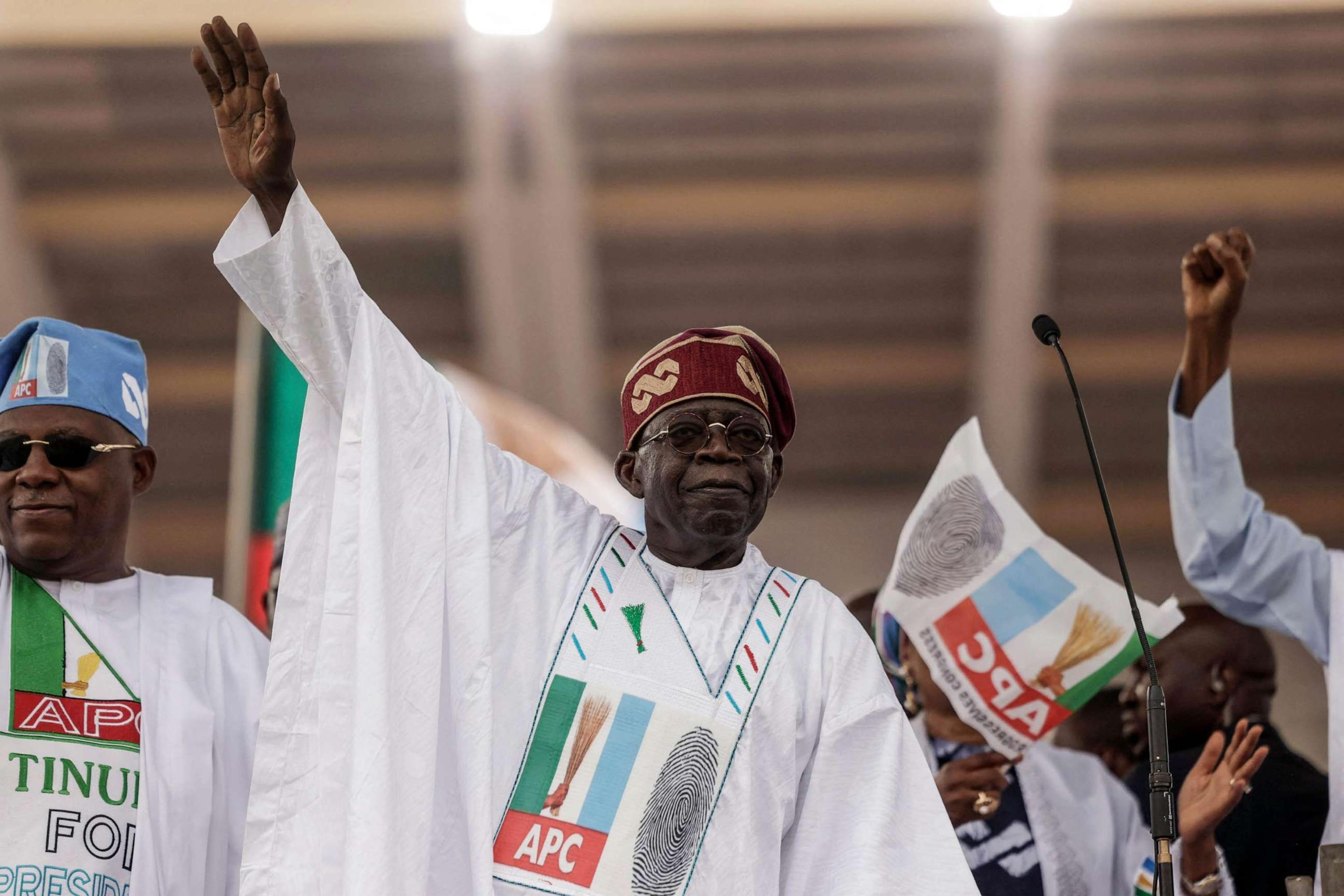
President Bola Tinubu says the naira would have become worthless without his administration's economic reforms, defending fuel subsidy removal and insisting Nigeria will not return to the policy. He also claims 27 states could not pay salaries when he took office in 2023.
UYO, November 7, 2026 President Bola Ahmed Tinubu has defended his administration’s controversial decision to remove Nigeria’s petrol subsidy, claiming that the naira would have become virtually worthless if his government had failed to introduce the economic reforms announced when he assumed office in May 2023. The President insisted that Nigeria could not afford to return to the subsidy regime, arguing that the policy had placed unsustainable pressure on public finances and left state governments struggling to meet their obligations to workers, pensioners and other beneficiaries.
Tinubu made the remarks on Friday, November 6, during a reception organised in his honour at the newly constructed Banquet Hall of ARISE Palm Resort in Uyo, Akwa Ibom State, following an All Progressives Congress presidential campaign rally at the Godswill Akpabio International Stadium. Defending the decisions taken during the first months of his administration, the President said Nigeria was facing the prospect of severe financial instability when he took over the country's leadership and that maintaining the existing economic arrangements would have made the situation considerably worse.
The President recalled that 27 of Nigeria’s 36 state governors were allegedly unable to meet their salary obligations when he assumed office, arguing that the financial difficulties extended beyond the payment of workers to include pensions and gratuities. He said the situation reflected the pressure on government finances before his administration introduced changes to the country's fiscal and foreign exchange policies.
“When I took over, 27 governors out of 36 of this country were unable to pay salary obligations, not to talk of pension and gratuity. Today I stand before you able to say we are out of that tunnel,” Tinubu said, adding that Nigeria had moved away from what he described as a period of uncertainty and the possibility of national bankruptcy.
In one of his strongest remarks defending the reforms, Tinubu suggested that the naira would have lost practically all its value if the government had not acted immediately after taking office. He compared the hypothetical collapse of the currency to a situation in which Nigerians would need wheelbarrows to transport money to markets to purchase ordinary household necessities.
“By now, if we didn’t take a decision the day I took over, we would use wheelbarrows to move our naira because it would have been valueless, nothing,” he said. Referring to an exchange rate of approximately ₦1,300 to the dollar, he argued that the currency still retained some value because of the decisions taken by his government, although the official exchange rate had moved further to around ₦1,346 to the dollar by October 30, according to Central Bank data.
Tinubu's argument centres on the administration's decision to remove the petrol subsidy, unify the foreign exchange market and introduce other fiscal and monetary changes intended to reduce government expenditure, improve revenue collection and attract investment. The subsidy announcement came during his inauguration on May 29, 2023, when he declared that the policy would no longer continue. The announcement immediately altered the country's fuel pricing arrangements and triggered substantial increases in petrol prices, transportation costs and the cost of goods and services.
The government maintained that the previous subsidy arrangement had become financially unsustainable, with public resources being spent to maintain artificially low petrol prices while the country faced competing demands for infrastructure, healthcare, education and other public services. Officials also argued that the system encouraged smuggling, fraudulent claims and the diversion of petroleum products into neighbouring countries, making it increasingly difficult to justify the expenditure.
The foreign exchange reforms that followed also changed the way the naira was valued in the official market, allowing the currency to depreciate sharply as the Central Bank moved towards a more market-driven exchange rate. While the administration has argued that the changes improved transparency, strengthened external reserves and reduced distortions in the foreign exchange market, the initial adjustments contributed to higher import costs and additional inflationary pressure across the economy.
The economic consequences of the reforms have remained a central subject of debate, particularly because the removal of the subsidy was followed by a dramatic increase in the price of petrol and a corresponding rise in transportation and distribution expenses. Nigerian households and businesses faced higher operating costs, while food prices increased as producers and traders adjusted to the rising cost of moving agricultural products from farms to markets. The pressure was particularly significant for lower-income households, which spend a substantial proportion of their earnings on food, transport and other basic necessities.
Although the administration has repeatedly argued that the reforms were necessary to prevent a deeper fiscal crisis, the impact on household purchasing power has remained one of the most difficult aspects of its economic record. The government has acknowledged that the changes imposed hardship on Nigerians, while maintaining that the country would have faced even more serious consequences if the previous policies had continued.
Recent economic figures provide evidence of some improvement in selected indicators, although they do not establish that the full benefits of the reforms have reached ordinary Nigerians. Nigeria's headline inflation rate declined to 14.63 per cent in September 2026, compared with 15.39 per cent in August and 20.98 per cent in September 2025, according to the National Bureau of Statistics. Food inflation, however, remained elevated at 19.59 per cent, demonstrating that the cost of essential food items continues to place pressure on households even as the overall rate of price increases slows.
The distinction between falling inflation and falling prices is important in assessing the administration's economic claims. A reduction in the inflation rate means that prices are increasing at a slower pace; it does not necessarily mean that goods and services have returned to the levels Nigerians paid before the reforms. Consequently, many households continue to face the effects of previous price increases despite the improvement in the latest inflation figures.
The exchange rate also remains an important measure of the economic adjustments introduced since 2023. The Central Bank's Nigerian Foreign Exchange Market data recorded the naira at approximately ₦1,346 to the dollar on October 30, 2026. Although the government has pointed to improved foreign exchange liquidity and stronger external reserves as signs of stabilisation, the currency's substantial depreciation since the beginning of the administration has increased the naira cost of imported goods, raw materials, machinery and other foreign-currency obligations.
In an October 30 policy statement published by the State House, Tinubu highlighted several indicators that his administration considers evidence of economic improvement. He said real gross domestic product growth reached 4.43 per cent in the second quarter of 2026, while the country's gross external reserves stood at approximately $55.1 billion as of October 9. The President also reported that federation revenue had increased significantly since 2021 and that net allocations to federal, state and local governments had risen.
The administration has argued that the increase in revenue available to state governments has improved their ability to pay salaries, execute infrastructure projects and meet other obligations. This forms an important part of Tinubu's defence of subsidy removal, as the government maintains that resources previously committed to supporting petrol consumption can now be distributed across the federation and used to finance public services and development projects.
However, the International Monetary Fund has raised questions about the extent to which the expected savings from subsidy removal were reflected in government finances. In its 2026 Article IV consultation report on Nigeria, the IMF estimated that the savings from the completed removal of the fuel subsidy could have reached as much as two per cent of gross domestic product, but said those savings did not appear to have accrued to the budget in 2025. The Fund also estimated that interest payments absorbed approximately 53 per cent of Federal Government revenue in 2025, compared with 41 per cent in 2024, highlighting the continuing pressure of debt servicing on public finances.
These concerns underscore the distinction between removing a costly subsidy and ensuring that the resources previously spent on it translate into measurable improvements in public finances and living conditions. The policy has changed the structure of government expenditure, but the extent to which the savings have been converted into better infrastructure, stronger public services and targeted assistance for vulnerable households remains an important measure of its long-term effectiveness.
Tinubu nevertheless maintained that his administration would not reverse the decision, insisting that returning to the former arrangement would undermine the progress made through the reforms. He argued that Nigeria must continue moving forward rather than return to policies he considers unsustainable, drawing a comparison with the biblical account of Moses and the Israelites leaving Egypt. The President's remarks reinforced his position that the subsidy question had been settled and that his government would focus on consolidating the changes rather than restoring the previous system.
The comments also carry political significance as Tinubu prepares for the January 16, 2027 presidential election, in which he is seeking another term in office. His Uyo appearance formed part of the APC's campaign activities, giving the President an opportunity to defend his administration's economic record and appeal to voters to support the continuation of its policies. The economic reforms, particularly subsidy removal and foreign exchange liberalisation, are expected to remain major issues in the national political debate as Nigerians assess the government's performance.
The President's defence of the reforms places the central question before voters and policymakers in clear terms: whether the economic adjustments have created a sustainable foundation for growth and improved public finances, and whether those gains are translating into better living conditions for ordinary Nigerians. While headline inflation has moderated, food prices remain high, the naira continues to trade at a significantly weaker level than before the reforms, and the cost of living remains a major concern for households and businesses.
For now, Tinubu has made clear that his administration will not restore the fuel subsidy, maintaining that the decision was necessary to prevent a deeper economic crisis. The government's next challenge will be to demonstrate that the reforms can deliver more than improved fiscal and macroeconomic indicators, with tangible benefits reflected in employment, purchasing power, affordable transportation, food prices and access to essential public services. Whether Nigerians ultimately accept the administration's argument that the hardship was necessary will remain a central question in the country's economic and political debate ahead of the 2027 election.