ADEBOYE ORDERED BILLIONS RETURNED WITHIN 24 HOURS AFTER EFCC TRACED CRIME PROCEEDS TO RCCG PROJECT OLUKOYEDE
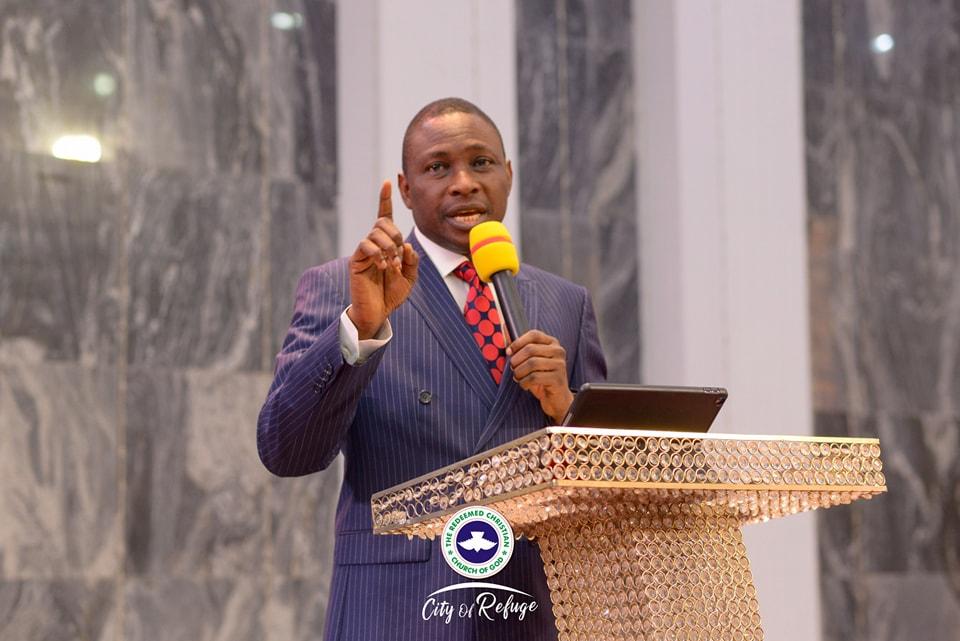
EFCC Chairman Ola Olukoyede says Pastor Enoch Adeboye ordered billions of naira returned within 24 hours after investigators traced funds linked to alleged financial crime to projects of the Redeemed Christian Church of God. Olukoyede said Adeboye acted immediately after being briefed and praised him for refusing to retain the money. The EFCC chairman did not disclose the donor, the precise amount or the project involved, and there is no allegation in the available reports that Adeboye personally participated in the underlying alleged fraud.
The Chairman of Nigeria’s Economic and Financial Crimes Commission, Ola Olukoyede, has revealed that Pastor Enoch Adejare Adeboye ordered the immediate return of billions of naira connected to a Redeemed Christian Church of God project after investigators traced the funds to proceeds linked to alleged financial crime. Olukoyede said the RCCG General Overseer acted within 24 hours of being informed about the source of the money, directing church officials to return the entire amount rather than allow the institution to retain funds connected to an ongoing fraud investigation. The EFCC chairman used the incident to warn churches and other religious organisations that accepting large donations without asking reasonable questions about their source can expose them to serious financial, legal and reputational risks, especially where investigators later establish that the money originated from criminal activity.
Olukoyede made the disclosure while addressing RCCG workers and ministers during a meeting held ahead of the church’s annual Holy Ghost Congress. According to accounts of the meeting, Pastor Adeboye had invited the EFCC chairman to speak to church workers about financial transparency, accountability, proper record-keeping and the growing risk of religious institutions becoming vulnerable to people seeking to conceal or legitimise questionable wealth through donations. Olukoyede, who is himself an ordained RCCG pastor, told the gathering that churches must not allow the generosity or public status of wealthy members to prevent them from asking difficult questions where unusually large sums of money are involved.
Recounting the case involving RCCG, Olukoyede said investigators were looking into an individual accused of serious financial misconduct involving transactions worth several billions of naira when they discovered that part of the money had been directed toward a church project. The EFCC chairman did not identify the individual, disclose the exact amount involved or name the specific project that received the money, but he said investigators were able to trace the funds and establish a connection between the donation and the proceeds of the alleged financial crime. He said he subsequently approached Adeboye directly and explained what the commission had discovered.
According to Olukoyede, Adeboye did not argue with investigators or attempt to retain the funds once the findings were presented to him. Instead, the cleric immediately instructed those responsible for the church’s finances to ensure that every naira connected to the questionable transaction was returned within 24 hours. The EFCC chairman said the directive was carried out and praised Adeboye for responding quickly rather than allowing the matter to develop into a prolonged dispute between the church and the anti-graft agency. He presented the episode as an example of how religious institutions should respond when credible evidence emerges that money received for charitable or religious purposes may have come from an unlawful source.
The disclosure is significant because there is currently no allegation that Adeboye personally participated in the underlying fraud or knowingly accepted criminal proceeds on behalf of RCCG. Olukoyede’s account instead portrays the church as a recipient of funds that were later traced by investigators to an individual under investigation, with the church leadership subsequently cooperating once the alleged origin of the money was brought to its attention. That distinction is important because receiving a donation that is later discovered to be tainted is not automatically the same as knowingly participating in money laundering or fraud, particularly where the recipient acts promptly once notified by law-enforcement authorities.
Olukoyede used the incident to make a broader point about the way religious institutions handle donations from wealthy individuals. He warned that churches can become attractive destinations for people seeking respectability, influence or social legitimacy after acquiring wealth through questionable means, particularly in environments where large donors are celebrated publicly, given special recognition or quickly elevated into positions of influence. He argued that when religious organisations fail to scrutinise suspicious financial activity, they risk becoming channels through which proceeds of crime are absorbed into apparently legitimate institutions.
The EFCC chairman said churches should not assume that every large donation is clean simply because it is offered for a religious project. While ordinary members may contribute modest amounts through regular offerings, tithes and fundraising, unusually large donations running into hundreds of millions or billions of naira can reasonably require greater scrutiny, particularly where the donor’s known business activities do not appear to justify the scale of the contribution. Olukoyede stressed that accountability should not be interpreted as hostility toward wealthy members but as a necessary safeguard capable of protecting religious institutions from becoming entangled in criminal investigations.
He also spoke about another case involving an unnamed church allegedly connected to funds arising from a Ponzi scheme. According to Olukoyede, the church leadership initially resisted the EFCC’s attempt to recover the money after investigators traced funds from the fraudulent investment operation into the organisation. The EFCC chairman said the church eventually refunded a substantial amount only after the commission threatened legal action, contrasting that response with Adeboye’s decision to return the money linked to RCCG without prolonged resistance. He did not disclose the identity of the second church or the individuals connected to that case, meaning there is no responsible basis for speculating about which organisation he was referring to.
Olukoyede’s remarks also focused heavily on the wider culture of materialism and competition within religious institutions. He warned church leaders against celebrating wealth without understanding how it was acquired and criticised situations in which people attempt to use financial contributions to secure influence, recognition or leadership positions. The EFCC chairman argued that the church cannot credibly condemn corruption in government while tolerating similar behaviour within its own structures, particularly if people believe that money can purchase status, appointments or preferential treatment in a religious organisation.
He further warned against attempts to bribe individuals in order to secure leadership positions within RCCG, describing such conduct as both morally wrong and potentially criminal. Olukoyede told church workers that the responsibility for fighting corruption does not begin and end with politicians or public servants, insisting that religious leaders must also demonstrate the standards of honesty and accountability they demand from government. According to him, people who condemn bribery in public institutions cannot justify using money to influence church appointments or internal promotions simply because the setting is religious rather than governmental.
The EFCC chairman also recounted instances in which allegations of financial misconduct involved members of RCCG itself, including senior church figures. He said his responsibility as head of the anti-graft agency required him to separate religious loyalty from law-enforcement duties and made clear that membership of a prominent church could not be used as protection against investigation. Olukoyede told the gathering that he had previously authorised action against an RCCG pastor accused of financial wrongdoing connected to the pastor’s secular employment, arguing that the church’s credibility would suffer if members believed religious affiliation provided immunity from accountability.
Adeboye, according to reports from the meeting, supported the call for stronger financial discipline and warned RCCG workers that the church would not protect anyone found to be involved in financial misconduct. He encouraged pastors and administrators to maintain clean records, ensure that funds received by the church are properly documented and avoid practices capable of bringing the institution into conflict with law-enforcement agencies. The General Overseer’s position reinforced Olukoyede’s argument that religious organisations must become more proactive about financial compliance rather than reacting only after problems emerge.
The revelation about the returned billions also raises wider questions about how churches and charitable organisations in Nigeria screen major donations. Religious institutions routinely raise significant sums for construction projects, schools, hospitals, humanitarian programmes, conventions and missionary work, and many of those projects depend heavily on wealthy individuals or corporate donors. While churches cannot realistically investigate every offering placed in a collection box, large transfers from identifiable donors can create additional responsibilities, particularly where the amounts involved are substantial enough to attract the attention of regulators or financial investigators.
Financial-crime investigations often involve following money through multiple transactions in order to determine whether criminal proceeds have been transferred, concealed, invested or donated. Funds obtained through fraud, corruption, embezzlement or other offences can be moved into property, businesses, charities, religious institutions or private accounts in an attempt to distance the money from its original source. When investigators trace such funds into legitimate organisations, those institutions may be required to return them even if the recipient was not involved in the original crime.
That appears to be the central issue in the RCCG case described by Olukoyede. Investigators were not accusing the church of generating the criminal proceeds but said part of the money connected to the person under investigation had entered church projects. Once the EFCC established that connection, the agency approached Adeboye, and the General Overseer ordered the funds returned. The incident therefore highlights both the vulnerability of large institutions to questionable donations and the importance of having systems capable of responding quickly when concerns are raised.
The case also demonstrates why proper financial records are critical for churches handling large amounts of money. Detailed records can show when money was received, who transferred it, what account it entered, what project it was assigned to and whether the institution had any prior knowledge of the donor’s financial circumstances. Without such documentation, an organisation may struggle to establish its innocence or cooperate effectively with investigators when questionable transactions are discovered.
Olukoyede’s warning is particularly relevant in Nigeria, where religion plays a major role in public life and prominent churches often manage large networks of schools, universities, healthcare centres, media operations, estates and humanitarian projects. Some religious institutions receive donations comparable in scale to major corporations, making transparency and financial oversight increasingly important. As those institutions grow, the financial risks associated with accepting large sums without sufficient internal controls also increase.
The EFCC chairman’s comments suggest that anti-corruption agencies are paying closer attention not only to banks and commercial companies but also to religious and charitable organisations that may unknowingly receive money from people under investigation. While banks are subject to formal anti-money-laundering requirements, churches and charities may not always operate with the same level of compliance infrastructure, potentially making them attractive to individuals seeking to move questionable funds into socially respected institutions.
This does not mean churches should automatically treat every wealthy member as suspicious, but Olukoyede’s message was that caution becomes necessary where the amount involved is extraordinary or where information about a donor raises legitimate concerns. Religious institutions, he argued, should be willing to reject money where accepting it could compromise their integrity or expose them to criminal investigations.
The controversy surrounding illicit donations also touches on the broader issue of how wealth is treated within religious communities. In some churches, large donors receive public recognition, titles, privileged seating or access to senior leaders, creating incentives for wealthy individuals to seek status through financial contributions. Olukoyede warned that this culture can become dangerous if the source of wealth is ignored simply because the money benefits the church.
He argued that churches should focus more on the character and integrity of members rather than the size of their donations. Where money becomes the primary measure of importance, people involved in fraud or other criminal activities may believe they can use religious giving to obtain social credibility or public acceptance. The EFCC chairman warned that such practices can weaken the moral authority of religious institutions and undermine their ability to speak credibly against corruption.
The undisclosed identity of the donor in the RCCG case remains one of the biggest unanswered questions. Olukoyede deliberately withheld the person’s name, and there has been no official disclosure of the individual’s occupation, business interests, political connections or legal status. There is also no public information confirming whether the investigation resulted in criminal charges, a conviction or an ongoing court case. Because of that, attempts to identify the donor through speculation would be irresponsible and could expose innocent people to false accusations.
The exact amount involved also remains undisclosed. Olukoyede referred to billions of naira and suggested that the person being investigated had handled financial transactions running into tens of billions, but he did not provide a specific figure for the money connected to RCCG. Headlines describing the case should therefore avoid inventing a number or presenting an estimate as a confirmed amount.
The specific RCCG project involved has similarly not been revealed. The church operates numerous projects across Nigeria and internationally, ranging from worship centres and camps to educational institutions and humanitarian programmes. Without confirmation from either the EFCC or RCCG, there is no factual basis for linking the money to any particular project.
The date of the original donation has also not been made public. Olukoyede disclosed the episode during his November 7 address, but that does not mean the money was donated or returned on the same day. The latest development is the EFCC chairman’s public revelation of the incident, not necessarily the original transaction itself. That distinction is important because social-media posts could otherwise create the false impression that RCCG received billions in questionable funds this week.
What is clearly established from Olukoyede’s account is that investigators traced funds connected to an individual under scrutiny to projects associated with RCCG, informed Adeboye about what they had found and received cooperation from the church. According to the EFCC chairman, the General Overseer ordered the money returned within 24 hours and the funds were subsequently refunded.
That response is why Olukoyede praised Adeboye during the meeting. His speech was not framed as an accusation against the RCCG leader but as an example of how a religious institution should react when confronted with credible information about questionable money. The EFCC chairman’s criticism was directed more broadly at religious organisations that may be tempted to protect wealthy donors or resist recovery efforts after receiving funds linked to criminal activity.
The incident nevertheless serves as a warning that no institution is completely insulated from the movement of illicit money. Churches, charities, universities, companies and even government agencies can receive funds whose origins later become subject to investigation. The difference often lies in how quickly the institution responds once the problem is identified and whether it cooperates with authorities or attempts to obstruct recovery.
For RCCG, Olukoyede’s account places the church on the side of cooperation in this particular case. The General Overseer’s reported instruction to return the money within 24 hours suggests that the institution chose to remove itself from the disputed funds rather than risk retaining money connected to an alleged crime.
The larger question raised by the EFCC chairman is whether churches should wait for investigators to alert them or develop stronger internal systems capable of identifying suspicious donations before law-enforcement agencies become involved. That may require religious institutions to rethink how they handle very large transfers, particularly from individuals whose wealth is difficult to explain.
Such safeguards could include donor documentation, internal approval thresholds, independent audits, bank-transfer records and compliance procedures for large project contributions. These measures would not eliminate all risks, but they could help churches demonstrate that they acted responsibly and had no intention of concealing criminal proceeds.
The episode also reinforces the importance of separating religious influence from law enforcement. Olukoyede’s position as both EFCC chairman and an ordained RCCG pastor could have created a conflict if church loyalty had been allowed to interfere with the investigation. His decision to publicly recount the case appears intended to demonstrate that his professional responsibilities take precedence where financial crime is concerned.
That message may prove significant beyond RCCG. Nigeria has thousands of churches and religious organisations with substantial financial operations, and the country’s anti-corruption agencies have increasingly warned that criminals may attempt to exploit respected institutions in order to conceal or legitimise stolen money.
Olukoyede’s speech therefore carries a broader warning to religious leaders across the country: large donations should not automatically be treated as evidence of generosity or divine blessing without considering where the money came from. Churches cannot preach against corruption while becoming safe destinations for proceeds obtained through fraud, theft or abuse of public funds.
For Adeboye, the disclosure has instead highlighted his response once the alleged source of the money was revealed. According to the head of Nigeria’s anti-graft agency, the RCCG leader did not hesitate, negotiate or attempt to shield the donor. He ordered the money returned within 24 hours.
That is ultimately the central fact emerging from Olukoyede’s account. Billions of naira connected to alleged criminal proceeds were traced to an RCCG project, the church was informed and Adeboye instructed officials to give the money back. The donor remains unidentified, the exact amount remains undisclosed and the project involved has not been named, but the EFCC chairman has used the episode to send a wider warning that religious institutions must not allow their platforms to become shelters for suspicious wealth.
For churches and other faith-based organisations, the lesson from the case is clear: accountability cannot stop at the church gate. Financial integrity, proper documentation and willingness to reject questionable money are increasingly becoming essential parts of protecting both religious credibility and legal compliance in a country where investigators are following illicit funds wherever they lead.