KANO HISBAH ARRESTS 17 YOUNG WOMEN OVER TIKTOK DANCING AND ALLEGED IMMORAL CONDUCT
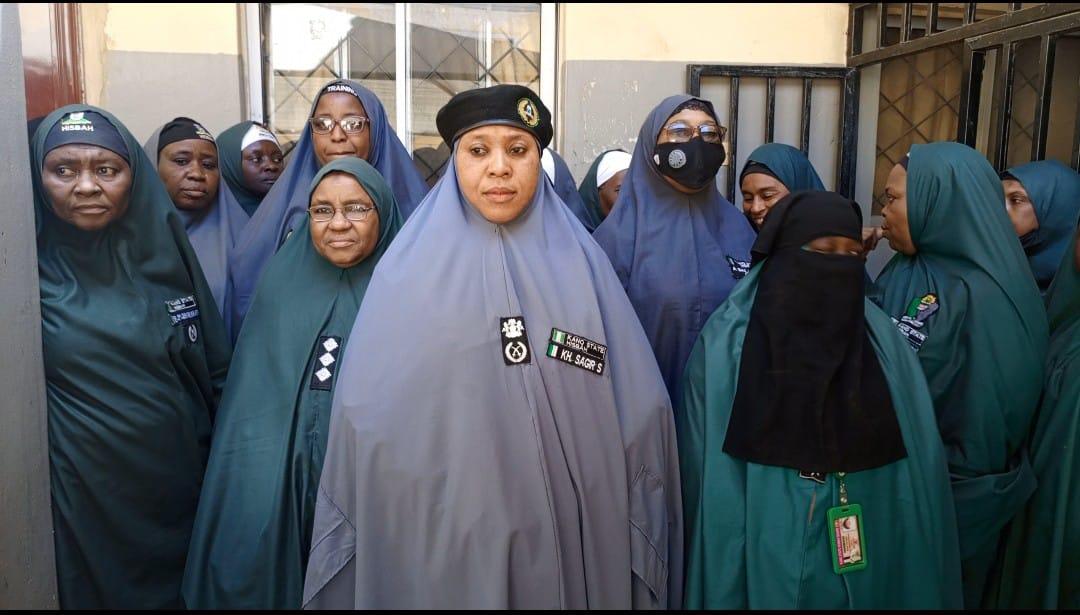
The Kano State Hisbah Board has arrested 17 young women accused of dancing on TikTok, loitering and engaging in conduct officials described as immoral at different locations across Kano metropolis. Some commercial tricycle riders were also detained for allegedly allowing female passengers to sit beside them. Deputy Commander General Mujahidden Aminuddeen said some of the detainees would receive lessons in ablution, prayer and other aspects of Islamic education while in custody.
The Kano State Hisbah Board has arrested 17 young women accused of dancing on TikTok, loitering at popular locations and engaging in conduct the religious enforcement agency described as immoral, as authorities in the state continue a broader campaign targeting behavior they consider inconsistent with Islamic teachings and public morality rules. The women were reportedly detained at different locations across Kano metropolis during routine surveillance and enforcement operations, with some allegedly picked up around hotels and other public spots. The Deputy Commander General of the board, Mujahidden Aminuddeen, confirmed the arrests and said the operation formed part of Hisbah’s continuing efforts to monitor activities it considers contrary to its regulations and moral guidelines.
Aminuddeen said the women were not arrested in a single location but were picked up during separate enforcement exercises across the state. According to him, preliminary screening showed that some of those detained had limited knowledge of basic Islamic practices, prompting the board to begin arrangements for religious instruction while they remain in its custody. He said officials planned to teach some of the women how to perform ablution, observe prayers and understand other aspects of Islamic education, arguing that the board’s objective was not simply punishment but what it described as correction and moral guidance. Hisbah has not publicly released the names or ages of the women, and there has been no announcement that any of them has been formally charged before a court.
“We discovered that some of them lack basic Islamic knowledge. We are making arrangements to teach them ablution, prayer and other aspects of Islamic education,” Aminuddeen said. His comments suggest that Hisbah intends to use the period of detention as part of what it describes as a reform process, although the board has not clearly stated how long the women will remain in custody or what specific legal procedure applies to the detention. There has also been no public statement from the women or their legal representatives, meaning the account of the alleged conduct currently comes mainly from Hisbah officials and should not be treated as an independent finding that every detainee committed an offense.
The operation extended beyond the 17 women. Hisbah also said some commercial tricycle riders were arrested for allegedly allowing female passengers to sit beside them in the driver’s section of their vehicles. The board has previously objected to unrelated men and women sitting closely together in commercial tricycles and has periodically enforced restrictions intended to prevent what it considers inappropriate physical contact between male drivers and female passengers. The latest arrests therefore reflect a wider enforcement campaign that covers not only social media activity but also transportation, hotels, public gathering places and everyday interactions between men and women.
Kano is one of several northern Nigerian states where Sharia law operates alongside the country’s conventional legal system. The Hisbah Board functions as a religious and morality enforcement institution and has for years intervened in matters involving alcohol, entertainment, dress, relationships, public gatherings, hotels and other behavior officials believe conflicts with Islamic standards. The board’s activities have often been defended by supporters who argue that Kano is predominantly Muslim and that Hisbah plays an important role in preserving religious and cultural values. At the same time, some of its enforcement actions have generated recurring debate over individual freedoms, due process and the extent to which a religious morality agency should be able to detain people over conduct that may not amount to a conventional criminal offense.
The arrest of young women over TikTok activity is likely to renew that debate because social media has become an increasingly important part of life for younger Nigerians. TikTok in particular is widely used for dancing, comedy, music, fashion, commentary, business promotion and other forms of entertainment. Videos posted by young people in Kano can reach audiences across Nigeria and beyond within minutes, placing local conservative standards in direct contact with a global digital culture that often operates according to very different social expectations. Hisbah officials have previously argued that content posted online can influence public behavior and should therefore fall within the agency’s moral enforcement responsibilities when it is considered offensive or indecent.
Kano Hisbah has previously confronted social media personalities over content it considered inappropriate and has invited some creators for questioning, warnings or religious counseling. The latest operation suggests that the board continues to view online behavior as an extension of public conduct rather than something entirely private. From Hisbah’s perspective, a video recorded by an individual can become a public morality issue once it is distributed to thousands of viewers, particularly when the content involves dancing, dress or behavior the agency considers inconsistent with Islamic expectations. That position has brought the board increasingly into conflict with younger residents whose social and professional lives are closely connected to digital platforms.
The board has also taken action against music, film and entertainment businesses over material it considered morally objectionable. Earlier enforcement operations have included raids at hotels and other locations where officials alleged that men and women were involved in activities contrary to Islamic rules. In another operation this year, Hisbah arrested 19 people at a hotel in Kano over alleged immoral conduct, including 12 women and seven men, according to officials. Those cases show that the latest arrests are part of a wider pattern of enforcement rather than an isolated response to TikTok.
Aminuddeen has also emphasized the responsibility of parents and guardians, urging families to pay closer attention to how young people behave online and in public. His comments reflect a recurring position within Hisbah that families should play the first role in preventing behavior the board regards as socially or religiously inappropriate. The decision to provide Islamic instruction to some of the detainees fits into the agency’s broader argument that religious education and counseling can be used alongside enforcement to influence behavior.
The legal position of the women remains less clear. Hisbah says the arrests were carried out under its mandate, but authorities have not publicly identified specific charges, court dates or the precise rules allegedly violated by each detainee. That matters because being described by an enforcement agency as engaging in immoral conduct is not the same as being convicted of a criminal offense. Standards of morality can involve religious and cultural judgments that are not always identical to the requirements of criminal law, and the lack of formal charges means the allegations remain unproven.
Kano’s legal structure makes such cases particularly sensitive because federal law, state law and Islamic legal institutions operate alongside one another. Sharia was expanded in Kano and several other northern states after Nigeria returned to civilian rule in 1999, creating a system in which Islamic courts and religious institutions have authority in certain areas while the country’s Constitution continues to guarantee broader rights and freedoms. Disputes have repeatedly arisen over how those systems interact, particularly when enforcement actions involve detention, freedom of expression or public conduct.
Hisbah is also different from a conventional police force. Its officers carry out moral patrols, surveillance and enforcement operations, but serious criminal matters generally require involvement from the police and the courts. That distinction becomes especially important when people are detained primarily for behavior described as immoral rather than for allegations involving violence, theft or another conventional crime. If the women remain in custody for an extended period without formal charges, questions about due process and access to legal representation are likely to become more prominent.
The arrests of the tricycle riders raise a different but related issue. Commercial tricycles are a major form of transportation in Kano and other Nigerian cities, and restrictions on where female passengers may sit can affect both drivers and passengers during busy periods. Hisbah has argued that allowing women to sit beside male drivers can create inappropriate physical proximity between unrelated men and women, while drivers may see the issue more practically as one of seating capacity and income. The fact that the board continues to enforce those restrictions shows that it treats such interactions as part of its broader moral mandate rather than simply a transportation matter.
The latest operation highlights the growing tension between traditional religious enforcement and a rapidly changing social environment. Hisbah remains influential in Kano and retains strong support among conservative sections of the population, but younger residents are increasingly connected to national and international culture through social media. That creates friction when activities considered ordinary elsewhere become the subject of religious enforcement in Kano.
TikTok has become one of the clearest examples of that tension. A young woman in Kano can post a dancing video that is viewed by people in Lagos, Accra, London or New York within minutes, but the same content may be judged according to local religious standards by Kano authorities. The platform itself operates across borders, while Hisbah’s authority is rooted in local law and social expectations. The result is an increasingly complex question about how far a state morality institution can extend its reach into online spaces.
There is also uncertainty over what standards Hisbah uses to determine when a TikTok video crosses the line into prohibited conduct. Dance videos can range from professional performances to casual entertainment, and creators may not always know which behavior could result in questioning or arrest. Without clear and publicly understood standards, enforcement can create uncertainty among young people about what content may attract the attention of authorities.
Hisbah officials are likely to argue that Muslim residents should already understand the religious expectations governing dress, conduct and interactions between men and women. Critics, however, may argue that detention requires clearer legal standards than general expectations about morality. That debate is unlikely to end with the release of the 17 women because social media use continues to expand and younger Nigerians are increasingly building careers and audiences online.
For now, the women remain under the authority of the Kano State Hisbah Board while officials prepare the religious instruction Aminuddeen described. The board has not announced exactly when they will be released or whether any of them will face formal proceedings in court. It has also not provided a detailed breakdown of which women were arrested for TikTok activity and which were detained at hotels or other public locations.
What is clear is that Hisbah intends to continue its campaign both on the streets and online. The board says its objective is to promote moral discipline, reduce social vices and guide young people toward behavior consistent with Islamic teachings. Supporters see that mission as an important part of Kano’s religious identity, while critics continue to question how enforcement should be balanced against individual rights and legal protections.
As social media becomes more deeply embedded in everyday life, Kano will continue facing difficult questions about where religious regulation ends and personal expression begins. The arrest of the 17 women shows that Hisbah is prepared to extend its traditional morality enforcement into digital culture, while the broader debate over detention, religious instruction and individual freedom remains unresolved. How authorities handle those questions will continue to shape the relationship between Kano’s conservative social institutions and a younger generation increasingly connected to a wider online world.