GUYANESE MAN ACCUSED OF ATTEMPTED MURDER REMAINS AT LARGE AFTER RIKERS RELEASE DESPITE ICE DETAINER, DHS SAYS
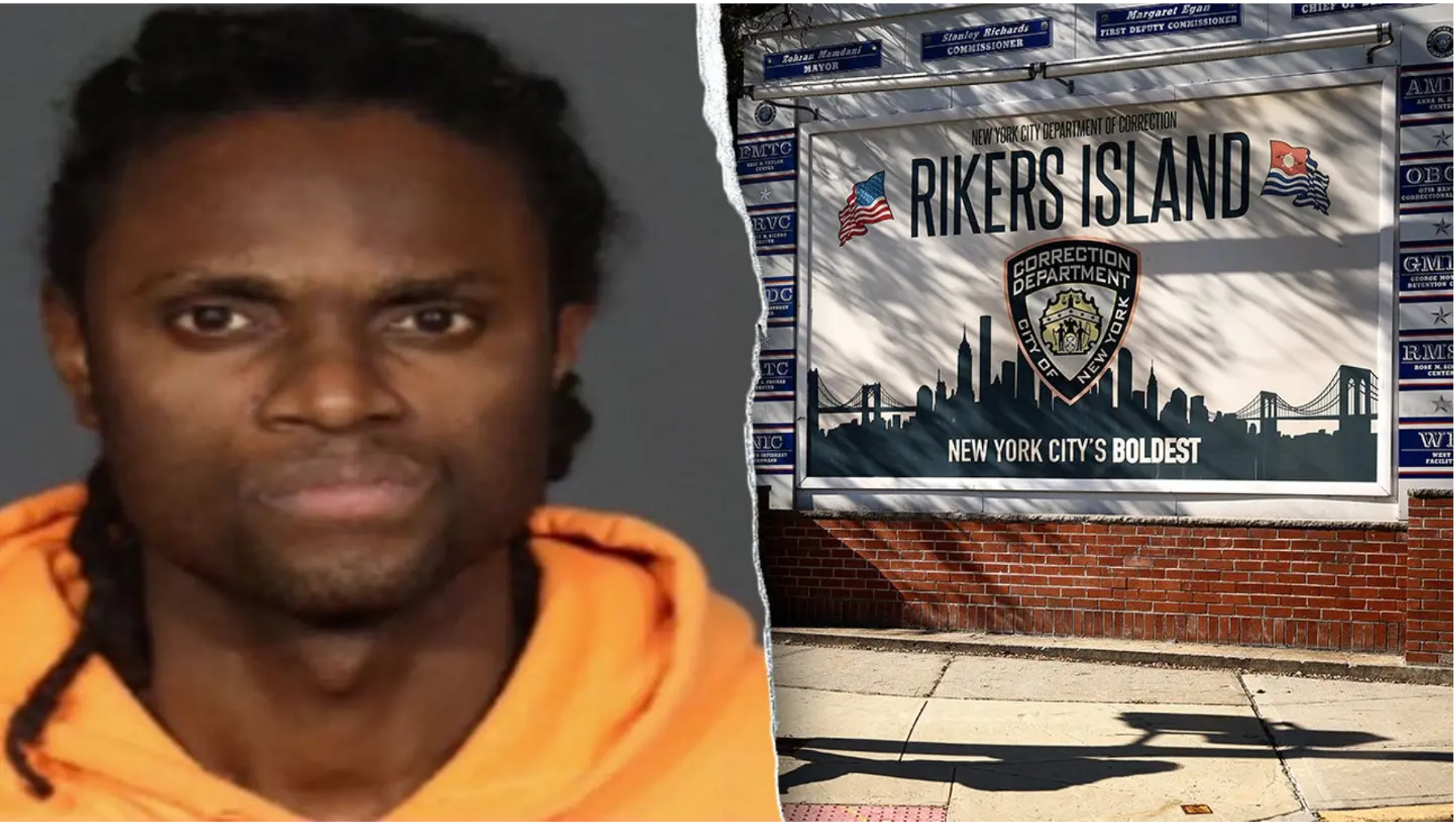
The Department of Homeland Security says Guyanese national Delon Raymond Jaundoo remains at large after being released from New York City’s Rikers Island jail despite an ICE immigration detainer lodged on April 29. Jaundoo, who DHS says entered the United States lawfully but overstayed his authorized stay after January 2015, faces pending charges including attempted murder, first- and second-degree assault, criminal use of a firearm and multiple weapons offenses. Homeland Security Secretary Markwayne Mullin has blamed New York’s sanctuary policies for the release, but New York City law generally restricts the Department of Correction from extending detention solely on the basis of a civil ICE detainee without additional legal conditions, including a qualifying judicial warrant. Public reporting reviewed by VNTV does not establish whether ICE supplied such a warrant, and the underlying criminal-court decision that made Jaundoo eligible for release has not been fully detailed.
A Guyanese national accused of attempted murder and a series of violent firearms offenses remains at large after being released from New York City’s Rikers Island jail despite an active immigration detainer lodged by U.S. Immigration and Customs Enforcement, according to the Department of Homeland Security, setting off another fierce political dispute over New York’s sanctuary policies and the limits of cooperation between local authorities and federal immigration officials. DHS says Delon Raymond Jaundoo was arrested in Brooklyn on charges including attempted murder, first- and second-degree assault, criminal use of a firearm and multiple counts of criminal possession of a loaded weapon, but was later released from city custody after the New York City Department of Correction declined to hold him for ICE. Homeland Security Secretary Markwayne Mullin has accused New York officials of placing the public at risk by refusing the federal request, while New York officials and existing city law maintain that civil immigration detainers are not equivalent to judicial warrants and that local correction authorities face strict legal limits on when they can continue holding someone after the criminal justice system has otherwise authorised release.
According to DHS, Jaundoo is a citizen of Guyana who originally entered the United States lawfully but remained in the country beyond the period he was authorised to stay, with his immigration status expiring in January 2015. The department says he was later arrested in Brooklyn in connection with a violent criminal case and now faces multiple felony charges, including attempted murder, two levels of assault and several firearm-related offences. DHS has also said his prior record includes an arrest for third-degree assault, although an arrest is not the same as a criminal conviction and the current attempted-murder and weapons allegations have not been adjudicated. Jaundoo is therefore accurately described as an accused person facing serious charges rather than as someone convicted of attempted murder, and the presumption of innocence continues to apply to the state criminal case unless and until prosecutors prove those charges in court.
ICE lodged its immigration detainer on April 29, DHS says, asking New York City correction officials to maintain custody long enough for federal immigration authorities to assume control of Jaundoo. The city’s Department of Correction did not honor the request, and Jaundoo was released from Rikers Island earlier in November, after which federal authorities said he remained at large. That sequence has become the central factual basis for the Trump administration’s criticism of New York, but the legal framework surrounding the release is more complicated than the phrase “ignored an ICE detainer” may suggest. Under federal regulations, an immigration detainer is ordinarily a request from ICE asking another law-enforcement agency to maintain custody of a person for a limited period beyond the time that individual would otherwise be released, allowing federal officers an opportunity to take custody for immigration proceedings. It is not, by itself, the same thing as a criminal arrest warrant signed by a judge.
New York City Administrative Code Section 9-131 places substantial restrictions on the Department of Correction’s ability to honor those requests. Under the city law, correction officials generally may hold someone beyond the point at which the person would otherwise be released only when federal immigration authorities provide a qualifying judicial warrant and when additional statutory conditions are met, including certain prior convictions for violent or serious crimes or a match in the terrorist screening database. That distinction is particularly important in Jaundoo’s case because the allegations currently attracting national attention are pending charges, not convictions. The public DHS and media accounts reviewed by VNTV do not state that ICE presented New York City with a judicial warrant meeting the requirements of the city code, so it would be inaccurate to conclude solely from the available information that correction officials had an unrestricted legal ability to continue holding him simply because ICE filed a civil detainer.
New York’s attorney general has similarly maintained that immigration detainers are requests rather than mandatory commands and that state or local agencies generally cannot prolong someone’s detention solely on the basis of an administrative immigration document without sufficient legal authority. Official guidance from Attorney General Letitia James says local agencies are not legally obligated to honor civil ICE detainers and warns that detention based only on an administrative immigration request may violate constitutional protections unless there is an independent legal basis, such as a judicial warrant or probable cause tied to a criminal offence. That legal position reflects years of litigation around the country over whether local authorities can expose themselves to unlawful-detention claims by keeping people incarcerated after the underlying state criminal authority for confinement has ended.
The Trump administration rejects the practical consequences of that approach and argues that so-called sanctuary policies prevent federal officials from taking custody of non-citizens accused or convicted of serious crimes while they are already inside secure local facilities. Secretary Mullin described Jaundoo’s release as another example of what the administration sees as a dangerous breakdown in cooperation, accusing New York officials of refusing to help ICE even in cases involving allegations of grave violence. Mullin said the state’s policies make it harder for immigration officers to carry out arrests safely because federal agents may then have to locate people in communities after they have been released rather than receiving them directly from correctional custody. His remarks are part of a wider administration campaign against jurisdictions that restrict participation in civil immigration enforcement, but they remain a political and policy argument rather than a judicial determination that New York violated federal law in this particular case.
The controversy has become more intense because New York expanded statewide limits on local involvement in immigration enforcement earlier this year. Governor Kathy Hochul signed the Local Cops, Local Crimes Act in May 2026, and parts of the measure took effect over the summer, requiring local law-enforcement agencies to terminate formal 287(g) agreements under which local officers could perform certain immigration-enforcement functions on ICE’s behalf. The law also restricts agreements allowing local correctional facilities to house people solely for federal civil immigration purposes, with additional provisions taking effect in November. State officials argue the policy is intended to ensure local police and jail resources remain focused on enforcing state and local criminal laws rather than functioning as an extension of federal civil immigration enforcement.
It is important, however, not to collapse those different rules into a single claim that New York now prohibits every form of cooperation with federal immigration authorities. The 287(g) restrictions address formal arrangements in which local agencies perform federal immigration functions, while New York City’s detainer rules separately govern when correction officials can hold or notify ICE about particular individuals. The state law also does not prevent compliance with federal criminal warrants or valid judicial orders, and New York officials have stressed that people facing criminal prosecution can still be held under ordinary state or federal criminal authority. The legal dispute is instead over whether local agencies should use their personnel and detention facilities to assist with civil immigration enforcement when there is no separate judicial order requiring them to do so.
New York City’s own correction data demonstrates that the system is not an absolute refusal to interact with ICE. The Department of Correction reported that it transferred 24 individuals to federal immigration authorities during fiscal year 2026 under circumstances allowed by city law, including cases involving qualifying criminal histories and supporting documentation. The same report says no person’s discharge was delayed solely because of a civil immigration detainer, reflecting the city’s policy that local authorities cannot simply extend incarceration after release has otherwise been ordered unless specific legal standards are satisfied. That record undercuts the broadest version of the claim that New York never cooperates with ICE, while at the same time illustrating why federal officials believe city restrictions substantially reduce the number of people transferred directly into immigration custody.
Jaundoo’s case has therefore become a powerful example of the clash between two competing approaches to public safety. Federal officials argue that once a non-citizen accused of serious violent crime is already in custody, it is safer and more efficient for local authorities to facilitate transfer to ICE rather than release that person and force federal agents to locate him later. New York officials and defenders of sanctuary policies counter that criminal charges should be handled through the criminal courts, that detention decisions should be governed by judges and existing state law, and that immigration status should not create an additional local detention power that bypasses judicial safeguards. The two positions are often presented politically as a simple choice between public safety and immigration protection, but the underlying legal dispute is about which government has authority to detain a person, for what reason, and under what judicial oversight.
The most serious unresolved question in Jaundoo’s case is why he was eligible for release from local criminal custody while facing attempted-murder and firearms charges. DHS statements focus on the immigration detainer and sanctuary policies, but the public reports reviewed by VNTV do not provide a full procedural history of his criminal case, including the specific bail decision, any bond conditions, the judge responsible for release or whether prosecutors sought continued pretrial detention. Those details are important because New York City correction officials do not independently decide whether a defendant facing state charges should remain jailed indefinitely; they execute court orders governing detention and release. If the criminal court had already determined that Jaundoo could legally leave custody, the Department of Correction would then need a separate lawful basis to keep him confined solely for immigration purposes. Without the underlying court records, attributing the entire release exclusively to city sanctuary policy would leave out an important part of the legal process.
DHS has not publicly provided those criminal-court details in the reporting reviewed, nor has it publicly stated whether its April 29 detainer was accompanied by a judicial warrant satisfying New York City’s requirements. Those omissions do not disprove the department’s criticism, but they matter for evaluating it. A civil ICE detainer and a federal judicial warrant are legally different instruments, and the New York City code expressly makes that distinction. If ICE had a qualifying judicial warrant and the city refused it despite satisfying the other statutory conditions, that would present a different legal scenario from one in which ICE sent only an administrative detainer. The available public record does not yet establish which of those circumstances applies.
The political rhetoric surrounding the case has been particularly sharp. Mullin accused New York’s sanctuary politicians of releasing a dangerous person “back onto the streets” and said the incident illustrated why the administration wants those policies eliminated. He also directed criticism at Governor Hochul, arguing that state restrictions make New York less safe by limiting cooperation with federal authorities. Hochul’s office has pushed back against similar federal attacks, saying New York does not provide sanctuary to violent criminals and stressing that the state continues to cooperate with federal authorities in criminal matters and follows federal judicial orders while rejecting the use of state resources for broad civil immigration enforcement. In a response reported by Fox News in connection with the Jaundoo story, a Hochul spokesperson said the state notifies federal immigration officials about non-citizens serving sentences in state prisons and accused DHS of misrepresenting the law.
That response also highlights an important jurisdictional distinction because Jaundoo was held at Rikers Island, which is part of New York City’s jail system, not the New York State prison system. City jails generally hold defendants awaiting trial or serving shorter sentences, whereas state prisons hold people convicted and sentenced for more serious offences. State officials can therefore truthfully describe cooperation involving state prisoners while the specific legal framework governing a Rikers detainee remains controlled in large part by New York City law and the court orders in that individual’s criminal case.
The Trump administration has repeatedly cited other cases in recent weeks involving non-citizens released by New York authorities despite ICE requests. In October, DHS publicised the case of Alpha Bah, a Guinean national accused of assaulting a police officer with a deadly weapon, saying local authorities released him despite multiple immigration detainers. Earlier this month, DHS also criticised the release of another individual with prior robbery and assault convictions. Those cases are part of a broader federal effort to argue that sanctuary restrictions make immigration enforcement more dangerous by requiring agents to locate individuals outside secure jail settings. New York officials and immigrant-rights advocates have countered that federal authorities should seek judicial warrants when they want extended detention and that local agencies should not be required to enforce civil immigration law on Washington’s behalf.
The public-safety debate is likely to intensify because cases involving allegations of attempted murder naturally generate a much different response from disputes involving civil immigration violations alone. Critics of sanctuary policies argue that whatever rationale may exist for limiting cooperation in routine immigration cases becomes harder to defend when the person involved is accused of severe violence. Supporters of the restrictions answer that constitutional detention requirements do not disappear because allegations are serious and that the proper mechanism for keeping a dangerous defendant in custody is a criminal-court order or valid judicial warrant rather than an administrative immigration request.
That tension is at the centre of Jaundoo’s case. The allegations against him are undeniably serious, and federal authorities say they are actively seeking him after his release. At the same time, accusations are not convictions, and the criminal justice system is required to distinguish between allegations sufficient for arrest and evidence sufficient for guilt. New York’s detainer rules were written around that distinction, generally requiring qualifying convictions and judicial authorisation before city correction officials extend custody for civil immigration purposes. Whether those rules strike the correct balance is a legitimate political question, but describing them accurately is essential to understanding why the release occurred.
The case also exposes the broader conflict between federal and local authority that has defined immigration policy in the United States for years. Immigration enforcement is principally a federal responsibility, while local police, prosecutors, courts and correction departments operate under state and municipal law. The federal government can arrest and detain people for immigration violations using its own officers, but it cannot always compel local jurisdictions to dedicate personnel, jail space and administrative resources to civil immigration enforcement. That division of authority has produced repeated legal clashes as presidential administrations attempt to pressure sanctuary jurisdictions into greater cooperation.
Supporters of stronger federal-local coordination argue that the current arrangement can create unnecessary risks for ICE agents and the public. If an individual with a known immigration violation is already inside a jail, they argue, transferring that person directly to federal custody is safer than releasing him into the community and then sending officers to locate him. Federal officials have repeatedly said street arrests can create unpredictable confrontations that would be avoided through jail transfers. In Jaundoo’s case, that argument is especially potent because he is accused of firearm-related violence and DHS says his current location is unknown.
Sanctuary-policy supporters respond that allowing ICE to rely routinely on local detention could blur the boundary between local policing and federal immigration enforcement, potentially discouraging immigrant communities from reporting crimes or cooperating with police. New York officials have explicitly relied on that reasoning in defending the Local Cops, Local Crimes Act, arguing that public safety depends partly on residents believing they can interact with local law enforcement without automatically triggering immigration consequences unrelated to the criminal matter at hand.
There is also a constitutional issue that extends beyond immigration politics. Courts have repeatedly treated detention as a serious deprivation of liberty requiring lawful authority, and local agencies can potentially face legal liability if they keep someone incarcerated after the basis for their criminal detention has expired. That is why New York’s attorney general distinguishes ICE administrative detainers from judicial warrants. A judge-issued warrant provides independent judicial authority, while an ICE detainer is generated by an executive agency. New York’s position is that local authorities should not prolong confinement solely on the latter document absent additional legal authority.
For ordinary New Yorkers, however, those legal distinctions can appear abstract when the subject of the dispute is someone accused of attempted murder. That political reality helps explain the intensity of Mullin’s response. The administration is framing Jaundoo’s release as evidence that sanctuary laws prioritise immigration protections over public safety, while New York leaders maintain that their policies do not shield violent criminals from prosecution and that state criminal courts remain fully empowered to jail defendants when the law permits.
The unanswered criminal-court questions will therefore be crucial to understanding the complete story. If prosecutors believed Jaundoo presented a serious danger, the record should show what detention they requested, how the judge ruled and what conditions were imposed. If he posted bail or was released because of a judicial ruling, that decision is separate from the Department of Correction’s refusal to extend custody for ICE. Those details would help establish whether the policy controversy concerns only immigration enforcement or whether there are additional questions about New York’s pretrial detention process.
At the time of the latest reporting, Jaundoo remained at large and federal authorities had not announced his recapture. DHS continues to describe him as unlawfully present in the United States because he allegedly overstayed the period of lawful admission that expired in January 2015, and ICE is seeking custody if he is located. His immigration history is therefore different from that of someone who entered the country clandestinely; according to DHS, he entered legally and later lost lawful status by remaining beyond the authorised period.
That distinction matters for precise reporting because political rhetoric often groups all people without current immigration status under a single label. “Illegal immigrant” is widely used in political and media discussion, but a more specific description in this case is that DHS says Jaundoo is a Guyanese national who entered the United States lawfully and later overstayed his authorised stay. That phrasing conveys the government’s immigration allegation without obscuring how he originally entered the country.
The most important immediate issue is now locating him and ensuring that both the outstanding criminal proceedings and any immigration process can continue through lawful channels. If Jaundoo is arrested again, federal and local authorities may once more confront the same jurisdictional questions over which agency takes custody and under what authority. Given the political attention now surrounding the case, any future arrest is likely to draw national scrutiny and renewed demands from the Trump administration for New York to change its sanctuary framework.
For New York, the controversy is unlikely to disappear regardless of the outcome of this particular case. The state has moved decisively in 2026 to restrict formal local participation in federal civil immigration enforcement, while the Trump administration has made aggressive immigration enforcement one of its central priorities. Those policies are fundamentally in tension, and individual criminal cases provide politically powerful examples for both sides.
Mullin and DHS will continue to argue that cases such as Jaundoo’s demonstrate the danger of releasing people whom ICE is prepared to detain. New York officials will continue to argue that the federal government has tools of its own, including obtaining judicial warrants and using federal officers, without requiring local agencies to hold people beyond what state criminal law otherwise permits. The dispute is therefore not simply about whether federal authorities wanted Jaundoo in custody; they clearly did. It is about whether the particular legal instrument they used required or permitted New York City to continue holding him.
The available evidence supports several firm conclusions. Jaundoo is a Guyanese national who, according to DHS, entered the United States lawfully and overstayed his authorised stay after January 2015. He faces serious pending criminal charges in Brooklyn, including attempted murder, assault and multiple firearms offences. ICE lodged a detainer on April 29, the New York City Department of Correction did not honor that detainer, and he was subsequently released from Rikers Island and is now being sought by federal authorities. Those facts are supported by DHS reporting cited by Fox News.
What the public record does not yet establish is equally important. It does not show that Jaundoo has been convicted of attempted murder or the current firearms charges, it does not explain in full why the criminal court authorised his release, and it does not confirm that ICE presented the kind of judicial warrant New York City law generally requires before correction officials can extend detention for civil immigration purposes. Those gaps mean the case cannot responsibly be reduced to a claim that city officials simply freed an accused attempted murderer despite having an unquestioned legal duty to hand him to ICE.
That nuance does not make the controversy less serious. A man facing extremely grave allegations is at large, federal immigration authorities say they wanted custody before he was released, and the case has exposed once again the consequences of a deep policy conflict between Washington and New York. For critics of sanctuary policies, Jaundoo’s release is evidence that legal barriers to cooperation can create public-safety risks. For defenders of those policies, the same case illustrates why detention powers must remain tied to judicial authority rather than political pressure.
As federal officers continue searching for Jaundoo, the immediate focus will remain on whether he is apprehended and returned to court. The broader debate, however, is likely to continue long after that happens because New York’s restrictions and the Trump administration’s enforcement strategy are built on fundamentally different views of the role local government should play in immigration enforcement.
For VNTV, the clearest conclusion from the verified record is therefore straightforward but legally precise: DHS says Delon Raymond Jaundoo remains at large after New York City released him from Rikers Island despite an ICE civil detainer, but the city operates under laws that significantly restrict detention based on such requests and generally require additional judicial authority. The criminal allegations against Jaundoo are severe, the search for him is active according to DHS, and the political fight over his release has become another major test of the increasingly confrontational relationship between federal immigration authorities and sanctuary jurisdictions across the United States.