AT LEAST 17 KILLED IN TWO MASS SHOOTINGS IN SOUTH AFRICA AS NINE ARE GUNNED DOWN IN A PRETORIA SHACK AND EIGHT MEN ARE FOUND IN A BULLET-RIDDLED VEHICLE
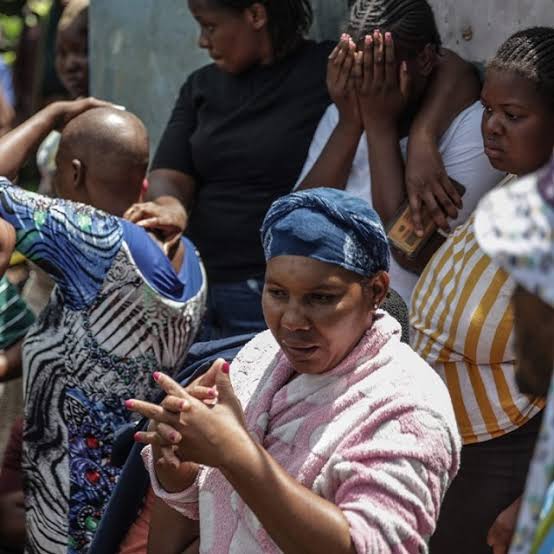
At least 17 people have been killed in two separate mass shootings in South Africa, deepening alarm over gun violence in a country that already has one of the highest murder rates in the world. In the first attack, nine people, six men and three women, were found shot dead inside a shack in the Jeffsville informal settlement in Atteridgeville, western Pretoria, in Gauteng province. In the second, eight men were found dead inside a bullet-riddled vehicle in Sweetwaters, outside Pietermaritzburg in KwaZulu-Natal province. The two attacks were discovered within hours of each other, and police confirmed both on Monday. Police are treating them as separate incidents, and no motive has been publicly confirmed for either. No arrests have been announced. The killings follow a string of mass shootings in recent years, many in taverns, hostels, informal settlements and the minibus taxi sector. Those attacks have repeatedly struck working-class and poor communities, where policing is thin, illegal firearms circulate widely, and organized crime, taxi rivalries and local disputes often end in bloodshed. The latest attacks will put fresh pressure on the South African Police Service, which faces criticism over low detection rates, stretched resources and internal turmoil. They will also renew calls for a serious crackdown on illegal guns and for long-term investment in the communities that carry the heaviest burden of the violence. For the families of the 17 dead, the questions are simpler and more urgent: who did this, why, and will anyone be held to account?
South Africa woke up to another grim tally of mass killing this week. At least 17 people were shot dead in two separate attacks, hundreds of kilometers apart, in two of the country's most populous provinces. In Atteridgeville, a sprawling township west of Pretoria, nine people were found dead inside a single shack. In Sweetwaters, on the outskirts of Pietermaritzburg in KwaZulu-Natal, eight men were found slumped inside a vehicle torn apart by gunfire. Police confirmed both incidents on Monday and said they were investigating them as separate cases. The killings were discovered within hours of each other. Together, they have left 17 families grieving, two communities in fear and a nation once again asking how this keeps happening.
The scene in Atteridgeville was found early on Monday in the Jeffsville informal settlement, a dense cluster of tin-and-wood homes on the edge of one of Pretoria's oldest townships. Six men and three women had been shot inside a shack. By the time police arrived, all nine were dead. Informal settlements like Jeffsville are home to hundreds of thousands of people across Gauteng. Many live in small, crowded structures with few streetlights, narrow paths and little formal security. A single shack can serve as a home, a gathering place or a drinking spot. In such places, gunmen can often arrive and leave in the dark before anyone fully understands what happened. Residents waking up to news of nine bodies in one room were left in shock, but many were not entirely surprised. For people in communities like Jeffsville, gunfire at night is a familiar sound.
The second scene was just as chilling. Late on Sunday, eight men were found dead in a vehicle in Sweetwaters, a semi-rural area outside Pietermaritzburg, the capital of KwaZulu-Natal. Police described the vehicle as riddled with bullets, and some reports identified it as a minibus. Emergency workers declared the men dead at the scene. The sheer number of bullet holes suggests the attackers intended to leave no survivors. Such killings, carried out on a vehicle full of people on a quiet road, carry the hallmarks of targeted, planned violence rather than a random robbery gone wrong. Yet police have not publicly confirmed a motive, and it would be unwise to speculate about who the victims were or why they were targeted until investigators release more details.
What is clear is that both attacks fit a pattern South Africans know too well. The country records roughly 27,000 murders a year, which works out to about 75 people killed every day. Its murder rate is among the highest in the world for a country not at war. Firearms are the single most common weapon used in those killings. Mass shootings, in which several people are killed in one attack, have become disturbingly regular. They no longer happen once every few years. They happen often enough that some barely register beyond the local news before the next one arrives.
The recent record is long and painful. In July 2022, gunmen opened fire inside a tavern in Soweto, killing 16 people in one of the deadliest bar shootings in the country's history. On the same weekend, four people were killed in a tavern shooting in Pietermaritzburg. In September 2024, 18 people, most of them women, were killed in a pair of attacks on homes in Lusikisiki in the Eastern Cape. In December 2025, gunmen stormed an illegal drinking spot at a hostel in Saulsville, another township west of Pretoria and a short distance from Atteridgeville, killing at least 12 people, including a young child. Each attack brought expressions of outrage from political leaders, promises of swift arrests and vows to tackle the root causes. Each time, the country moved on, until the next massacre forced it to look again.
The latest killings expose a geography of violence that is hard to ignore. Mass shootings in South Africa rarely happen in wealthy suburbs behind high walls and private security. They happen in townships, informal settlements, hostels, rural villages and taxi ranks. The victims are overwhelmingly poor and working-class Black South Africans. Many live in places where the nearest police station is far away, patrol vans are scarce, and calls for help can go unanswered for hours. These are communities where people have long told reporters and researchers that they feel abandoned, forced to rely on neighbors, street committees and sometimes vigilante groups for protection. When a massacre happens there, the shock is real, but so is a deep, weary sense that the state was never present to begin with.
Townships carry the weight of history as well as the burden of present-day crime. Under apartheid, they were designed to keep Black South Africans at a distance from white cities, with little investment in services, policing or economic opportunity. Three decades after the end of apartheid, many of those structural gaps remain. Unemployment in South Africa sits above 30%, and among young people it is far higher. Informal settlements have expanded rapidly around major cities as people move from rural areas and neighboring countries in search of work. Housing, sanitation, lighting and policing have not kept pace. Criminologists have long pointed out that poverty alone does not cause violence, but concentrated poverty, joblessness, weak institutions and easy access to guns create the conditions in which violence spreads and becomes normal.
Guns are at the center of the crisis. South Africa has strict firearm laws on paper. Owning a gun legally requires a license, competency training and background checks. Yet illegal firearms circulate widely. Some are smuggled across borders. Many others start out as legal weapons that end up in criminal hands through theft, loss or corruption. Police and military firearms have also been lost or stolen over the years, and investigations have shown how weapons that were meant to be destroyed found their way back onto the streets. Gun-control campaigners have argued for years that cutting off this supply is one of the most effective things the state could do to reduce killings. When the government ran firearm amnesties and tightened licensing in the early 2000s, researchers linked those efforts to a meaningful drop in gun deaths. Many experts believe that progress has since been lost.
KwaZulu-Natal has its own long and bloody history with gun violence. The province was the scene of brutal political conflict in the late 1980s and early 1990s, when clashes between supporters of rival political movements claimed thousands of lives. That legacy has never fully disappeared. Political killings, especially of local councilors and candidates, remain a recurring problem. The province is also a hotspot for taxi violence, as rival associations fight over lucrative routes in a minibus taxi industry that carries millions of commuters every day. Hitmen can be hired, sometimes for shockingly small sums, to settle disputes over routes, money, land or power. Areas around Pietermaritzburg have seen repeated bursts of this kind of targeted killing. That history is why an attack on a vehicle full of men on a quiet road raises immediate questions, even before police have said a word about motive.
Gauteng, the economic heart of the country, faces different but equally serious pressures. Its townships and informal settlements are home to organized gangs, illegal mining syndicates known as zama zamas, extortion networks and turf wars over drugs, alcohol and protection money. Unlicensed taverns and shebeens, where much of social life happens, have been the scenes of several mass shootings. Pretoria's western townships, including Atteridgeville and Saulsville, have seen repeated violent incidents in recent years. For residents there, the killing of nine people in a Jeffsville shack is not an isolated horror. It is the latest chapter in a story they have been living for a long time.
The response of the South African Police Service will be watched closely, and not without skepticism. Police have pledged in past cases to deploy specialized teams, including detectives and forensic experts, to hunt down the killers. Arrests have followed in some mass shootings. In others, months and even years have passed with no one charged. Detection rates for murder in South Africa are low, and conviction rates are lower still. Many cases stall because witnesses are too afraid to come forward, forensic laboratories face backlogs, and detectives carry heavy caseloads. When killers know that the chances of being caught and convicted are slim, the deterrent effect of the law weakens. That gap between crime and punishment is one of the biggest reasons critics say violence continues to escalate.
The police service itself is also under strain from within. Over the past year and a half, explosive allegations of corruption, political interference and links between senior officials and criminal networks have shaken public confidence. A judicial commission was set up to investigate claims of high-level corruption in the criminal justice system, and senior figures were placed on leave as the allegations unfolded. For ordinary South Africans, the details of those hearings may feel distant. But the message they send is not. If the institutions meant to fight organized crime are compromised or distracted, the people who pay the price are those in the townships and settlements where crime is most deadly.
There is also the question of resources. South Africa's police service is large, but its officers are unevenly spread. Wealthier areas often benefit from private security companies that outnumber the police many times over, while poorer communities rely almost entirely on a public service that is stretched thin. Visible policing in informal settlements can be rare, partly because of poor roads and lighting and partly because of a lack of vehicles and staff. Community policing forums exist, but their effectiveness varies widely. Without consistent, trusted policing on the ground, criminals operate with confidence and residents lose faith that reporting a crime will make any difference.
Beyond the numbers and the policy debates are the people whose lives ended this week. Nine people who went to sleep or gathered in a shack in Jeffsville did not live to see Monday morning. Eight men in Sweetwaters never made it home. Each had a family, a name and a story. Some may have been parents or breadwinners. Some may have been young people trying to find their way in a country where opportunities are scarce. As police work to identify victims and inform relatives, families face the agony of waiting, then grieving, then trying to understand how ordinary lives ended in such violent circumstances. Funerals in South Africa are large communal events, and mass killings often mean several burials in one small community within days of each other, multiplying the trauma for everyone involved.
That trauma does not fade quickly. Researchers and mental health workers have warned that repeated exposure to violence leaves deep and lasting scars on communities, especially on children. Young people growing up in areas where mass shootings are a recurring event can come to see violence as normal, which feeds the cycle that produced it. Many communities lack access to counseling and psychological support, so grief and fear are carried silently. Over time, that weight shapes how people live. It affects whether they trust neighbors, whether they go out at night, whether they report crimes and whether they believe the future can be different.
Political leaders will likely condemn the attacks, as they have after every major massacre. Condemnation matters, but South Africans have heard it many times before. What communities want to see is action that lasts beyond the news cycle. That means fast, thorough investigations that lead to arrests and convictions. It means a serious national effort to reduce the number of illegal guns, including tighter control of police and state-owned firearms, stronger border enforcement and renewed amnesty programs. It means more visible, better-resourced policing in townships and informal settlements, with officers who know the communities they serve. And it means long-term investment in jobs, housing, lighting, schools and youth programs, so that fewer young people are drawn into gangs, taxi wars or contract killing.
There is no single fix for a problem this deep. South Africa's violence has roots in history, inequality, unemployment, weak institutions and a flood of firearms. But other countries have shown that sustained, coordinated strategies can bring murder rates down, even in difficult conditions. Those strategies usually combine focused policing of the most violent groups, strong community partnerships and social investment in the places hit hardest. The question for South Africa is whether its leaders are willing to commit to that kind of long-term work, rather than reacting with fresh promises each time another massacre makes headlines.
For now, attention will turn to the investigators in Atteridgeville and Sweetwaters. Their work will determine whether the families of the 17 dead get answers, and whether those responsible face justice. Every unsolved mass shooting sends a message that killing is a low-risk act. Every successful prosecution sends a different message, that the state can still protect its people and punish those who take lives. Seventeen people are dead. Two communities are in mourning. The country is waiting to see whether this time will be different.