NDLEA INTERCEPTS 25KG METH HIDDEN IN CEREALS, ARRESTS AMERICAN OVER 33.95KG CANNABIS AT LAGOS AIRPORT
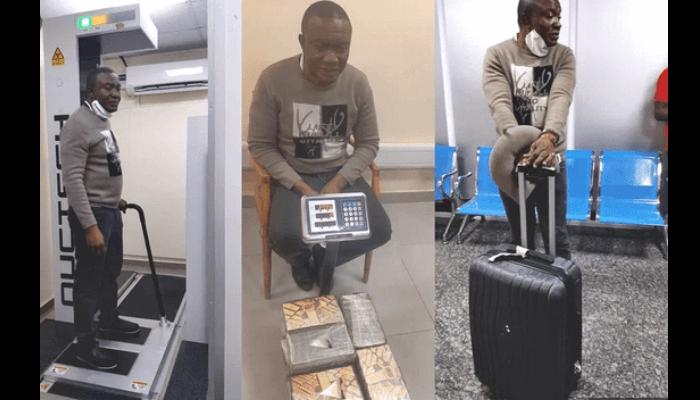
NDLEA says it arrested 56-year-old Chinedu Onwude at Murtala Muhammed International Airport on November 11 after recovering 25.05kg of methamphetamine allegedly hidden inside packs of breakfast cereals and cereal-based foods in his two suitcases. The agency says Onwude arrived from South Africa and had been living there for more than 24 years under the identity Omokan Isaac Babatope, which he allegedly told investigators he obtained using forged documents.
LAGOS, NIGERIA — Nigeria’s National Drug Law Enforcement Agency has announced two major international narcotics interceptions at the Murtala Muhammed International Airport in Lagos, arresting a 56-year-old Nigerian man accused of importing more than 25 kilograms of methamphetamine concealed inside breakfast cereal packs from South Africa and separately detaining a 28-year-old American citizen after nearly 34 kilograms of high-potency cannabis allegedly arrived with him from Thailand. The two operations, both carried out on Wednesday, November 11, form part of a wider series of NDLEA raids and seizures across several states and highlight the increasingly elaborate methods international trafficking networks are allegedly using to move synthetic drugs and cannabis through Nigeria’s busiest international aviation gateway.
According to an official statement released by NDLEA Director of Media and Advocacy Femi Babafemi on Sunday, November 15, the first suspect was initially traveling under the name Omokan Isaac Babatope but was later identified by investigators as Chinedu Onwude. The agency said Onwude arrived at Terminal II of the Lagos airport from South Africa and was stopped after intelligence and screening procedures led officers to inspect two traveling boxes in his possession. Inside the luggage, operatives allegedly discovered 25 parcels containing a white crystalline substance concealed within packs of assorted breakfast cereals and other cereal-based food products, with laboratory field testing identifying the material as methamphetamine weighing a combined 25.05 kilograms.
The concealment method appears to have been designed to make the luggage resemble an ordinary shipment of packaged food rather than a narcotics consignment. NDLEA Chairman and Chief Executive Brigadier General Mohamed Buba Marwa, retired, later praised the officers involved and said the discovery demonstrated that traffickers were continuing to experiment with increasingly sophisticated methods while security personnel adapted their own intelligence and screening techniques. Marwa said the interception reinforced the agency’s position that concealment strategies, no matter how carefully designed, would continue to be targeted through intelligence-led operations at Nigeria’s airports and other entry points.
The identity issue surrounding Onwude has become a significant part of the investigation. NDLEA said the 56-year-old holds both Nigerian and South African passports and has lived in South Africa for more than 24 years. During what the agency described as a preliminary interview, he allegedly admitted that he had adopted the identity Omokan Isaac Babatope after obtaining forged documents that enabled him to enter South Africa and that he had continued using that identity over the years. That claim remains part of an ongoing investigation and has not yet been tested before a court, meaning both the drug-trafficking allegation and the alleged identity offences remain accusations rather than convictions.
NDLEA further alleged that Onwude told investigators he had been recruited by a South Africa-based man identified as Obiora Okoye to carry the consignment into Nigeria in exchange for 20,000 South African rand. The agency did not announce the arrest of Okoye or provide evidence that he has been formally charged, and his alleged role therefore remains based on the account NDLEA attributes to the detained suspect. Investigators are expected to examine telephone records, financial transfers, travel patterns and other evidence in an effort to determine whether the alleged courier operation forms part of a larger trafficking network connecting South Africa and Nigeria.
The seizure is particularly significant because methamphetamine trafficking has become one of NDLEA’s major concerns in recent years. Nigeria has increasingly appeared in international investigations not only as a transit point for synthetic drugs but also as a location where clandestine methamphetamine laboratories have been discovered. In September 2026, the agency announced the dismantling of another industrial-scale methamphetamine laboratory and the arrest of a Mexican suspect whom it described as a major figure in a wider network. Earlier operations during the year also led to arrests of Mexican and Nigerian suspects at alleged production sites hidden in rural areas, reinforcing concerns that international criminal organizations may be attempting to establish production infrastructure inside the country.
The Lagos airport interception adds a different dimension to that threat because the drugs in this case allegedly originated outside Nigeria and were being brought into the country rather than manufactured domestically. If prosecutors establish the allegation, it would illustrate the increasingly multidirectional nature of Nigerian narcotics trafficking, with the country serving at different times as a source, destination and transit point for drugs moving between Africa, Asia, Europe and the Americas.
The second November 11 airport operation involved American citizen Greene Da’monte Khiree, 28, whom NDLEA said arrived in Lagos on an Emirates flight from Thailand through Dubai. The agency said Khiree had been placed under discreet surveillance based on intelligence received before or around his arrival and was observed leaving behind two checked-in bags while attempting to exit the airport with only his carry-on luggage. Operatives subsequently arrested him at the airport car park before retrieving and searching the abandoned bags.
NDLEA said both checked bags carried name tags identifying Khiree and contained 16 parcels each, producing a total of 32 parcels of what the agency described as “Loud,” a potent strain of cannabis, weighing 33.95 kilograms. Officers also recovered a tracking device from the luggage, a detail investigators are likely to examine closely because such devices can be used in legitimate travel situations but can also allow people involved in a consignment to monitor its location without remaining physically close to it.
The agency said Khiree is from Savannah, Georgia, in the United States and claimed during questioning that he had lived in Thailand since October 2025, where he plays professional basketball. He reportedly told officers that he came to Nigeria on holiday and intended to build contacts for his basketball career. NDLEA, however, said a forensic examination of his mobile phone revealed information that investigators believe points to his knowledge of and participation in the drug-trafficking operation.
That allegation is potentially important because abandoning the checked luggage before leaving the airport could otherwise support several competing explanations, including an attempt to distance himself from the bags after recognizing a security threat or a claim that the luggage did not belong to him. NDLEA’s reference to information recovered from his phone suggests investigators believe they possess additional evidence linking him to the consignment beyond the luggage tags and travel records. The agency has not publicly disclosed the contents of the messages, contacts or other digital material it says it recovered, and those details are likely to become central evidence if the case proceeds to prosecution.
It is also important to distinguish Khiree’s reported basketball career from the criminal allegation. NDLEA’s official statement says he claimed to play professionally in Thailand, but the agency did not identify a club, league or federation, and the available reporting reviewed by VNTV does not independently verify his status as a professional player. That aspect of his background should therefore remain attributed to his own statement to investigators rather than presented as established sporting history.
Both suspects remain entitled to the presumption of innocence. NDLEA’s announcement describes arrests, seizures and preliminary investigative findings, not convictions. Prosecutors will still need to establish possession, knowledge, intent and any wider conspiracy through admissible evidence before a court, while defense lawyers would have the opportunity to challenge the legality of searches, the accuracy of drug testing, the interpretation of digital evidence and statements allegedly made during interrogation.
The two airport cases were announced alongside a much broader nationwide enforcement operation covering Lagos, Kaduna, Ondo, Delta, Edo and Osun states. In Lagos, NDLEA said operatives arrested 33-year-old Taiwo Adebayo Aderoju at Ebute Metta on November 10 and recovered 119.71 kilograms of cannabis sativa. Four days later, a joint operation in Ajah led officers to an abandoned Toyota Sienna containing 78.8 kilograms of cannabis, 2.5 litres of a locally mixed psychoactive drink known as skuchies, 6.8 litres of codeine syrup, quantities of Rohypnol and tramadol, 10.6 kilograms of nitrous oxide and 714 grams of pregabalin.
The Kaduna component of the operation was particularly striking because NDLEA said its officers discovered a facility being used for the local fabrication of firearms during a November 9 raid in Sabon Garin Kangin. A 45-year-old man identified as Sagiru Musa was arrested, while officers said they recovered 17 locally made Dane guns, two pistols, 25 gun barrels and other materials used in weapons production. The agency presented the discovery as evidence of links between illicit drug activity and other forms of organized crime, although the precise connection between the suspected gun factory and any narcotics network has not yet been established through a court proceeding.
NDLEA also reported that officers on patrol along the Abuja-Kaduna expressway intercepted a 31-year-old woman identified as Tabara Dauda on November 13 with 196 rounds of AK-47 ammunition and ₦675,000 in cash. In another Kaduna operation, a 30-year-old man was arrested with 3,840 tablets of tramadol, while almost half a tonne of cannabis was recovered during a separate raid on a suspected hideout in the Gonin-Gora area. Those cases are being investigated independently and should not be assumed to be connected to the Lagos airport suspects unless law-enforcement authorities establish such a link.
In Ondo State, the agency said two men were arrested after allegedly bringing cannabis from a storage location in Olabi village for sale, eventually leading operatives to 50 bags containing approximately 560 kilograms of the substance. A later operation at a cannabis farm in Ipele forest resulted in three additional arrests and the recovery of 122 kilograms of cannabis, according to the agency.
Delta State produced another significant seizure when NDLEA officers arrested a 43-year-old woman in the Agbor area and allegedly recovered more than 255 kilograms of cannabis and 1.5 kilograms of cannabis seeds. In a separate operation, a 25-year-old man whom the agency said it had tracked for more than six months was arrested with cannabis, codeine, tramadol, swinol and MDMA.
Operations in Osun State targeted cannabis cultivation inside the Owena Forest Reserve, where NDLEA said officers arrested several suspects, recovered dried and fresh cannabis and destroyed a farm measuring approximately 0.855 hectares. The agency estimated that the destroyed cultivation contained more than two tonnes of cannabis plants, although such farm estimates ordinarily depend on field calculations and can later differ from final forensic measurements.
In Edo State, officers raided Jamila Street in the Ikpoba Hill area of Benin City after what NDLEA described as weeks of surveillance and arrested a 39-year-old woman. The agency said 14 kilograms of Loud cannabis, Colorado, and a smaller quantity of methamphetamine were recovered during that operation, reinforcing its claim that multiple categories of drugs are being distributed through overlapping networks.
The national scale of those operations places the two Lagos airport arrests within a much wider enforcement campaign. NDLEA has increasingly combined traditional airport and border interdiction with raids on production facilities, farms, warehouses, urban distribution points and transport corridors. That approach reflects the reality that illicit drugs can enter Nigeria through international aviation, move across land borders, be produced domestically or circulate through regional networks after importation.
Murtala Muhammed International Airport remains particularly important because Lagos is Nigeria’s largest commercial hub and one of West Africa’s busiest aviation gateways. Flights connecting the city with Johannesburg, Dubai, Bangkok, Addis Ababa, Doha, London and other major transit centers create legitimate commercial and passenger opportunities but also provide routes that trafficking organizations repeatedly attempt to exploit.
The methods used in the latest cases illustrate the different challenges airport authorities face. One suspect allegedly concealed crystalline methamphetamine inside familiar food packaging, relying on the expectation that cereal products would attract less scrutiny than loose or unusual objects. The second case allegedly involved drugs packed openly enough inside checked luggage that the passenger attempted to walk away without the bags after arrival, suggesting a trafficking method based more on distancing the courier from the consignment than on complex physical concealment.
Law-enforcement agencies increasingly rely on intelligence, passenger profiling, baggage information, digital surveillance and international cooperation to identify such operations before suspects leave the airport. NDLEA said Khiree had been under discreet surveillance, suggesting the arrest was not based solely on an unexpected baggage search. The agency did not disclose the origin of the intelligence, which is common in ongoing narcotics investigations where revealing partner agencies or surveillance techniques could compromise wider operations.
The South African connection in Onwude’s case may similarly require international cooperation. If NDLEA’s account of his alleged recruiter is accurate, investigators may seek assistance from South African authorities to trace telephone numbers, addresses, financial transactions and travel records associated with the suspected network. The allegation that Onwude had lived under a stolen identity for decades could also trigger separate immigration and document-fraud inquiries in both countries.
The identity claim is unusually serious because it potentially extends beyond the drug allegation. NDLEA says Onwude admitted obtaining forged documents to enter South Africa and continuing to operate under another person’s name. Authorities would need to determine how the identity was acquired, whether the real Omokan Isaac Babatope exists or was aware of the use, what documents were issued under the name and whether other transactions or travel occurred using those credentials.
If South African authorities confirm extensive identity fraud, the case could develop into a multi-jurisdictional investigation involving immigration, passport and financial offences in addition to narcotics trafficking. For now, however, NDLEA has made only preliminary allegations and has not announced formal charges relating to the identity issue.
The amount of methamphetamine seized is also substantial. Twenty-five kilograms represents far more than personal-use quantities and, if linked to an organized supply network, would indicate commercial distribution. Methamphetamine is a powerful synthetic stimulant associated with severe health risks and is treated as a controlled narcotic under Nigerian law, with trafficking offences carrying significant criminal penalties.
The 33.95 kilograms of Loud cannabis allegedly found in Khiree’s luggage is likewise a commercial-scale quantity. “Loud” is a street term commonly used in Nigeria and other countries for high-potency cannabis varieties, often imported and marketed at a premium compared with locally cultivated cannabis. NDLEA has repeatedly announced seizures of Loud arriving from Thailand, the United States, Canada and other markets, reflecting a growing international trade in high-potency cannabis products despite widespread domestic cultivation in Nigeria.
Thailand has become a particularly prominent source route since changes to the country’s cannabis laws created a large legal or semi-regulated domestic market, even though transporting cannabis internationally without appropriate legal authorization remains prohibited. Nigerian authorities have repeatedly warned travelers that changes to cannabis laws abroad do not legalize importation into Nigeria.
The Khiree case could therefore become part of a wider pattern rather than an isolated incident. NDLEA has intercepted multiple passengers and cargo consignments linked to Thailand in recent years, frequently involving vacuum-sealed cannabis hidden inside luggage. The agency has also targeted suspected Nigerian receivers who wait outside airports or arrange delivery after couriers pass customs.
The tracking device allegedly recovered from Khiree’s bags may help investigators determine whether someone else intended to collect the luggage or monitor it remotely. If the device’s account information can be traced, digital forensics could reveal who registered it, who had access to its location data and whether others were communicating with the suspect as he passed through immigration and baggage claim.
Such evidence would be especially important if prosecutors pursue conspiracy charges. Drug-trafficking cases involving international travel often include multiple participants who perform separate functions, including procurement, packing, travel arrangements, airport monitoring, local reception and distribution. Identifying those roles can determine whether an arrest stops at the courier level or expands into a larger criminal network.
Marwa’s comments after the operations reflect NDLEA’s emphasis on moving beyond individual seizures toward dismantling organizations. He praised officers across the affected commands for what he described as vigilance and professionalism and argued that the firearm discovery in Kaduna underscored the broader relationship between drugs and violent criminal activity. He also urged commands to maintain simultaneous pressure on supply networks and continue public education under the agency’s War Against Drug Abuse initiative.
That dual approach is central to Nigeria’s current drug-control strategy. Enforcement agencies can seize narcotics and arrest traffickers, but demand inside the country continues to sustain local markets. NDLEA therefore combines operations with school, community, workplace and religious outreach intended to discourage drug use and encourage early intervention.
In the week covered by Sunday’s statement, the agency said its personnel conducted awareness programs at schools in Lagos, Oyo, Ogun, Ebonyi, Ekiti, Plateau and Kano states, while the Ondo command held an advocacy meeting with a traditional ruler. Those campaigns receive less public attention than major airport seizures but form part of NDLEA’s argument that drug policy cannot be based entirely on arrests.
The latest airport cases will nevertheless attract significant scrutiny because both involve unusual personal circumstances. Onwude is accused not only of trafficking a large quantity of methamphetamine but of traveling under an identity he allegedly assumed decades earlier, while Khiree is an American visitor who told investigators he plays professional basketball in Thailand and arrived in Nigeria purportedly to build professional contacts.
Those details make the cases distinctive, but they should not overshadow the evidentiary issues that will ultimately determine prosecution. NDLEA must establish that each suspect knowingly possessed or controlled the drugs, that laboratory analysis confirms the substances and quantities reported, and that statements attributed to the suspects were obtained and documented in accordance with Nigerian law.
For Onwude, prosecutors may also seek to establish the relationship between the suspect and the alleged South African recruiter and determine whether the R20,000 payment can be traced. For Khiree, baggage tags, flight records, surveillance footage, the tracking device and mobile-phone evidence could form the backbone of the case.
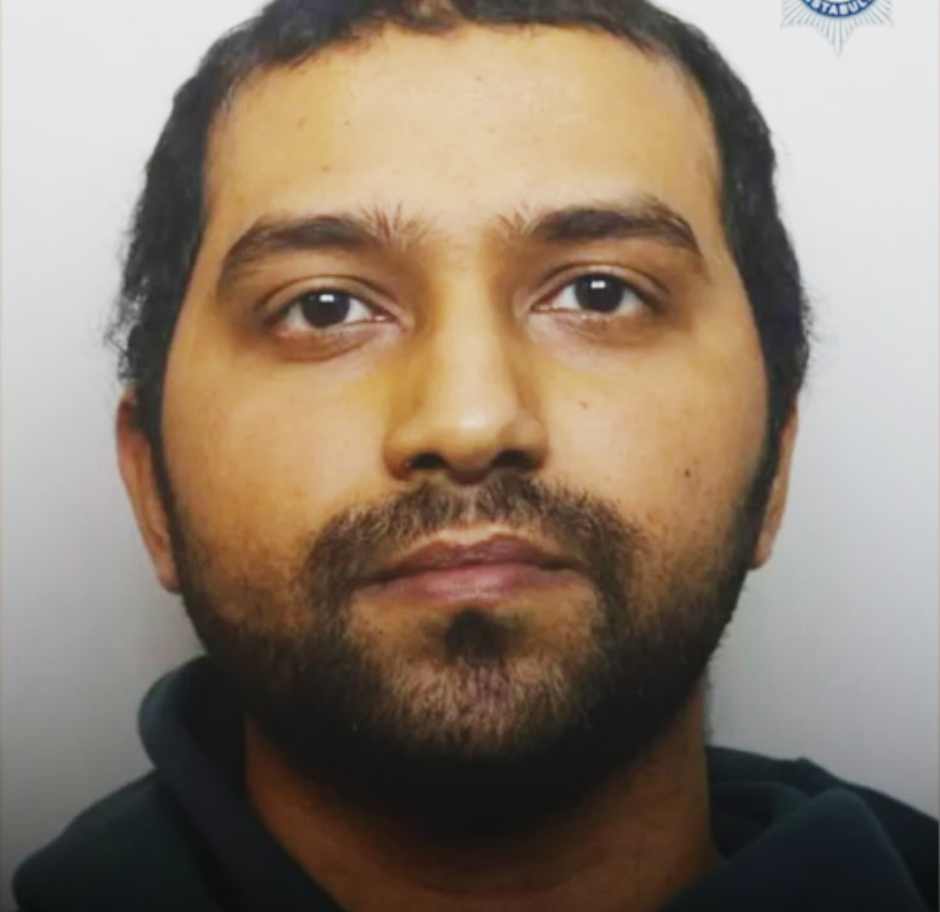
Neither man has yet had the allegations determined by a court. Their arrest photographs, any seized-drug displays and statements issued by NDLEA represent the investigative stage rather than proof of guilt, and responsible reporting should continue to describe them as suspects until a conviction is entered.
The cases also raise broader questions about Nigeria’s position in international drug networks. The country’s population, extensive diaspora, major airports, long land borders and large domestic consumer market create opportunities that organized traffickers can exploit, while its strategic location between southern Africa, Asia, Europe and the Americas makes it attractive as both a destination and transit point.
At the same time, the scale and frequency of NDLEA interceptions indicate increasingly active intelligence operations. The agency’s challenge is converting headline-making seizures into prosecutions that identify organizers rather than simply couriers, while strengthening cooperation with foreign agencies capable of following networks beyond Nigerian territory.
That will be particularly important in the South African dimension of the Onwude investigation. If the alleged recruiter remains outside Nigeria, the effectiveness of the case may depend on whether evidence can be shared quickly enough for authorities abroad to identify, question or arrest additional suspects.
The Thai connection in Khiree’s case presents a similar issue. Investigators will need to establish where the cannabis was acquired, who packed the luggage, who purchased the ticket, who controlled the tracking device and whether anyone in Lagos was waiting to receive the consignment. NDLEA’s allegation that the suspect’s phone contains incriminating information could provide leads, but the agency has not yet revealed whether any alleged Nigerian receiver has been identified.
For now, the November 11 operations represent two significant interceptions at the same airport on the same day involving very different trafficking routes. One consignment allegedly traveled from South Africa concealed inside ordinary breakfast products, while the other came from Thailand through Dubai inside checked baggage allegedly abandoned by its passenger before he attempted to leave the terminal area.
Together, the seizures amounted to approximately 59 kilograms of methamphetamine and cannabis. More importantly for investigators, both cases may provide opportunities to trace networks operating beyond the immediate suspects if digital, financial and travel evidence supports the agency’s preliminary account.
The next stage will be prosecution. NDLEA is expected to conclude its investigations before presenting charges before the Federal High Court, where narcotics trafficking cases are ordinarily handled. Any additional offences involving forged identity documents, immigration violations or conspiracy could broaden the eventual case depending on what investigators establish.
Until then, the strongest verified facts remain those contained in NDLEA’s official November 15 statement: 25.05 kilograms of suspected methamphetamine were recovered from cereal packaging linked to Chinedu Onwude, 33.95 kilograms of Loud cannabis were recovered from two checked bags bearing Greene Da’monte Khiree’s name, and both men were taken into custody at Murtala Muhammed International Airport on November 11.
Everything beyond those physical seizures — including the alleged South African recruiter, the claimed R20,000 courier payment, the suspected decades-long identity fraud and the interpretation of information found on Khiree’s phone — remains part of an active investigation that prosecutors will eventually have to prove if charges proceed.
For NDLEA, the two arrests are being presented as evidence that international traffickers continue to view Nigeria as an attractive market and transit hub but are facing increasingly intelligence-driven enforcement. For the suspects, however, the decisive process will occur not at the airport or in an agency statement but before a court, where the evidence behind two of Nigeria’s latest major drug interceptions will have to withstand legal scrutiny.